Skunk Removal in Colorado North | Skedaddle skip to main content
Skip to main content
Skunk standing in grass

Colorado North Skunk Removal

Contact Us
970-289-1322

Monday–Friday: 5:30 AM–7:00 PM

Saturday: 6:00 AM–3:00 PMSunday: 8:00 AM–2:00 PM Mountain Time

Proudly Serving • Fort Collins, Greeley, Loveland, Windsor, Timnath, Severance, Wellington, Estes Park, Berthoud, Johnstown, Evans, Mead
COLORADO NORTH · HUMANE SKUNK REMOVAL

Humane Skunk Removal in Colorado North

Skunk removal for Fort Collins, Greeley, Loveland and nearby communities, from the den entrance to the barrier that keeps skunks out.

Skedaddle Humane Wildlife Control: Colorado North removes skunks from under decks, sheds, porches and other ground-level spaces in Fort Collins, Greeley, Loveland and nine nearby communities. We inspect to find the den entrance and check for kits, then remove the family humanely, bury a steel-mesh barrier so skunks cannot dig back in, and clean and deodorize the affected area.

  • Serving 12 Colorado North communities
  • Part of the Skedaddle network, founded 1989
  • Humane removal and prevention

Why homeowners choose Skedaddle

A skunk under the deck brings an urgent mix of worries: the smell, your pets and whether a family is living underneath. We sort out all three before any work begins.

An inspection built around the den

Our technicians locate the active entrance and check the full perimeter of the structure, because one sealed hole can simply push a skunk to the next gap. Once we understand the situation, we explain our findings and walk you through each step of the plan.

Humane removal and prevention

We choose the removal approach after the inspection. When kits are present, we place them in a heated baby reunion box so their mother can move them to another den site. Adults can leave through one-way doors where those suit the entrance, and we then close the way back in.

Workmanship and materials guarantee

Our barrier and exclusion work carries a lifetime guarantee on all workmanship and materials. Your written scope lists each deck, shed or porch we screen, so you know exactly which work the guarantee covers.

Signs of skunks and how they get in

Colorado State University Extension notes that striped skunks are present throughout Colorado and generally den in burrows, brush piles or spaces under buildings. At a home, the evidence usually shows up at ground level long before you see the animal.

Activity signs

Signs worth checking

A musky smell near the deck at night, especially after a dog has been out, is often the first clue. Skunks also leave piles of dirt and holes along the edge of a structure where they have dug in, and they are usually active at night rather than during the day.

Den entrances

Likely access points

Skunk entry points are often found below porches, decks and sheds, where there is no full foundation to stop them digging. Gaps beneath steps, concrete slabs, crawlspace openings and floating additions are worth checking as well.

Odor and contamination

What the inspection checks for

We look for the active entrance, signs that kits may be present and droppings or soiled material under the structure. Odor matters too: spray released under a deck or porch can take weeks to dissipate, so we note where the smell is concentrated before planning cleanup.

Not sure what is getting in?

A fresh hole beside the porch could belong to a skunk, a rabbit or a fox. Tell us what you are seeing and smelling, and we will confirm the animal and its entrance during the inspection.

Understanding skunks in Northern Colorado

  • Striped skunks
  • Spotted skunks

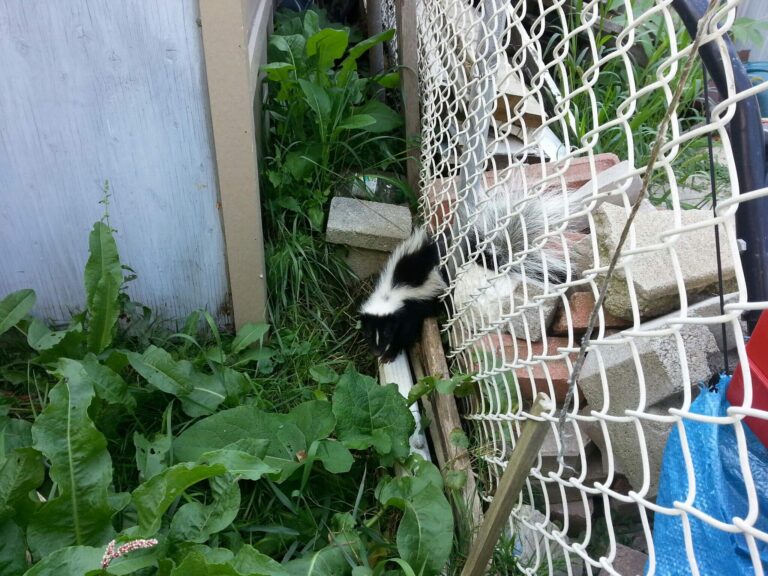
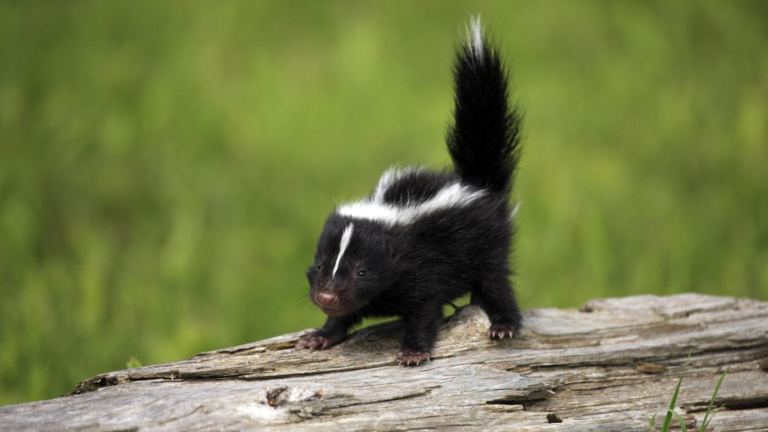
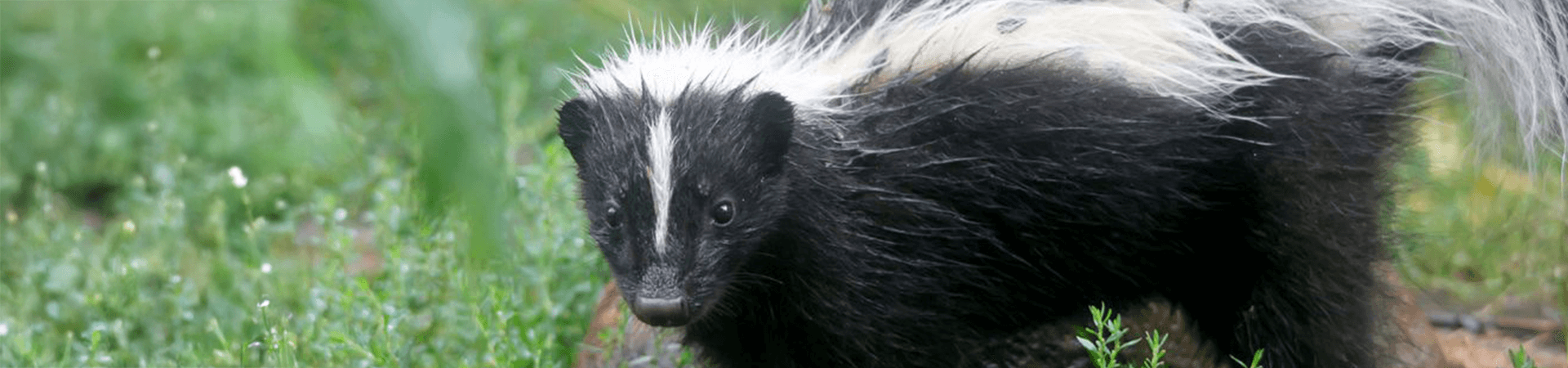
CSU Extension lists four skunk species in Colorado, and the striped skunk is the one homeowners meet most often. It is about the size of a house cat, weighs 4 to 10 pounds and carries a white V-shaped stripe along its back. Because skunks are nocturnal, we usually confirm them from dig-outs, tracks and odor rather than a sighting.

Skunks are strong diggers. Skedaddle's skunk service notes that they can move hundreds of pounds of dirt to create a single den site, and a female often keeps using her winter den into spring to raise her young. That is why a quiet deck in March can hold a family by May.

Colorado rules shape the plan here. Colorado Parks and Wildlife states that state health laws do not permit skunk relocation. Our skunk work is built around exclusion instead: kits are placed where their mother can retrieve them, adults leave through a one-way door where appropriate, and the family moves to one of the mother's other den sites.

For your home, that means we confirm whether kits are present before any entrance is closed and pair removal with a barrier that stops skunks from digging back under.

What to expect from a Skedaddle inspection

Our inspection covers the deck, shed, porch, steps and foundation edges where skunks den. We confirm the animal, find every entrance, check for kits and measure the perimeter that needs a barrier. Then we explain our findings and each step we recommend before work begins.

  • Activity: We confirm that skunks are the animal involved and whether the den is currently in use.
  • Access: We find the active dig-out and every other gap along the base of the structure.
  • Occupied spaces: We check for dependent kits before any entrance is closed, often with the help of thermal imaging cameras.
  • Work required: We identify the barrier length, foundation gaps and any soiled material or odor that needs attention.

After the inspection, we provide a written quote that separates removal, the buried barrier and any cleanup or deodorizing, so you can see the full scope before work starts. The quote also lists the structures covered by our guarantee.

Skedaddle's Three-Step Wildlife Removal Process

Step 1

Assess and Remove

We locate the den and check for kits before choosing a method. When young are present, our technicians use hands-on techniques to place them in a heated reunion box so their mother can relocate them to one of her other den sites. Adults leave through a one-way door where it suits the entrance.

Learn more
Step 2

Clear and Clean

Once the skunks are out, we clear contaminated or soiled material and droppings from the den area, taking care not to spread bacteria. We then deodorize the surrounding space so the odor does not keep drawing attention to the same spot.

Learn more
Step 3

Prevent and Protect

We seal the entrance and secure a screen 8 to 12 inches deep into the ground around the deck, shed or porch so skunks cannot dig or chew back in. Your written scope lists each protected structure covered by our lifetime guarantee on all workmanship and materials.

Learn more

Seasonal activity and removal timing

Skunk activity follows a clear yearly pattern, and the timing changes how we approach a den. In Northern Colorado, kits can be under a deck from May through summer, so we check for a family before closing any entrance.

SeasonWhat may changeWhat it means for the homeowner
Spring(Mar–May) Young are born in early May, and rabid skunks appear most often from February to May.Any occupied den may hold a litter. We check for kits before removal, and no one should approach a skunk acting oddly.
Summer(Jun–Aug) At about six weeks, kits begin to leave the den, staying with their mother until fall.Young skunks may still return to the den at dawn, so removal and the barrier must account for the whole family.
Fall(Sep–Nov) Young skunks stay with their mother until the fall, and skunks look for a den before winter.The best time to remove skunks is before they settle in for winter, so fall is a practical time to screen decks and sheds.
Winter(Dec–Feb) Skunks settle into winter dens and usually breed in February or March.A den chosen in winter is often used for kits in spring. We confirm activity and secure empty spaces before then.

These patterns describe skunk biology, not a fixed removal calendar. This fall, we focus on dens under decks, sheds and porches before winter.

A humane approach to skunk removal

Humane skunk removal means getting the family out without harm and without leaving an open invitation for the next skunk. Careful handling and the right sequence matter as much as the barrier itself.

Inspection-led removal

We decide how to remove skunks only after we know where the den is, how many entrances exist and whether kits are inside. Hand removal, reunion boxes and one-way doors each have a role. One-way doors are used only where they suit the entrance, never as a default step.

Assessing dens and dependent young

Kits are born blind, deaf and completely dependent on their mother, so closing a den with only the adult removed would strand them. We locate the young, lift them out by hand and place them in a heated reunion box so their mother can move them to another den. Reunification is our aim, though it cannot be promised in every case.

Cleanup and odor

We remove droppings and soiled material from the den area and deodorize the surrounding space. Odor that has reached the home is assessed separately, and the written scope lists exactly which areas we treat, so cleanup matches what the inspection found.

Long-term exclusion

The buried barrier is the step that keeps a skunk from digging straight back in. Our lifetime guarantee on all workmanship and materials covers the screening we install. A skunk digging under an untreated structure later needs a new assessment.

Ready for a property-specific plan?

Every deck, shed and porch is built a little differently. Book an inspection and we will map the den, the perimeter that needs screening and any odor cleanup, then explain the work before it begins.

Where this service is currently available

Our Colorado North team provides skunk removal in Fort Collins, Greeley, Loveland, Windsor, Timnath, Severance, Wellington, Estes Park, Berthoud, Johnstown, Evans and Mead. If your home is near but outside these communities, call with your address and we will confirm availability.

Skunk dens sit at ground level, usually beneath structures without a full foundation. Skedaddle's skunk service lists decks, sheds and porches as common den sites. When you book, tell us which structure you are concerned about and where you have noticed digging or odor, so we can plan the perimeter inspection.

Frequently asked questions about skunk removal

How much does skunk removal cost?

Cost depends on the size of the structure, how many entrances need closing, whether kits are present and how much barrier screening and odor cleanup the space needs. We inspect the property first and provide a written quote that separates removal, the barrier and cleanup, so you see the full price before any work starts.

Can you remove skunks the same day?

Same-day service is not guaranteed. We schedule inspections based on availability, and removal and the barrier installation may happen on different days, especially when kits are under the structure. Call 970-289-1322 and we will explain the next available appointment and what to expect.

How do you remove skunks humanely?

We start with an inspection that finds the den and checks for kits. Kits are placed in a heated reunion box so their mother can retrieve them, and adults leave through a one-way door where it suits the entrance. We then bury a steel-mesh barrier so skunks cannot dig back in.

Which Colorado North areas do you serve?

Our Colorado North team removes skunks in Fort Collins, Greeley, Loveland, Windsor, Timnath, Severance, Wellington, Estes Park, Berthoud, Johnstown, Evans and Mead. Visit our Colorado North wildlife removal page to learn more, or call with your address to confirm availability if you live near these communities.

What does the guarantee cover?

Our skunk exclusion work comes with a lifetime guarantee on all workmanship and materials. It covers the barrier and sealed entrances listed in your written scope. It is not a promise that skunks can never dig under any part of the property, and an untreated structure needs its own assessment.

Is cleanup or deodorizing included?

Cleanup is part of our recommended scope whenever skunks have soiled a den area, and the quote lists it separately. We remove droppings and soiled material and deodorize the surrounding space. How much work is needed depends on where the den is and how long it was used, which the inspection findings decide.

How do you assess activity beneath a deck or shed?

We check the full perimeter for fresh dig-outs, tracks and odor, then confirm whether the den is in use before closing anything. In spring and summer we look for kits, often with thermal imaging, because young under a deck or shed need hands-on removal before the entrance is sealed.

Can you guarantee there will be no spraying?

No one can guarantee that a skunk will never spray. Our technicians use careful, hands-on methods and plan each step around skunk behavior to keep the risk low, and our guarantee covers the exclusion work rather than spray. If a pet or person is sprayed, CSU Extension describes home deodorizing solutions.

Colorado North Wildlife Resources & Guides

Book your skunk inspection

A skunk under the deck, a fresh dig-out by the shed or a lingering smell at night all deserve answers before kits arrive. Our Colorado North team finds the den, checks for young, removes the family humanely, buries a barrier skunks cannot dig through and cleans and deodorizes the area. Every barrier is backed by our lifetime guarantee on all workmanship and materials.

menu