Lifetime Warranty
On workmanship and materials.
Skedaddle Madison — serving the greater Madison area since 2021.
No traps. No poison. Permanent exclusion.
Fitchburg lies immediately south of Madison, where neighborhoods meet the Lewis Nine Springs E-Way, the Capital Springs Recreation Area, and the Capital City Trail. Skedaddle Madison removes mice, raccoons, squirrels, and bats from Fitchburg homes through humane, inspection-led exclusion and permanent sealing, then cleans and decontaminates every area wildlife used inside the home — kitchens, wall voids, basements, crawlspaces, or attics. When animals denned in an attic, the written scope also includes removal of damaged insulation and attic restoration.
Reviewed by Bill Dowd, Founder, President & CEO. Last updated August 2026.
Skedaddle Madison serves Fitchburg from greater Madison, drawing on Skedaddle's history since founder Bill Dowd began the company in 1989. Immediately south of Madison, Fitchburg stretches from established northeast residential neighborhoods toward newer south-side development, with Fish Hatchery Road and Verona Road, US-18/151, forming its north-south corridors. The city is one of Madison's largest suburbs, with 29,600 residents in the 2020 Census, while the Lewis Nine Springs E-Way and Capital Springs Recreation Area bring a connected environmental corridor close to homes. Our Fitchburg team has completed 15+ humane wildlife-removal jobs in the past twelve months.
Skedaddle technicians are trained in wildlife biology, home repair, cleanup and decontamination, and attic restoration, and they work using humane methods approved by SPCAs and Humane Societies. At a Fitchburg property, the technician inspects to identify the species and all active and inactive entry points, then applies the exclusion method suited to it before permanently sealing the opening. Every job includes cleanup and decontamination of the areas wildlife used, with attic restoration added when animals denned there. Bat colony exclusion is scheduled outside Wisconsin's June 1 to July 31 maternity window under the state's Broad Incidental Take Permit (Wisconsin DNR bat FAQ).
Every entry point Skedaddle seals in Fitchburg is built as a permanent repair. The work is backed by our lifetime guarantee on all workmanship and materials used to seal your home for life — if wildlife gets back in through a sealed opening, we return and re-seal it at no additional charge. Before work begins, each homeowner receives a written scope with itemized exclusion, cleanup, and warranty details. That gives residents from North Fish Hatchery to Stone Meadows a clear view of the inclusions. The same guarantee supports every species Skedaddle Madison handles at a Fitchburg property.

Owner/Operator
Marcus has been the Owner and Operator of Skedaddle Milwaukee since 2017. A Milwaukee native, Marcus combines a deep understanding of the local community with extensive academic and hands-on experience in wildlife management. He holds a Master of Science in Wildlife Biology from the University of Wisconsin–Madison and has dedicated his career to helping home and business owners resolve wildlife conflicts safely and humanely. Marcus gained valuable field experience as an intern at a local wildlife rehabilitation center, where he worked closely with Milwaukee residents facing wildlife challenges every day. Seeing firsthand the need for effective, humane solutions inspired him to bring Skedaddle’s proven approach to his hometown.

Wildlife Technician Assistant
Anna Aikman is a Wildlife Removal Technician Assistant with the Madison, Wisconsin team. She studied at both Creighton University and UW–Madison, focusing on academics and music, and was an active member of the band programs and pit orchestra. Her passion for wildlife and science has been lifelong, and she even spent time teaching elementary-aged kids about general science through WCATY (Wisconsin Center for Academically Talented Youth). Anna’s professional background includes a range of leadership and customer service roles that built her strong communication and organizational skills. She previously served as the State Canvass Director for Wisconsin Public Media, heading up grassroots fundraising campaigns for PBS Wisconsin and Wisconsin Public Radio.

Wildlife Technician
Born and raised in Dalton, Moriah has always been interested in the outdoors and wildlife. She spent much of her youth outside between being a 4-H member, helping her dad build things, or exploring her neighborhood. Her love for nature blossomed throughout her childhood and led her to attend the University of Wisconsin – Madison for science-based studies. While attending university, she volunteered for the UW Urban Canid Project, where she learned useful field and interpersonal skills. Moriah graduated in the fall of 2018 with a Bachelor of Science in Wildlife Ecology and a Certificate in Environmental Studies. Following graduation, she joined Skedaddle Humane Wildlife Control in Milwaukee. She loves that each day presents different challenges that allow her to sharpen her skills.

Wildlife Technicians
Dan Holmes has been a Wildlife Technician with Skedaddle Humane Wildlife Control since July 2022, working out of the Madison, Wisconsin branch. While primarily based in Madison, he often assists with jobs in the Milwaukee area as well. Before joining Skedaddle, Dan spent over 15 years as a professional mover, completing countless jobs across Wisconsin and on cross-country trips. His passion for animals and a connection through fellow technicians led him to Skedaddle, where he found a meaningful way to combine hands-on work with helping both people and wildlife. Dan is known for his reliability, strong work ethic, and positive attitude. He’s always ready to jump in and support his teammates, whether it's tackling a challenging job or lending a hand in another city.

Wildlife Specialist
Lucas Gann is a Wildlife Specialist with Skedaddle, proudly serving the Madison, Wisconsin area. A Madison native, Lucas studied Criminal Justice at Madison Area Technical College, where he also volunteered with the Madison Eastside Community Center, mentoring youth through after-school programs. His early career path spanned various roles, including automotive sales with Infiniti and CarMax, before he made a shift into the automotive paint industry.Through these experiences, Lucas honed his communication skills and developed a passion for customer service, which would later become foundational to his success in wildlife control. Lucas was drawn to Skedaddle because of the company’s dual commitment to protecting animals and helping homeowners.

Assistant Service Supervisor
Lucas Brown has been a valued member of the Skedaddle Humane Wildlife Control team since March 21, 2022, and currently serves as Assistant Service Supervisor for the Wisconsin franchise. With over a decade of experience in retail, Lucas made a deliberate career shift by spending a year in landscaping to gain hands-on, outdoor experience before finding his true calling in humane wildlife control. Motivated by a deep passion for protecting both wildlife and homeowners, he quickly became an integral part of the team. Lucas takes pride in mentoring new technicians and has played a key role in their growth and development, contributing significantly to the ongoing success of the franchise.
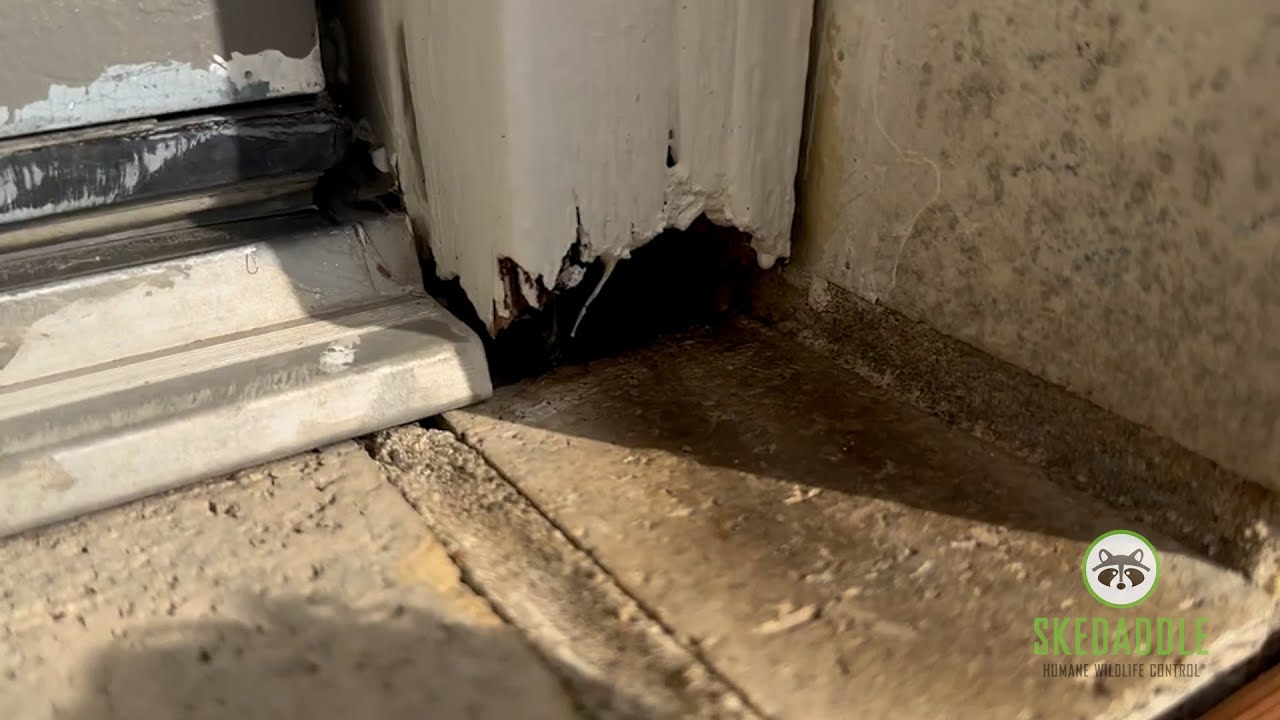
Watch Skedaddle's Madison-area team identify common places mice can enter a home and see why finding and sealing these gaps is key to preventing future infestations.
Four species account for the majority of Skedaddle Madison's Fitchburg wildlife calls over the trailing twelve months: mice, raccoons, squirrels, and bats. The city’s established northeast residential areas, newer south-side development, and green corridors around Nine Springs create different roofline, foundation, and vent vulnerabilities for each species across the year.
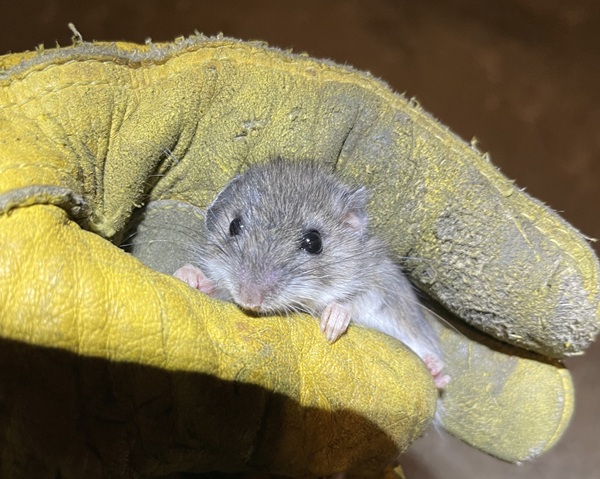
Homeowners often notice droppings behind appliances, scratching in walls, or activity at pantry baseboards as overnight temperatures fall. On homes near North Fish Hatchery and Southdale, technicians inspect foundation seams, garage-slab gaps, dryer vents, and utility penetrations before installing permanent exclusion materials. Cleanup of droppings and contaminated insulation follows the seal, and a follow-up visit confirms the activity has stopped.
Near Nine Springs and Swan Creek, residents may hear heavy nighttime attic movement or find a soffit vent pulled loose after a female seeks denning space. Technicians inspect roof-vent screens, soffit-fascia joints, chimney flashing, and roof-edge returns, then use humane exclusion that lets the animal leave before permanent repairs are completed.
Daytime scratching overhead or chewing along a roofline is usually the first sign. In the established northeast neighborhoods and along the wooded edges near Nine Springs, technicians check gable louvers, soffit returns, roof-edge trim, and vent screens for gnawed openings. Adults leave through a one-way door where appropriate, dependent young are retrieved and reunited with the mother, and openings are then sealed.
A bat found indoors at dusk or faint scratching behind fascia can signal a route through soffit gaps, chimney flashing, or ridge-cap seams. Technicians inspect those routes and schedule colony exclusion outside Wisconsin's June 1 to July 31 maternity restriction (Wisconsin DNR bat program). Guano and contaminated insulation are removed before the roofline is sealed permanently.
Summer brings other species to Fitchburg properties as well. Striped skunk mothers can den beneath decks and sheds near the Nine Springs corridor from June through August. Norway rats can appear in outdoor areas near connected waterways and commercial corridors. Birds, including chimney swifts protected by the federal Migratory Bird Treaty Act, can nest in masonry chimneys, dryer vents, and soffit returns from April through August, so timing and an entry-point assessment matter before work proceeds.
Our Fitchburg technicians can identify the species and confirm the entry points during a single on-site visit.
What areas of Fitchburg does Skedaddle service? Skedaddle Madison services every residential area of Fitchburg, from the Northeast Neighborhood and North Fish Hatchery to Nine Springs, Stone Meadows, and Swan Creek. If a Fitchburg home is inside city limits, Skedaddle services it.
Fitchburg lies immediately south of Madison, where neighborhoods meet the Lewis Nine Springs E-Way, the Capital Springs Recreation Area, and the Capital City Trail. The city’s established northeast residential areas, newer south-side development, and green corridors around Nine Springs create different roofline, foundation, and vent vulnerabilities for each species across the year.
Booking a Skedaddle inspection in Fitchburg starts with a phone call and finishes with a written plan, not a hard sell. Fitchburg homeowners receive a scheduled appointment, an on-site assessment, and a clear explanation of the property findings before any work begins.
The quote is itemized so Fitchburg homeowners see exactly what is included — exclusion hardware, sealing scope, cleanup and decontamination of the affected areas of the home, and attic restoration when animals were in the attic — with no pressure to buy add-on services during the inspection. Every recommendation ties back to a condition the technician physically found on the property.

We begin with a detailed inspection of your home to identify the wildlife, locate active entry points, and assess the extent of the problem. Our technicians then use proven, species-appropriate methods to remove animals safely and humanely.
Learn more
After the animals are removed, we clean and decontaminate affected areas, removing nesting materials, droppings, and other traces left behind. When needed, we also address damaged insulation and help restore the space to a clean, healthy condition.
Learn more
Finally, we identify vulnerable areas and seal confirmed or potential entry points to help prevent wildlife from returning. Our durable exclusion work provides lasting protection and includes a lifetime warranty on the entry points we seal.
Learn moreWildlife activity in Fitchburg follows a seasonal pattern shaped by breeding cycles and Wisconsin weather. Mice create the fall indoor push, raccoons and squirrels bring attic and roofline concerns, and bat work concentrates in late summer outside the DNR restriction.
| Season | Active species | Notes |
|---|---|---|
|
Winter (Dec–Feb) |
Mice, raccoons, squirrels | Mice active in walls and kitchens; raccoons and squirrels may use attics for shelter, producing heavy-noise calls |
|
Spring (Mar–May) |
Raccoons, squirrels, bats, mice | Raccoon denning activity rises; squirrels use soffit and roofline gaps for litters; bat activity resumes before the June 1 pause |
|
Summer (Jun–Aug) |
Bats, raccoons, squirrels, mice | Bat colony exclusion paused June 1 – July 31 under the WI DNR maternity restriction (Wisconsin DNR bat FAQ); squirrel and raccoon family activity continues |
|
Fall (Sep–Nov) |
Mice, raccoons, squirrels, bats | Mice move indoors as overnight lows fall; bat exclusion demand rises after July 31; raccoons and squirrels seek denning and shelter space |
Quarterly focus: As of late summer 2026, the Wisconsin DNR bat exclusion pause has lifted, and Fitchburg homeowners with confirmed colony activity should book early. Demand for bat exclusions rises through August and September while mouse-season inspections begin to increase as overnight temperatures drop. Call (608) 819-9406 to get on the schedule.
No two Fitchburg wildlife problems are alike, so every job opens with a thorough inspection of the home and the routes an animal is actually using — a chewed gable louver on North Fish Hatchery Road is a different repair from a soffit seam backing onto the Lewis Nine Springs E-Way. Whenever the situation allows, technicians fit species-specific one-way doors so adult raccoons, squirrels, skunks, and other animals can leave safely before the entry point is secured. Young too small to leave on their own are lifted out by hand and reunited with their mother so she can move them to another den. Bat and bird exclusions use species-appropriate equipment and are timed around nesting and maternity periods, including Wisconsin's June 1 to July 31 bat restriction. Mice are stopped by sealing the openings they use, never by bait left inside a wall.
Raccoon activity often increases from late winter through early summer as females search for warm, protected spaces where they can safely raise their young. Attics are especially appealing because they provide shelter from weather, predators and other disturbances. If a technician discovers a litter during the inspection, the removal plan is carefully adjusted to protect both the mother and her kits. The young raccoons are gently removed by hand and placed in a heated reunion box close to the original entry point. This keeps them warm, secure and easy for their mother to find. After returning at dusk, she can collect her kits and move them one at a time to another den nearby. Reuniting the family whenever possible supports a humane removal process and reduces the risk of the mother damaging another area of the roof, soffit or fascia while attempting to regain access to her young.
After animals are confirmed out and entry points are sealed, Skedaddle cleans and decontaminates every area wildlife used inside the home. In Fitchburg, that may include mouse droppings and urine around kitchen baseboards, squirrel nesting material at a gable vent, or raccoon waste and bat guano in an attic. Contaminated droppings, urine, and nesting material are removed, and affected surfaces are decontaminated to eliminate scent trails that can attract other wildlife. When animals denned in the attic, Skedaddle also removes damaged insulation and restores the attic according to the written scope.
Every entry point Skedaddle seals in Fitchburg is designed as a permanent repair, not a temporary patch. Mesh, fasteners, and closure materials are selected for the actual vulnerability, whether that is a garage-slab gap, roof-vent screen, soffit return, or chimney-flashing seam. Each sealing job carries Skedaddle's lifetime guarantee on all workmanship and materials used to seal your home for life. If wildlife returns through an opening Skedaddle sealed, the Madison team re-seals it at no additional charge, helping homeowners avoid repeat repairs to the same route.
Get a Fitchburg-specific inspection and a written scope that spells out exclusion points, decontamination, and warranty terms before any work begins.
Service area: Fitchburg and the greater Madison metro, including Madison, Oregon, Verona, Sun Prairie, Shorewood Hills, and Maple Bluff.
Wildlife removal cost in Fitchburg depends on the species involved, the scope of the exclusion work, and any decontamination or attic restoration needed afterward. Skedaddle Madison inspects the property on-site and provides a written, itemized quote before any work begins, so Fitchburg homeowners see the full scope and price before committing. Call (608) 819-9406 to book an inspection and get a property-specific quote.
Skedaddle Madison prioritizes urgent Fitchburg calls, particularly active entry situations or a bat confirmed inside a living space. Call (608) 819-9406 during business hours to discuss the fastest available inspection slot for your situation. Same-day availability depends on the current schedule and the nature of the animal activity at your property.
Bat exclusion in Fitchburg can be scheduled any time outside the Wisconsin DNR's June 1 to July 31 maternity restriction. During that window, exclusion work is prohibited because flightless pups would be separated from their mothers if the entry point is sealed. Skedaddle Madison can inspect and plan the work year-round and then schedule the physical exclusion for the first available date outside the restricted period.
Skedaddle Madison services every residential area of Fitchburg, including Northeast Neighborhood, North Fish Hatchery, Nine Springs, Greentree, Southdale, Belmar Hills, Jamestown, Stone Meadows, and Swan Creek. If a Fitchburg home is inside city limits, Skedaddle services it.
Yes. Skedaddle follows Wisconsin wildlife regulations, including the DNR's bat exclusion window of June 1 to July 31 for cave bats covered under the state's Broad Incidental Take Permit. Skedaddle uses humane methods approved by SPCAs and Humane Societies.
Over the trailing twelve months, Skedaddle Madison's Fitchburg work concentrated in four species: mice, raccoons, squirrels, and bats. The Lewis Nine Springs E-Way and Capital Springs Recreation Area place connected green corridors near residential rooflines and foundations, bringing a fall mouse push indoors, raccoon and squirrel activity along wooded lot lines, and late-summer bat work that resumes after the DNR exclusion window reopens August 1.
Yes. Every full exclusion job in Fitchburg is backed by Skedaddle's lifetime guarantee on all workmanship and materials used to seal your home for life. If wildlife gets back in through a sealed opening, Skedaddle Madison returns and re-seals it at no additional charge.
Every Skedaddle Madison job includes cleanup and decontamination of the areas the wildlife used inside the home — kitchens, wall voids, basements, crawlspaces, or attics — with contaminated droppings, urine, and nesting material removed and the affected surfaces decontaminated to eliminate scent trails that attract other wildlife. When the animals were denning in the attic, Skedaddle also removes the damaged insulation and restores the attic per the written scope, so the attic returns to a clean, sealed condition.
Wildlife problems in Fitchburg do not resolve themselves — a raccoon working a soffit beside the Lewis Nine Springs E-Way can keep using the same seam, a squirrel at a North Fish Hatchery gable louver can return if the opening remains accessible, and mice at a garage-slab gap can draw more activity as temperatures drop. Skedaddle Madison manages the process from first call to final seal: identify the species and entry points, apply the exclusion method that suits the animal, seal the route with materials built for Wisconsin winters, clean and decontaminate each affected area, restore the attic when animals denned there, and back the sealing work with a lifetime guarantee. Technicians work using humane methods approved by SPCAs and Humane Societies. Call (608) 819-9406 or submit an online request and a member of the Skedaddle Madison team will follow up.
 menu
menu