Lifetime Warranty
On workmanship and materials.
Skedaddle Madison — serving the greater Madison area since 2021.
No traps. No poison. Permanent exclusion.
Mount Horeb is a Norwegian-heritage village on the edge of the Driftless Area, about 20 miles southwest of downtown Madison along US-18/151. Its Trollway, mature residential cover, and parkland near Stewart Lake and Blue Mound State Park put homes near natural corridors. Skedaddle Madison removes mice, squirrels, bats, and raccoons from Mount Horeb homes using humane exclusion chosen to suit the species and permanent sealing, then cleans and decontaminates wherever wildlife has been active — kitchens, wall voids, basements, crawlspaces, or attics — and restores the attic when animals denned there.
Reviewed by Bill Dowd, Founder, President & CEO, Skedaddle Humane Wildlife Control. Last updated September 2026.
Skedaddle Madison serves Mount Horeb as part of its greater-Madison service area, supported by Skedaddle’s national history since founder Bill Dowd started the company in 1989. The village lies roughly 20 miles southwest of downtown Madison on US-18/151, at the edge of the Driftless Area, with the Trollway at its center and Stewart Lake County Park. That mix of village homes, tree cover, and parkland creates varied routes to rooflines and foundations for homeowners across the village. Village homeowners get the same inspection standards, humane exclusion methods, and lifetime workmanship guarantee as every other community the Madison team serves.
Skedaddle technicians are trained in wildlife biology, home repair, cleanup and decontamination, and attic restoration, using humane methods approved by SPCAs and Humane Societies. A technician identifies the species, evaluates accessible entry points, and selects the exclusion method that lets the animal exit safely before the opening is permanently sealed. Cleanup and decontamination cover every area wildlife used; attic restoration is added only if animals denned there. For bats, physical colony exclusion is scheduled outside Wisconsin’s June 1 to July 31 maternity window under the state’s Broad Incidental Take Permit, with inspection and planning available year-round (Wisconsin DNR bat FAQ).
Each Mount Horeb exclusion plan is built around closing the entry routes found during the inspection, rather than relying on a temporary removal alone. Skedaddle backs full exclusion work with a lifetime guarantee on all workmanship and materials used to seal your home for life: if wildlife gets back in through a sealed opening, Skedaddle Madison returns to re-seal it at no additional charge. Homeowners receive a written scope that separates exclusion, cleanup and decontamination, and any attic-restoration work required after attic denning. The guarantee applies to the sealing work for every species handled through the Mount Horeb service area.

Owner/Operator
Marcus has been the Owner and Operator of Skedaddle Milwaukee since 2017. A Milwaukee native, Marcus combines a deep understanding of the local community with extensive academic and hands-on experience in wildlife management. He holds a Master of Science in Wildlife Biology from the University of Wisconsin–Madison and has dedicated his career to helping home and business owners resolve wildlife conflicts safely and humanely. Marcus gained valuable field experience as an intern at a local wildlife rehabilitation center, where he worked closely with Milwaukee residents facing wildlife challenges every day. Seeing firsthand the need for effective, humane solutions inspired him to bring Skedaddle’s proven approach to his hometown.

Wildlife Technician Assistant
Anna Aikman is a Wildlife Removal Technician Assistant with the Madison, Wisconsin team. She studied at both Creighton University and UW–Madison, focusing on academics and music, and was an active member of the band programs and pit orchestra. Her passion for wildlife and science has been lifelong, and she even spent time teaching elementary-aged kids about general science through WCATY (Wisconsin Center for Academically Talented Youth). Anna’s professional background includes a range of leadership and customer service roles that built her strong communication and organizational skills. She previously served as the State Canvass Director for Wisconsin Public Media, heading up grassroots fundraising campaigns for PBS Wisconsin and Wisconsin Public Radio.

Wildlife Technician
Born and raised in Dalton, Moriah has always been interested in the outdoors and wildlife. She spent much of her youth outside between being a 4-H member, helping her dad build things, or exploring her neighborhood. Her love for nature blossomed throughout her childhood and led her to attend the University of Wisconsin – Madison for science-based studies. While attending university, she volunteered for the UW Urban Canid Project, where she learned useful field and interpersonal skills. Moriah graduated in the fall of 2018 with a Bachelor of Science in Wildlife Ecology and a Certificate in Environmental Studies. Following graduation, she joined Skedaddle Humane Wildlife Control in Milwaukee. She loves that each day presents different challenges that allow her to sharpen her skills.

Wildlife Technicians
Dan Holmes has been a Wildlife Technician with Skedaddle Humane Wildlife Control since July 2022, working out of the Madison, Wisconsin branch. While primarily based in Madison, he often assists with jobs in the Milwaukee area as well. Before joining Skedaddle, Dan spent over 15 years as a professional mover, completing countless jobs across Wisconsin and on cross-country trips. His passion for animals and a connection through fellow technicians led him to Skedaddle, where he found a meaningful way to combine hands-on work with helping both people and wildlife. Dan is known for his reliability, strong work ethic, and positive attitude. He’s always ready to jump in and support his teammates, whether it's tackling a challenging job or lending a hand in another city.

Wildlife Specialist
Lucas Gann is a Wildlife Specialist with Skedaddle, proudly serving the Madison, Wisconsin area. A Madison native, Lucas studied Criminal Justice at Madison Area Technical College, where he also volunteered with the Madison Eastside Community Center, mentoring youth through after-school programs. His early career path spanned various roles, including automotive sales with Infiniti and CarMax, before he made a shift into the automotive paint industry.Through these experiences, Lucas honed his communication skills and developed a passion for customer service, which would later become foundational to his success in wildlife control. Lucas was drawn to Skedaddle because of the company’s dual commitment to protecting animals and helping homeowners.

Assistant Service Supervisor
Lucas Brown has been a valued member of the Skedaddle Humane Wildlife Control team since March 21, 2022, and currently serves as Assistant Service Supervisor for the Wisconsin franchise. With over a decade of experience in retail, Lucas made a deliberate career shift by spending a year in landscaping to gain hands-on, outdoor experience before finding his true calling in humane wildlife control. Motivated by a deep passion for protecting both wildlife and homeowners, he quickly became an integral part of the team. Lucas takes pride in mentoring new technicians and has played a key role in their growth and development, contributing significantly to the ongoing success of the franchise.
Watch Skedaddle’s Madison-area team identify common places mice can enter a home and see why finding and sealing these gaps is key to preventing future infestations.
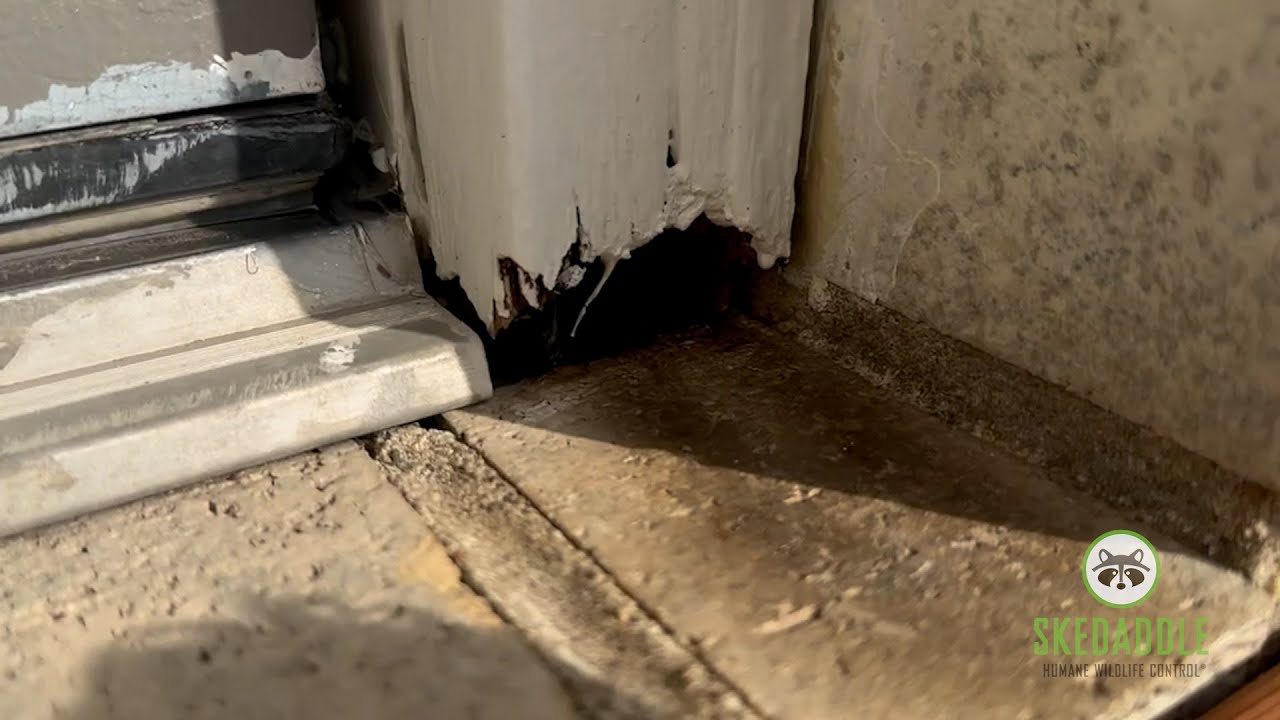
Skedaddle Madison technicians service Mount Horeb homes year-round for mice, squirrels, bats, and raccoons. Mature tree cover along the Trollway and Valley View Heights, older village housing stock, and the surrounding Driftless Area ridges give each species a different route indoors and a different seasonal pattern.
Mice are a recurring call for Skedaddle Madison in Mount Horeb. Skedaddle inspects foundation seams, garage-slab gaps, dryer vents, and utility penetrations, then builds a permanent exclusion plan around openings found. Cleanup and decontamination address indoor areas mice used after the humane exclusion is complete.
Flying squirrels appear alongside tree squirrels here, especially where mature tree cover in Valley View Heights and along the Trollway reaches nearby rooflines. An inspection checks gable vents, soffit returns, roof-edge gaps, and attic activity before selecting a humane exclusion approach. Where suitable, one-way doors let adult squirrels leave and young are reunited with the mother, then durable sealing addresses the openings found.
Skedaddle is prepared to service Mount Horeb homes for bats, including big brown and little brown bats near the Driftless Area edge. Technicians inspect roofline seams, soffits, flashing, and accessible entry routes to identify active access points, then plan exclusion and permanent sealing. Exclusion is scheduled outside Wisconsin’s June 1 to July 31 maternity window (Wisconsin DNR bat program).
Skedaddle is prepared to service Mount Horeb homes for raccoons, from a damaged soffit or roof vent to an attic den. The technician identifies access points, uses a humane one-way door where appropriate, and retrieves and reunites any dependent young with the mother before sealing. Cleanup and decontamination cover interior areas raccoons used, while attic restoration is added when the attic was a den.
Mount Horeb homeowners can also call Skedaddle Madison about skunk removal, bird removal, and rat removal. In summer, technicians assess seasonal activity around decks, sheds, vents, and masonry near parks and the Trollway, where skunk mothers den beneath low structures and rats use outdoor cover close to outbuildings. Bird work is planned around applicable protections, including the Migratory Bird Treaty Act. Skedaddle confirms the species and every access point during the on-site inspection before any exclusion work begins, and nesting-season timing determines when bird work can proceed. Skunk removal, rat removal, and bird removal are available service resources. Call (608) 819-9406 or learn more about wildlife removal in Madison.
Our Mount Horeb technicians can identify the species and confirm the entry points during a single on-site visit.
What areas of Mount Horeb does Skedaddle service? Skedaddle Madison services every residential area of Mount Horeb, including Valley View Heights, North Cape Commons, Windflower Village, and the downtown Trollway area. If a Mount Horeb home is inside village limits, Skedaddle services it.
Booking a Skedaddle inspection in Mount Horeb starts with a phone call and ends with a written plan, not a hard sell. Homeowners receive a scheduled appointment, on-site assessment, and a clear explanation of the conditions found before work begins.
The quote is itemized, so Mount Horeb homeowners see the exclusion hardware, sealing scope, cleanup and decontamination, and any attic restoration required when animals denned there. There is no pressure to buy add-on services during the inspection; every recommendation ties back to a condition the technician found at the property. Call (608) 819-9406 or see the full inspection process.
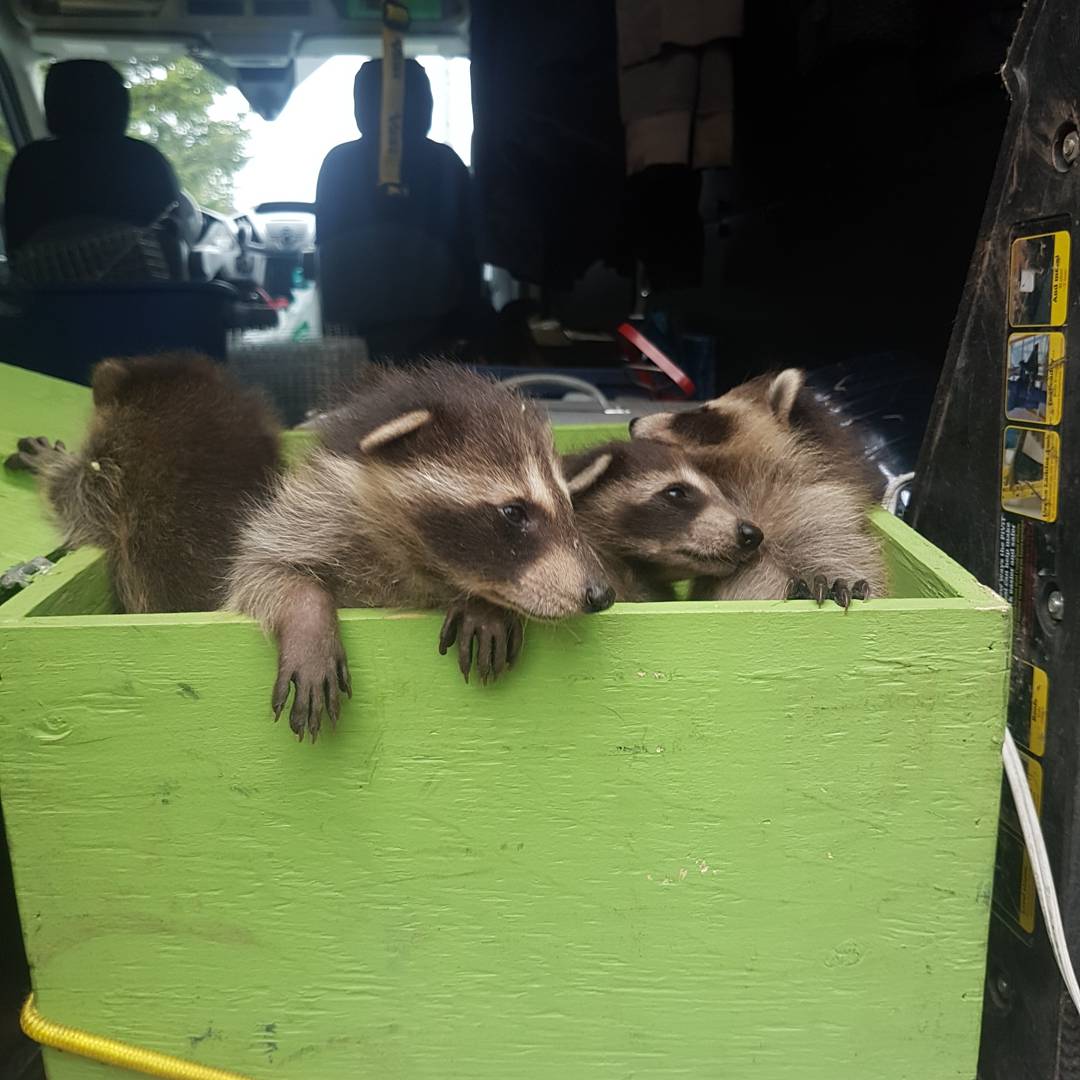

We begin with a detailed inspection of your home to identify the wildlife, locate active entry points, and assess the extent of the problem. Our technicians then use proven, species-appropriate methods to remove animals safely and humanely.
Learn more
After the animals are removed, we clean and decontaminate affected areas, removing nesting materials, droppings, and other traces left behind. When needed, we also address damaged insulation and help restore the space to a clean, healthy condition.
Learn more
Finally, we identify vulnerable areas and seal confirmed or potential entry points to help prevent wildlife from returning. Our durable exclusion work provides lasting protection and includes a lifetime warranty on the entry points we seal.
Learn moreWildlife activity in Mount Horeb follows Wisconsin’s weather and breeding cycles. Mice may seek indoor routes as temperatures cool, while bats, squirrels, and raccoons require timing and planning that reflect animal activity and the condition of the home.
| Season | Active species | Notes |
|---|---|---|
| Winter (Dec–Feb) |
Mice (indoor activity), raccoons (attic denning), squirrels (attic denning) | Scratching in walls, insulation damage visible, animals heard moving inside during Wisconsin’s coldest weeks |
| Spring (Mar–May) |
Raccoons (nesting), squirrels (nesting), bats (returning) | Attic scratching, chimney activity, daytime raccoon sightings around Valley View Heights and North Cape Commons |
| Summer (Jun–Aug) |
Bats — colony exclusion paused June 1 to July 31 under the Wisconsin DNR Broad Incidental Take Permit — juvenile squirrels | Bats in living spaces, baby-animal calls, chirping or fluttering heard in the roof at dusk |
| Fall (Sep–Nov) |
Mice (peak entry), squirrels (food storing), raccoons (pre-winter denning) | New scratching sounds at night, droppings in the basement or garage, new entry points appearing in Windflower Village and along the Trollway |
Quarterly focus: As of late summer 2026, Mount Horeb homeowners with suspected bat activity can plan exclusion after the Wisconsin maternity window, while homes near the Trollway, Stewart Lake, and mature tree cover can benefit from a roofline and foundation assessment before fall. Call (608) 819-9406 to discuss an inspection (Wisconsin DNR bat FAQ).
Mount Horeb homeowners hire Skedaddle because the exclusion is engineered to last. Each step below reflects how the Madison team approaches humane wildlife control in Mount Horeb homes.
A Mount Horeb plan starts with a thorough inspection, because the answer depends entirely on what that inspection finds — a garage-side foundation gap, a lifted soffit return, and a compromised roof vent each call for different work. Where it is appropriate, a species-specific one-way door lets adult raccoons, squirrels, skunks, and other animals leave under their own movement pattern before the entry point is secured. Any young unable to leave on their own are carefully retrieved and reunited with their mother so she can move them. Bat and bird exclusions use species-appropriate equipment, timed around nesting and maternity periods and Wisconsin’s June 1 to July 31 bat window. Mouse work focuses on finding and sealing entry points rather than on bait.
A suspected maternity den changes the technician’s plan. Before exclusion work proceeds, the inspection looks for dependent young and identifies the safest humane next step. When a raccoon litter is found, technicians can hand-remove the young and place them in a warmed reunion box near the original entry so the mother can retrieve them. This approach protects the family unit and helps prevent a mother from trying to create a new opening to reach young still inside the home.
After wildlife is out and access points are sealed, Skedaddle removes droppings, urine, and nesting material from every interior area used by the animal, including kitchens, wall voids, basements, crawlspaces, and attics. Affected surfaces are decontaminated to remove scent trails that could attract other wildlife. This cleanup is part of every job, not only attic work. When an animal denned in the attic, damaged insulation is removed and the attic is restored according to the written scope as an additional service.
The permanent-sealing phase addresses the specific conditions found at the Mount Horeb home, with materials selected for the opening and its exposure to Wisconsin weather. A roofline repair, foundation closure, or screened vent is not treated as a temporary patch. Full exclusion work is backed by Skedaddle’s lifetime guarantee on all workmanship and materials used to seal your home for life. If wildlife re-enters through an opening Skedaddle sealed, the Madison team returns to re-seal that opening without an additional charge.
Get a Mount Horeb inspection and a written scope that spells out exclusion points, decontamination, and our lifetime guarantee before any work begins.
Wildlife removal cost in Mount Horeb depends on the species involved, the scope of exclusion work, and any decontamination or attic restoration needed afterward. Skedaddle Madison inspects the property on-site and gives a written, itemized quote before work begins, so homeowners can review the scope and price before deciding. Call (608) 819-9406 to arrange an inspection and receive a property-specific quote.
Skedaddle Madison prioritizes urgent Mount Horeb calls, especially active-entry situations or a bat confirmed inside a living space. Call (608) 819-9406 during business hours to discuss the earliest available inspection for your circumstances. Same-day availability depends on the current schedule and the animal activity found at the property.
Bat exclusion in Mount Horeb is scheduled outside Wisconsin’s June 1 to July 31 maternity window. During that period, exclusion would separate flightless pups from their mothers if an entry point were sealed. Skedaddle Madison can inspect and plan the work throughout the year, then schedule physical exclusion for the first suitable date after the window.
Skedaddle Madison services every residential area of Mount Horeb, including Valley View Heights, North Cape Commons, Windflower Village, and the downtown Trollway area. If a Mount Horeb home is inside village limits, Skedaddle services it.
Yes. Skedaddle follows Wisconsin wildlife regulations, including the DNR’s June 1 to July 31 bat-exclusion window for cave bats covered under the state’s Broad Incidental Take Permit. Skedaddle uses humane methods approved by SPCAs and Humane Societies.
Skedaddle Madison’s Mount Horeb work centers on four species: mice, squirrels, bats, and raccoons. Fall mouse pressure tends to concentrate on foundation seams and attached garages, while mature tree cover around Valley View Heights and the Trollway brings squirrel activity to rooflines and attics. Bat-exclusion scheduling resumes after the DNR maternity window closes. Mount Horeb’s recorded service history is low-volume, so this species order reflects a small number of local jobs.
Yes. Every full exclusion job in Mount Horeb is backed by Skedaddle’s lifetime guarantee on all workmanship and materials used to seal your home for life. If wildlife gets back in through a sealed opening, Skedaddle Madison returns and re-seals it at no additional charge.
Every Skedaddle Madison job includes cleanup and decontamination wherever wildlife was active inside the home — kitchens, wall voids, basements, crawlspaces, or attics. Contaminated droppings, urine, and nesting material are removed, and affected surfaces are decontaminated to eliminate scent trails. When animals denned in the attic, Skedaddle also removes damaged insulation and restores the attic under the written scope.
A raccoon working a soffit near Stewart Lake, squirrels testing a roofline along the Trollway, or mice finding a way through an attached-garage seam can turn a small opening into an indoor wildlife problem. Skedaddle Madison manages the full humane process: identify the species and entry points, choose the exclusion method that fits, permanently seal the vulnerabilities, clean and decontaminate the areas wildlife used, restore an attic when the animal denned there, and back the sealing work with a lifetime guarantee. Technicians use humane methods approved by SPCAs and Humane Societies. Call (608) 819-9406 or submit an online request and a Skedaddle Madison team member will follow up.
 menu
menu