Lifetime Warranty
On workmanship and materials.
Skedaddle Minneapolis — serving the greater Plymouth area since 2023.
No traps. No poison. Permanent exclusion.
Plymouth spreads across northwest Hennepin County around Medicine Lake, Parkers Lake and Bass Lake, cut through by the Interstate 494 and Highway 169 corridors, with newer construction out toward the Elm Creek area. Skedaddle Minneapolis removes mice, squirrels, bats and birds from Plymouth homes with an inspection-led approach matched to the species, seals every opening permanently, clears droppings and contaminated insulation out of the spaces wildlife used, and restores attic insulation where animals denned. No traps, no poison, no lethal removal, and a lifetime guarantee on all workmanship and materials.
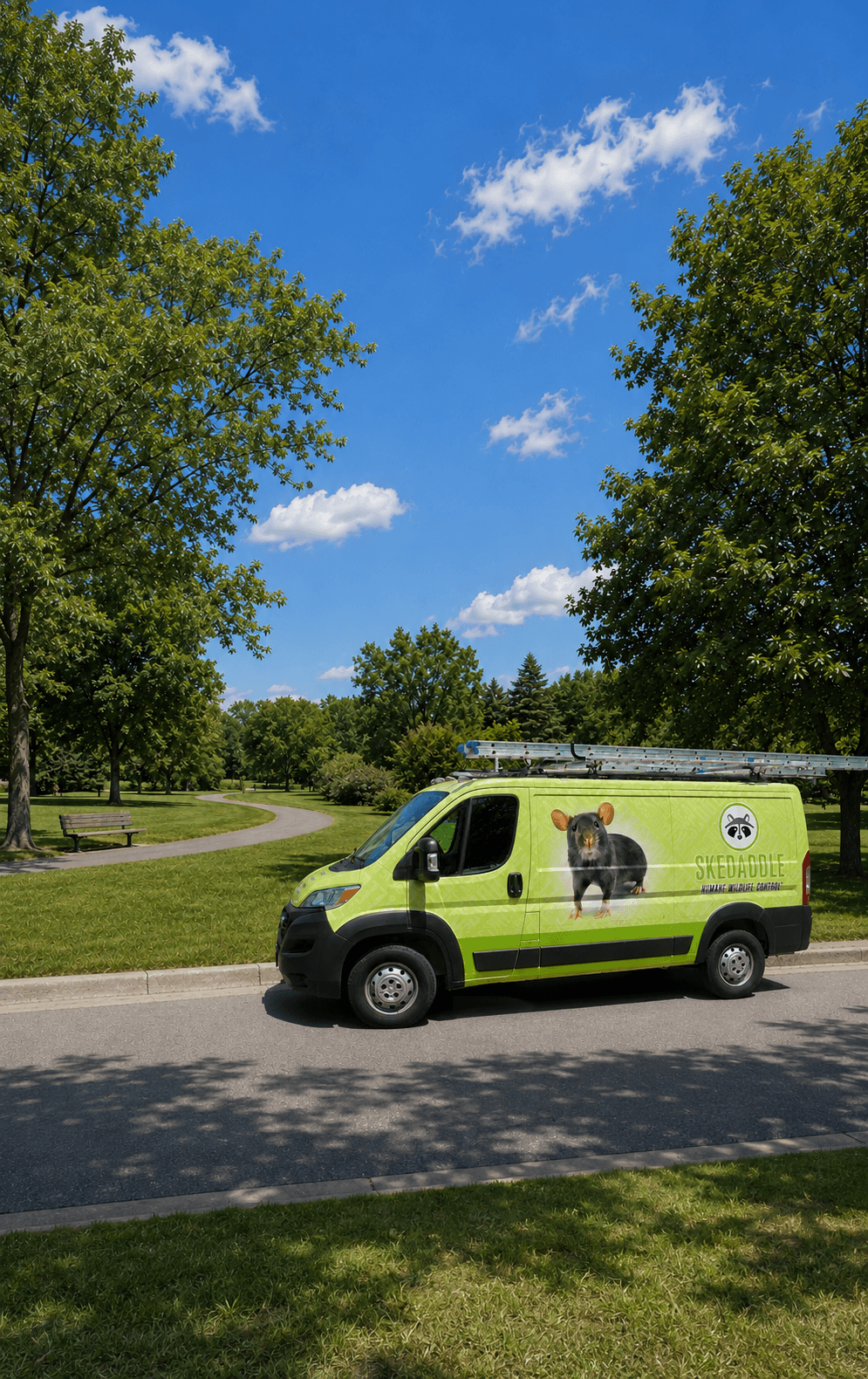
Reviewed by Bill Dowd, Founder, President & CEO, Skedaddle Humane Wildlife Control. Last updated September 2026.
When something gets into a Plymouth house, the fastest fix is rarely the one that holds. Skedaddle Minneapolis inspects the property first, matches the exclusion method to the species, seals every opening with materials rated for Minnesota freeze-thaw and stands behind the work with a lifetime guarantee. Three things separate that from a quicker call.
Skedaddle Minneapolis has served Plymouth as part of the greater Minneapolis service area since 2023, and stands on the wider Skedaddle Humane Wildlife Control operation founded by Bill Dowd in 1989. Plymouth is a mix of mid-century lakeside neighborhoods around Medicine Lake and newer construction out toward the Elm Creek area, and each era of housing has its own opening pattern. The Plymouth crew has completed more than 15 humane wildlife-removal jobs in the past 12 months across that mix.
Skedaddle technicians train in wildlife biology, home repair, decontamination and attic restoration, and every Plymouth job runs through the same sequence: identify the species, let the animal leave on its own through an inspection-led exclusion matched to the species, then permanently seal every opening. No traps inside the home, no bait stations, no poison, no lethal removal. Bat colony exclusion is scheduled outside the May 15 to August 1 pup-season avoidance window the Minnesota DNR recommends.
Every opening Skedaddle seals in Plymouth is backed by a lifetime guarantee on all workmanship and materials. If the same animal returns through a sealed opening, Skedaddle returns and re-seals it at no additional charge. Every job includes a written, itemized scope covering exclusion, decontamination and restoration before any work starts, so homeowners see exactly what is included and what is not before agreeing to anything. See our full warranty terms.

Co-Owner
Matt Sanders launched Skedaddle Minneapolis with long time friend and colleague Brett Robertson. Born and raised in Minneapolis, Matt now lives in a house across the street from his childhood home, with his wife and children. He has a passion for the community he calls home and is proud to provide home and business owners with humane solutions to their wildlife conflicts. Matt graduated from Bethel University with a double major in Philosophy and Biblical and Theological Studies in 2004. He then returned to Minneapolis to begin a decades-long career in supply chain management in the food production industry. Launching a Skedaddle franchise has allowed Matt to fulfill his dream of operating a business that could have a more direct impact in his community. As a local business owner, Matt relies on his decades worth of management experience to provide Skedaddle clients with a high level of customer service.

Co-Owner
Brett Robertson launched Skedaddle Minneapolis with the desire to bring humane wildlife control services to the community he calls home. As a resident of Plymouth, Minnesota, with his wife and two kids, Brett has first hand knowledge of the area and the wildlife that thrive in the city. Brett graduated from Missouri University of Science and Technology in 2006, and before joining Skedaddle spent several years working in corporate America across the Midwest. Becoming a Skedaddle Franchise partner has allowed Brett to put his decades worth of management experience and business knowledge to use helping property owners in Minneapolis with their wildlife challenges. Brett loves the outdoors and is thrilled to deliver unique solutions and high level customer service to clients.

Lead Wildlife Technician
Jesse is a Lead Wildlife Technician with Skedaddle’s Twin Cities branch. Raised in Union City, California, he graduated early from James Logan High School before jumping straight into blue-collar work. He started his career in tree care with Davey Tree’s Tree Surgery Division, trimming trees near power lines for PG&E, and later worked with Acorn Tree Company on residential projects. Along the way, he developed a love for working outdoors and even rescued baby squirrels and hummingbirds, bringing them to rehab centers. After moving to Minnesota, Jesse discovered Skedaddle—a unique opportunity that fit his skills and passion for hands-on work.
Wildlife Control Inspector
Logan is a Wildlife Inspector with Skedaddle. She grew up in rural Southeastern Ohio and earned her bachelor’s degree in Biology from West Virginia University. Since 2015, Logan has gained extensive experience working with wildlife, including live removals and rehabilitation. She is a licensed Wildlife Educator in Tennessee and a former permitted Wildlife Rehabilitator. Before joining Skedaddle, Logan worked for the Tennessee Wildlife Resource Agency and later with a wildlife control company, where she also helped launch a sister company focused on attic and crawlspace restoration. Now based in the Twin Cities, Logan handles everything from detailed home inspections and emergency animal removals to building relationships in the community.
Lead Wildlife Control Technician
Mia Bagley is a Lead Wildlife Control Technician with Skedaddle Humane Wildlife Control. She grew up on a small farm along the Utah–Idaho border, where a lifelong love of animals first took root. Mia earned her degree in Environmental Sociology with a minor in Equine Studies from Utah State University. After graduation, she moved to Minnesota to manage a horse farm—a role that further strengthened her passion for hands-on animal work. Skedaddle appealed to her as a place where she could combine her interest in wildlife with her problem-solving skills, all while helping people and animals safely coexist. Since joining Skedaddle, Mia has taken on the role of lead technician, working closely with homeowners to assess wildlife concerns and provide effective, humane removal and exclusion solutions.
Wildlife Control Inspector
Caleb is a Wildlife Inspector with Skedaddle who brings a unique background to the team. A native of Parkers Prairie, MN, he briefly attended Saint Cloud State University to study economics before exploring a variety of career paths. His experience includes roles in food service and tech, along with certifications in forklift operation and aerial lifts. What drew Caleb to Skedaddle was the opportunity to join a growing branch led by people he respected and a collaborative environment where everyone motivates each other to succeed. At Skedaddle, Caleb focuses on putting homeowners at ease during stressful wildlife situations by creating effective, humane solutions that restore peace of mind. Outside of work, he enjoys golf, gardening, fishing, thrift shopping, playing volleyball, and gaming with friends across the country. Caleb and his wife share their home with three beloved cats and are excited about the next chapter of building a home and family together.
We are thrilled to announce the launch of Skedaddle Humane Wildlife Control's newest franchise in the vibrant city of Minneapolis, Minnesota and surrounding communities! Meet dedicated co-owner, Brett Robertson as he leads the charge in providing humane and effective wildlife solutions.

Four species account for most of the wildlife-removal work Skedaddle does inside Plymouth homes: mice at the foundation, squirrels at the roof line, bats at gable ends and soffit-fascia gaps, and birds in dryer and roof vents. What changes from job to job is which of the four is active, the opening pattern the house presents and how much cleanup the space needs — not the underlying process.
Mice generate the fall entry surge in Plymouth once overnight lows drop. Homeowners hear scratching in walls and find droppings near the kitchen or garage baseboard. On Plymouth's mix of mid-century and newer housing stock the failure points are the same: foundation seams, garage-slab gaps, dryer vents and utility penetrations for gas and electric. Skedaddle's approach is exclusion first — find the openings, close them with rodent-proof material and clean up the scent trail — rather than baiting the yard.
Gray squirrels are Plymouth's most persistent rooftop chewers. The signal is morning scratching in the attic and fresh gnaw marks along fascia. On the older lakeside streets around Medicine Lake and Parkers Lake and on newer construction along Interstate 494, the failure points repeat: gable-end louvers, ridge vents and soffit returns. Two nesting pushes — late winter and mid-summer — drive most of the annual volume. Skedaddle inspects the roof line, retrieves dependent young where present so the mother is reunited with them, then permanently seals every opening.
Bats in Plymouth homes typically reveal themselves in summer as a single bat found indoors or scratching behind fascia at dusk. On Plymouth's older housing stock colonies enter at soffit-fascia gaps, chimney flashing and where the ridge cap meets the roof plane. Colony exclusion is scheduled outside the May 15 to August 1 pup-season avoidance window the Minnesota DNR recommends. Any indoor bat exposure should be reported to a health provider.
Birds in Plymouth mostly show up in dryer vents, roof vents and soffit corners. The signal is a blocked dryer vent that will not open, twigs on the ground below a gable end, or nestling calls behind an exterior wall. Species-specific protections apply during active nesting, so Skedaddle inspects first, waits out active nests where required and then screens the opening with hardware cloth so the vent stays usable and the next bird cannot get in.
Fall brings the rest of Plymouth’s wildlife up against the house. Raccoons work the roof line and torn soffit vents on older ranch-style homes around Medicine Lake and Parkers Lake, and fail more often at chimney flashing on newer construction. Skunks den under decks, porches and sheds ahead of winter. Rats are uncommon here and turn up mainly near creek and drainage corridors, handled the same way as everything else — by finding and closing the opening rather than baiting.
Our technicians can identify the species and confirm the entry points during a single on-site visit.
What areas of Plymouth does Skedaddle service? Skedaddle Minneapolis services every residential area of Plymouth, including the Medicine Lake, Parkers Lake, Bass Lake and Elm Creek areas and homes along the Interstate 494 and Highway 169 corridors. That covers the older lakeside streets under mature canopy and the newer construction on the north and west sides. If a Plymouth home is inside the city limits, it is on the map.
Plymouth's residential geography runs from lakeshore streets around Medicine Lake, Parkers Lake and Bass Lake through mature-canopy neighborhoods and newer subdivisions along the Interstate 494 and Highway 169 corridors, out to the Elm Creek area on the western edge of the city. That mix of eras and settings shapes the wildlife activity Skedaddle Minneapolis sees across Plymouth year-round.
What happens during a Skedaddle wildlife inspection? A technician walks the whole property — interior, exterior, roof line, soffits, vents and attic — to find every active and likely opening, confirms which animal is using it, documents the damage inside, and leaves a written quote itemizing exclusion, cleanup and guarantee scope before any work begins.
There is no pressure to book on the spot. Restoration scope is priced on the same written quote as the exclusion work, so a homeowner near Bass Lake or along the Elm Creek area can weigh the whole job in one place rather than in stages. Call (952) 460-2680 to book your inspection or request a Plymouth inspection online.
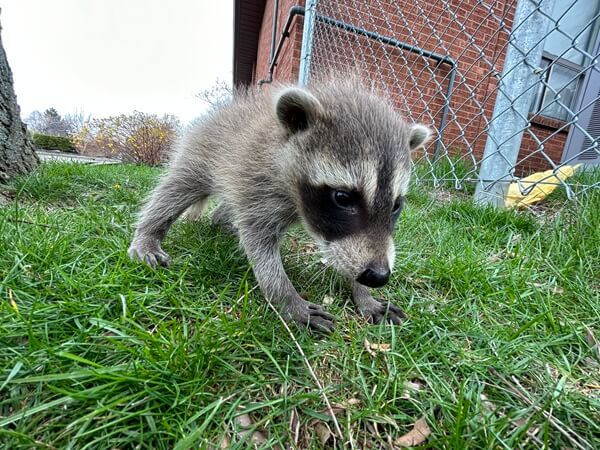

We begin with a detailed inspection of your home to identify the wildlife, locate active entry points, and assess the extent of the problem. Our technicians then use proven, species-appropriate methods to remove animals safely and humanely.
Learn more
After the animals are removed, we clean and decontaminate affected areas, removing nesting materials, droppings, and other traces left behind. When needed, we also address damaged insulation and help restore the space to a clean, healthy condition.
Learn more
Finally, we identify vulnerable areas and seal confirmed or potential entry points to help prevent wildlife from returning. Our durable exclusion work provides lasting protection and includes a lifetime warranty on the entry points we seal.
Learn moreWhen is Plymouth wildlife most active? Pressure runs all year with two clear peaks: spring nesting from March through May, when squirrels take attic space and birds pack out vents, and fall entry from September through November, when mice push in at the foundation line as overnight temperatures drop. Bat activity tracks the DNR's summer avoidance window.
| Season | Active Species | What Plymouth homeowners notice |
|---|---|---|
| Winter (Dec–Feb) |
Mice (indoor activity), squirrels (attic denning) | Scratching in walls and ceilings, damaged insulation showing up in attics near Medicine Lake during the coldest weeks. |
| Spring (Mar–May) |
Squirrels (nesting), bats (returning), birds (vent nesting) | Late-winter squirrel litters, spring bat calls at gable ends, nesting debris blocking dryer and roof vents. |
| Summer (Jun–Aug) |
Bats — the Minnesota DNR recommends avoiding exclusion May 15 – August 1, so colony work resumes after August 1 — juvenile squirrels | Fluttering heard at dusk near Parkers Lake homes; inspections and dusk exit counts booked through the window so colony work can start on August 1. |
| Fall (Sep–Nov) |
Mice (peak entry at foundation), juvenile squirrels (soffit and roof-vent work), bats (secondary exclusion window) | Highest mouse-entry pressure as overnight lows drop; new scratching in walls, droppings in basement or garage, entry points along the Interstate 494 and Highway 169 corridors. |
Quarterly focus: Fall is mouse season in Plymouth. Nights are cooling, and mice are moving toward foundation seams, dryer vents and gas-line penetrations on homes backing onto shoreline and creek habitat. Squirrels remain active at soffits and roof vents, and bat colony exclusion is running again now that the Minnesota DNR’s recommended avoidance window has closed for the year. Sealing entry points before the first hard freeze is what keeps mice out for the winter. Call (952) 460-2680 to book an inspection.
Mouse pressure inside Plymouth homes builds from late September. University of Minnesota Extension notes that an increase in mouse activity is one of the signs fall is approaching, with mice looking for a safe, warm space in a shed, garage or house. Their nests turn up in sheltered locations, built from shredded paper and other fibrous material, which is why a Plymouth household usually notices mice in the kitchen or the utility room before the attic.
The City of Minneapolis puts it plainly: mice squeeze through holes a quarter of an inch or bigger, and they climb well. On the older ranch-style homes around Medicine Lake and Parkers Lake, that means soffit returns, dryer and roofline vents, utility penetrations, garage-door corners and the gap under an exterior door.
City of Minneapolis guidance lists droppings, gnawed doorways and packaging, a musty pungent odor, and rub marks on walls in heavily traveled areas as what to look for. In a house, add scratching inside walls at dusk and dawn, and check the baseboards, the back of the kitchen cabinets and the garage sill first.
A full exterior inspection comes first, to find every opening rather than the obvious ones, then sealing with materials mice cannot chew. Missouri Extension is explicit that plastic sheeting, screen, wood and rubber are unsuitable for plugging mouse holes and that steel wool works only as a temporary plug, which is why sealing done in a hurry so often fails. The interior inspection covers kitchen, basement, garage, wall voids and attic for nests and contaminated insulation, and you get a written, itemized quote before any work is authorized. Call (952) 460-2680 to schedule an inspection.
How does Skedaddle remove wildlife humanely in Plymouth? The inspection comes before any equipment goes on the house, because the right approach depends on the species, the time of year and the structure itself. Nothing is trapped or killed. The animal leaves on its own, the opening is sealed permanently, and the attic is decontaminated and restored afterward.
A 1970s lakeside home near Medicine Lake offers different routes in than a newer build out by the Elm Creek area, so technicians choose equipment to suit the situation rather than reaching for one device every time. Where suitable, a one-way door lets an adult squirrel leave on its own before the opening is closed. Bats are handled with species-appropriate equipment scheduled outside the May 15 to August 1 pup-season avoidance window, birds are cleared by hand once the young have fledged, and mice are excluded by sealing the seams and penetrations they use.
Plymouth attics hold late-winter and midsummer squirrel litters every year, and young too small to follow their mother out are not left behind a seal. Technicians retrieve them by hand and place them in an insulated reunion box at the opening so she can carry them to an alternate den herself. The same patience governs bat work, which is why colony exclusion waits until pups can fly. It is slower than removing the adult, and it is the reason this work is called humane.
An emptied attic is not a finished attic. Droppings, urine-soaked insulation and nesting material come out, the space is treated to cut the odor and the scent trail that signals the next animal in, and contaminated insulation is replaced so the attic insulates properly through a Minnesota winter again. Mouse work adds the same treatment at the foundation line and in wall voids. Plymouth homeowners see the cleanup and restoration scope itemized on the same written quote as the exclusion.
A repair that fails in two winters is not exclusion. Skedaddle Minneapolis closes Plymouth openings with heavy-gauge mesh and weather-rated materials chosen to hold against animals that will test them and against freeze-thaw on an exposed lakeside roof line, and the work carries Skedaddle's lifetime guarantee on all workmanship and materials. If anything gets back in through an opening the crew sealed, the team returns and re-seals it at no cost to you.
Get a Plymouth-specific inspection and a written scope that spells out exclusion points, decontamination, and warranty terms before any work begins.
Serving Plymouth and the broader Minneapolis territory, including Maple Grove, Minnetonka, Wayzata and Medina.
Wildlife removal cost in Plymouth depends on the species, how many openings the animal is using, and whether decontamination or insulation replacement is needed afterward. A Skedaddle Minneapolis technician inspects the property first and leaves a written, itemized quote covering exclusion, cleanup and guarantee scope before any work starts, so a homeowner sees the whole scope before committing to anything.
Same-day service is sometimes available, but it cannot be guaranteed. Priority goes to genuine urgency — a bat loose in a Plymouth bedroom, or an animal trapped somewhere it cannot free itself. Every other call is booked into the earliest available inspection. Call (952) 460-2680 to check what the schedule allows today.
Colony work runs from August into November and again from spring into mid-May. A call placed while the window is closed still gets an inspection and a dusk exit count at the gable end so the exclusion can be booked for the first date available once it reopens.
Skedaddle Minneapolis services every residential area of Plymouth, including the Medicine Lake area, the Parkers Lake area, the Bass Lake area, the Elm Creek area, and homes along the Interstate 494 and Highway 169 corridors. That covers the older lakeside streets under mature canopy and the newer construction on the north and west sides. If your home is inside Plymouth city limits, we service it.
Yes. Skedaddle Minneapolis works to Minnesota Department of Natural Resources guidance, including the recommendation that bat exclusion wait from May 15 to August 1 until pups can fly. Technicians train in wildlife biology, home repair, decontamination and attic restoration, and use humane methods approved by SPCAs and Humane Societies. No traps and no poison are used on a Plymouth job.
Fall belongs to mice in Plymouth. The first sign is usually droppings in a kitchen cabinet or under a sink, then noise in a basement, garage or wall void as more follow the same gap inside. Squirrels are still working soffits and roof vents, and bat colony exclusion runs through the fall now that the pups can fly. The inspection identifies the animal before any work is quoted.
Yes. Every full exclusion job in Plymouth carries Skedaddle's lifetime guarantee on all workmanship and materials. If anything gets back in through an opening the crew sealed, Skedaddle Minneapolis returns and re-seals it at no charge. The guarantee is written into the same quote that itemizes the exclusion, decontamination and restoration scope, so nothing about coverage is left to a handshake.
Once the animal is out and every opening is sealed, the attic is cleared of droppings, soiled insulation and nesting material, then treated to cut the odor and the scent trail that draws the next animal in. Insulation is restored where it was contaminated so a Plymouth attic performs through a Minnesota winter. That cleanup and restoration is itemized on the same written quote.
Wildlife problems in Plymouth do not settle themselves: a squirrel through a failed roof-vent cap near Parkers Lake will reopen the same hole next season, a bird packing a dryer vent along the Highway 169 corridor blocks the duct until the nesting comes out, and mice at a garage sill near the Elm Creek area keep bringing more indoors as the nights cool. Skedaddle Minneapolis handles it end to end — identify the animal, match the method to the species, seal the opening permanently, decontaminate what was left behind, restore the attic where animals denned, and guarantee the work for life. Technicians work to humane standards approved by SPCAs and Humane Societies. Call (952) 460-2680 or request an inspection online.
 menu
menu