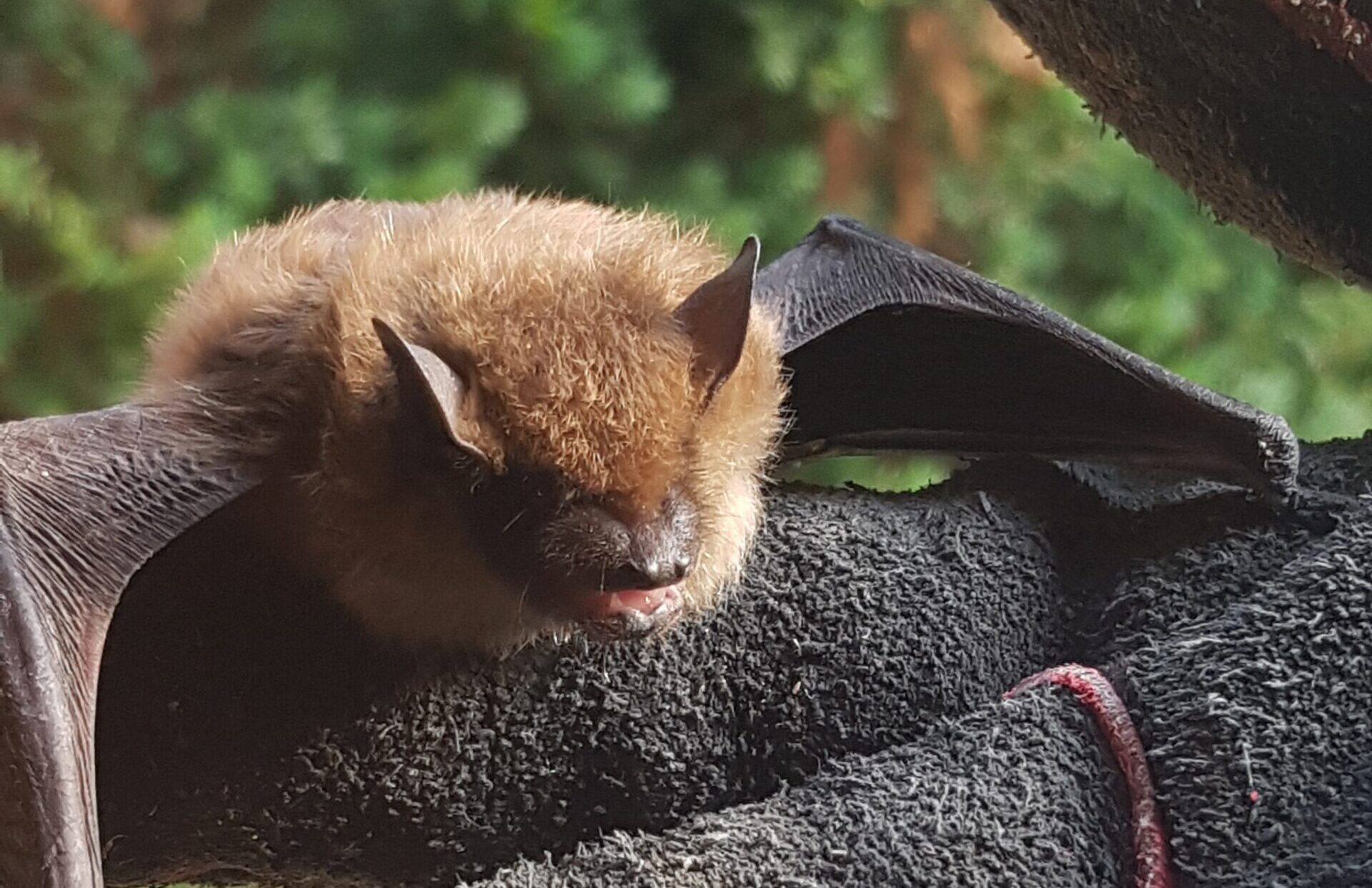
You probably do not think much about bats until one shows up where it should not be. Maybe you spot them darting out from under your roofline at dusk. Maybe you hear a faint scratching in the attic on a warm summer night. Most people’s first reaction is worry, but once you learn what these bats are really doing up there, you might be surprised by how amazing they are.
Bats are one of the most misunderstood animals on the planet. They are the only mammals that can truly fly. They can eat thousands of insects in a single night. Some species live for more than 30 years, even though they are no bigger than your thumb. They are not dangerous pests. They are smart, social animals that help keep nature in balance.
At Skedaddle Humane Wildlife Control in Minneapolis, we work with these animals every season and have a lot of respect for what they do. In this blog, you will learn what makes these creatures so fascinating, how they behave in the wild and inside your home, and how our team handles any roosting situation safely and humanely.
Do Bats Mate for Life?
No, these animals do not mate for life. Most species mate in the fall before going into hibernation. Males will mate with more than one female during that time. The bond between them does not last long. But females do form strong, lasting friendships with other females in their colony and those bonds can last for years.
Female colonies, called maternity roosts, are made up of mothers and their young. The social structure inside these groups is more complex than most people expect. Females remember each other, recognize each other’s voices, and help care for young in the group. A mother can find her own pup among hundreds of others using sound and smell. That kind of social awareness is rare in the animal world.
In Minneapolis, maternity roosts are most active from late spring through summer. Females look for warm, enclosed, elevated spaces to give birth and raise their young and your attic fits that description perfectly. A roost inside your home is not random. These females are making a deliberate choice based on warmth, safety, and memory of the spot. That is why the same colony tends to come back to the same place year after year if the entry points are not sealed.
High Intelligence and Social Lives
Bats are much smarter than most people give them credit for. Their memory, social bonds, and communication skills put them in a rare category. Here is what makes their inner lives so interesting:
- They Have Remarkable Memories: Bats can remember specific roosting spots, hunting routes, and colony members for years. Their memory and sense of direction rival those of much larger mammals. A colony that roosts in a Minneapolis attic one summer will remember that spot and return to it the next year. That is one of the biggest reasons why sealing every entry point after removal is so important without it, the same animals come right back.
- Their Social Groups Are Well Organized: Female colonies have a clear social structure that is rare among small mammals. Mothers know their own young by sound and smell. Females form lasting bonds with other members of the group. Young animals learn where to roost and where to hunt from older colony members. That kind of social learning is a big part of why these animals adapt so well to city environments like Minneapolis.
- They Can Learn New Ways to Communicate: Bats can pick up new vocal patterns and change the way they call based on their social group. This ability to learn and adjust vocalizations is extremely rare. It is a trait shared only with humans, whales, and elephants. Each animal in a colony has its own unique call that others recognize. That allows them to coordinate, warn each other, and stay connected even in a roost with hundreds of animals.
Ecosystem Impact
One of the most important things to know about bats is how much good they do. A single little brown bat, the species most often found in Minneapolis homes, can eat up to 1,000 mosquitoes in one hour. A colony of just a few hundred animals can wipe out a huge number of insects in a single night. The natural pest control they provide is something no other species comes close to matching.
They also eat moths, beetles, and other insects that damage crops across Minnesota every season. Farmers and homeowners benefit from this every year without ever seeing it happen. It takes place silently, after dark, while most people are asleep. When bat populations drop in a neighborhood, the insects they would have eaten do not disappear, they just go unchecked.
This is why our team at Skedaddle always handles these situations with the animals’ wellbeing in mind. When a colony needs to be removed from a home, we do it in a way that lets them leave safely and find a new roost. The goal is to fix the problem for the homeowner without harming the colony. Bats are too important to the local environment to treat any other way.
Advanced Echolocation
Bats find their way and catch food using one of the most impressive systems in the natural world. Here is how it works:
- They Use Sound to Navigate in Total Darkness: Bats send out high-frequency sound pulses that bounce off objects and come back to them. The returning echo tells them the size, shape, distance, and texture of whatever is nearby. This system is so accurate that they can spot an insect the size of a fruit fly while flying at full speed in complete darkness. No human technology can match how fast and precise their system is in real conditions.
- Every Animal Has Its Own Unique Call: Just like people have unique fingerprints, bats have individual calls that other members of their colony can recognize. This lets them tell each other apart in the air and avoid crossing signals when many animals are hunting close together. In a busy urban area like Minneapolis where several colonies may be active in the same neighborhood, this system lets them hunt side by side without getting in each other’s way.
- They Adjust Their Calls Based on Where They Are: Bats change the timing, pitch, and strength of their calls depending on their environment. Calls used in open fields are different from those used inside a tight attic or a dense tree canopy. They can switch from one mode to another almost instantly based on what their echoes are telling them. That flexibility is a big part of what makes them such effective hunters in so many different settings.
Inverted Biological Design and Lifespan
Two of the most surprising things about these animals are how they rest and how long they live. Both go against what most people expect from a small mammal. Here is what makes their biology so unusual:
- Hanging Upside Down Takes No Effort at All: Bats hang upside down not by holding on tight, but by relaxing. Their tendons are built so that their body weight automatically locks their feet into a closed grip around whatever they are hanging from. Letting go actually takes muscle effort, holding on does not. That means they can roost for hours or even months during hibernation without using any energy to stay in place. It is one of the most efficient resting systems found in any mammal.
- They Live Much Longer Than Their Size Suggests: Small bats usually have short lives. A mouse lives one to three years. These animals are a completely different story. Some species live more than 30 years in the wild. The little brown bat found across Minneapolis has been documented living past 30 years in some cases. Scientists think their strong immune systems and slow metabolism during hibernation help explain why they live so much longer than other mammals their size.
- Their Wings Work Like Human Hands: A bat’s wing is not built like a bird’s wing. It is made up of long finger bones with a thin layer of skin stretched between them, basically a hand with very long fingers and webbing in between. That structure gives them flight control that birds simply cannot match. They can make sharp turns, change direction instantly, and navigate tight spaces with ease. In an attic or enclosed roofline, that ability lets them move in and out through very small openings with no trouble at all.
Attic Colonies and Removal
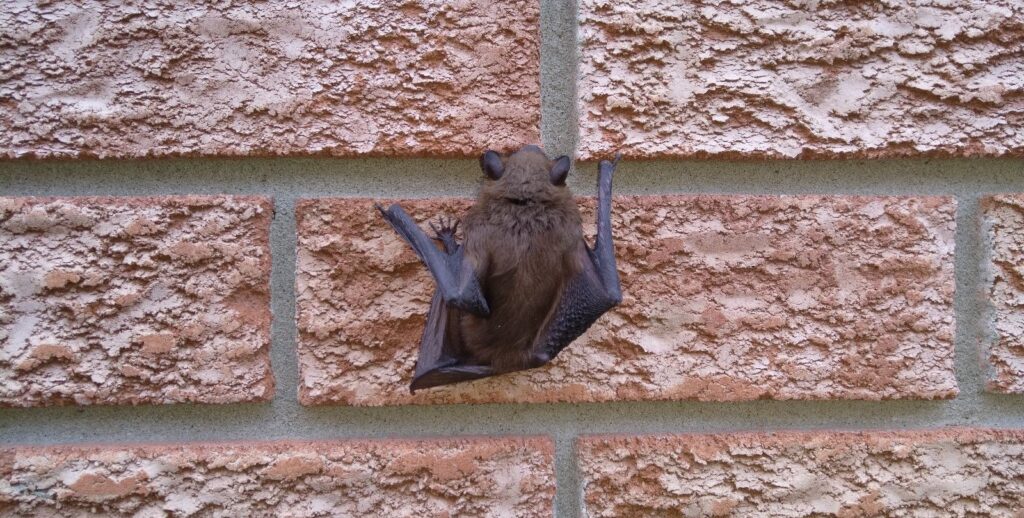
When bats roost inside a Minneapolis home, it is almost always a maternity colony — a group of females that picked that space to give birth and raise their young through the summer. Your attic gives them the warm, dark, enclosed space a nursing mother looks for. The size of the colony can range from just a few animals to several hundred, depending on how large the space is and how long the roost has been there.
Bats can squeeze through a gap the size of a dime. That means the entry points they use are often impossible to spot from the ground. Small gaps along the roofline, worn vent screens, cracks in the fascia, or spaces where flashing has pulled away from the wall are all common entry spots. Once inside, they roost in the warmest part of the attic and move in and out through the same opening every night at dusk. That predictable pattern is exactly what our team looks for when finding the active entry point during an inspection.
Timing matters a lot when it comes to removal. In Minnesota, exclusion work cannot be done safely or legally during maternity season when young are present and unable to fly. Sealing entry points while pups are still inside traps them and cuts them off from their mothers. Our team checks the timing of every situation carefully and schedules exclusion work for late summer or early fall, when the young have grown enough to fly out on their own. Homeowners should never try to seal any opening before calling our team first.
What are Bat Problems in Minneapolis?
Minneapolis has a large and active bat population. The city’s older neighborhoods and mature tree canopy create ideal conditions for bats to roost in homes through the summer. Little brown bats and big brown bats are the two species found most often in Minneapolis attics. Both are protected under Minnesota state wildlife rules during maternity season.
Summer is when our team in Minneapolis gets the most calls about roosting situations. Homeowners spot them flying out from the roofline at dusk, hear sounds in the attic on warm nights, or find a single young one that has wandered into the living space from the attic above. By the time those signs show up, a maternity colony is usually well settled and has been using the space for weeks or longer.
Older Minneapolis homes with aging rooflines, worn vent covers, and deteriorating wood trim are targeted most often. These homes develop the small gaps and openings these animals use to get in, and without a professional inspection those spots can go unnoticed for years. Our team works across Minneapolis neighborhoods every summer and knows exactly what to look for on the outside of a home to find where an active colony is getting in.
Bat Prevention with Skedaddle
When you call our team at Skedaddle, we start with a full inspection of your roofline, attic, and exterior. We find every active entry point, check the size of the colony, look for young, and figure out the right timing for exclusion work based on Minnesota’s rules. That full picture is what lets us handle the situation correctly from the start.
Once the timing is right, we put one-way exclusion devices over the active entry points. These let bats fly out at dusk but stop them from getting back in. After the colony has fully left, we take the devices down and seal every entry point with materials that hold up long-term. Homeowners should never try to seal entry points on their own. Without knowing whether young are still inside, blocking an active opening can make the situation much worse and much harder to fix.
Cleanup and long-term prevention finish the job. Our team removes built-up droppings safely, treats affected areas, and fixes every roofline condition that made your home a target. Do not go into the attic, touch any droppings, or disturb the roosting area for any reason. The moment you notice these animals flying from your roofline at dusk or hear sounds in your attic on warm nights, call our team at Skedaddle Humane Wildlife Control in Minneapolis and let us handle every step safely and humanely.
Frequently Asked Questions
How do I know if bats are roosting in my Minneapolis attic?
The clearest sign is watching them fly out from the same spot on your roofline at dusk, night after night. You may also hear high-pitched squeaking or light scratching in the attic during warm evenings, smell a strong ammonia-like odor from the attic, or find small dark droppings along the exterior walls near the roofline.
Can a single bat in my house mean there is a colony in the attic?
Yes. A single bat found inside your living space is often a young one that has wandered from a colony in the attic above. This happens most in summer when young are just learning to fly. Any bat found inside your home is a reason to call our team for an inspection right away.
Are bats in Minnesota protected by law?
Yes. Both little brown bats and big brown bats are protected under Minnesota state wildlife rules. Exclusion work cannot be done during maternity season when young are present. Our team follows these rules and schedules all work in full compliance with state law.
Will bats leave my Minneapolis attic on their own in fall?
The colony will leave when temperatures drop in fall, but they will come back the following spring if the entry points are not sealed. Leaving for winter is not the same as the problem being fixed. Our team does exclusion work in late summer and early fall so the entry points can be sealed before the colony returns next year.
Is bat guano in my attic a health risk?
Yes. Droppings can grow a fungus that causes histoplasmosis, a lung illness that can be serious for people with weak immune systems. Dry droppings release spores into the air when disturbed, which is why no one should go into an attic with an active or recent roosting situation without proper protective gear. Our team handles all cleanup safely.
How long has a bat colony likely been in my attic before I notice it?
Colonies can be in place for weeks or months before homeowners notice anything. Bats are quiet, use very small openings, and are mostly active at dusk and dawn. By the time sounds or smells alert a homeowner, the colony is usually well settled in and droppings have been building up for some time.
Bats Are Remarkable But They Do Not Belong in Your Attic
Now that you know a little more about how bats live, it is easy to see why they are worth protecting. They are smart, long-lived, and genuinely good for the environment. But a maternity colony roosting in your attic is still a situation that needs professional attention and the sooner it is handled, the less damage there is to deal with.
Droppings build up fast, entry points stay open, and the same colony comes back to the same spot every spring if nothing is done. Waiting until the problem gets worse is never the right move.
At Skedaddle Humane Wildlife Control in Minneapolis, our team handles every step of the process with the animals’ wellbeing in mind. We inspect the roofline, find every entry point, time the exclusion work correctly, seal the home after the colony has left, and take care of all the cleanup safely. You do not need to go into the attic or handle any part of this yourself. Request an estimate today and let our team resolve the situation the right way.

 Loading...