






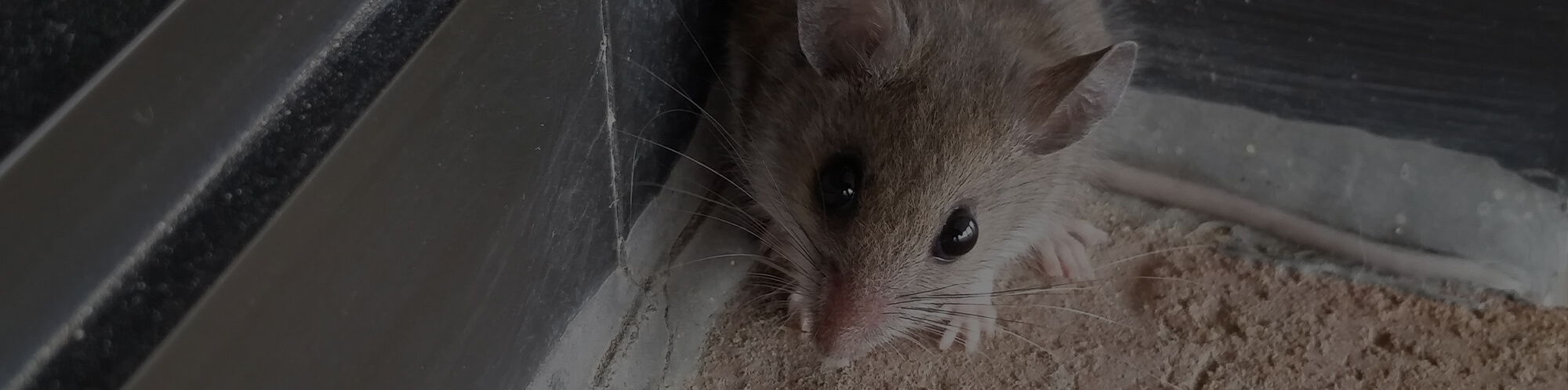


MOUSE REMOVAL PROCESS

Assess and Remove
You can’t resolve a mouse problem if you don’t know how they’re getting in. We begin with a thorough 50 point inspection of your home’s exterior and interior to identify all mouse entry points. We then remove the mice using expertly installed one-way doors that allow the mice to leave for food but prevent them from getting back in.

Clear and Clean
Mice are messy, leaving droppings and urine behind wherever they go. Skedaddle offers cleaning and sanitizing services to safely remove harmful mouse droppings and contaminated building materials to return your home to a liveable state.

Prevent and Protect
The results from our initial home inspection will provide us with a full understanding of what areas of your home need to be sealed against future mice infestations. Our wildlife technicians will use professional grade wildlife exclusion materials to prevent any possible re-entry and keep mice out.
WHAT OUR BARRIE CLIENTS SAY:
When I called to book an inspection, I was given a quick booking time. James M came within the window of time, called ahead and was professional upon arrival. He was able to assess the property and give me a plan of action! He was able to provide great solutions to the problem! I would recommend!
Julie Riegert
Mice in Cambridge
Cambridge, Ontario, is a growing community with a mix of charming neighbourhoods, green spaces, and historical buildings, from Galt’s beautiful Grand River views to the bustling Hespeler Village and Preston Town Centre. While this makes for a wonderful place for families and businesses, it also provides an ideal environment for pests like mice. Mice are a very common concern in Cambridge. Their ability to squeeze through small openings and reproduce rapidly makes them a challenging pest to control. Understanding mouse behavior, the risks they pose, and how to keep them out is key to maintaining a mouse-free home or business in Cambridge.
Mouse Habitats in Cambridge
Mice are adaptable creatures that can flourish in nearly any environment where food, water, and sheltered spaces are available. In Cambridge, you’ll commonly find them in residential neighbourhoods, commercial buildings, and even in parks and green spaces. The city’s numerous green areas — from Riverside Park, Shade’s Mills Conservation Area, and Churchill Park — provide a rich food supply and a convenient refuge for mouse nests.
During the warmer months, mice typically reside in burrows, woodpiles, or thick vegetation. However, as temperatures drop in the fall and winter, they move indoors in search of warmth and food. Common entry points include gaps in foundations, vents, utility lines, and small cracks in exterior walls. Once inside, mice typically make nests in attics, basements, wall cavities, or even within cabinetry — anywhere sheltered, warm, and close to a food source.

How Construction Affects Mouse Activity in Cambridge
As Cambridge continues to grow, new residential developments and commercial projects are reshaping the landscape — and directly affecting mouse activity in nearby neighbourhoods. Construction displaces many mouse habitats, forcing them to move toward nearby homes and businesses in search of refuge, food, and sheltered spaces.
This is especially true in growing areas like Langs, Galt, Hespeler, and Preston, where new buildings are replacing previously undeveloped land. Fields, forests, and green belts that once provided sheltered spaces for wildlife are disrupted by heavy machinery and clearing, sending mice in search of new refuge. As a result, homeowners and business owners may notice a rise in mouse activity as these pests move inward, looking for warmth, food, and a safe place to nest during and after nearby construction.
The Dangers of Mouse Infestations
While mice may seem harmless, their presence in your Cambridge home or business can lead to significant problems. Mice are more than just a nuisance — they pose health and structural risks that can grow if left unchecked.
1. Health Risks
Mice carry and transmit a range of diseases, including hantavirus, salmonella, and leptospirosis, through their urine, droppings, and saliva. This can contaminate food, cooking utensils, and storage spaces — putting your family or employees at risk.
2. Structural Damage
Mice constantly gnaw to keep their teeth from growing too long. This can result in extensive structural damage, as they chew through wood, plastic, and even electrical wiring. This increases the risk of fire and other costly repairs.
3. Rapid Reproduction
A single mouse can produce up to 60 offspring in a year under favorable conditions. This means a small mouse problem can quickly spiral into a significant infestation if not addressed promptly.
4. Contamination of Food and Surfaces
Mice frequently invade food storage areas, spreading urine and droppings as they move. This can compromise food safety and contribute to health issues.
Signs of a Mouse Infestation
Recognizing the early signs of a mouse problem can help you avoid a larger, more serious infestation. Here are some indicators you might have mice in your Cambridge home or business:
- Droppings — small, dark droppings in cabinets, drawers, or along baseboards.
- Gnaw marks — chewed furniture, baseboards, food packaging, or wires.
- Scratching or scurrying — especially at night, when mice are most active.
- Nests made from shredded paper, fabric, or insulation.
- Unusual pet behavior — pets may become fixated on a particular area where mice are present.
Downtown vs. Suburban Neighbourhoods in Cambridge
Mice are a common nuisance in Cambridge, and their activity is closely tied to the city’s unique blend of older neighbourhoods, new developments, and abundant green spaces. Each area presents its own set of challenges when it comes to mouse infestations.
In heritage districts like Galt, many homes have small gaps, cracks, or deteriorating materials that make it easy for mice to gain entry. Older properties often provide sheltered spaces within wall cavities, attics, and basements — perfect for nesting and breeding.
In contrast, newer subdivisions such as Townline or River Mill may be constructed with tighter seals, but ongoing development and nearby green spaces can displace wildlife and drive mice toward nearby houses in search of refuge, food, and warmth.
Across Cambridge’s parks and conservation areas — from Riverside Park and Churchill Park to Dumfries Conservation Area — abundant food sources, sheltered habitats, and nearby water enable mouse populations to flourish. This, in turn, increases the likelihood that nearby homeowners will discover unwanted mouse activity in their own properties.
Whatever the neighbourhood, a mouse infestation can compromise health, cause structural damage, and pose a significant nuisance. Our team of wildlife control experts is trained to identify entry points, safely remove the pests, and implement long-term solutions to keep them from returning.
Why Professional Mouse Control is Essential
Managing a mouse infestation effectively and humanely is a challenging process. At Skedaddle Humane Wildlife Control, we specialize in safely removing mice while protecting your home or business from future intrusions. Our team is trained to identify entry points, eradicate nests, and implement strategies to keep mice from turning up again.
1. Comprehensive Inspection
We conduct a thorough assessment to identify mouse entry points, nests, and activity, allowing us to customize a solution for your particular situation.
2. Humane Removal
Skedaddle’s team utilizes the most humane methods, safely removing the mice without causing harm, while complying with local wildlife regulations.
3. Cleanup and Sanitation
After removing the mice, we thoroughly clean and sanitize affected areas to eliminate health hazards, droppings, urine, and lingering odors.
4. Exclusion Techniques
Lastly, we seal all entry points to make sure the mice can’t come back, adding a crucial layer of long-term prevention.
Trust Skedaddle for Mouse Removal in Cambridge
If you suspect a mouse infestation in your Cambridge home or business, don’t wait until the problem escalates. Mice reproduce quickly, and a small issue can soon become a major infestation. Skedaddle Humane Wildlife Control offers expert, humane mouse removal services to help you keep your space mouse-free.
Contact us today for an inspection and take the first step toward a rodent-free home.

Mouse Facts
CHECK OUT OUR LATEST BLOGS
CALL US TODAY
1.888.592.0387
OR
Request for Services

