Mouse Removal in Columbus, OH | Skedaddle skip to main content
Skip to main content
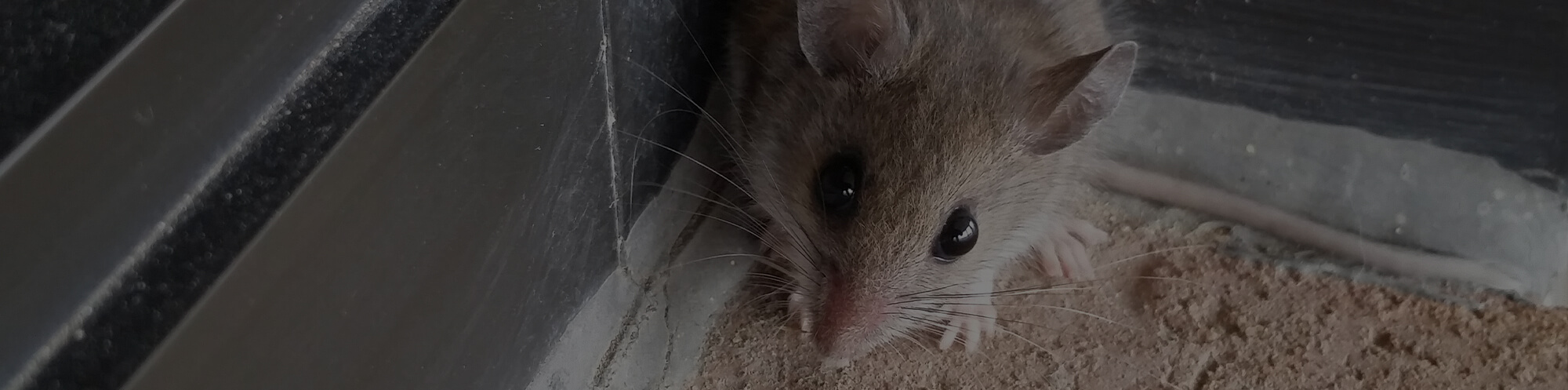
Mouse beside a doorway threshold

Columbus Mouse Removal

Contact Us
614-662-1800

Monday–Friday: 7:30 AM–9:00 PM

Saturday: 8:00 AM–5:00 PMSunday: 10:00 AM–4:00 PM Eastern Time

COLUMBUS · HUMANE MOUSE REMOVAL

Mouse Removal in Columbus

Serving Central Ohio since 2024.
A plan for the mice, the spaces they use and the small gaps that let them in.

Skedaddle Columbus provides humane mouse removal across Central Ohio, from Columbus and Upper Arlington to Westerville, Dublin and Powell. Through late fall and winter, as mice move indoors, we inspect your home from the foundation to the roof for the small gaps they use, remove the mice without poisons and seal every entry point. We then clean the affected areas, with attic restoration where needed.

BBB Accredited Business. Click for the Skedaddle Humane Wildlife Control BBB profile.

Reviewed by Bill Dowd, Founder, President & CEO. Last updated November 2026.

Why homeowners choose Skedaddle

A mouse in the kitchen usually means more than one mouse and more than one way in. We look past the room where you saw it to the gaps, hidden spaces and materials connected to the activity.

An inspection that covers the whole house

Our technicians go inch by inch around the perimeter, from the foundation to the roof, looking for droppings, chewing and the staining mice leave at the openings they use. That matters when the signs are inside but the way in is tucked behind a utility line, vent or building joint.

Removal without poisons or traps in your walls

We do not rely on poisons, which can leave mice to die inside your walls and attic. Instead, we remove the mice and close the routes they use, so the problem is solved at the openings rather than one mouse at a time.

Clear coverage for the exclusion work

Our exclusion work carries a lifetime guarantee on all workmanship and materials. Your written quote lists the openings we seal and keeps cleanup and insulation work as separate items, so you know exactly what the guarantee covers.

Signs of mice and how they get in

Where you notice the signs, and whether they show up in more than one room, is a great starting point for our inspection. Leave droppings and nesting material where they are; we will deal with them safely.

Activity assessment

Droppings, chewing and odor

Mouse droppings are dark, pointed and about the size of a grain of rice. Along with chewed food packages and an ammonia smell in enclosed spaces, they are often the first clue. Where you find them, whether in a pantry, garage, basement or attic, helps us decide where to start.

Small-opening inspection

Small gaps outside the home

A mouse can fit through a hole about the size of a dime. Weep vents between bricks, poorly sealed window casings, utility lines and gaps between building materials are common entry points, along with dryer vents, garage door corners and sill plates. We check all of them, not just the one closest to where you saw the mouse.

Affected-space assessment

Sounds and nests inside

Mice are most active at night, so chewing or scratching behind walls after dusk is a common sign. They nest in attics, basement ceilings and behind cabinets, and their constantly growing teeth can damage wood, wiring and insulation. We check those spaces so cleanup is planned alongside the removal.

A mouse sighting deserves a closer look

Tell us where you saw the mouse and any other signs you have noticed. Our inspection traces the routes into your home and the spaces the mice are using, so the plan fits the whole problem rather than a single sighting.

Understanding mice in Central Ohio

  • House mice
  • White-footed mice

Two kinds of mice cause most indoor activity in Ohio. The Mammals of Ohio field guide describes the house mouse as a nonnative species that usually lives in buildings, in close association with people. The white-footed mouse is a common native mouse of woody and brushy areas that often enters buildings. Both are active at night.

Around Columbus, homes range from older houses with settled foundations and brick weep vents to new builds with fresh utility runs and garage doors. Each kind of home has small gaps, and landscaping that runs from wooded areas right up to the foundation gives mice cover on the way in.

Mice also breed quickly. House mice have several litters a year after a pregnancy of only 18 to 21 days, with up to 11 young in a litter. A few mice that get in this fall can become a much larger problem by spring.

For your home, that means we confirm which mouse is involved, trace every connected opening and pair the removal with the sealing and cleanup the space needs.

What to expect from a Skedaddle inspection

Our inspection follows the outside of your home from the foundation to the roof and checks the spaces inside where mice nest. We confirm the activity, find each opening and check the affected materials. Then we explain our findings and walk you through our process and give you a written quote before any work starts.

  • Activity: We assess sightings, droppings, chewing and other signs, and confirm the type of mouse.
  • Access: We identify the small gaps and penetrations around the exterior, including the ones not yet in use.
  • Affected spaces: We check nesting areas and materials such as soiled insulation and stored items.
  • Work required: We explain the removal, the exclusion repairs and any cleanup or insulation work.

Your written quote separates removal, exclusion repairs and any cleanup or insulation work, so you can see the full scope before work starts.

Skedaddle's Three-Step Wildlife Removal Process

Step 1

Assess and Remove

We use the inspection to find the openings mice are using and choose the removal approach. Where appropriate, we install one-way devices over active openings so mice can leave to find food but cannot get back in. No poisons are used.

Learn more
Step 2

Clear and Clean

Once the mice are out, we clear droppings, urine and nesting material and disinfect the affected areas. Heavily contaminated attics may need full restoration with new insulation; smaller areas often need targeted cleaning only.

Learn more
Step 3

Prevent and Protect

We seal every potential entry point using heavy-gauge steel screening and Skedaddle's exclusive wildlife exclusion sealant. Your written quote lists each protected opening covered by our lifetime guarantee on all workmanship and materials.

Learn more

Seasonal activity and removal timing

Mice live around Central Ohio homes all year, but cold weather changes where they spend their time. Here is what each season can mean for your home.

SeasonWhat may changeWhat it means for the homeowner
Winter(Dec–Feb) Mice that moved in during the fall often stay inside through the winter once they find food. House mice can keep breeding indoors, with several litters a year.Signs inside do not fade with the cold. We remove the mice now and seal the routes they used.
Spring(Mar–May) Small rodents usually breed most in spring and fall, and white-footed mice breed from March to June.Nests made from shredded paper or insulation may turn up during spring cleaning. We handle the cleanup safely and find how the mice got in.
Summer(Jun–Aug) Outdoor mice stay busy around foundations, sheds and plantings.Summer is a good time to seal gaps from the outside, before mice start looking for shelter.
Fall(Sep–Nov) Cooler weather and shrinking outdoor food supplies send mice looking for shelter indoors, during a second breeding peak.This is when most mice move in. We seal the small openings before they settle in for the winter.

These patterns describe mouse biology, not a fixed removal calendar. The findings at your home set the order of the work.

A humane approach to mouse removal

Humane removal means solving the problem at its source without leaving mice to die inside your walls. Small openings call for careful building work, so we pair every removal with sealing and cleanup.

Choosing the method from the findings

We decide how to remove mice only after we know which openings are active and where the mice are nesting. One-way devices are used only where appropriate for the opening, and we never rely on poisons.

Checking connected entry routes

Mice rarely use just one opening. We follow the building from the foundation to the roof and seal every gap that connects to the activity, along with the weak spots they could use next, instead of patching only where the last mouse disappeared.

Matching cleanup to the affected space

We remove droppings, urine and nesting material and disinfect the area. The CDC warns that sweeping or vacuuming rodent droppings can put tiny droplets carrying viruses into the air, so we clean with disinfectant and protective equipment and replace insulation only where it is contaminated.

Securing the building afterward

We close the entry points with steel screening and exclusion sealant built to resist chewing and weather. Our lifetime guarantee on all workmanship and materials covers the openings we seal, and if one needs attention later, we come back to inspect and repair it.

Address the openings as well as the mice

Every mouse problem starts at a different gap. Book an inspection and we will map the openings, the spaces the mice are using and the cleanup your home needs, then explain the work before it begins.

Where this service is currently available

Our Columbus team provides mouse removal in Clintonville, Columbus, Delaware, Dublin, Franklinton, Gahanna, Grove City, Groveport, Hilliard, New Albany, Obetz, Pataskala, Pickerington, Powell, Reynoldsburg, Sunbury, Upper Arlington, Westerville, Whitehall and Worthington. If your home is nearby but outside these communities, call with your address and we will confirm availability.

Mice can get in anywhere from the foundation to the roofline, in older homes and new builds alike. When you book, tell us whether the signs are in a kitchen, basement, garage, attic or another part of the home so we can prepare for the inspection.

Frequently asked questions about mouse removal

Wondering how far the problem has spread? Bring your questions to the inspection, and we will connect each recommendation to what we found.

Call 614-662-1800

How much does mouse removal cost?

Cost depends on how many openings need sealing, where they are on the home, which materials the work needs and how much cleanup or insulation work the affected areas require. We inspect the property first and provide a written quote that separates removal, exclusion and cleanup, so you see the full price before any work starts.

Can you remove mice the same day I call?

Same-day service is sometimes available, but it cannot be guaranteed. The inspection and the completion of all work may happen on different days, because sealing every gap from the foundation to the roof takes time. Call 614-662-1800 and we will explain the next available appointment and what to expect.

How do you remove mice humanely?

We start with an inspection that finds every opening the mice are using. Where appropriate, we install one-way devices so mice can leave but cannot return, and we never rely on poisons that leave mice to die inside your walls. We then seal the openings with steel screening and exclusion sealant and clean the affected areas.

Which areas do you serve?

Our Columbus team serves Clintonville, Columbus, Delaware, Dublin, Franklinton, Gahanna, Grove City, Groveport, Hilliard, New Albany, Obetz, Pataskala, Pickerington, Powell, Reynoldsburg, Sunbury, Upper Arlington, Westerville, Whitehall and Worthington. If you live near these communities, call with your address and we will confirm availability.

What does the guarantee cover?

Our exclusion work comes with a lifetime guarantee on all workmanship and materials. It covers the repairs and sealed openings listed in your written quote, and if one of those repairs needs attention, we come back to inspect and fix it. A new concern on another part of the home gets its own assessment.

Is cleanup or attic restoration included?

Cleanup is part of our recommended scope whenever mice have left droppings, urine or nests in a space, and the quote lists it separately. Not every attic needs full restoration. Small areas may need targeted cleaning, while heavily contaminated insulation may need removal and replacement. Because rodent droppings can carry hantavirus, we clean with disinfectant rather than a broom or vacuum.

Does seeing one mouse tell you how many are present?

Not on its own. Mice are most active at night and nest out of sight in walls, cabinets and ceilings, and a female can have a new litter about every three weeks. One sighting can mean a few mice or many more. Our inspection looks at droppings, nests and entry points to show how far the activity has spread.

How are possible entry points assessed?

Our technicians follow the outside of your home inch by inch, from the foundation to the roof. We check weep vents, window casings, utility lines, dryer vents, garage door corners and gaps between building materials, because a mouse can fit through a hole about the size of a dime. Your quote lists each opening we will seal.

Book your mouse inspection

Droppings in the pantry, chewing behind the walls or a mouse darting across the basement floor all deserve answers before the problem grows. Our Columbus team finds every opening mice are using, removes them without poisons, seals the entry points and cleans the affected areas, with attic restoration where needed. Every exclusion repair is backed by our lifetime guarantee on all workmanship and materials.

Reviewed by Bill Dowd, Founder, President & CEO. Last updated November 2026.

menu