When a homeowner hears scratching in the attic for the first time, there’s a moment of dread that’s impossible to ignore. Is it a raccoon? A squirrel? Mice? Is something making a nest up there?
That uncertainty is exactly why the first call to Skedaddle Humane Wildlife Control matters so much. What happens next isn’t just about removing animals—it’s about restoring peace of mind, protecting your home, and putting a stop to a problem before it grows.
At Skedaddle, every service starts the same way: with a plan, a process, and a purpose. Here’s what really happens from the moment you tell us, “I hear scratching in my attic.”
Step One: How We Listen and Understand Your Wildlife Concerns
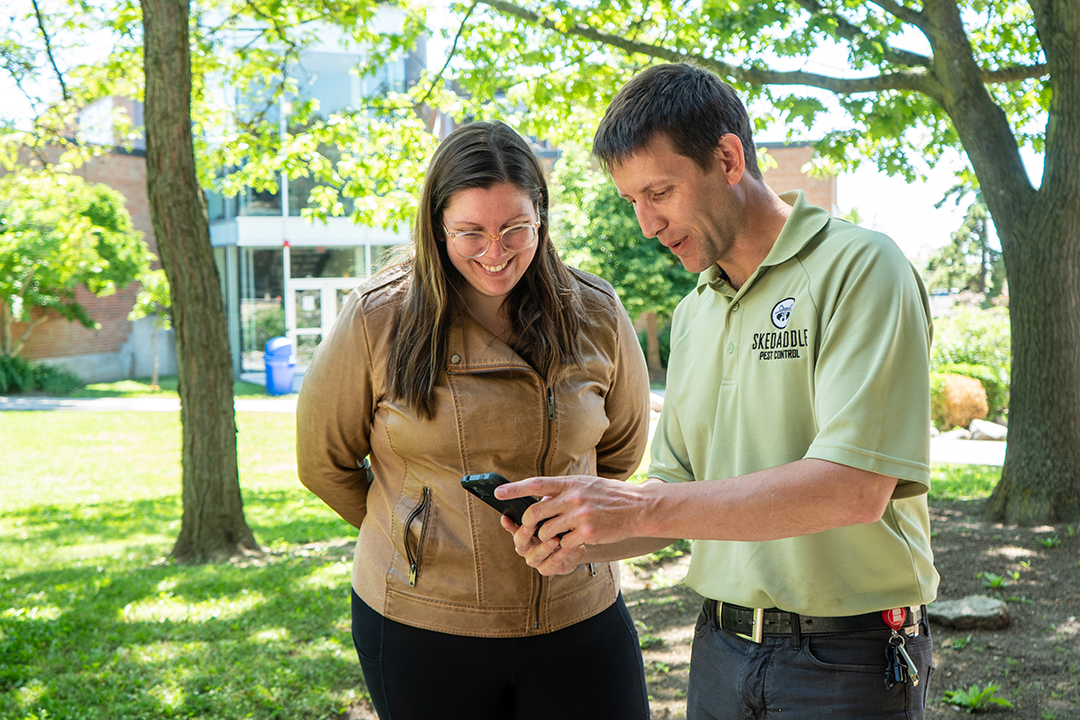
“Most homeowners call us feeling stressed or unsure of what they’re hearing,” says Matthew Shewchuk, one of Skedaddle’s customer service specialists. “Our job is to walk them through those first questions, help identify what the noises might mean, and reassure them that they’ve called the right people. We gather the details we need and then schedule a full property assessment as soon as possible so a technician can get there, investigate, and start solving the problem right away.”
What We Need to Know From You During the First Call
To help us understand your situation and prepare the technician for your property assessment, our customer service specialists gather a few key details. Sharing this information helps us identify the species and assess urgency.
Here are the most important things homeowners should tell us during that first call:
- What sounds you’re hearing (scratching, thumping, scurrying, chirping, squeaking)
- When the sounds occur (daytime, nighttime, early morning, all day)
- How long the noise has been happening
- Where the sounds seem to be coming from (attic, walls, vents, ceiling)
- Any wildlife you’ve seen outside (on the roof, near soffits, around chimneys, at vents)
- Any previous wildlife issues you’ve experienced in the home
- Recent home changes (renovations, storms, roof damage, new ventilation, etc.)
- Safety concerns you’ve noticed—chewed wires, insulation on the floor, odors, or droppings
- Access details (locked gates, pets on the property, or areas the technician should know about)
Our customer service specialists gather key information during that first call—noise patterns, timing, any visible wildlife, previous issues, and areas of concern around the home. All of this is passed directly to the technician scheduled to attend the property.
Step 2: How Our Team Works Together
Once a homeowner reaches out, Skedaddle’s process becomes a seamless handoff between the customer service team and the wildlife technicians. Clear, detailed communication is what ensures the technician arrives fully prepared—not guessing, not starting from scratch, but ready to investigate the problem with context and purpose.
“Every detail the homeowner gives us helps us hit the ground running,” says Matthew Shewchuk. “We make sure they know what sounds were reported, how long it’s been happening, and anything the homeowner has noticed outside. That way the technician isn’t showing up blind—they’re arriving with a starting point.”
On the other end of that communication chain, technicians rely on this information to shape their inspection strategy before they even step out of the truck.
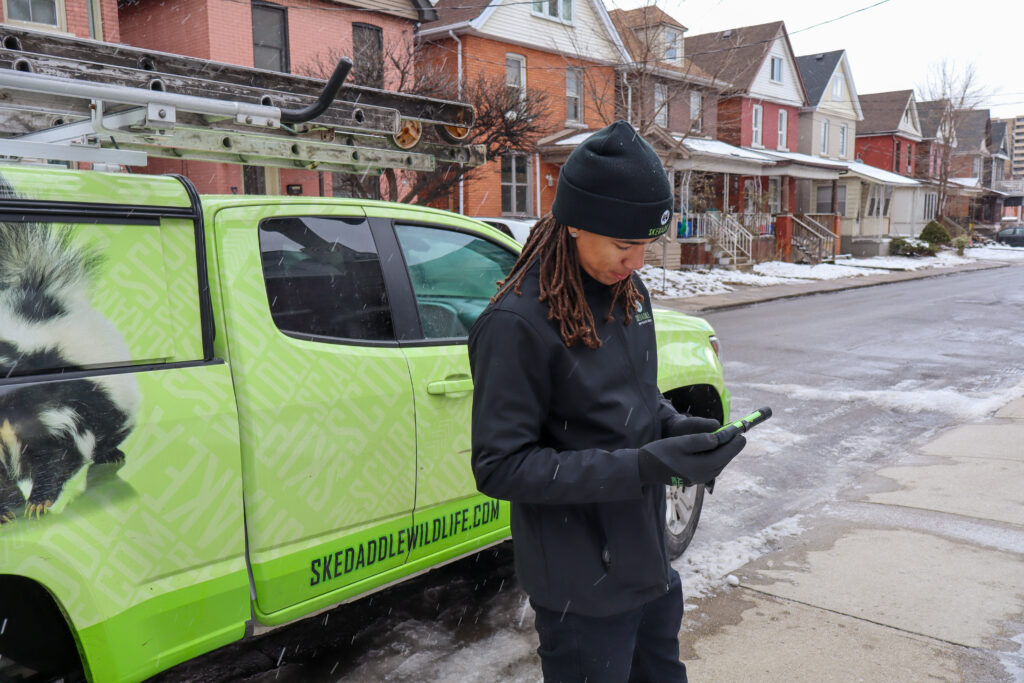
“Those notes from the office guide my first steps on any property,” explains Joseph Blackborow, Skedaddle wildlife technician. “If the call mentions nighttime scratching, I’m thinking of raccoons. If they hear fast daytime scurrying, I’m leaning toward squirrels. The more we know ahead of time, the faster we can narrow down the issue and give the homeowner real answers.”
This teamwork ensures homeowners get a smooth, coordinated experience from the moment they call to the moment help arrives at their door.
Step 3: Your Full-Home Inspection
Our technicians use all this information to create a comprehensive on-site assessment. This isn’t a quick peek into the attic—it’s a top-to-bottom evaluation of your home’s structure and vulnerabilities. During the inspection, our wildlife technician will:
- Check the attic for nesting materials, droppings, or damage
- Look for entry points around the roofline, soffits, shingles, and vents
- Identify chewed wiring, insulation damage, or moisture issues
- Determine which species is present and whether young are involved
- Assess the overall risk to both your home and the animals
“When I arrive for an assessment, I’m looking for the full story,” explains Joseph Blackborow. “It’s not just about finding where the animals got in—it’s understanding why they chose that spot, what condition the home is in, and whether there are babies involved. The goal is to give the homeowner real answers and a clear plan so they know exactly what’s happening and how we’re going to fix it.”
Most homeowners are surprised by how much wildlife can do before anyone hears the first scratch. The inspection gives us a full picture—not just of the current intrusion, but of potential future risks.
Step 3: We Walk You Through Your Wildlife Problem Clearly
Once the inspection is complete, we walk you through everything we found. After our technician has spoken with you, you will know:
- What species is in the home
- How they got inside (the exact entry points)
- Whether there are babies involved
- What damage they’ve caused
- What needs to be done to solve the problem permanently
We also explain wildlife behavior—because understanding why animals choose your attic is key to preventing it from happening again.

Step 4: Full-Home Exclusion & Fortification
Using all the information from the initial phone call and property assessment, technicians will humanely remove the animals from the home. If any babies are present, they will be safely reunited with the mother outside of the home. Then technicians can begin the exclusion work on the home. This is where we wildlife-proof your home using techniques and materials designed to withstand chewing, clawing, pushing, and weathering.
Our technicians:
- Seal every entry point—not just the main one
- Reinforce weak spots wildlife could exploit in the future
- Install heavy-duty screening on vents, soffits, roof returns, and gaps
- Repair damage caused by the intrusion
- Restore insulation if contaminated
This step is what sets Skedaddle apart. It’s not a patch job—it’s a permanent, preventative shield for your home. Without exclusion, even the most successful removal is only temporary.
Step 5: Follow-Up Support and Long-Term Protection for Your Home
Even after the animals are removed and your home is secured, Skedaddle’s support doesn’t end there. Our call center remains available to answer any questions that come up afterward—whether it’s a concern about a sealed area, a noise you’re unsure about, or simply wanting reassurance that everything is functioning as it should.
At the heart of this commitment is our lifetime guarantee, a promise that reflects how deeply invested we are in keeping your home permanently protected from wildlife.
We don’t just fix the problem and walk away. We stay connected, ready to help for as long as you live in the home.
As Matthew Shewchuk explains: “When a job is complete, our support doesn’t stop. Homeowners can call us anytime—whether it’s a week later or years later—and we’ll always be here to help. If something needs to be checked or repaired, we make it right. That lifetime guarantee isn’t just a policy; it’s a promise.”
Your first call to Skedaddle is the beginning of a partnership—one built on trust, communication, and long-lasting protection.

 Loading...