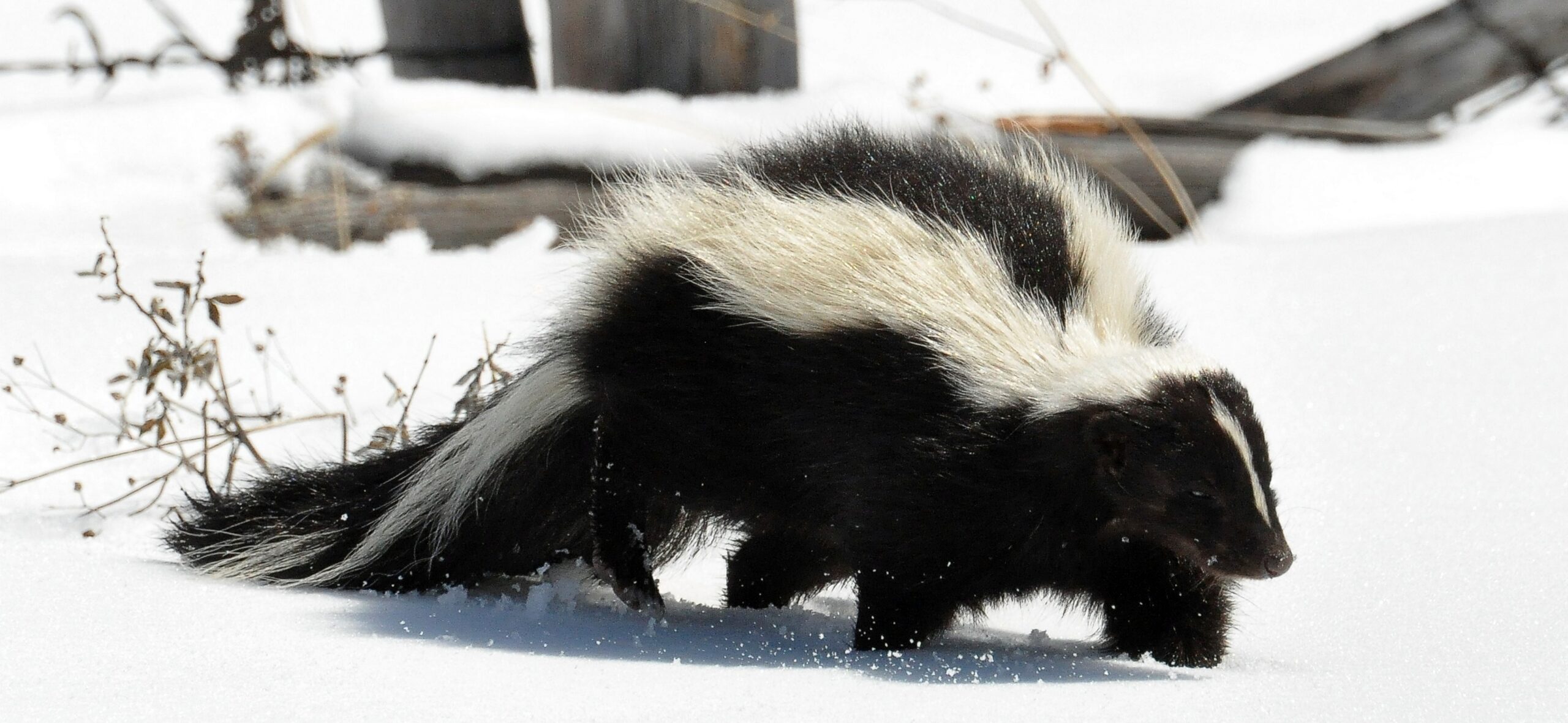
You sometimes hear about raccoons or squirrels in the winter, but skunks in Ajax stay much quieter. They’re still around, just hidden from view. If you’ve ever wondered, Where do skunks go when the cold hits? You’re not alone.
Many homeowners hear noises under their decks or notice digging in the yard and aren’t sure what’s happening. When winter comes, these animals search for warm places, and that can bring them closer to homes.
You want to know how they survive, where they hide, and what makes winter different for them. Learning about winter skunk habits helps you understand why they choose certain places and how to keep them out safely.
At Skedaddle Humane Wildlife Control in Ajax, we work with families every day who discover skunk den locations around their homes. You deserve peace of mind, and knowing how these animals behave is the first step.
In this article, you’ll learn where skunks go during the cold, what they do to stay safe, and how our team protects homes with humane methods and one-way doors that let animals leave without getting back inside.
Natural Places Skunks Use for Shelter in the Winter
Skunks are not built for harsh winter weather. They don’t have the thick layers of fat or long sleep cycles that true hibernators have, so they need to find shelter quickly. In the wild, they look for places that offer warmth, protection from wind, and cover from predators. These shields give them the chance to rest deeply through long stretches of cold weather.
In forests or open fields, skunks choose hollow logs because they trap heat and stay dry. They also use old tree stumps, rock piles, or hidden spaces along riverbanks. Brush piles offer good cover too, especially when snow piles on top and locks in extra warmth. When these natural shelters are available, they become reliable winter homes. These areas stay quiet, dark, and protected from heavy snow, giving the animals a safe place to move into torpor when temperatures drop.
Even though we don’t always see them, skunks pick their locations carefully. They avoid open areas and look for pockets where they won’t be disturbed. Many of these natural shelters are reused year after year, especially by females. The more sheltered the spot, the better their chances of staying warm through long, cold stretches.
Human-Made Places Skunks Choose During Winter in Ajax
When skunks live near neighbourhoods, natural shelters become harder to find. That’s when they start looking for safe spots around homes. These areas offer warmth, dryness, and easy entry points, especially when cold weather forces them to make quick decisions. Here are common human-made den sites:
- Under Decks and Porches: Skunks love these spaces because the floor above traps heat and shields them from storms. Even a small gap is enough for them to slip inside, curl up, and stay still for days. These areas also stay dry when snow piles high, giving them a dependable shelter.
- Under Sheds or Backyard Structures: Sheds create perfect winter shelters because they block wind while sitting low to the ground. Snow often packs around the base, which adds insulation. These spots are especially attractive to females that want a quiet and hidden area to rest with others.
- Foundation Gaps or Crawlspaces: Small openings around concrete or wooden foundations can be enough for skunks to enter. Crawlspaces are warm because heat escapes from the home. Once inside, the animal settles into a corner and moves very little until a warm spell arrives.
These locations make winter survival easier, which is why so many skunks in Ajax end up close to homes each year.
Why Skunks Choose These Winter Den Locations
Skunks don’t want to travel far during winter because the cold slows them down. That’s why they search for spots that provide reliable protection and easy access. These shelters must stay warm, especially during long stretches of freezing weather, and that drives their choices.
Warmth is the biggest factor. Skunks lose body heat quickly, so they look for places close to the ground where heat gathers naturally. They also try to avoid predators. Even in winter, they must stay aware of coyotes, dogs, or other wild animals. A den that’s hidden or hard to reach offers the safety they need.
Female skunks sometimes share dens, even though they are usually solitary animals. During extremely cold periods, staying together helps them hold in warmth. This behaviour is one of the most interesting winter skunk habits, especially when temperatures drop far below freezing. These shared dens work like blankets, trapping more heat and allowing the animals to rest longer between eating or drinking.
When a natural den isn’t available, a human-made shelter becomes the next best choice. These spots keep snow and wind away, making them valuable survival sites. This is why it’s common to discover skunk den locations in yards or under structures during January and February. The colder the season becomes, the harder these animals work to stay hidden, warm, and safe.
Winter Skunk Habits You Should Know
Skunks behave differently in winter than they do in warmer months. Their bodies slow down, their activity changes, and their den habits shift to match the weather. Here are some key patterns that help them survive:
- Enter a Deeper Sleep Called Torpor: Torpor helps skunks save energy. Their breathing slows, their heart rate drops, and they stay still for days at a time. This is not true hibernation, but it’s close enough to protect them from the cold. They wake up quickly when weather improves, making it a flexible winter strategy.
- Shared Dens: Female skunks may gather together during extreme cold to stay warm. Shared dens often include several animals, which might surprise homeowners who think only one animal is present. Skunk groups help each other survive longer cold spells.
- Search for Food During Warm Breaks: Even in winter, skunks leave their dens when temperatures rise. They look for insects, berries, or other food sources. This explains why some people see tracks after a thaw even though the animal hasn’t been visible for weeks.
- Prepared Early for Mating Season: Late winter brings more movement as males begin searching for females. This sudden increase in activity can make it seem like more skunks appeared overnight, even though they were hidden nearby the whole winter.
Understanding these habits helps explain why skunks in Ajax become more active at certain times and stay hidden at others.
How Skedaddle Keeps Homes Protected During Winter
When skunks choose areas around homes, it’s because those spots offer warmth and safety. Our role is to protect the home while respecting the needs of the animals. We use humane steps that guide animals out without harming them or forcing them to move in unsafe ways.
Our team checks every possible entry point, including the deck, porch, shed, or foundation. When we confirm where the animals are staying, we guide them out using methods that match their natural habits. Humane options like one-way doors let them leave when they’re ready, but they cannot get back inside. This protects both the animals and the home.
Once the space is empty, we secure the area with strong materials so it can’t be used again. This keeps homes safe through the rest of the winter and into spring when animals become more active. Our process focuses on long-lasting solutions so families don’t have to worry about repeat visits.
How We Prevent Winter Skunk Problems
Winter brings more activity around homes because skunks look for warm and safe spots during the cold months. Our team uses proven prevention steps to keep these animals from settling near your home and to stop problems before they start. Here are some of the key things we do:
- Inspect the Outside of the Home for Weak Spots: We look closely at areas that skunks might use to slip inside, such as loose boards, open gaps under steps, or small spaces around pipes. When we find an opening, we secure it with strong, humane materials. This stops animals from entering while keeping your home protected through the winter.
- Reduce Attractants in the Yard: Clutter around sheds, fences, or garden areas can create shelter that skunks use when temperatures drop. Brush piles, old wood, and debris also attract insects, which can draw wildlife even closer. Clearing these areas makes the property less appealing and reduces the chance of a den forming nearby.
- Use Humane Steps When Skunk is Present: If a skunk has settled under a structure, we guide it out safely using methods that protect both the home and the animal. Once the area is empty, we seal it fully so it can’t be used again. This keeps your home secure and prevents repeat visits during the rest of the winter season.
Help Your Home Stay Safe from Winter Skunks
Skunks in Ajax look for warm, quiet places to survive the cold months. Their behaviour changes as temperatures drop, and that’s why winter den activity becomes more common around homes. When you understand winter skunk habits and the most common skunk den locations, it becomes easier to spot early signs of activity.
Our team at Skedaddle Humane Wildlife Control in Ajax is here to help you stay protected through the entire winter season. We use humane methods, including one-way doors, to guide animals out safely and keep them from getting back inside. If you want strong, long-lasting protection for your home, request an estimate to learn more about how we can help.
Let us keep your home safe, warm, and skunk-free all winter long.

 Loading...