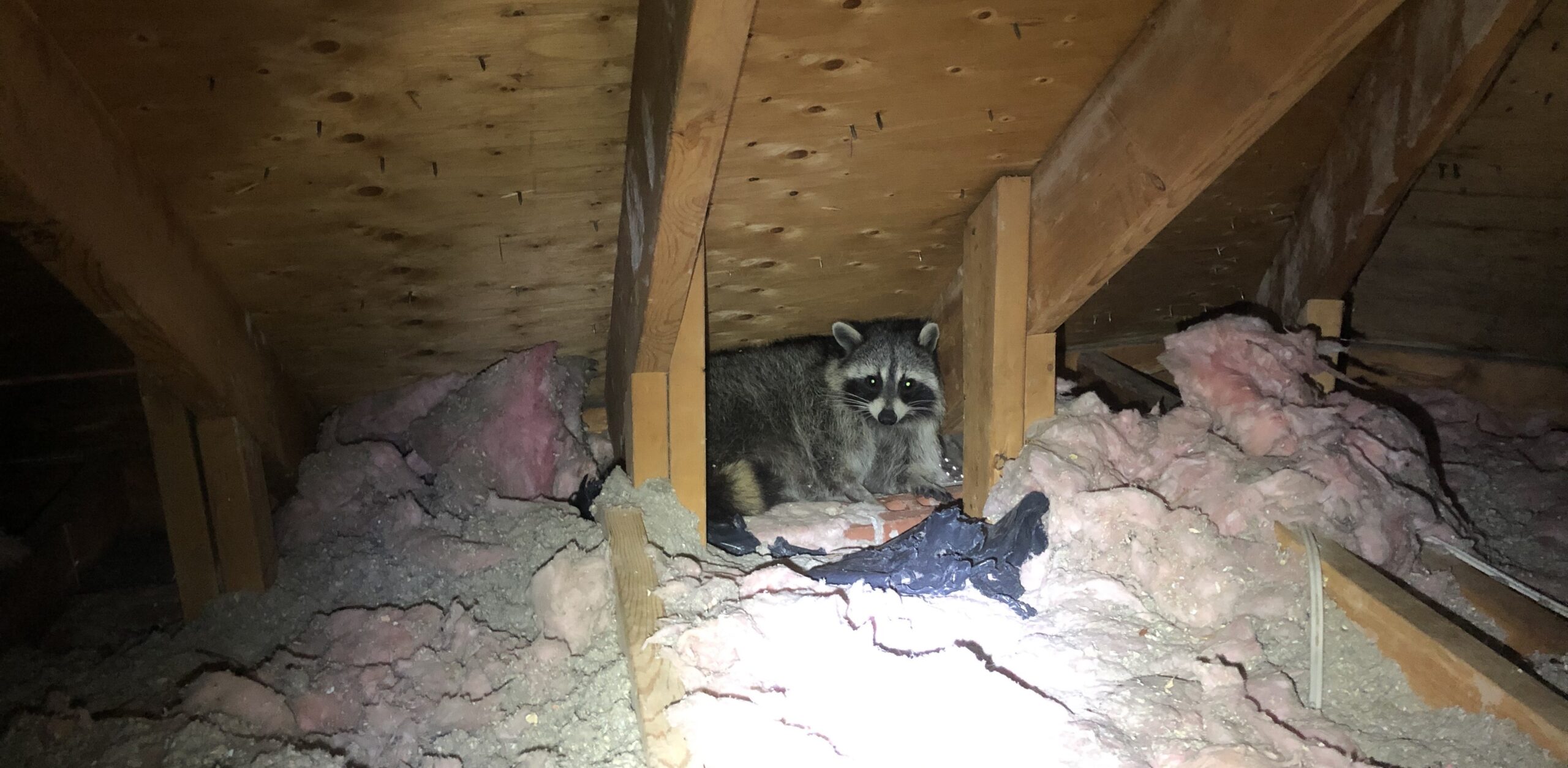
It’s late at night, and you hear it again – that scratching noise coming from above your bedroom ceiling. You’ve noticed a few other strange things lately: unexplained stains on your ceiling, mysterious damage to your roof edge, and an unusual musty smell in your upstairs hallway. These aren’t random coincidences; they’re likely signs of raccoons in your attic. As Colorado homeowners ourselves, we at Skedaddle Humane Wildlife Control understand how unsettling these discoveries can be.
Raccoon infestations are a more common issue than many realize, especially in neighborhoods near our beautiful Rocky Mountains, where these clever creatures thrive. Left unaddressed, they can cause significant structural damage, create fire hazards, and expose your family to potential health risks. The good news? With the right information, you can identify the warning signs early and take appropriate action.
The Top 5 Telltale Signs of Raccoons in Your Attic
When raccoons move into your home, they rarely do so quietly. These nocturnal visitors leave behind numerous clues that can help you confirm their presence. Here are the five most common indicators that raccoons have made themselves comfortable in your attic:
1. Distinctive Noises at Specific Times
The sounds these animals make are often the first sign homeowners notice when dealing with a raccoon attic infestation.
- Heavy thumping or walking sounds: Unlike smaller rodents, raccoons weigh between 10-30 pounds, making their movements sound more like a person walking than the light scurrying of mice or squirrels.
- Vocal sounds: Raccoons are surprisingly vocal animals. You might hear chittering, purring, or even high-pitched screams, especially during mating season or if babies (kits) are present.
- Timing pattern: Raccoons are primarily nocturnal, so these sounds typically occur between dusk and dawn. If you consistently hear noises above your ceiling at night that stop during daylight hours, raccoons are a likely culprit.
When to be especially alert: February through July is baby raccoon season in Colorado. During this time, mother raccoons are particularly active in securing safe den sites for their young. If you hear noises during this period, there’s a higher chance that a mother has chosen your attic to raise her kits.
2. Visual Evidence Around Your Property
Raccoons leave visual clues both outside and inside your home when they’ve taken up residence.
Exterior signs to watch for:
- Damaged roof edges or soffits: Raccoons have incredibly dexterous paws and significant strength. They can tear through aluminum siding, wood fascia boards, and roof shingles when determined to get inside.
- Dirty, greasy marks: Raccoons have oily fur that leaves dark streaks on surfaces they regularly travel. Look for these marks on downspouts, trees near your roof, or exterior walls.
- Footprints: After rain or snow, you might spot distinctive raccoon tracks – they look somewhat like tiny human handprints with five long fingers.
- Disturbed garbage cans: While not a direct sign of attic infestation, regularly tipped-over or torn-into garbage cans can indicate raccoons are active on your property.
When raccoons establish an entry point to your attic, they create what wildlife experts call a “raccoon highway” – a consistent path they follow to and from their den. Identifying this path can help wildlife technicians determine how they’re accessing your home.
3. Unusual Stains and Damage Inside Your Home
Once raccoons have moved in, signs of their presence will begin to appear inside your home:
- Ceiling stains: The accumulation of urine in insulation can seep through your ceiling, creating yellowish-brown water stains. These may appear gradually and worsen over time.
- Insulation damage: Raccoons flatten insulation to create nesting areas and sleeping spots. They may also tear up insulation and use it as nesting material.
- Chewed wiring or damaged ductwork: Raccoons don’t deliberately chew on electrical wires like rodents do, but they may accidentally damage them when moving around or creating den space. This presents a serious fire hazard that requires immediate attention.
Pro tip: If you suspect raccoons in your attic, never attempt to examine damaged wiring yourself. Raccoon droppings can contain harmful parasites, and damaged wiring creates electrocution risks. Our Skedaddle technicians use specialized equipment, including thermal imaging cameras, to safely assess damage.
4. Droppings and Strong Odors
Raccoon waste creates both visual evidence and olfactory clues:
- Raccoon latrines: Unlike some wildlife, raccoons designate specific areas for elimination. These communal “latrines” accumulate significant amounts of waste in concentrated areas of your attic.
- Distinctive smell: Raccoon urine has a strong, musky odor that intensifies over time. This smell may be particularly noticeable on hot days when your attic heats up.
- Health risk: Raccoon droppings commonly contain eggs of the Baylisascaris roundworm, which can cause serious illness if accidentally ingested. This is why professional cleaning and sanitization is essential after removal.
The presence of distinctive droppings is one of the most definitive signs of raccoons in attic spaces. Our wildlife technicians are trained to identify waste and safely remove contaminated materials using appropriate protective equipment and cleaning protocols.
5. Entry and Exit Points
Raccoons need a way in and out of your home. Finding these access points is essential for both confirming their presence and planning their removal.
Common entry points include:
- Damaged roof vents or chimney caps
- Gaps where roof lines meet
- Rotted fascia boards or soffits
- Uncapped chimneys
- Loose or damaged roof shingles
What to look for: Fresh damage around these areas or dark, greasy marks from raccoon’s fur oils are strong indicators. You may also notice building materials that have been torn away or pushed aside.
How Raccoons Access Your Colorado Home
Understanding how raccoons get into attics helps explain why these clever animals are so successful at invading our homes. With their remarkable dexterity, raccoons can exploit vulnerabilities in your home’s exterior that you might not even notice.
Common access methods include:
- Climbing downspouts or nearby trees to reach your roof
- Creating or enlarging existing openings in roof edges, vents, or soffits
- Taking advantage of deteriorated building materials that have weakened due to weather exposure
- Pushing through loose or damaged roof vents or chimney covers
With over three decades of experience, our technicians have witnessed raccoons’ impressive determination. These animals can easily widen a four-inch opening to accommodate their bodies and have the strength to tear through aluminum, vinyl, and some wood materials.
The Damage Raccoons Cause Beyond Just Their Presence
Discovering signs of raccoons in attic spaces should prompt immediate action because the longer they stay, the more extensive the damage becomes. Beyond the initial entry point damage, raccoons can cause:
- Structural damage: Their weight and movement can damage ceiling joists, especially when multiple raccoons are present.
- Insulation destruction: Raccoons trample, tear, and soil insulation, significantly reducing your home’s energy efficiency and potentially raising your utility bills.
- Electrical hazards: Damaged wiring can short circuit, creating fire risks. The U.S. Fire Administration estimates that many residential fires annually are attributed to animal damage to wiring.
- Secondary pest issues: Raccoon droppings can attract insects and other pests, compounding your wildlife problem.
- Health concerns: Raccoon droppings can contain harmful parasites, including the raccoon roundworm Baylisascaris, which poses serious health risks if eggs are accidentally ingested.
Protect Your Home with Skedaddle
Learning how to detect raccoons in your attic is just the first step. Once confirmed, professional removal and prevention are crucial to safeguarding your home’s integrity and your family’s health. Skedaddle offers comprehensive services to humanely remove raccoons and restore your attic. Our experienced technicians will seal entry points, clean and sanitize affected areas, and implement prevention strategies to keep your home raccoon-free.
If you suspect raccoons in your attic, don’t wait until they cause substantial damage. Contact Skedaddle today for a safe, effective, and humane solution to protect your home and peace of mind.

 Loading...







