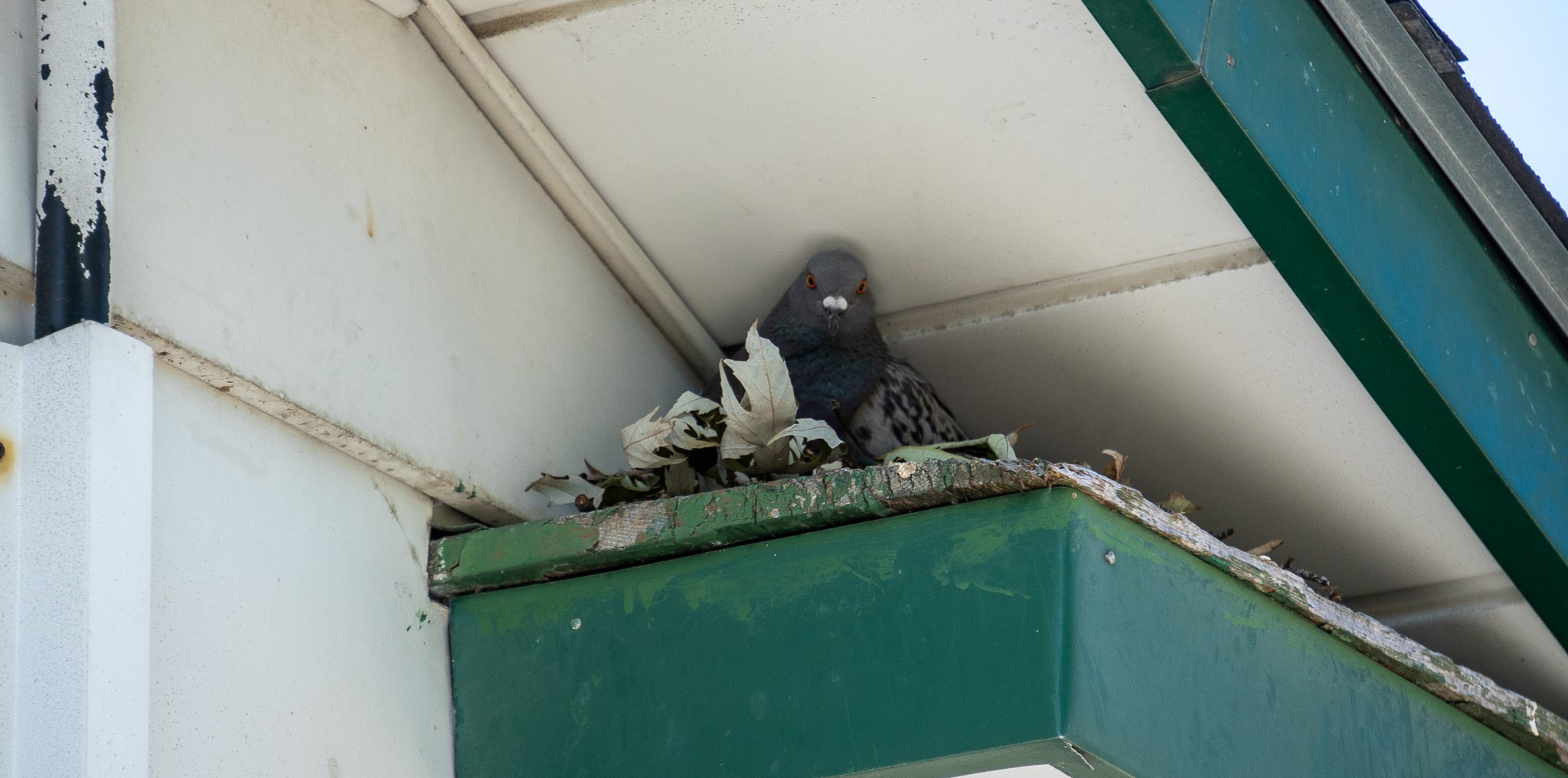
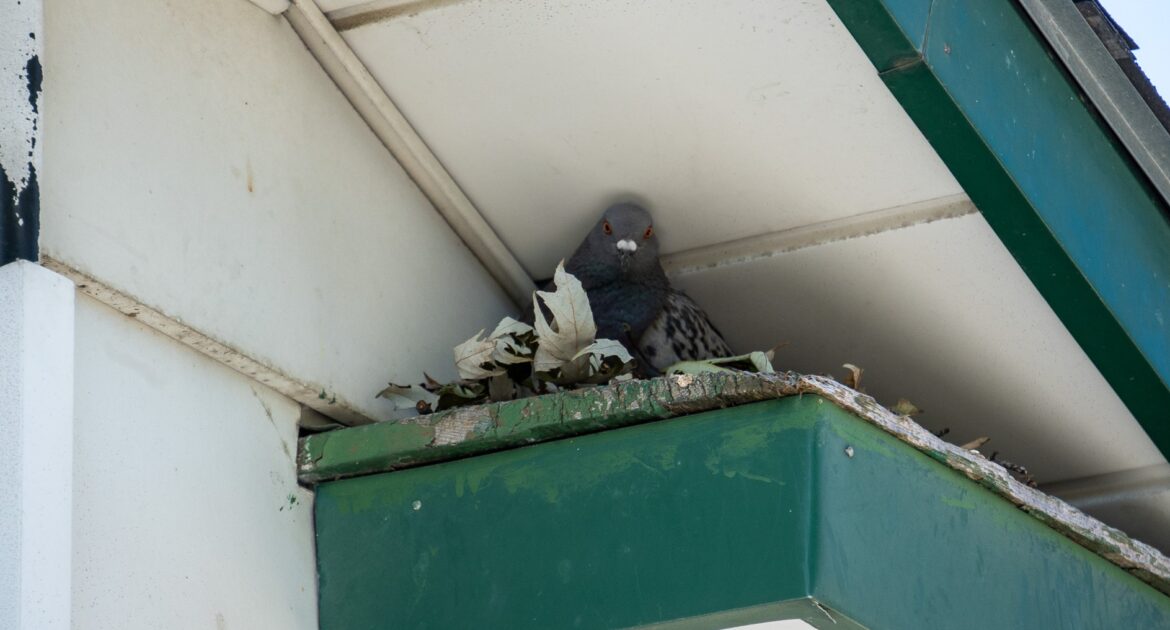
Pigeons are especially visible in Baltimore buildings when temperatures drop, and for good reason. These birds are drawn to urban structures because they provide warmth, shelter, and safety. Walk along the Inner Harbor, Camden Yards, or the rowhouses of Fells Point, and you’ll often see groups of pigeons huddled together to conserve energy. Baltimore’s mix of historic architecture, dense city layout, and accessible food sources makes it an ideal winter refuge for large flocks.
At Skedaddle Humane Wildlife Control, we understand how these cold-weather pigeon problems can impact homes and businesses. In this article, we explore what attracts pigeons to local buildings, the challenges they create during the colder months, and effective strategies to prevent long-term damage.
Why Pigeons Prefer Buildings in Winter
Buildings offer pigeons more than shelter—they provide warmth, food, and safety, especially when the weather turns chilly. These intelligent birds instinctively seek out conditions that give them the best chance of surviving winter. Let’s look at what draws them to the heart of our city.
Architectural Features That Attract Pigeons
Pigeons are drawn to certain design elements that provide comfort and security. Some appealing features include:
- Deep building ledges that block wind
- Open attics and vents that retain heat
- Decorative facades that create nesting spots
- Abundant flat roofs for gathering and roosting
- Easy access to hidden corners beneath bridges and walkways
Baltimore’s famous rowhouses are particularly attractive, as their repeating shapes and brick construction offer ample roosting options. Areas near food sources—like the Lexington Market or outside popular restaurants—are even more enticing for pigeon flocks.
Climate Factors and Urban Warmth
The arrival of colder months makes finding warmth a top priority. Baltimore’s urban “heat island” effect—the tendency for city centers to be warmer than surrounding areas—attracts even more pigeons downtown. Rooftop HVAC units, warm exhaust vents, and heat leaking from walls create cozy microclimates that pigeons love.
This explains why large flocks gather on the sun-warmed facades of buildings near Mount Vernon Place or huddle around heating vents close to the Charles Center. These birds are quick to find any nook that offers shelter from wind, rain, and snow.
Transitioning from why our buildings draw in pigeons, it’s important to understand the toll their winter presence can take.
The Impact of Cold Weather Pigeon Problems on Properties
While pigeons may seem harmless at first glance, their winter flocks can create a surprising number of challenges for both homes and businesses. These issues go far beyond simple noise or mess.
Damage to Building Structures
Pigeon droppings are acidic and can rapidly damage building materials. Over time, this can result in permanent stains on brick, stucco, and siding, erosion of mortar and even concrete, corrosion of metal fixtures on roofs or balconies, and blocked gutters and downspouts, which increase the risk of winter ice dams and water intrusion.
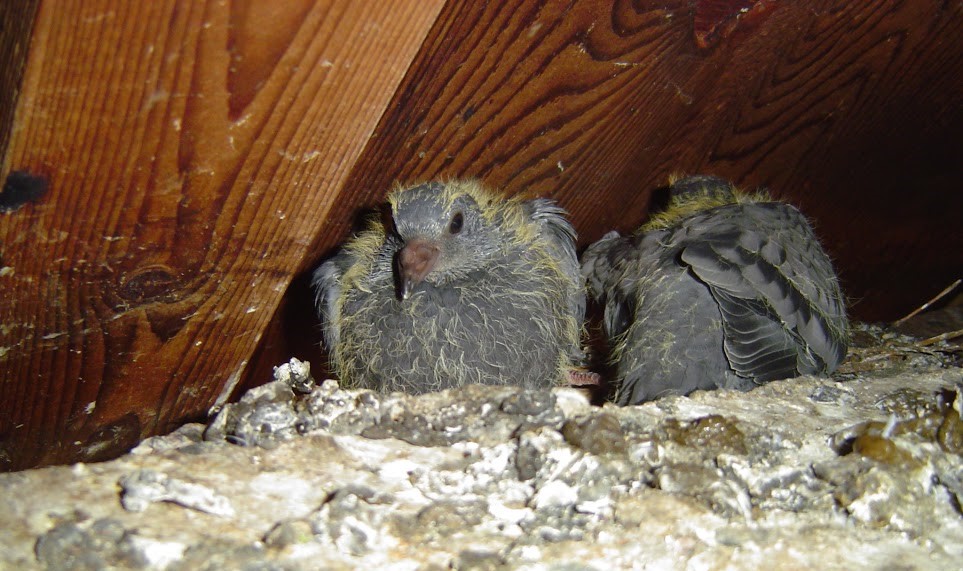
Inside buildings, pigeons nesting in attics, vents, or chimneys may introduce moisture and nesting debris, which can cause insulation damage, pose serious fire risks, and affect indoor air quality.
Health and Safety Risks
Beyond physical damage, pigeons bring other hazards:
- Droppings can carry diseases such as histoplasmosis, salmonellosis, and psittacosis.
- Feathers and nesting materials can clog vents, increasing carbon monoxide dangers.
- Moist nesting areas encourage pests such as mites and flies.
For business owners, a flock of pigeons over the entrance or outdoor seating can negatively impact customer perception and even violate local health codes.
Community Concerns
Many neighborhoods take pride in their appearance and sense of community. Unmanaged pigeon populations can harm historic facades and public art, create unsightly messes around parks such as Patterson Park, and drive up maintenance costs for both homeowners and city agencies.
With problems like these, the next step is finding out how to prevent pigeons in buildings from becoming a recurring winter headache.
How to Prevent Pigeons in Baltimore Buildings
A proactive approach is the best defense against winter flocks. Our experience shows that preventing access is more effective than addressing pigeons after they’ve settled in.
Building Inspection: The First Line of Defense
Thorough inspection is crucial before winter hits. At Skedaddle, our technicians look for:
- Gaps along roof lines or behind fascia boards
- Open vents or chimneys
- Unprotected ledges, balconies, or signs with space behind them
- Evidence of previous nesting, such as feathers or droppings
This careful walkthrough helps us pinpoint areas at greatest risk, ensuring a comprehensive plan targets the real entry points before pigeons can move in.
Effective Exclusion and Deterrent Techniques
We use a combination of physical exclusion and specialized deterrents tailored to each property:
- Stainless steel mesh or screens to seal vents and attic openings
- Netting systems to block access to large roof spaces or signage
- Spikes or angled ledge covers to make perching uncomfortable
- Visual deterrents and bird-safe gels in problem spots
Our team at Skedaddle always employs humane approaches to keep pigeons safe while protecting your property.
Understanding the actions necessary to prevent pigeon invasions, let’s consider how pigeons are naturally integrated into urban neighborhoods.
The Role of Pigeons in Urban Environments
It’s easy to focus only on the problems pigeons cause, but they have played a role in urban communities for generations. In some neighborhoods, raising domestic pigeons—sometimes referred to as “pigeon fancying”—is part of local tradition, creating opportunities for community bonding over shared interests, participation in racing or show clubs, and intergenerational knowledge sharing, especially in areas like Highlandtown.
While managing wild pigeons during winter months is essential for health and safety, responsible pigeon raising can enrich urban life and offer meaningful activities for residents.
Understanding this context helps balance our approach, celebrating Baltimore’s vibrant culture while maintaining building protection.
Skedaddle’s Approach: Safe Removal and Long-Term Prevention
Managing cold weather pigeon problems requires expert knowledge and the safest tools available. At Skedaddle, our strategy for assisting property owners includes several key steps:
- Assessment: Careful inspection of all potential entry points and identifying pigeon behavior patterns.
- Humane Removal: Safe physical removal of birds and nests, taking special care not to disturb any eggs or chicks unnecessarily.
- Sanitization: Thorough cleanup of all droppings, nesting material, and contaminated surfaces to reduce disease risk.
- Prevention: Installation of custom exclusion devices and deterrents to prevent pigeons from returning.
- Follow-Up: Ongoing support and a lifetime guarantee to ensure lasting results.
Many building owners try DIY approaches or rely on store-bought solutions that may only provide temporary relief. Our team’s thirty years of experience with birds in urban and suburban environments allows us to diagnose the full scope of a problem and deliver a permanent solution.
When you notice signs of pigeons gathering—such as droppings beneath eaves, feathers collecting near a vent, or repeated sightings on ledges—we recommend contacting a professional for an inspection before issues expand.
Each season brings new wildlife challenges to the city, but with the right strategies and ongoing vigilance, we can ensure that both people and birds can thrive together in harmony.
Keep Buildings Bird-Free This Winter
As winter brings flocks of pigeons seeking shelter among Baltimore’s rooftops and historic buildings, it’s important to recognize the risks their presence creates—from costly structural damage and clogged vents to hazardous droppings that compromise health and safety. Taking action before pigeons settle in can protect your property and ensure your home or business remains pristine and welcoming throughout the colder months.
If you’ve spotted signs of pigeon activity or want to safeguard your property against future invasions, trust the experts at Skedaddle. Our team combines three decades of hands-on experience with humane, effective techniques tailored for Baltimore’s unique architecture. Don’t let winter birds make your building their haven—contact Skedaddle today for a thorough assessment, safe removal, and lasting prevention. Let’s work together to keep your space clean, healthy, and bird-free all season long.

 Loading...







