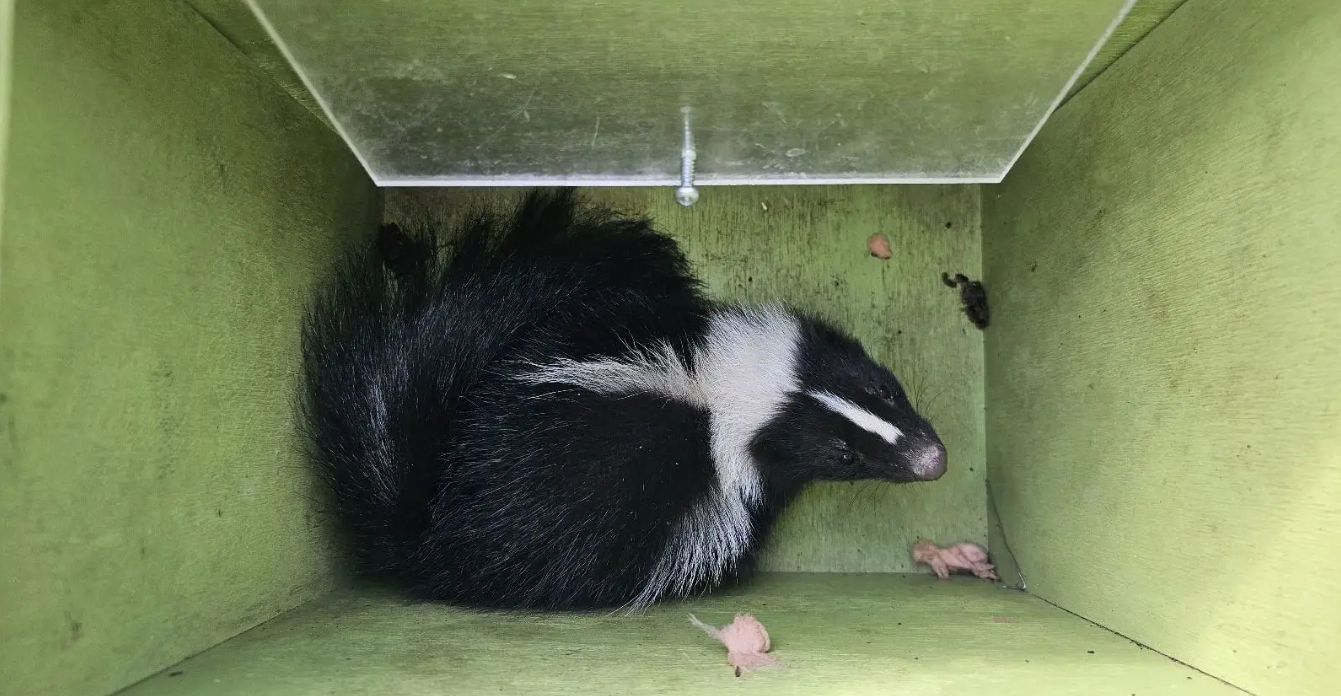
You’re walking your dog on a quiet Durham evening when you spot a black and white striped animal ahead.
Your heart races as you wonder: will it attack or just spray? This question crosses many homeowners’ minds when dealing with skunk behaviour in Durham.
The answer might surprise you – skunks rarely attack, but they have other ways to protect themselves that can be far more unpleasant.
Understanding whether skunks attack or spray helps Durham residents stay safe around these animals. Most of them prefer to avoid conflict entirely, but when cornered or threatened, they rely on their famous defence mechanism rather than physical aggression.
This knowledge is crucial for effective skunk control in Durham, especially when dealing with animals that have made your property their home. At Skedaddle Humane Wildlife Control in Durham, we see firsthand how skunk behaviour affects local families and their pets.
Why Skunks Choose Spraying Over Attacking
Skunks are naturally peaceful animals that prefer to mind their own business. They’re not built for fighting like other wildlife species. Instead, evolution gave them something much more effective – a powerful spray that can deter threats from up to 15 feet away.
When faced with danger, these animals follow a predictable pattern of behaviour. They don’t immediately spray because their scent glands only hold enough liquid for about six uses. After that, it takes up to 10 days to refill their supply. This means skunks are actually quite conservative about when they use their spray.
Before spraying, they give several warning signs:
- Stomping their front feet
- Raising their tail high in the air
- Arching their back to appear larger
- Hissing or growling softly
- Backing away while facing the threat
If you see these behaviours, you have time to slowly back away and give the skunk space. Most encounters end here because skunks want to avoid using their spray just as much as you want to avoid getting hit by it.
Physical attacks from skunks are extremely rare in Durham. These animals have small teeth and claws that are better suited for digging than fighting. They’re much more likely to run away or find a hiding spot than to engage in any kind of physical confrontation.
When Skunks Do Become Aggressive
While attacks are uncommon, certain situations can make skunks more likely to act aggressively. Rabies is the most serious concern, though it’s still quite rare in the Durham region. A rabid skunk might behave erratically, seem disoriented, or approach humans without fear.
Signs of a potentially rabid skunk include:
- Activity during daylight hours
- Stumbling or appearing confused
- Approaching people or pets without fear
- Excessive drooling or foaming at the mouth
- Unusual vocalizations
Mother skunks protecting their babies can also become more defensive, though they still prefer spraying to attacking. During breeding season in early spring, or when young skunks are learning to be independent in late summer, you might encounter more skunk activity around your Durham property.
The Science Behind Skunk Spray
Skunk spray isn’t just smelly – it’s a powerful defence tool. The liquid contains sulphur compounds called thiols, which create that strong, long-lasting odour. But the smell isn’t the only problem.
The spray can cause temporary blindness if it gets in your eyes. It burns and makes breathing hard for a few minutes. Pets that get sprayed often paw at their faces, trying to ease the discomfort. This shows why skunks rarely need to attack physically.
The odour molecules are oil-based, making them tough to wash off with soap and water. They stick to fur, skin, and surfaces for weeks without proper treatment. This makes the spray an effective deterrent.
Weather affects how far the spray travels. On humid nights, common in Durham, the smell can spread farther. Wind direction also impacts how long the odour lingers.
Skunk Behaviour Patterns in Durham
Durham’s mix of neighbourhoods and natural spaces is perfect for skunks. These adaptable animals thrive near human activity. Knowing their habits can explain why they might choose your property.
Skunks are nocturnal, sleeping in dens during the day and searching for food at night. They dig burrows under decks, sheds, and porches. Your property might attract these animals if it offers:
- Food sources like pet food, garbage, or lawn grubs
- Water from leaky hoses or drainage areas
- Shelter under structures or in quiet corners
- Minimal human activity at night
In winter, skunks enter torpor, a state like hibernation. They become less active and may share dens to stay warm. Winter is a good time for professional wildlife control to address skunk issues.
Spring brings more activity as skunks leave their dens to find mates. By summer, females raise their young, often leading to multiple skunks in one den.
Health Risks Beyond the Spray
Skunk spray isn’t the only concern. They can carry parasites and diseases that harm humans and pets, especially when they live near your home.
Skunk droppings are a hidden health risk. They can contain bacteria, parasites, and pathogens. Unlike the spray, droppings can go unnoticed for weeks, spreading contamination.
Professional cleanup is crucial. Skunk waste needs to be handled with protective gear and disposed of safely. Contaminated areas must be cleaned and disinfected to protect your family and pets.
Never try to clean skunk waste yourself. Professionals have the tools and training to safely decontaminate your property and restore it to a healthy state.
Signs of Skunk Activity on Your Property
Spotting early signs of skunk activity can help you act before problems worsen. Look for these clues:
- Cone-shaped holes in your lawn from digging
- Disturbed garbage or compost
- Strong musky odours, even without spraying
- Tracks with long claws and five toes
- Dark, tube-shaped droppings with insect parts
You might also see damage to structures, like scratched or chewed areas around decks or sheds. Fresh dirt piles near these spots often mean active digging.
Pets can also alert you. Dogs and cats may act agitated or avoid going outside when they sense skunks. If your pet’s behaviour changes, check for signs of wildlife activity.
Professional Skunk Control Solutions
Professional wildlife control is the safest way to handle skunk problems in Durham. At Skedaddle, we use one-way doors that let skunks leave but stop them from coming back. This humane method solves the issue without risking sprays.
Our one-way doors work with skunks’ natural habits. When they leave to find food, they can’t return through the door. This encourages them to find new homes away from your property.
We also inspect your property to find and seal all entry points. This prevents new skunks from moving in after the current ones leave. Our approach ensures long-term protection for your home.
Our services include professional cleanup and decontamination. We safely remove waste, sanitize surfaces, and restore your property. This protects your family from health risks linked to wildlife contamination.
Prevention and Long-term Protection
The best approach to skunk control combines professional removal with ongoing prevention strategies. Making your property less attractive to skunks reduces the likelihood of future problems and helps maintain the effectiveness of professional wildlife control services.
Key prevention strategies include:
- Securing garbage in tight-fitting containers
- Removing outdoor pet food and water sources
- Installing motion-activated lighting in problem areas
- Treating lawn grubs that attract foraging skunks
- Sealing potential den sites before they’re occupied
Regular property maintenance also plays an important role in prevention. Keeping grass short, removing brush piles, and maintaining clear sight lines around structures makes your property less appealing to wildlife seeking shelter.
Our professional inspection services can identify potential problems before they develop into serious issues. Annual wildlife assessments help homeowners stay ahead of seasonal changes in animal behaviour and maintain effective long-term protection.
Get Professional Help for Skunk Control in Durham
Skunk behaviour in Durham shows these animals prefer spraying to attacking when they feel threatened. While this knowledge helps you stay safe around skunks, it doesn’t solve the problem of animals living on your property. Professional skunk control in Durham provides the expertise and tools needed to address wildlife issues safely and effectively.
The question of whether skunks attack or spray has a clear answer – they almost always choose spraying. But dealing with the aftermath of encounters, contamination cleanup, and long-term prevention requires professional intervention. Skedaddle Humane Wildlife Control in Durham has the experience to handle all aspects of skunk problems, from safe removal to thorough property restoration.
Don’t let skunk behaviour disrupt your family’s safety and comfort. Request an estimate today to learn how we can protect your Durham home from wildlife issues and restore your peace of mind.

 Loading...