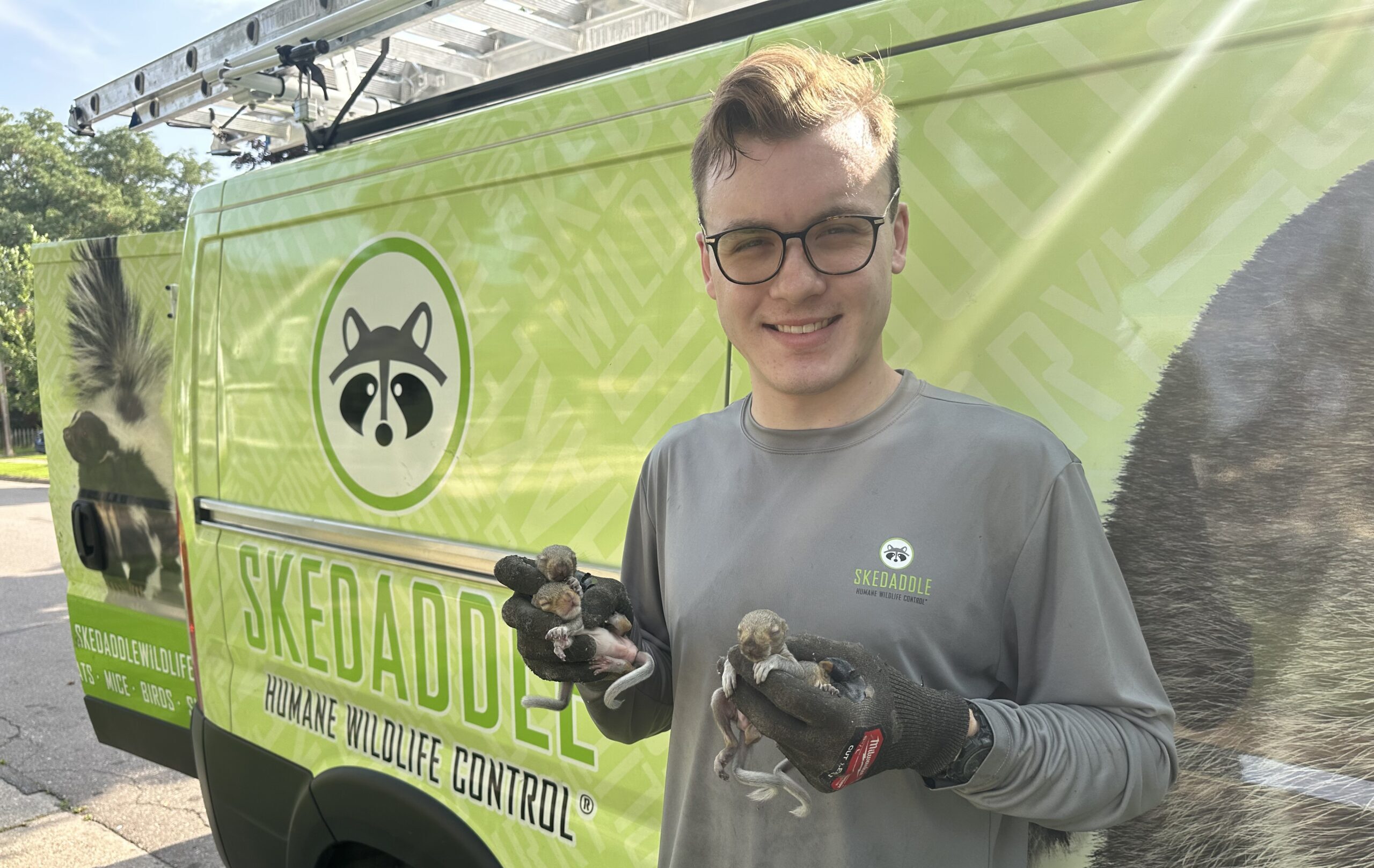

Have you ever noticed squirrels gnawing on your siding, attic beams, or even electrical wires, even though food seems plentiful outside? It can be frustrating to see damage without understanding why it happens. At Skedaddle Humane Wildlife Control in Eden Prairie, we help homeowners understand squirrel behavior so they can protect their property safely and humanely.
Squirrels chew for reasons far beyond hunger. This natural behavior is part of how they explore, interact with their environment, and maintain their health. Understanding these behaviors is key to preventing property damage while ensuring local wildlife remains safe. In this blog, we’ll break down why squirrels chew, the areas of your home they target, seasonal patterns, and how we help homeowners reduce damage humanely.
Natural Instinct to Chew
One of the primary reasons squirrels chew is dental health. A squirrel’s teeth grow continuously throughout its life, so gnawing is essential to keep teeth at a manageable length. Without constant chewing, squirrels could face serious dental issues that affect their ability to survive in the wild.
- Chewing is instinctual and not always related to hunger.
- Wood, rubber, and even certain plastics mimic natural chewing materials.
- Continuous gnawing allows squirrels to explore textures and strengthen their jaws.
Studies suggest that up to 70% of squirrel-related home damage comes from chewing driven by instinct rather than food-seeking behavior. That means even if a backyard feeder is full, squirrels will still gnaw on structures.
Exploring and Marking Territory
Squirrels are naturally curious animals. Chewing is one of the ways they investigate their surroundings. By gnawing on new objects, they learn about their environment and mark it as part of their territory.
- Gnawing leaves visual and scent markers for other squirrels.
- It helps squirrels navigate and establish safe travel routes around a property.
- Repeated damage in the same area is often a sign of territorial behavior, not random destruction.
Recognizing that chewing is part of how squirrels explore helps homeowners understand why damage often occurs even in areas with plenty of natural food sources.
Nesting and Home Entry Exploration
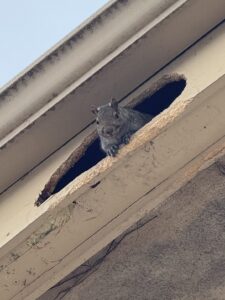
Squirrels are always on the lookout for safe, dry places to nest. Gnawing is a key part of this process, especially when they are considering attics, eaves, and soffits as potential shelter.
- Commonly affected areas include roof edges, shingles, vents, and attic openings.
- Siding and wooden trim often show signs of gnawing when squirrels are testing access points.
- According to wildlife studies, over 60% of squirrel-related home damage comes from attempts to access shelter rather than food.
Homeowners often notice these signs before seeing the animals themselves. Early detection of gnawing marks is crucial to preventing more extensive damage.
Stress, Boredom, and Play Behavior
Squirrels are intelligent, social animals. Chewing is also a form of play and mental stimulation. Young squirrels often explore their world by gnawing, and adult squirrels may continue this behavior to relieve stress or boredom.
- Chewing provides sensory stimulation and keeps squirrels engaged.
- Play behavior can lead to repeated damage in the same areas.
- Even squirrels with abundant outdoor food may chew for fun or mental exercise.
This playful side of squirrels shows that not all chewing is about survival—it’s also a natural part of their behavior and daily routine.
Attraction to Certain Materials
Some materials naturally appeal to squirrels because they mimic objects they would chew in the wild.
- Wood is the most common target, including fascia, decking, and siding.
- Rubber, plastic, and even some synthetic garden structures can attract chewing.
- Electrical wires or cable lines are sometimes gnawed for texture rather than taste.
Homeowners may notice damage on seemingly “unappealing” materials simply because they simulate natural chewing targets. Being aware of which areas are most attractive helps prioritize preventive measures.
Seasonal Influences on Chewing Behavior
Chewing behavior changes with the seasons. Understanding these patterns helps homeowners anticipate potential issues.
- Fall and Winter: Increased activity as squirrels prepare for colder months, seeking shelter, and building nests.
- Spring and Summer: Chewing continues for dental health, exploration, and play, even if food is plentiful.
- Repeated seasonal chewing can indicate high wildlife activity near your home.
Data from wildlife behavior studies suggest that gnawing incidents peak in late summer and early fall as squirrels actively search for suitable shelter for winter.
Signs of Chewing to Watch For
Recognizing chewing early is essential for minimizing damage. Common indicators include:
- Small tooth marks on wood trim, siding, or beams
- Frayed insulation in attics or eaves
- Damage around vents, soffits, or roof edges
- Missing bark from trees near structures
Early recognition allows homeowners to take preventive measures before damage becomes costly.
How We Help Homeowners Protect Their Property
At Skedaddle Humane Wildlife Control in Eden Prairie, we focus on humane, proactive solutions to prevent property damage from squirrels. Our team helps homeowners understand squirrel behavior and provides strategies that protect homes without harming wildlife.
Our services include:
- Property Assessments: We inspect roofs, vents, attics, and other high-risk areas to identify potential access points.
- Guidance on Property Maintenance: We advise on landscaping, trees, and other attractants that may encourage chewing.
- Safe Protection Recommendations: We provide expert advice on repairs and preventive measures that are humane and long-lasting.
- Education and Awareness: We help homeowners understand squirrel behavior, seasonal patterns, and early warning signs.
By taking a proactive approach, homeowners can prevent damage and foster a safe environment for both their property and local wildlife.
Understanding Squirrel Behavior Protects Your Home
Squirrels chew for many reasons beyond looking for food. Dental health, exploration, territorial marking, play, and shelter-seeking all drive this behavior. Understanding why squirrels gnaw helps homeowners anticipate where damage may occur and take steps to prevent it safely.
At Skedaddle Humane Wildlife Control in Eden Prairie, we focus on safe, effective, and humane solutions. By combining property assessments, professional advice, and homeowner education, we help protect homes while respecting local wildlife. Small, informed decisions today can prevent costly damage tomorrow and ensure squirrels continue to thrive safely in their natural environment.
Contact Skedaddle to learn more about how we help homeowners minimize chewing damage while keeping wildlife safe and healthy.

 Loading...







