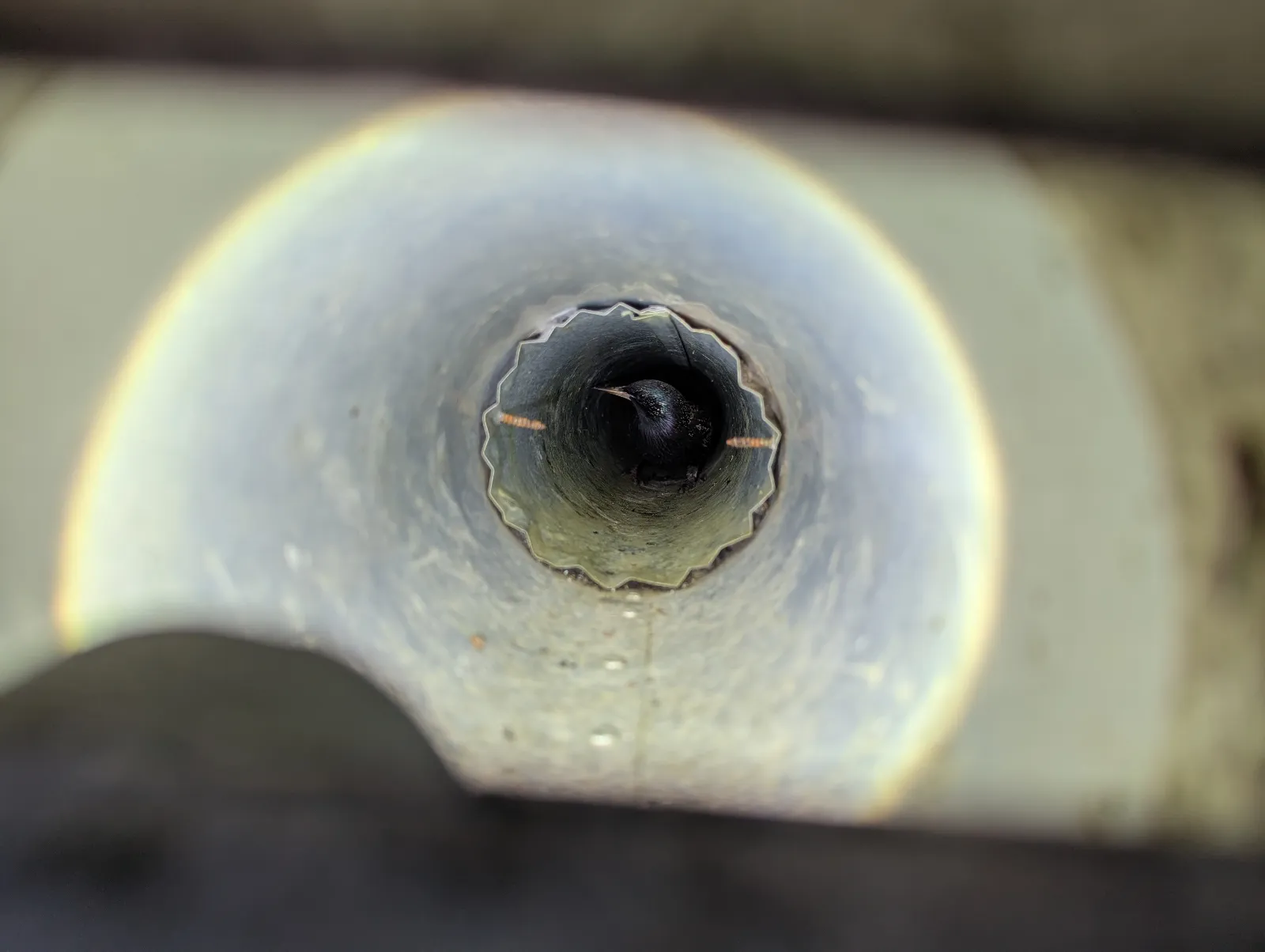
You may hear scratching, fluttering, or light tapping sounds coming from your bathroom ceiling. You may notice it more in the early morning or when the fan is turned on. When a scratching noise in the vent keeps returning, it can feel confusing and stressful.
You may not realize that birds in bathroom vent situations are very common. Bathroom vents lead outside and often stay warm, dry, and quiet. These conditions make them a popular nesting spot. When this happens, professional help is the safest way forward.
You may think the sound will stop on its own, but vent activity often means a nest has already been built. Bird nest removal services are important because vents are not safe places for animals to stay. At Skedaddle Humane Wildlife Control in Littleton, we often see how vent issues begin and why early action matters.
Below, you’ll learn why noise in your bathroom vent may mean nesting activity and what professionals look for when handling these situations.
Warm, Enclosed Vents Feel Like Safe Shelter
You may not think of a bathroom vent as a place for nesting, but it offers everything animals look for. Vents are warm, covered, and protected from wind and rain. These features make the space feel safe and comfortable, especially during cooler months. Once a vent feels secure, it can quickly turn into a nesting spot.
You may notice activity more often in spring or fall when nesting is common. During these seasons, birds search for places that offer warmth and protection. A bathroom vent provides both in one small space. Once a vent is found, it can become occupied very quickly.
Why do vents attract nesting birds? There’s a few good reasons.
- Warm Air Flows Through the Vent: Heat from showers and indoor air moves through the vent pipe each day. This warmth helps keep eggs and young protected from cold temperatures. A steady heat source makes the vent feel safe. Warm spaces are hard for nesting birds to ignore.
- The Space Stays Dry and Covered: Rain and snow stay outside the vent system. Dry conditions help nesting materials last longer and stay in place. Shelter from bad weather reduces stress. This protection encourages birds to stay longer.
- The Location Feels Hidden: Bathroom vents are often placed high and out of reach. Little foot traffic nearby makes the area feel quiet and calm. Hidden spaces reduce disturbance. Calm surroundings support nesting.
- The Opening is Easy to Access: Exterior vent covers often face open air on walls or roofs. Without proper protection, getting inside is simple. Once entry is easy, the space may be reused again. Easy access makes vents a repeated target.
Scratching and Chirping Sounds Travel Through the Vent
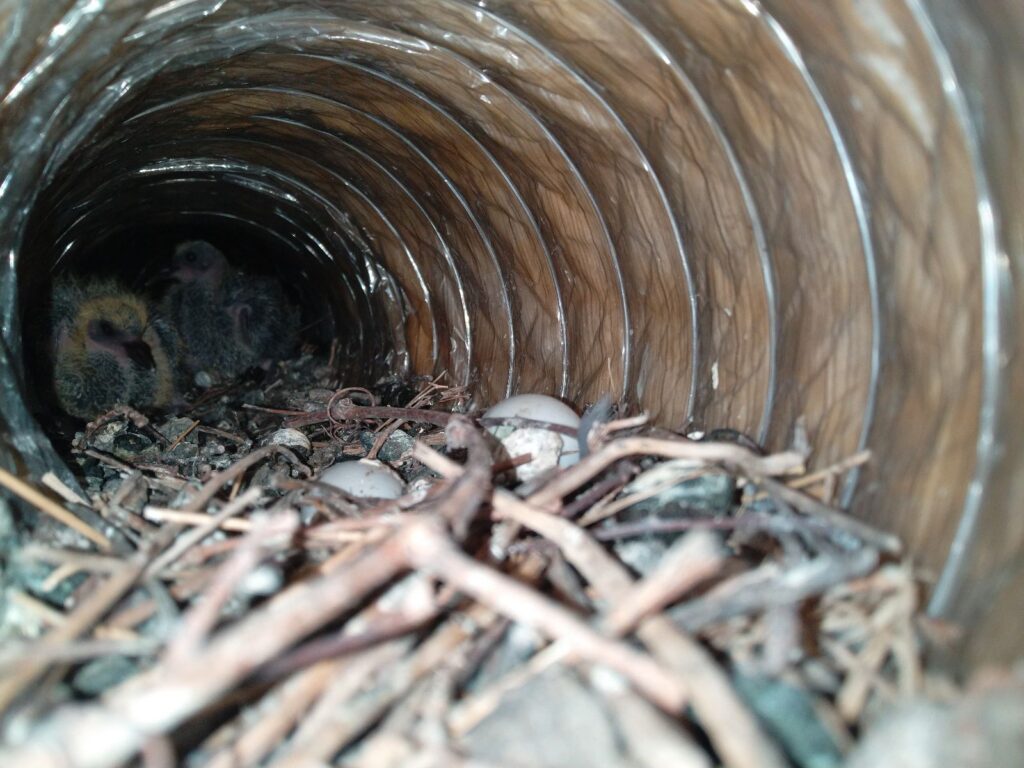
You may first notice sound before seeing anything else. Scratching, chirping, or light fluttering noises can echo through the vent pipe. These sounds often seem louder in bathrooms because the room is usually quiet. Even small movements can become very noticeable in this space.
You may hear noise when the bathroom fan turns on or off. Air moving through the vent can make sounds travel farther. Movement inside the vent becomes easier to notice at these times. Sound is often the clearest early warning sign of activity inside the vent.
Here’s a full breakdown on why vent noise happens.
- Nesting Materials Rub Against Metal: Twigs, leaves, and debris shift as birds move around. These materials scrape against the metal walls of the vent. Scraping creates scratching or tapping sounds. The noise can repeat throughout the day.
- Movement Increases During the Day: Feeding, fixing the nest, and caring for young all create movement. Even small motions send sound through the vent pipe. Hollow vents carry noise well. This makes activity easy to hear.
- Chirping Signals Young Nearby: High-pitched sounds often come from young birds inside the nest. These noises travel easily through the vent system. Repeated chirping usually means nesting is active. The sounds may happen often.
- Fan Use Makes Noise Clearer: When the fan turns on, air moves through the vent quickly. This airflow pushes sound toward the bathroom. Activity inside becomes louder and more clear. Fan use often confirms the source is inside the vent.
Vents Are Often Unprotected on the Outside
You may never notice the outside vent cover on your home. Many homes have basic vent covers that wear down over time due to weather and age. Small gaps or loose parts can form without being obvious. These openings can create easy access for birds.
You may not see nesting material when looking up from the ground. Activity often stays hidden inside the vent system. Sounds or smells are usually the first clear signs. By the time these signs appear, a nest may already be present.
Weather and time can weaken vent covers. Wind, rain, and temperature changes cause materials to loosen or crack. Small openings often form around the edges of the cover. These gaps allow birds to enter with very little effort.
Some vents also lack proper screening. Open ducts lead directly into the home. Roof and wall vents are rarely checked closely, so damage can go unnoticed for months. Once a vent has been used as shelter, birds often return to it again unless proper protection is added.
Nesting Creates Health and Safety Risks Indoors
You may think the noise is the only problem, but nesting inside a vent can cause other serious issues. When a vent becomes blocked, air cannot move the way it should. This can affect moisture levels in the bathroom and allow other problems to develop over time.
You may also notice that the bathroom fan does not work as well as it used to. Poor airflow often points to a blockage inside the vent. When nesting material builds up, these issues can grow worse and should never be ignored.
But, why does vent nesting become a problem?
- Airflow Gets Blocked: Nesting material can fill part or all of the vent pipe, slowing or stopping airflow. Moist air from showers stays trapped instead of moving outside. This can lead to damp conditions inside the bathroom. Over time, trapped moisture can cause damage.
- Odours May Travel Indoors: Waste and nesting debris can create strong smells inside the vent. These odours move easily through the ventilation system. Bathrooms are often the first place where smells are noticed. Lingering odours usually mean the blockage is getting worse.
- Insects May Appear: Nesting areas can attract mites and other small pests. These insects can move from the vent into living spaces. This adds another layer of concern inside the home. Insects are often a sign that nesting has been present for some time.
- Fire Risk Increases: Dry nesting material can sit close to the fan motor inside the vent. When the fan runs, heat can build up around this material. This increases the risk of overheating or fire. Fire risk makes vent nesting a serious safety issue.
Why Professional Bird Nest Removal Services Matter
You may feel tempted to check the vent yourself, but this can be unsafe. Vents are connected to electrical fans and tight spaces. Handling nesting activity requires training and care.
Bird nest removal services focus on safety, proper removal, and long-term protection. Professionals understand how vents work and how to restore airflow safely.
We handle these situations using humane methods. One-way doors allow birds to leave without harm and stop re-entry. After removal, vent covers are secured to help prevent future access.
At Skedaddle, we approach each case with care. Our goal is to restore safe ventilation while protecting both homes and birds.

Resolve Birds In Bathroom Vent Issues Safely
You deserve peace of mind when a scratching noise in the vent starts disrupting your home. Birds in bathroom vent situations are more than a noise issue. Nesting inside vents affects safety, airflow, and indoor comfort.
When activity appears, bird nest removal services should always be handled by trained professionals. At Skedaddle Humane Wildlife Control in Littleton, we provide humane solutions designed to restore safe ventilation and prevent repeat issues.
Request an estimate today to learn how we can help resolve bird concerns with professional care you can trust.

 Loading...







