

Have you ever wondered when do raccoons have babies and whether one might be preparing a den in your home? In Marietta, it’s common for people to hear noises in their attic, crawl space, or walls and question what’s going on overhead. Georgia’s climate and suburban neighborhoods provide ideal conditions for urban wildlife to thrive.
At Skedaddle Humane Wildlife Control, we help homeowners understand animal behavior and protect their homes using humane strategies. In this post, we’ll break down raccoon breeding habits, signs of nesting activity, and what to watch for if you suspect raccoons are preparing to have young near your property.
Understanding Raccoon Breeding Season
Raccoons follow a yearly cycle based on seasonal changes in daylight and temperature. The raccoon breeding season in Georgia typically begins in late winter — around January to March — when daylight increases and weather begins to warm. During this time, male and female raccoons seek mates, and successful breeding leads to pregnancy.
After mating, a raccoon’s gestation period lasts about 63 days, meaning most births occur in spring, especially between March and May, although some females may give birth later in summer if an earlier litter didn’t survive.
Where Raccoons Choose to Have Their Young
Female raccoons carefully select safe, secluded spots to bring their babies into the world. In nature, this might be hollow trees or brush piles, but urban raccoons are adaptable. Many choose quiet spots close to food and shelter, including:
- Attics or roof spaces
- Chimneys
- Wall voids
- Crawl spaces
When raccoons find warmth and protection, they may prepare a den there well before babies arrive. Raccoons in attic spaces from late winter to summer often means a mother is preparing for or raising kits.
When Do Raccoons Have Babies? Timing and Kits
The most common answer to when do raccoons have babies is spring. After mating in late winter, female raccoons typically give birth in late March through May. However, some females delay giving birth until as late as June or July, especially in warmer climates like ours.
Here’s what to expect from raccoon litters:
- Most litters are three to five babies, called kits
- Kits are born blind and entirely dependent on their mother
- Their eyes usually open at about three weeks of age
Once born, kits stay with their mother inside the den as she forages for food. Their presence often means increased activity, so if you hear noises in your walls or ceiling in spring or early summer, it could be a family preparing to grow.
Signs Raccoons Are Preparing a Nest
Before babies arrive, a raccoon mother selects and sets up a den site. You might notice signs that something is happening overhead or behind your walls. Common clues include:
- Thumping, scratching, or scampering sounds at night
- Rustling noises that increase in frequency
- Unusual debris or nesting material near vents or openings
- Strange smells coming from attic or roof spaces
These subtle signs can indicate that a female raccoon is preparing for the raccoon breeding season and could be getting ready to welcome young. At Skedaddle, we help homeowners interpret these signs and determine what might be going on before the situation becomes more serious.
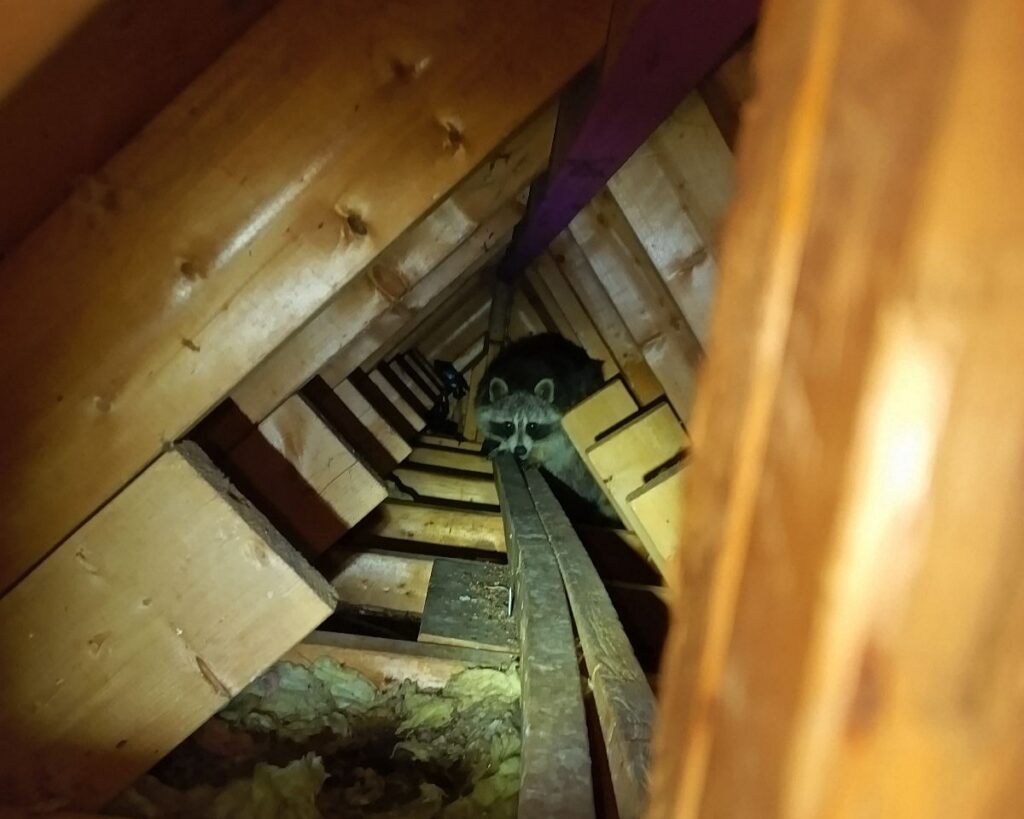
Why Attics Are Attractive to Raccoons
If you’ve noticed signs of raccoon activity above your ceiling, you’re not alone. Many urban and suburban homes in Marietta offer ideal nesting locations. Attics provide:
- Warm, dry environments
- Protection from predators
- Quiet areas with minimal disturbance
That’s why raccoons in attic spaces are a common concern for homeowners, especially during spring and early summer. A female raccoon preparing to have babies seeks out a space that feels secure, and attics fit the bill. These spaces offer the right mix of shelter and safety for raising young kits.
Potential Risks When Raccoons Prepare to Have Babies
While raccoons are fascinating animals, a family living in or around your home can present challenges. Some of the issues we commonly see include:
- Damage to insulation, wiring, or wood as nesting materials are gathered
- Increased noises during the day and night as kits move and play
- Strong odors from nesting materials and waste
It’s important to recognize these risks early. Monitoring signs of activity — without attempting DIY actions — helps you take steps to protect your home and family. Our team uses humane methods to assess and advise on reducing these risks safely.
How to Tell If It’s Just One Raccoon or a Family
Sometimes, a single raccoon might explore a space without plans for kittens. But multiple sounds, especially accompanied by high-pitched chirping or squeaking, usually mean a mother is raising kits nearby.
You might notice:
- Multiple sets of sounds
- Noises that change in pitch and frequency
- Movement at different times of the night
Understanding these patterns helps our experts determine if a single animal is present or if a family group could be forming. We’re trained to identify behaviors indicating raccoon reproductive activity so you’re not left guessing what’s happening in your home.

Why Professional Guidance Matters
When raccoons pick a place to have their babies, it’s not simply a one-time event, it can mean weeks or months of activity until the kits mature. Trying to manage this yourself isn’t recommended. Instead, relying on professional support ensures that:
- Your home’s structure and insulation are protected
- Animals are treated with respect and care
- You get tailored advice specific to your situation
At Skedaddle Humane Wildlife Control, we approach every situation with both your safety and wildlife well-being in mind. We assess conditions, identify signs of nesting or preparation, and help you understand what to expect during raccoon season.
Keeping Your Home Safe During Raccoon Season
Knowing when raccoons have babies is key to protecting your Marietta home. Raccoons typically mate in late winter and give birth in spring, with some births happening as late as summer. When mothers are preparing for kits, signs like increased noise, nesting materials, and unusual attic activity often show up first.
Keeping an eye out for these signs and understanding the timing of raccoon behavior can help you respond appropriately. From recognizing the raccoon breeding season to noticing if raccoons in attic spaces are active, early awareness is helpful.
If you think raccoons may be preparing to have young around your home, our team is here to help. We use humane, professional approaches to assess your property and recommend the best solutions to protect your family and your home, without harmful methods or guesswork.

 Loading...