Lifetime Warranty
On workmanship and materials.
Since 2017, Skedaddle Milwaukee has served the greater Milwaukee area.
No traps. No poison. Permanent exclusion.
Pewaukee is built around water: Pewaukee Lake covers roughly 2,437 acres with about 12.8 miles of shoreline, and the shoreline itself belongs to two separate municipalities — the City of Pewaukee, home to 15,914 residents, which surrounds the smaller, older Village of Pewaukee and its 8,238 residents clustered at the downtown lakefront. Lake homes here run from raised cottages on crawlspace and pier foundations to newer construction set back on higher inland ground, and a lakefront property that sits lightly used for stretches of the year gives wildlife an uninterrupted run at whatever gap it finds. Skedaddle Milwaukee removes mice, bats, squirrels, and birds from Pewaukee homes humanely, with the method chosen at inspection to suit the species and the situation — controlled exit systems such as one-way doors, careful hands-on assistance, or other purpose-designed exclusion techniques — then secures the accessible entry points, cleans and decontaminates wherever the animal was active inside the house, and restores the attic when that is where it was denning.
Reviewed by Bill Dowd, Founder, President & CEO. Last updated August 2026.
Skedaddle Milwaukee covers this area as part of its greater-Milwaukee route, standing on a national company Bill Dowd founded in 1989. The lake sits between two municipalities with different histories: the village incorporated in 1876 out of the original township, while the surrounding city did not incorporate until 1999, after residents watched the village and neighboring Waukesha annex pieces of that township for decades. That history left an older lakefront ring facing newer inland construction, part of why Skedaddle has completed 10+ humane removals here in the past year.
Technicians train in wildlife biology, building repair, decontamination, and attic restoration, using humane methods approved by SPCAs and Humane Societies. From a lakefront cottage to an inland home, the inspection selects the removal method: species, location, and circumstances may call for a controlled exit system such as a one-way door, careful hands-on assistance, or another purpose-designed exclusion technique. After the animals leave, the team secures the accessible entry points. For bat work, Skedaddle follows the Wisconsin DNR's June 1–July 31 direction not to restrict exits.
A sealed crawlspace vent or pier-foundation gap is treated as finished work, not a patch that needs revisiting next spring. The job carries our lifetime guarantee on all workmanship and materials used to seal your home for life, so if an animal comes back through something Skedaddle closed, the crew returns and closes it again at no charge. Homeowners get a written scope up front that itemizes exclusion, cleanup, and warranty coverage before anyone starts, which matters on a lakefront property where the owner may not be on site to notice a problem right away.

Owner/Operator
Marcus has been the Owner and Operator of Skedaddle Milwaukee since 2017. A Milwaukee native, Marcus combines a deep understanding of the local community with extensive academic and hands-on experience in wildlife management. He holds a Master of Science in Wildlife Biology from the University of Wisconsin–Madison and has dedicated his career to helping home and business owners resolve wildlife conflicts safely and humanely. Marcus gained valuable field experience as an intern at a local wildlife rehabilitation center, where he worked closely with Milwaukee residents facing wildlife challenges every day. Seeing firsthand the need for effective, humane solutions inspired him to bring Skedaddle’s proven approach to his hometown.

Wildlife Specialist
Chris was born and raised in Waukesha and has been working with and studying wildlife for much of his life. He earned an Associate's of Science degree with a major in Wildlife Management from Vermilion Community College in Ely, MN in 2006. During his time in Ely, he gained practical experience as a volunteer at the International Wolf Center. Chris then returned to Wisconsin to complete a Bachelor's of Science with a major in Wildlife Ecology-Research and Management and a minor in Captive Wildlife from The University of Wisconsin - Stevens Point (UWSP). He gained more hands-on experience at The Wildlife In Need Center in Oconomowoc where he worked as an intern during the summer of 2008. After graduation, Chris worked for 8 years as a Licensed Wildlife Rehabilitator for the Wisconsin Humane Society.

Wildlife Technician
Kara was born and raised in Waukesha, and has always been an avid animal lover. Over the years, she has had a variety of pets ranging from hamsters, guinea pigs, and hedgehogs, to reptiles such as snakes, salamanders, and lizards. Currently, she has two dogs, two cats, several fish and reptile snakes. Growing up, her first job was at a Humane Society where she had previously spent two years volunteering. After working there, she left to study abroad where she spent her time in New Zealand at a bible school taking leadership classes for roughly 6 months. Though her work background is in management and retail, she wanted to work for Skedaddle to get back to her passion of caring for animals and wildlife. Being able to help homeowners with humane solutions to their wildlife issues brings her great joy.

Assistant Service Supervisor
Lucas Brown has been a valued member of the Skedaddle Humane Wildlife Control team since March 21, 2022, and currently serves as Assistant Service Supervisor for the Wisconsin franchise. With over a decade of experience in retail, Lucas made a deliberate career shift by spending a year in landscaping to gain hands-on, outdoor experience before finding his true calling in humane wildlife control. Motivated by a deep passion for protecting both wildlife and homeowners, he quickly became an integral part of the team. Lucas takes pride in mentoring new technicians and has played a key role in their growth and development, contributing significantly to the ongoing success of the franchise.
Watch Skedaddle's Bill Dowd speak with CBS 58 in Milwaukee about professional, humane wildlife control and the experience behind our trusted approach to protecting homes and families.

Water sets the pattern for what Skedaddle Milwaukee finds in Pewaukee. Four animals cover nearly every call from the past twelve months: mice far more than anything else, then squirrels, bats, and birds. The common thread is a lakefront property that sits lightly used through part of the year — a raised cottage on a crawlspace or pier foundation, a boathouse or detached lake structure, an upper floor above a room nobody opens all winter — sitting next to newer inland construction that fails in entirely different places.

Along the quiet lakefront, mice find the low edges of buildings first. A cottage left still between visits gives them time to test the foundation, especially around raised older homes. Common gaps sit close to the ground: a pulled-away crawlspace vent, a seam where an addition meets the original pier foundation, or an unsealed sill plate near grade.

Squirrels follow the tree canopy straight onto a roof, and the dense shoreline cover around Pewaukee Lake puts branches directly over older lake homes in a way inland subdivisions rarely see. Gray and fox squirrels gnaw through wood, leaving holes roughly baseball-sized, most often where a cottage addition meets the original roofline at an uneven seam.

Above the water, an upper floor left unopened for a season can give bats the still, dark attic space a roost needs. They usually reach it through roofline or soffit gaps already opened by squirrels or woodpeckers, and the Wisconsin DNR instructs that exits stay open June 1 through July 31 while flightless pups remain in the roost.

Birds are the smallest share of the four but turn up reliably in vents and flues left unused on a lightly occupied home — a bathroom exhaust or chimney on a cottage closed for weeks at a stretch is an easy nesting cavity. A technician identifies the species, waits for fledglings to leave, then clears, caps, and decontaminates the opening.
Skedaddle's approved species list covers three more animals that show up in summer around the lake. Raccoons work boathouses and detached lake structures, denning in a roof void a female can reach from a low branch or dock piling, and raccoon removal usually follows a loud noise complaint overhead. Striped skunks den under docks, sheds, and deck skirting on shoreline lots, and skunk removal generally starts with a smell. Norway rats show up in yards backing onto the river outlet, handled through rat removal.
Our Pewaukee technicians can identify the species and confirm the entry points during a single on-site visit.
What areas of Pewaukee does Skedaddle service? Skedaddle Milwaukee services every residential area on both sides of Pewaukee Lake — the Village downtown at the lakefront, the older cottage streets ringing the shoreline, the newer inland subdivisions across the City of Pewaukee, and every neighborhood in between. If a Pewaukee home sits inside the City of Pewaukee or Village of Pewaukee limits, Skedaddle services it.
Booking an inspection in Pewaukee ends with a written plan, not a pitch. The homeowner gets a scheduled appointment, a technician who physically walks the property — crawlspace and all — and a plain explanation of what is happening down there or up in the attic before anyone quotes a number.
Quotes are itemized, so a Pewaukee homeowner can see exclusion hardware, sealing scope, decontamination of the affected areas, and attic or crawlspace restoration priced as separate lines. The written plan covers only conditions the technician found firsthand at the property. Call (414) 522-1999 to get on the schedule.
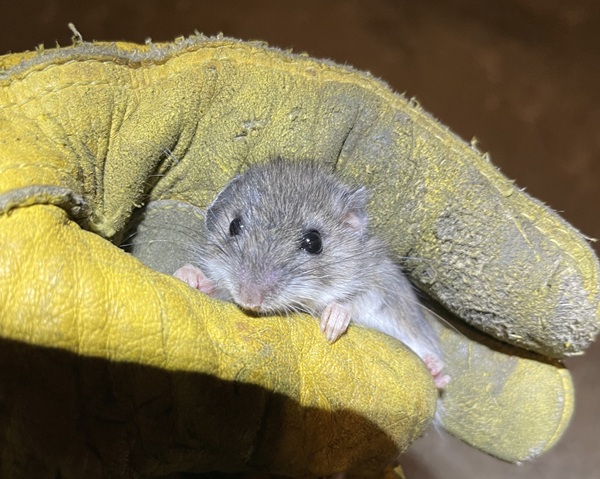

We begin with a detailed inspection of your home to identify the wildlife, locate active entry points, and assess the extent of the problem. Our technicians then use proven, species-appropriate methods to remove animals safely and humanely.
Learn more
After the animals are removed, we clean and decontaminate affected areas, removing nesting materials, droppings, and other traces left behind. When needed, we also address damaged insulation and help restore the space to a clean, healthy condition.
Learn more
Finally, we identify vulnerable areas and seal confirmed or potential entry points to help prevent wildlife from returning. Our durable exclusion work provides lasting protection and includes a lifetime warranty on the entry points we seal.
Learn moreActivity around Pewaukee Lake follows breeding cycles and the calendar of who is actually using the lake homes. Mice own the fall and winter as houses go quiet, bats settle into undisturbed roosts through summer, squirrels peak twice a year with their litters, and birds concentrate in spring nesting season.
| Season | Active species | Notes |
|---|---|---|
| Winter (Dec–Feb) | Mice, squirrels | Mice fully indoors and breeding inside wall voids on lightly used lake homes; first squirrel litters arrive January through March; heaviest crawlspace and attic-noise call volume of the year. |
| Spring (Mar–May) | Squirrels, birds, mice | Birds start nesting in dryer, bath, and kitchen vents plus chimney flues on cottages reopened after winter; first squirrel litter disperses along shoreline canopy; mouse activity drops as they move back outdoors. |
| Summer (Jun–Aug) | Bats, squirrels, birds | Bat maternity season June 1 through July 31 — no exits restricted per Wisconsin DNR; second squirrel litter May through July puts young animals on rooflines; bird fledglings leave nests and vents can finally be capped. |
| Fall (Sep–Nov) | Mice, squirrels, bats | Mice push indoors through crawlspace vents and pier-foundation gaps as overnight lows fall on lake homes going quiet for the season; squirrels cache food and test attics for a winter den; bat calls surface once summer-quiet cottages get opened up again. |
Bird nesting note: Skedaddle identifies the species and waits for fledglings to leave before excluding. The federal Migratory Bird Treaty Act protects native migratory birds, while house sparrows, European starlings, and rock pigeons are non-native and not MBTA-protected.
Quarterly focus: As of late summer 2026, Pewaukee is moving into the stretch where lake homes start emptying out for the season, which is exactly when a quiet crawlspace or an unused upper floor becomes attractive to mice and bats alike. Getting entry points sealed before the first cold snap is far more effective than dealing with an animal that has already settled into a foundation nobody checks between visits. Call (414) 522-1999.
Each job begins by getting the animal out alive, then closing the route it used. The inspection determines how the animal leaves, because species, location, and circumstances change the right approach. A bat colony in an unfinished attic above a rarely used upper floor is handled differently from a mouse working a crawlspace vent, and a squirrel that has gnawed through a cottage-addition seam may need a controlled exit system where a raccoon denning in a boathouse might need careful hands-on assistance instead. The Wisconsin DNR is explicit that more damage results from an animal gnawing its way back out of a building it was closed into, which is why confirming the space is empty always comes before sealing anything.
Litter timing matters most on properties that sit unused for stretches, because a den that goes unnoticed for weeks has time to grow. Squirrel litters land January through March and again May through July, and gestation runs 38 to 45 days with three or four young typical, which means a technician checking a shoreline roofline in spring is very likely standing above dependent young. Finding a litter during the inspection reshapes the plan immediately. Young are hand-removed into a warmed reunion box set near the original opening, and the mother relocates them herself after dusk — the humane outcome and the practical one, since a separated mother will tear a fresh hole through the same seam to reach them.
Cleanup begins after the building is empty and every opening has been closed. In Pewaukee that often means mouse droppings and urine along crawlspace framing and pier-foundation sill plates in older lake homes, bat guano pulled from unfinished attic spaces above upper floors that went unused for months, squirrel nesting material and chewed insulation cleared from attic bays under shoreline canopy, and bird nests removed from vents and flues that sat closed through the off-season. Technicians decontaminate each affected surface so lingering scent does not invite the next animal. For an attic den, damaged insulation is stripped out and the space is restored to the written scope.
The material chosen follows the weak point rather than a one-size-fits-all approach. Gnaw-resistant sheet metal and heavy mesh go over squirrel-worked rooflines and cottage-addition seams, because chicken wire will not hold an animal that chews through wood and metal. Breathable, gap-tolerant mesh goes over bat roost openings so the space can still vent. Crawlspace vents and pier-foundation gaps get weather-rated closure built for freeze-thaw movement and lakefront moisture. All of it carries our lifetime guarantee on all workmanship and materials used to seal your home for life, which matters most on a property the owner cannot check on every week.
Get a Pewaukee-specific inspection and a written scope that spells out exclusion points, decontamination, and warranty terms before any work begins.
Service area: The City of Pewaukee and the Village of Pewaukee, plus Waukesha, Brookfield, Delafield, Hartland, and Menomonee Falls.
Cost comes down to three things: which animal is inside, how many openings have to be sealed, and how much decontamination or restoration the job needs once the animal is out. A Skedaddle Milwaukee technician first inspects the property, then provides an itemized written quote rather than putting a figure on work unseen. Call (414) 522-1999 to book that inspection.
Skedaddle Milwaukee gives priority to urgent situations, especially an animal loose in a living space or an opening still being used. Whether a same-day slot exists depends on the day's route and how many Pewaukee-area calls are already booked. Calling (414) 522-1999 during business hours gets the earliest appointment the schedule can genuinely support.
Any time outside June 1 through July 31. During that maternity window, the Wisconsin DNR directs that bat exits remain open, because sealing an opening could strand flightless pups in a wall or attic. This matters most on lakefront cottages, where an upper floor above the water goes unused for stretches of the year and a colony can settle in undisturbed. Skedaddle Milwaukee will inspect a Pewaukee home and build the exclusion plan at any point in the year, then carry out the physical work on the first available date once the window has passed.
Both of them. Skedaddle Milwaukee services the City of Pewaukee and the Village of Pewaukee, the two separate municipalities that share Pewaukee Lake and the Pewaukee name, from the lakefront blocks around Lake Park and the downtown shoreline through the inland subdivisions on higher ground. If a home sits inside either municipality's limits, Skedaddle services it.
Yes. Skedaddle follows the Wisconsin DNR's published guidance: bat exits stay unrestricted from June 1 through July 31 during the maternity season, and every animal must be out before a building opening is covered. Bird work respects the federal Migratory Bird Treaty Act. Humane methods used by the team are approved by SPCAs and Humane Societies.
Across the past twelve months, mice have been the most common Pewaukee call by a wide margin, with squirrels, bats, and birds behind them. Heading into fall, mice dominate as overnight temperatures drop and rodents push toward crawlspace vents and pier-foundation gaps on lightly used lakefront properties, while bat calls tend to surface once a cottage that sat quiet through summer gets opened up again.
Yes. Completed exclusion work in Pewaukee carries Skedaddle's lifetime guarantee on all workmanship and materials used to seal your home for life. If an animal returns through an opening Skedaddle sealed, the crew comes back to seal that point again at no additional charge.
Cleanup follows the animal, not the room. Wherever wildlife was active inside the house — a crawlspace under a raised cottage, a pier-foundation void, an unfinished attic over a rarely opened upper floor — droppings, urine-soaked material, and nesting debris come out and the surfaces get decontaminated so the scent trail that draws the next animal is gone. If the attic was the den, damaged insulation is removed and the attic is restored to the written scope.
A bat colony that has settled quietly above the rarely opened upper floor of a Pewaukee Lake cottage will keep growing for as long as no one checks on it, a squirrel that gnawed through a cottage-addition seam under the shoreline canopy will widen that same hole rather than give up the attic, and a mouse trail through a crawlspace vent on a lightly used lake home will keep recruiting more mice for as long as the foundation gap stays open. Skedaddle Milwaukee handles mice, bats, squirrels, and birds humanely and end to end across both the City and Village of Pewaukee: identify the species and every opening, remove the animals by the method the inspection calls for — a controlled exit system, careful hands-on assistance, or another purpose-designed technique — seal with materials built for Wisconsin winters and lakefront moisture, clean and decontaminate wherever they were active inside the house, restore the attic when that is where they were denning, and back the sealing work with a lifetime guarantee. The team uses humane methods approved by SPCAs and Humane Societies. Get in touch at (414) 522-1999, or send an online request, and a Skedaddle Milwaukee team member will reply.
Reviewed by Bill Dowd, Founder, President & CEO. Last updated August 2026.
 menu
menu