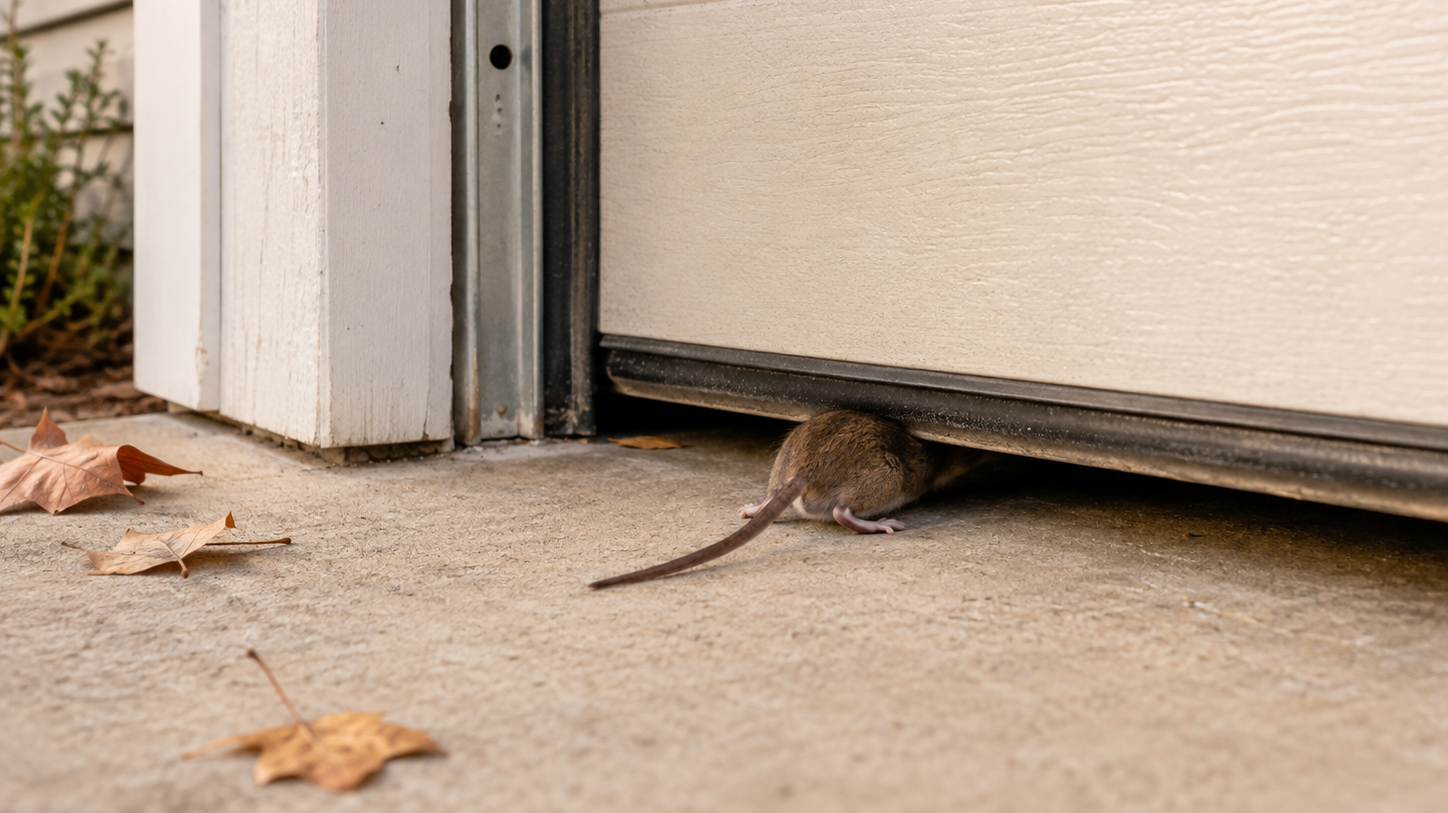
You may notice droppings in your garage and assume the problem stops there. However, mice can enter through small exterior gaps and move into kitchens through shared walls, utility openings, ceilings, and spaces beneath floors. An attached garage may be their first indoor stop, but it does not have to be where they nest or feed.
Pipes, wires, vents, cabinets, and wall cavities connect different parts of your home. These hidden routes allow mice to travel without crossing an open room. You may hear scratching in one place while finding droppings or damaged food somewhere else.
At Skedaddle Humane Wildlife Control in Milwaukee, we inspect the whole property to locate active entrances, travel routes, nesting sites, and contamination. You should not open walls, enter tight spaces, handle droppings, or close suspected entry points yourself. In this blog, we explain how mice move from the garage to the kitchen and how our professional team addresses the complete problem.
Where Do Mice Nest in Garages?
Mice often nest inside stored boxes, behind cabinets, near warm equipment, and within garage walls or ceilings. These areas give them darkness, protection, and access to soft nesting materials. A nest may stay hidden even when you use the garage every day.
- Inside Stored Boxes: Cardboard boxes provide shelter and material that can be torn apart for nesting. Items that remain untouched for long periods create quiet hiding places. You should not sort through boxes when droppings, odors, or nesting material are present.
- Behind Shelving and Cabinets: Narrow spaces behind storage units keep mice close to walls and away from open areas. These locations may also sit beside cracks or utility gaps leading deeper into the structure. Droppings or damaged materials may collect along the hidden edge.
- Around Appliances and Equipment: A freezer, water heater, or other equipment may provide warmth and cover. Pipes, wires, and nearby wall openings can connect the area with other rooms. Homeowners should not reach behind mechanical or electrical equipment to search for a nest.
- Inside Walls and Ceilings: A garage nest may sit behind drywall or above the ceiling instead of in the visible room. Movement through these hidden cavities can make sounds seem as if they come from several places. A professional inspection is needed to locate the occupied area.
The nest, exterior entrance, and indoor food source may all be in different locations. Finding one piece of evidence does not show the full route. Our technicians trace the movement beyond the place where you first noticed activity.
How Mice Enter the Garage
An attached garage often contains several exterior gaps and building connections. The main door, utility lines, foundation, and roof edges can all contain small openings. Once mice enter this space, they may find hidden routes into the rest of the home.
- Worn Garage Door Seals: Weatherstripping can crack, loosen, or pull away from the bottom and sides of the door. Even a small ground-level gap may provide enough room for entry. Light beneath a closed door can point to an area that requires professional inspection.
- Corners Around the Door Frame: Gaps can form where the frame meets brick, siding, or exterior trim. Building materials may shift at different rates as temperatures change. A narrow seam can become a regular route into the garage.
- Utility Penetrations: Electrical cables, water lines, gas lines, and HVAC equipment must pass through exterior walls. Open space may remain around these lines after installation or repair work. These gaps can lead directly into the garage or a connected wall cavity.
- Foundation and Siding Gaps: Cracks, worn mortar, and seams between building materials may provide access near the ground. Landscaping or stored items can hide these areas from view. The visible gap may lead into a much larger space beneath the floor.
- Openings Near the Roofline: Mice can climb rough brick, wood, siding, and exterior fixtures. Once they reach the upper garage, they may use gaps around soffits, fascia, vents, or roof intersections. Entry at roof level may lead into the ceiling rather than the open garage.
A quick look around the garage may miss openings behind trim or stored materials. Sealing one visible gap can also leave another route active. Our inspection covers the full exterior and interior connection.
Shared Walls Connect the Garage to the Main Home
An attached garage often shares walls, ceilings, door frames, and utility systems with the living area. These building connections create protected paths that people cannot see. Mice can move through them without crossing the garage floor in plain sight.
- Gaps Inside the Shared Wall: Openings behind drywall may connect the garage with a hallway, laundry room, kitchen, or another nearby space. A mouse can travel through the framing and appear far from its first entry point. Scratching may be the only early sign.
- Plumbing and Electrical Routes: Pipes, wires, and conduits pass through studs, floors, and ceilings. Small spaces around them can create a path between rooms. These lines may also lead from the garage into the basement or upper floors.
- Openings Around Doors and Trim: The door between the garage and home may close properly while hidden gaps remain behind its frame. Baseboards and wall trim can cover small seams along the floor. Mice may use these protected edges to enter the living area.
- Ceiling Connections: A garage ceiling may connect with an attic or room above it. Openings around lights, ducts, and wiring can lead into these spaces. Movement above the garage can then spread toward other parts of the home.
The shared wall should be inspected as part of the whole structure. Looking only at the garage door may miss the route into the living space. Our technicians follow signs through each connected area.
Pipes, Wires, and Ducts Become Hidden Highways
Building systems connect garages, basements, kitchens, bathrooms, walls, and ceilings. Plumbing lines may pass through several floors before reaching a sink or appliance. Small openings around those pipes can provide a protected route through the structure.
Electrical wiring and conduits also run through wall framing. Mice may move beside these lines or widen nearby gaps in softer materials. Chewed wiring can create a possible fire risk that requires professional attention.
Ductwork and HVAC lines can connect rooms and levels in similar ways. Mice normally travel beside these systems rather than through open living areas. You should not open walls or reach around electrical and mechanical equipment to investigate these paths.
How Mice Reach the Kitchen
The kitchen provides food, water, warmth, and many hidden edges. A mouse can arrive through the wall system without walking across the home where you can see it. Evidence may first appear beneath a sink, behind an appliance, or inside a lower cabinet.
- Openings Under the Sink: Drainpipes and water lines enter through the back or bottom of the cabinet. Gaps around them may connect directly with the wall or floor cavity. Droppings beneath the sink can point to regular movement through this area.
- Spaces Behind Cabinets: Kitchen cabinets do not always sit flat against every wall and floor. Hidden gaps behind the cabinet line can create a long protected path. Mice may travel through this space before entering one lower cupboard.
- Areas Behind Appliances: Refrigerators, stoves, and dishwashers provide warmth and cover. Crumbs, grease, or moisture may also collect where people cannot easily see them. These areas can support feeding as well as movement.
- Baseboard and Floor Gaps: Narrow seams can form where walls, cabinets, and floors meet. These routes may lead toward food storage without requiring movement across the open kitchen. Gnaw marks or dark stains may appear along the edges.
- Pantries and Lower Cabinets: Damaged packages can provide access to stored food. Droppings, shredded material, and scattered crumbs may be found nearby. Homeowners should not remove contaminated items without professional guidance.
Kitchen evidence does not show where the mice originally entered. The route may begin at the garage, foundation, roofline, or another exterior opening. A full inspection connects the kitchen activity with the rest of the structure.
Movement Can Spread Between Floors
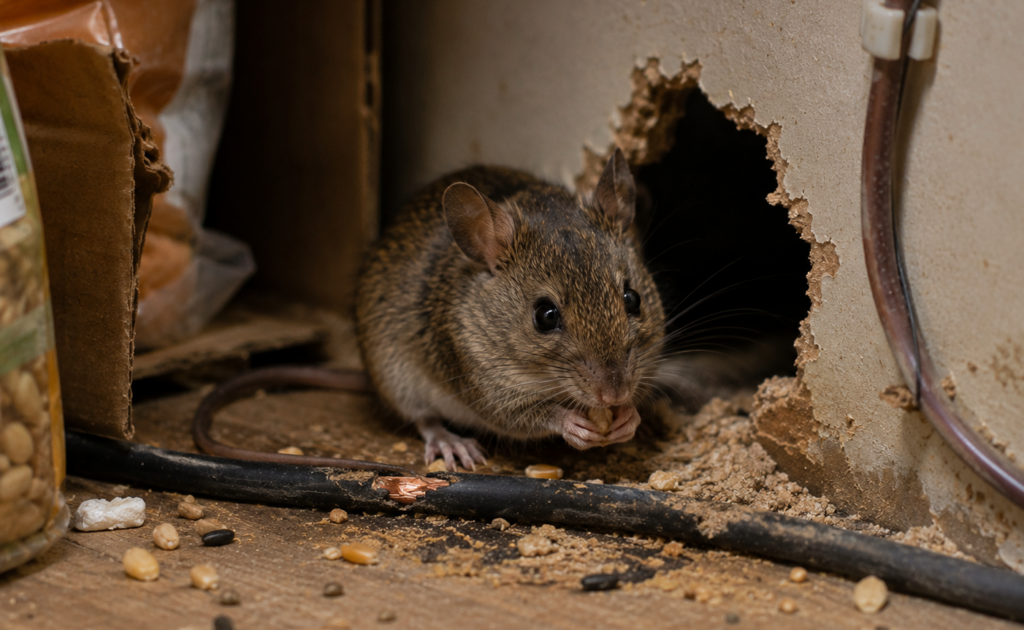
The route may extend beyond the garage and kitchen. Wall cavities connect lower levels with ceilings, attics, and upper rooms. Plumbing stacks and utility lines can provide vertical paths through several floors.
Spaces between floor joists create horizontal routes beneath rooms. Sounds may seem to move from a garage wall to the kitchen ceiling or another part of the home. The nesting area can therefore be far from the place where you hear activity.
Treating only one room may leave the hidden route active. Mice may feed in the kitchen, nest in the garage wall, and enter through a foundation gap. Our whole-home assessment identifies how these separate areas connect.
Signs the Garage-to-Kitchen Route Is Active
Scratching, scurrying, or gnawing inside shared walls may point to movement between rooms. These sounds can seem stronger at night when the home is quiet. Noise alone, however, cannot show the nest or entry point.
Droppings may appear along garage walls, beneath sinks, behind appliances, or inside cabinets. You should not touch, sweep, or vacuum this material. Disturbing it can spread contamination into the surrounding area.
Other signs include damaged food packages, chewed materials, dark stains, odors, and disturbed stored items. Evidence in the kitchen does not prove that entry occurred there. Our technicians connect the indoor signs with exterior openings and hidden travel routes.
Why Milwaukee Homes May Develop Connected Mouse Routes
Milwaukee’s cold winters and cool fall weather can make heated buildings attractive to mice. Garages provide an easier first stop because doors, foundations, and utility lines may contain small exterior gaps. Once inside, shared walls can provide access to warmer living areas.
Older brick homes may have worn mortar, foundation cracks, and openings created during utility upgrades. Newer properties can also have gaps around garage doors, siding, vents, pipes, or cables. Age alone does not decide whether a home is vulnerable.
Snow and freezing weather can make indoor food and shelter even more useful. Attached garages, basements, and kitchens may form one connected system of hidden spaces. Skedaddle Humane Wildlife Control in Milwaukee inspects these connections instead of treating each room as a separate problem.
Mice Removal and Prevention 101
Our professional wildlife team inspects the garage, kitchen, attic, basement, shared walls, foundation, roofline, and utility openings. We trace the route from the exterior entrance to the nesting and feeding areas. You do not need to open walls, crawl into tight spaces, or move contaminated belongings.
We then create a removal plan based on the structure and level of activity. When appropriate, our one-way doors allow mice to leave but prevent them from getting back inside. We do not rely on live trapping and relocation.
Once the activity has ended, our team removes contaminated materials and sanitizes affected areas. We secure vulnerable openings with durable materials designed for long-term protection. This process addresses the occupants, waste, damage, and structural routes that allowed movement through the home.
Frequently Asked Questions
Can mice move from an attached garage into the house?
Yes, mice can move from an attached garage into the main home. Shared walls, ceiling spaces, utility openings, and gaps around door frames may provide hidden routes. The garage may only be the first indoor stage of the problem.
Why are there droppings in the kitchen but not the garage?
Mice may pass through garage walls without spending much time in the open room. The kitchen offers easier access to food, water, warmth, and hidden cabinet spaces. Droppings should not be touched, swept, or vacuumed by homeowners.
Can mice travel between different floors?
Yes, they can travel between floors through wall cavities, plumbing openings, wiring routes, and spaces around ducts. Joist spaces can also provide horizontal paths beneath floors. Sounds in several rooms may come from one connected travel system.
Does one mouse in the kitchen mean more are present?
One sighting cannot confirm how many mice are inside. However, repeated sounds, droppings, damaged food, and evidence in several rooms can suggest a wider problem. Our professional inspection is needed to determine how much of the home has been affected.
Should an entry point be sealed immediately?
No suspected entrance should be sealed before the structure is professionally inspected. Mice may remain inside the walls, garage, attic, or living area. Humane removal should take place before lasting exclusion work begins.
Stop the Route From the Garage to the Kitchen
A small exterior opening can connect your garage with shared walls, ceilings, utility paths, and the kitchen. Mice may enter near the garage door, travel beside pipes or wires, and appear beneath a kitchen sink or behind an appliance. The place where you find droppings may be far from the original entrance or nest.
You should not open walls, enter tight spaces, handle droppings, or seal a suspected entrance yourself. Closing one gap too soon can trap mice inside while other routes remain open. A complete inspection must identify the active occupants, nesting area, feeding locations, and every point that needs professional exclusion.
At Skedaddle Humane Wildlife Control in Milwaukee, we can inspect your entire home and trace the hidden route between affected areas. Our team handles humane removal, cleanup, repairs, and long-term prevention, so you do not need to perform risky work. Contact us to schedule a professional assessment or service appointment. You can also request an estimate to learn more about protecting your home from recurring mouse activity.

 Loading...