Lifetime Warranty
On workmanship and materials.
Skedaddle Milwaukee has served the greater Milwaukee area since 2017.
No traps. No poison. Permanent exclusion.
Wauwatosa grew up along the lush Menomonee River valley, and that river corridor is still the spine of the city today, running through the connected greenway of the Menomonee River Parkway and past the open prairie and woodland of the Milwaukee County Grounds. That much unbroken canopy sits directly against a housing stock where entire blocks still carry 1910s-through-1930s Period Revival and bungalow construction — original wood soffits, open eave returns, and unlined masonry chimneys that were never built with wildlife exclusion in mind. Skedaddle Milwaukee removes squirrels, raccoons, bats and mice from Wauwatosa homes humanely, with the method chosen at inspection to suit the species and the situation — controlled exit systems such as one-way doors, careful hands-on assistance, or other purpose-designed exclusion techniques — then secures the accessible entry points, cleans and decontaminates wherever the animal was active inside the house, and restores the attic when that is where it was denning.
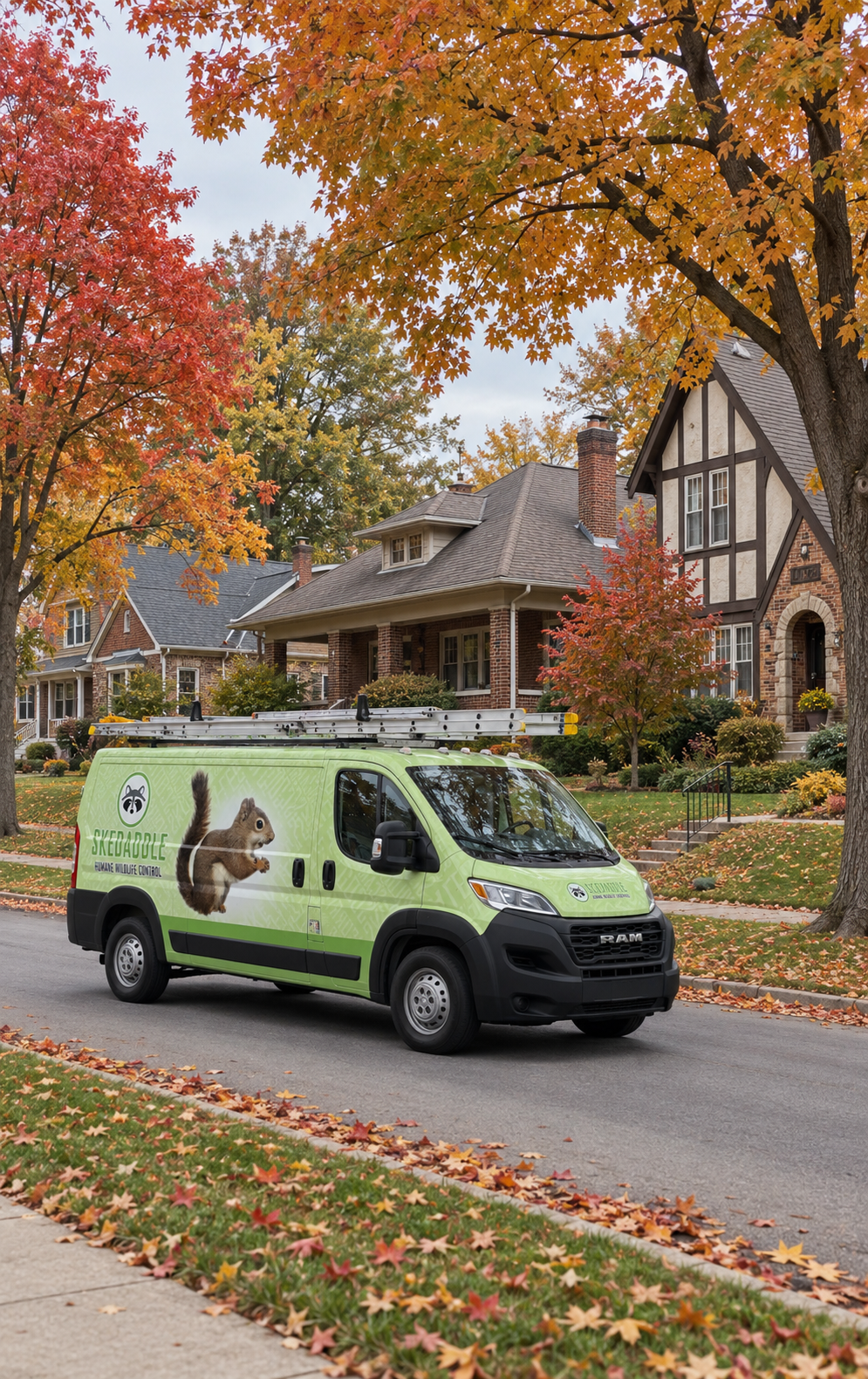
Reviewed by Bill Dowd, Founder, President & CEO. Last updated August 2026.
Skedaddle Milwaukee covers Wauwatosa as part of its greater-Milwaukee route, standing on a national company Bill Dowd founded in 1989. Wauwatosa is dense for its size — 48,387 residents on 13.23 square miles — and was incorporated in 1897, having grown out of the mid-1830s mill settlement at Hart's Mills on the Menomonee River. That density, set against an old housing stock and a continuous run of protected parkland along the river, keeps wildlife and rooflines in close contact, which is why Skedaddle has completed 15+ humane removals here in the past twelve months.
Technician preparation spans wildlife biology, building repair, decontamination, and attic restoration, with humane methods approved by SPCAs and Humane Societies. Inspection findings set the removal approach: the species, location, and circumstances may call for a controlled exit system such as a one-way door, careful hands-on assistance, or another purpose-designed exclusion technique. Once the animals have left safely, technicians secure the accessible entry points, fitting each repair to the pre-war detail it closes. Bat work follows the Wisconsin DNR direction to leave exits unrestricted from June 1 through July 31.
At an original wood soffit or masonry chimney, Skedaddle seals the specific joint with materials suited to that component and its weather exposure. The work carries our lifetime guarantee on all workmanship and materials used to seal your home for life, so if an animal comes back through something Skedaddle closed, the crew returns and closes it again at no charge. Homeowners get a written scope up front that itemizes exclusion, cleanup, and warranty coverage before anyone starts, which is how a Washington Highlands or Village homeowner knows exactly where the job ends.
Watch Skedaddle's Bill Dowd speak with CBS 58 in Milwaukee about professional, humane wildlife control and the experience behind our trusted approach to protecting homes and families.

Four animals account for nearly every Wauwatosa call Skedaddle Milwaukee has taken over the past twelve months: squirrels most often, along with raccoons, bats, and mice. That mix is the direct product of Wauwatosa's build: entire blocks of 1910s-to-1930s bungalows, Tudor revivals, and period-revival duplexes, with original eave returns and unlined chimneys, sitting against the continuous parkland of the Menomonee River corridor.

Squirrels lead Wauwatosa calls because gray and fox squirrels gnaw through wood, leaving roughly baseball-sized holes, and the original wood trim at pre-war open eave returns is easier to breach than newer soffit assemblies. Mature canopy near Hoyt Park and the parkway provides direct roof access. Litter periods fall from January through March and again from May through July.

Raccoons move along the wooded Hoyt Park–Currie Park–County Grounds corridor and into older homes beside the parkway. A female seeking a den can work loose chimney flashing or an open eave return on a period-revival roofline; the first sign for a homeowner is often disturbance in the ceiling cavity.

Bats appear nearly as often as raccoons in Wauwatosa, where pre-war construction leaves narrow roosting gaps at unlined chimneys, original wood soffits, and slate or clay-tile roof edges. The Wisconsin DNR instructs that exits remain unrestricted from June 1 through July 31 during maternity season, so work at these details is planned outside that period.

Mice enter Wauwatosa's pre-war bungalows low, at the seam where a rubble-stone or block foundation meets the sill plate, at unsealed utility penetrations, and under original wood porch framing. Because these gaps are structural rather than chewed, permanent sealing matters more than trapping. Cold nights bring the first scratching behind a kitchen wall.
Beyond the four species above, a few other animals turn up in Wauwatosa. Nesting birds use unlined masonry chimney flues and open eave returns, and because fledglings must leave before a flue can be capped, that work is handled through bird removal. Striped skunks den under decks, porches, and sheds on lots backing onto the county-grounds conservancy land and the parkway greenway, addressed by skunk removal. Norway rats turn up in yards along the river corridor and older alleys near the Village, handled through rat removal.
Our Wauwatosa technicians can identify the species and confirm the entry points during a single on-site visit.
What areas of Wauwatosa does Skedaddle service? Skedaddle Milwaukee services every residential area of Wauwatosa — the curving, canopy-heavy streets of the east side, the river-valley blocks around the Village, and the newer west-side subdivisions toward the county line. If a Wauwatosa home sits inside city limits, Skedaddle services it.
A Wauwatosa inspection ends with a written plan. The homeowner receives a scheduled appointment, a technician who physically walks the property, and a clear on-site explanation of the conditions before any work is recommended.
Quotes are itemized, so a Wauwatosa homeowner can see exclusion hardware, sealing scope, decontamination of the affected areas, and attic restoration priced as separate lines. Recommendations are limited to conditions the technician physically documented on the property. Call (414) 522-1999 to get on the schedule.
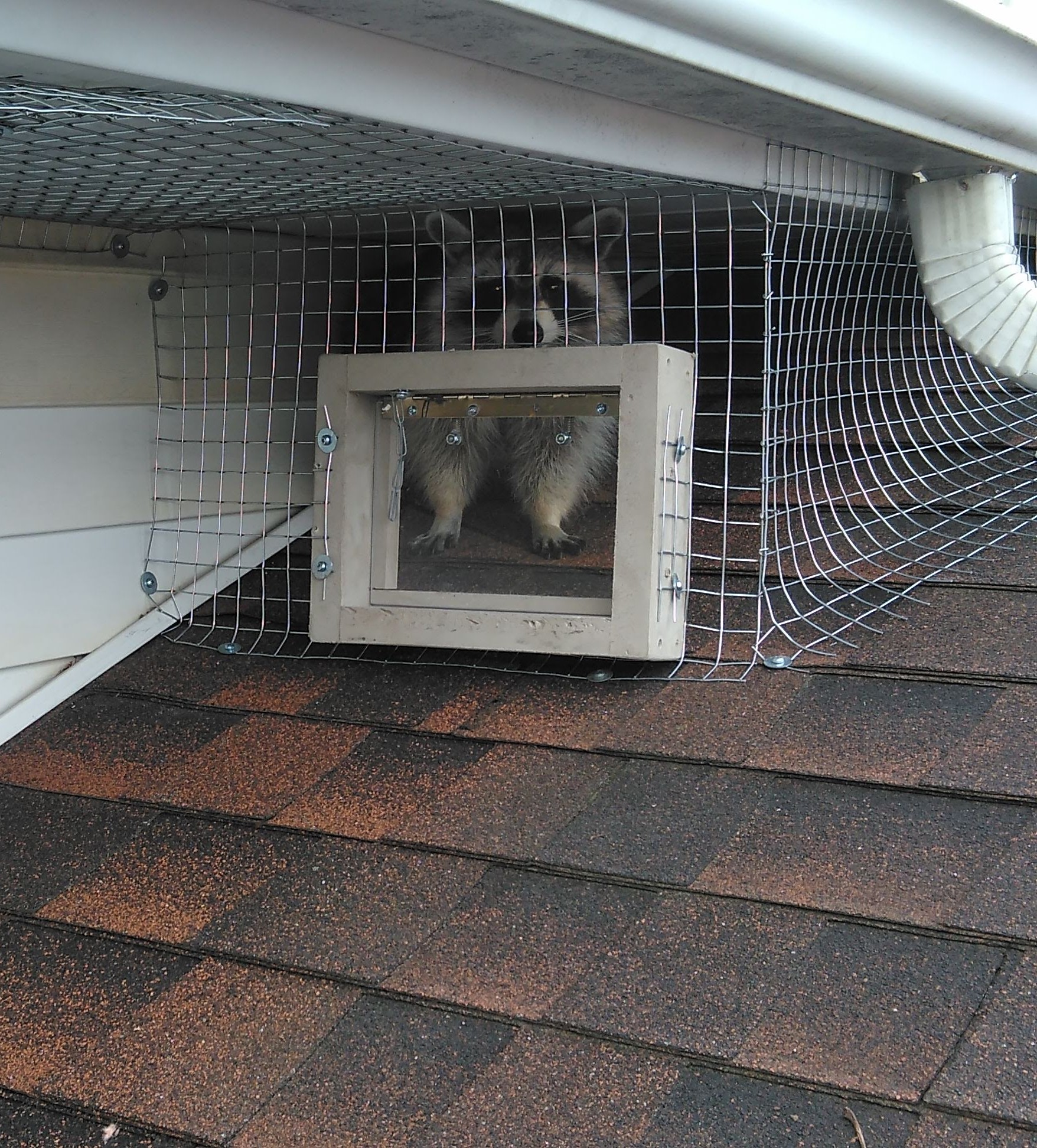

We begin with a detailed inspection of your home to identify the wildlife, locate active entry points, and assess the extent of the problem. Our technicians then use proven, species-appropriate methods to remove animals safely and humanely.
Learn more
After the animals are removed, we clean and decontaminate affected areas, removing nesting materials, droppings, and other traces left behind. When needed, we also address damaged insulation and help restore the space to a clean, healthy condition.
Learn more
Finally, we identify vulnerable areas and seal confirmed or potential entry points to help prevent wildlife from returning. Our durable exclusion work provides lasting protection and includes a lifetime warranty on the entry points we seal.
Learn moreActivity here follows the calendar closely, driven by breeding cycles and Wisconsin's winters. Squirrels peak twice a year with their litters, mice push indoors as overnight lows fall, raccoons look for denning space in late winter and spring, and bats return to roofline and chimney gaps after the maternity window.
| Season | Active species | Notes |
|---|---|---|
| Winter (Dec–Feb) | Mice, squirrels | Mice move fully indoors and breed inside wall voids and along sill plates on Wauwatosa's older housing stock; first squirrel litters arrive January through March; heaviest attic-noise call volume of the year. |
| Spring (Mar–May) | Raccoons, squirrels, birds | Raccoons seek denning space along the Menomonee River Parkway and work chimney flashing and open eave returns; first squirrel litter disperses through mature canopy; birds begin nesting in unlined masonry flues and open eave returns. |
| Summer (Jun–Aug) | Bats, squirrels, birds | Bat maternity season June 1 through July 31 — no exits restricted per Wisconsin DNR; second squirrel litter May through July puts young animals on rooflines; bird fledglings leave nests and flues can finally be capped once the season ends. |
| Fall (Sep–Nov) | Mice, squirrels, bats | Mice push indoors at foundation seams and utility penetrations as overnight lows drop; squirrels cache food and test old soffit returns and roof-edge trim for a winter den; bat and chimney work resumes from August 1 as the maternity window closes. |
Bird nesting note: Skedaddle identifies the species and waits for fledglings to leave before excluding. The federal Migratory Bird Treaty Act protects native migratory birds, but not non-native house sparrows, European starlings, or rock pigeons. Chimney swifts are MBTA-protected birds that nest in masonry chimneys; the U.S. Fish & Wildlife Service advises chimney work roughly from September/October through March/April, outside the swifts' nesting and roosting season — a particularly relevant window where much of Wauwatosa's chimney stock predates modern flue liners.
Quarterly focus: As of late Summer 2026, Wauwatosa is heading into its busiest stretch. The summer squirrel litter is dispersing now, which is exactly when young squirrels start testing old eave returns and roof-edge trim for a winter den, and the bat maternity window closed July 31, allowing chimney and soffit exclusion work to resume from August 1. Getting the roofline and chimney sealed before the first hard frost is far more manageable than sharing an attic through a Wisconsin winter. Call (414) 522-1999.
Each job begins by getting the animal out alive, then closing the route it used to enter. Inspection determines the exit approach because the correct method changes with the species, location, and circumstances. A raccoon working an open eave return near the Menomonee River Parkway may be given a controlled exit system sized to it, so it leaves on its normal nightly foraging run and finds the route closed on return, while a litter found during that same inspection is more likely to need careful hands-on assistance. A squirrel colony in a Washington Highlands attic has all but one or two openings closed first, whatever the exit method — the Wisconsin DNR is explicit that more damage results from a squirrel gnawing its way back out of a building it was closed into. For bats it means timing the work outside the maternity window and sealing an unlined chimney or soffit gap for good. Permanent closure waits until the final animal is confirmed out.
Litter timing drives much of the Wauwatosa calendar. Squirrel litters land January through March and again May through July, and gestation runs 38 to 45 days with three or four young typical, which means a technician on a spring roofline near the county grounds is often standing above dependent young. If the inspection finds a litter, the removal plan is adjusted immediately. Technicians place hand-removed young in a warmed reunion box near the original opening, allowing the mother to relocate them to a secondary den after dusk. That is both the humane outcome and the practical one — a separated mother will tear a fresh hole through the same old soffit run to reach them.
After the building is confirmed empty and every opening is sealed, technicians remove the remaining contamination. In Wauwatosa that often means squirrel nesting material and chewed insulation pulled from attic bays behind period-revival roof lines, bird nests and debris cleared from unlined chimney flues, bat guano removed from soffit voids and chimney interiors, and residue from other wildlife activity in the oldest housing stock. Each affected surface is decontaminated so remaining scent does not draw another animal. Where the attic served as a den, damaged insulation is stripped and the space is restored to the written scope.
Material selection follows the failed building component rather than a uniform treatment. Gnaw-resistant sheet metal and heavy mesh go over squirrel-worked eave returns and gable louvers, because chicken wire will not hold an animal that chews through brick and metal. Breathable mesh goes over vents that still need airflow. Chimney caps are fitted to the specific flue dimensions of an unlined masonry chimney rather than a universal size. All of it carries our lifetime guarantee on all workmanship and materials used to seal your home for life, which is why homeowners on the same street with the same century-old roofline are not repeating this job every few seasons.
Get a Wauwatosa-specific inspection and a written scope that spells out exclusion points, decontamination, and warranty terms before any work begins.
Service area: Wauwatosa and the greater Milwaukee metro, including Milwaukee, West Allis, Brookfield, Elm Grove, and Menomonee Falls.
Cost depends on which animal is inside, how many openings need sealing, and how much of the roofline or attic detail is involved once the animal is out — a 1920s soffit return with built-up gnaw damage is a different job than a single vent cap. A Skedaddle Milwaukee technician inspects the property first and hands over an itemized written quote before any work begins. Call (414) 522-1999 to book that inspection.
Urgent situations move to the front of the Skedaddle Milwaukee schedule, particularly an animal loose inside a living space or an opening that is actively in use. Whether a same-day slot is available depends on the day's route and how many Wauwatosa-area calls are already booked. Call our team within business hours to get on the schedule for the earliest appointment.
Any time outside June 1 through July 31. The Wisconsin DNR instructs that bat exits not be restricted during that maternity window, because sealing an opening then would strand flightless pups inside a chimney flue or soffit void. Skedaddle Milwaukee will inspect a Wauwatosa home and plan the exclusion at any point in the year, then carry out the physical work on the first available date once the window has passed.
All of them. Skedaddle Milwaukee works the whole city, from the curving streets of Washington Highlands and the older blocks of the Village through Story Hill-adjacent East Tosa, Tosa Village, Glenview Heights, Pabst Park, Historic Heights, and the newer subdivisions on the west side near Currie Park Estates. If the address is inside Wauwatosa city limits, it is inside the service area.
Yes. Skedaddle follows the Wisconsin DNR's published guidance: bat exits remain unrestricted from June 1 through July 31 during maternity season, and technicians confirm a building is empty before covering an opening. Chimney swifts and other native birds nesting in Wauwatosa's older chimneys are protected under the federal Migratory Bird Treaty Act. Skedaddle technicians use humane methods approved by SPCAs and Humane Societies.
Across the past twelve months, squirrels have been the most common Wauwatosa call, followed by birds, raccoons, bats, and mice. Heading into fall, squirrels dominate as the second litter of the year disperses and young animals test old soffit returns and roof-edge trim for a winter den, while chimney and vent activity from birds tapers as nesting season closes.
Yes. Completed exclusion work in Wauwatosa carries Skedaddle's lifetime guarantee on all workmanship and materials used to seal your home for life. If an animal re-enters through an opening Skedaddle sealed, the crew returns to seal that opening again under the guarantee.
Cleanup follows the animal, not the room. Wherever wildlife was active inside the house — an attic bay behind a knee wall, a chimney flue, a wall void behind old lath and plaster, a foundation sill — droppings, urine-soaked material, and nesting debris come out and the surfaces get decontaminated so the scent trail that draws the next animal is gone. When an attic served as the den, damaged insulation is removed and the space is restored to the written scope.
A raccoon that has learned an open eave return above the Menomonee River Parkway will keep returning to that same seam, a squirrel litter dispersing across a Washington Highlands roofline will gnaw a fresh baseball-sized hole rather than give up an attic, and a bat colony roosting in an unlined chimney in the Village will keep using that flue every summer until the opening is closed for good. For all four species, Skedaddle Milwaukee carries the work from inspection through final sealing: technicians identify the animal and each opening, use the inspection-appropriate method — a controlled exit system, careful hands-on assistance, or another purpose-designed technique — seal with materials suited to Wisconsin winters, clean and decontaminate the interior areas used, restore an attic that served as the den, and back the sealing work with a lifetime guarantee. Their work uses humane methods approved by SPCAs and Humane Societies. Dial (414) 522-1999 or file a request online, and a Skedaddle Milwaukee team member will respond.
 menu
menu