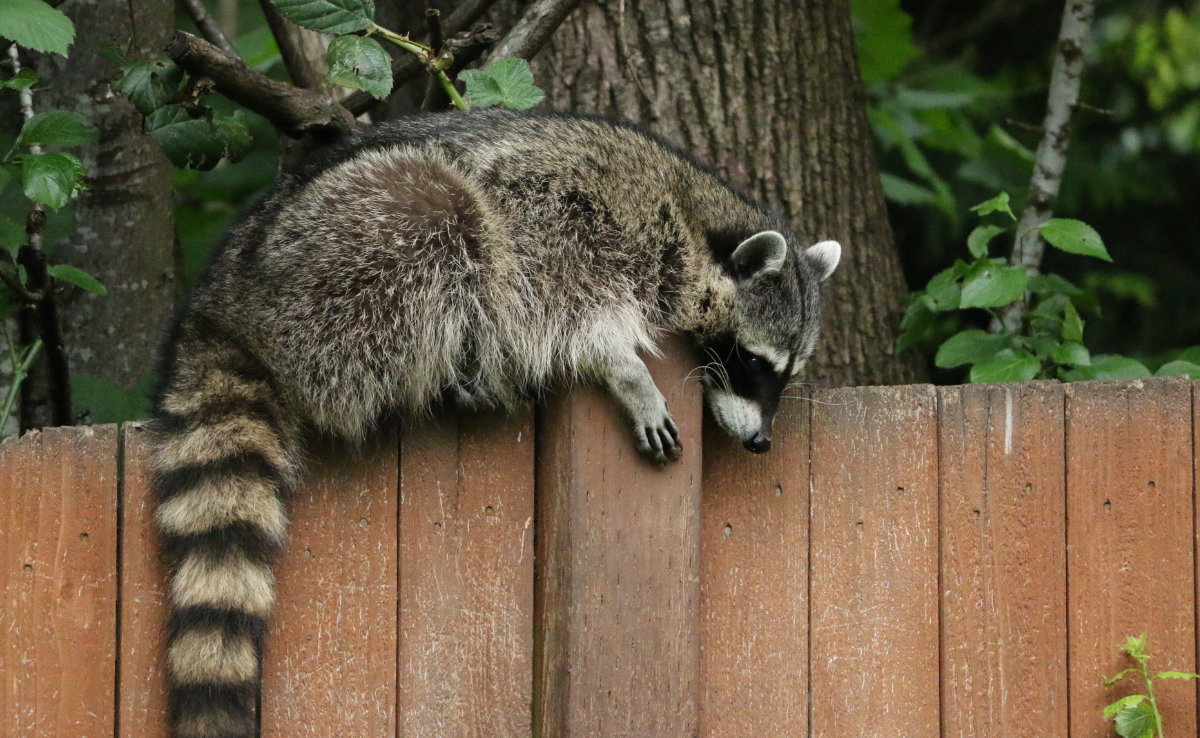
Quick answer: Hot, dry weather can increase wildlife pressure around Niagara homes and businesses as animals search for water, food, shade, and secure shelter. Raccoons, squirrels, bats, birds, skunks, mice, and rats may investigate vents, soffits, attics, wall cavities, crawl spaces, and areas beneath structures. Repeated activity, noises, droppings, or damaged entry points should be assessed through humane, professional wildlife control from Skedaddle Humane Wildlife Control.
Summer heat affects more than outdoor comfort. It changes where animals travel, when they feed, and which sources of water and shelter they use. For property owners across St. Catharines, Niagara Falls, Welland, Fort Erie, Grimsby, Port Colborne, and Niagara-on-the-Lake, those changes can bring wildlife closer to homes, restaurants, warehouses, offices, farms, vineyards, and other commercial buildings.
An Associated Press article republished through Ground News recently examined how high temperatures affect birds and other wildlife. Animals have natural cooling strategies, but prolonged heat can place them under stress, particularly when water is limited and warm nights offer little recovery. That same pressure may lead wildlife to investigate human properties where shade, condensation, waste, gardens, and structural shelter are concentrated.
Seeing an animal outside does not necessarily mean there is a wildlife-control problem. The concern begins when animals repeatedly approach a building, disappear through an opening, establish a den or nest, or leave evidence inside. At that point, simply removing an attractant or closing the visible hole is unlikely to solve the entire issue. Humane wildlife removal must account for the species, active entry points, dependent young, contamination, property damage, and the conditions that could allow another animal to move in.
How Does Heat Affect Wildlife?
Wildlife regulates body temperature in different ways. Mammals may pant, rest in shade, reduce daytime movement, or become more active after sunset. Birds do not sweat; many open their beaks, pant, bathe, or rapidly move tissues in the throat through a process called gular fluttering. Squirrels may stretch against cooler surfaces, while skunks and raccoons often wait until evening to become active.
Problems develop when heat continues for several days, humidity limits evaporative cooling, water becomes scarce, or overnight temperatures remain high. Young, injured, sick, and weakened animals are especially vulnerable because they may not be able to relocate or compete for resources.
Environment and Climate Change Canada has historically used Southern Ontario heat-warning criteria that include daytime highs of at least 31°C and nighttime lows of at least 20°C, or a Humidex of at least 40, for two or more days. These are human public-health thresholds rather than wildlife tolerance limits, but they indicate sustained conditions that can alter animal behaviour throughout Niagara.
Chart: Ontario heat-warning criteria by region
Source: Environment and Climate Change Canada. Criteria shown apply when conditions are forecast for two or more consecutive days. These thresholds are designed for human health alerts and should not be interpreted as exact wildlife tolerance limits.
Why Can Hot Weather Bring Wildlife Closer to Homes and Businesses?
Heat does not automatically send wildlife indoors, and some spaces—especially poorly ventilated attics—can become extremely hot. However, buildings and maintained properties concentrate resources that may be harder to find outdoors. An animal exploring a property may discover:
- Shade: Decks, sheds, porches, rooftop equipment, loading docks, and dense landscaping create protected areas.
- Water: Birdbaths, irrigation, leaking taps, condensation, floor drains, ponds, pet bowls, and roof drainage provide moisture.
- Food: Garbage, grease bins, outdoor dining waste, birdseed, compost, pet food, fallen fruit, insects, and garden produce encourage return visits.
- Shelter: Soffits, wall cavities, crawl spaces, vents, chimneys, garages, barns, and spaces beneath structures offer protection from weather and predators.
- Established den sites: A mother may continue using a nest or den because dependent young cannot leave, even if temperatures become uncomfortable.
The first visit may be temporary. The risk increases when food, water, and an accessible opening are available together. An animal that repeatedly follows the same route can widen a weak point, leave scent cues, or establish a secure place to rest and raise young. Once wildlife is inside, the heat-related search for relief has become a property-control issue.
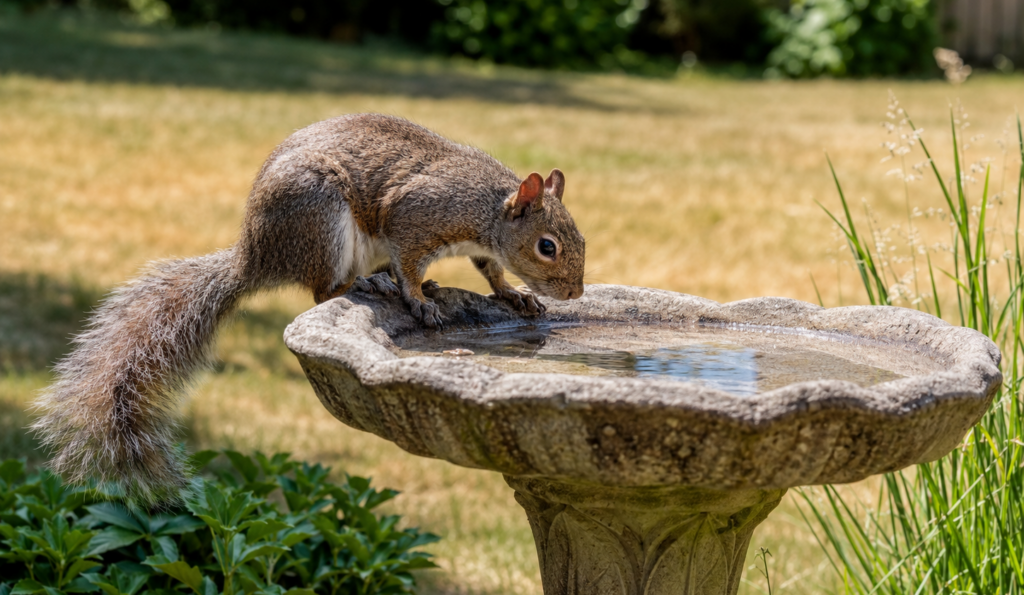
Which Wildlife May Move Toward Niagara Properties During Hot Weather?
Raccoons
Raccoons are usually active in the evening and overnight, when summer temperatures are lower. They may visit garbage areas, gardens, ponds, pet dishes, and outdoor dining spaces before investigating nearby shelter. Roof edges, loose soffits, chimneys, garages, and attics can resemble the protected cavities they use in nature.
Heavy movement overhead at night, torn roofing materials, damaged vents, or a raccoon repeatedly climbing the same section of a building may indicate an established den. A female with young cannot simply be excluded without locating the babies. Humane raccoon removal keeps the family together and secures the entry after every animal is safely out.
Squirrels
Squirrels often rest during the hottest part of the day and become more active in the morning or late afternoon. Mature trees and branches can give them direct access to rooflines, fascia, soffits, and vents. Once a squirrel finds a vulnerable opening, an attic may provide a protected nesting site despite its fluctuating temperature.
Daytime scratching, rolling or scampering sounds, chewed materials, and squirrels disappearing into the same roof gap are common warning signs. Growing young may also make a summer infestation louder and more noticeable.
Bats
Bats emerge around dusk to feed on insects, then return to narrow, protected roosting spaces. Older Niagara homes, barns, rooflines, attics, and wall gaps may provide suitable crevices. Hot conditions can cause bats to move within a roost, gather near openings, emerge earlier, or occasionally enter occupied living areas.
Bat removal requires careful timing. Ontario guidance notes that flightless pups may be present from roughly mid-May through mid-August. Sealing an opening or installing a one-way door at the wrong time can separate mothers from young. A bat found on the ground or in a room should not be handled, particularly because possible human or pet exposure may require public-health or veterinary guidance.
Birds
Birds may seek shade, water, and protected nesting sites around buildings. Bathroom vents, dryer vents, soffits, chimneys, commercial signs, warehouse ledges, and rooftop equipment can all appear suitable. Unfortunately, these spaces can trap heat, block ventilation, collect nesting debris, and create moisture or fire concerns.
Chirping inside a wall or vent, nesting material protruding from an opening, repeated flights to the same location, or droppings beneath a ledge can indicate an active nest. Removing material or screening the opening before the nest is inactive can trap adults or dependent young.
Skunks
Skunks generally wait until cooler evening hours to search for insects, grubs, fallen fruit, garbage, and water. Shaded spaces beneath decks, sheds, porches, and additions can become den sites, particularly when an edge is open or the soil is easy to excavate.
Persistent odour, cone-shaped holes in the lawn, tracks near a structure, or repeated movement beneath the same deck may indicate more than a passing visit. The opening should not be blocked until occupancy and the possible presence of babies have been assessed.
Mice and Rats
Dry weather can make condensation, drains, leaking fixtures, irrigation, pet water, and food-service waste more valuable to rodents. Mice and rats can enter through small foundation gaps, worn door sweeps, utility penetrations, roof intersections, vents, drains, and damaged masonry.
Once inside, they may settle in walls, ceilings, basements, kitchens, storage rooms, crawl spaces, and utility areas. Because rodents reproduce out of sight, a few droppings or one nighttime sighting may represent a larger problem than is visible.
What Are the Warning Signs of Wildlife Inside a Building?
Animals often remain hidden long after they enter. Recognizing early signs can limit contamination and damage while making humane removal more straightforward.
Sounds
- Heavy footsteps, thumping, or dragging in an attic at night may suggest raccoons.
- Fast scampering or rolling sounds during the day may point to squirrels.
- Scratching, gnawing, or squeaking in walls can indicate mice or rats.
- Chirping, fluttering, or wing sounds near vents may indicate birds or bats.
- Repeated noise from one location can identify a den, nest, or travel route.
Visible exterior evidence
- Torn soffits, bent flashing, damaged shingles, or enlarged roof gaps
- Loose or broken vent covers and chimney caps
- Nesting material protruding from vents or eaves
- Grease marks, dark staining, fur, feathers, or tracks around an opening
- Fresh digging beneath decks, sheds, porches, or foundations
- Wildlife repeatedly entering and leaving the same location
Indoor evidence
- Droppings or urine stains in attics, cabinets, basements, storage areas, or utility rooms
- Strong, unfamiliar odours that persist after cleaning
- Chewed packaging, wood, insulation, plastic, or wiring
- Damaged or compressed attic insulation
- Nesting material inside vents, wall cavities, or mechanical spaces
- Unexplained insects or parasites near a suspected den
Business-specific warning signs
Commercial wildlife problems may first appear as damaged stock, contaminated packaging, droppings behind equipment, noise above suspended ceilings, odours near customer areas, or repeated sightings around dumpsters and loading docks. Staff may notice different pieces of evidence on different shifts, so sightings and cleanup concerns should be recorded and reported rather than handled individually.
What Risks Can Wildlife Create in Homes and Businesses?
Wildlife inside a building is not only inconvenient. The longer animals remain, the greater the potential for structural damage, contamination, safety concerns, and disruption.
Damage to roofs, vents, and building materials
Raccoons can tear roofing and soffit materials to enlarge an opening. Squirrels and rodents may gnaw wood, plastic, and wiring. Birds can pack vents with nesting material, while skunks can excavate beneath decks and other structures. An entry point that begins as a small weakness may become larger through repeated use and exposure to weather.
Fire and ventilation concerns
Chewed electrical wiring can increase fire risk. Bird nests in dryer or exhaust vents can restrict airflow, hold combustible debris, and interfere with moisture removal. Damaged roof vents and soffits may also allow rainwater into insulation and concealed building areas.
Contamination and indoor air concerns
Droppings, urine, nesting debris, fur, feathers, and soiled insulation can create persistent odours and contaminate surfaces. Disturbing dry accumulations without the correct protective equipment may release dust into the air. Bird and bat droppings have been associated with fungal hazards, while raccoon feces can contain roundworm eggs. Professional cleanup helps protect occupants and reduces scent cues that may attract future wildlife.
Bites, scratches, and disease exposure
Even an animal that appears weak or calm may defend itself when cornered. Raccoons, skunks, and bats are among the Ontario mammals that can carry rabies. People should avoid direct handling and seek prompt guidance after a possible bite, scratch, or bat exposure. Pets should also be kept away from wildlife and evaluated by a veterinarian when contact may have occurred.
Separated or trapped young
Closing an opening without finding the entire family can trap adults inside or leave babies without their mother. Animals may then damage additional materials while attempting to escape. The resulting odour, noise, and welfare concerns can make the situation far more difficult than the original entry.
Operational and reputational risks for businesses
Wildlife can contaminate inventory, food-preparation areas, storage rooms, and customer spaces. Droppings near an entrance, odours in an office, or an animal appearing during operating hours can affect customer confidence. Businesses may also face downtime while contaminated materials are removed or damaged vents, ceilings, and wiring are repaired. Early professional intervention helps contain the issue and document where corrective work is needed.
Why Is DIY Wildlife Removal Especially Risky During Hot Weather?
When animals are already responding to heat, chasing, cornering, or separating them can add unnecessary stress. DIY work also tends to focus on the most obvious animal or opening rather than the full building.
Common mistakes include:
- Sealing a hole while animals or dependent young remain inside
- Pulling a bird nest from an active vent
- Attempting bat exclusion during the maternity season
- Approaching a raccoon, skunk, or bat that appears weak
- Using poison, glue boards, or other methods that cause suffering and leave animals hidden in walls
- Cleaning droppings without suitable protective equipment or containment
- Repairing one opening while secondary entry points remain available
A humane solution begins with identification. Different species use buildings differently, remain active at different times, and require different removal timing. A professional inspection replaces guesswork with a plan that protects the animals, occupants, and structure.
How Does Skedaddle Remove Wildlife Humanely?
Skedaddle uses a three-step process designed to resolve the current infestation and reduce the risk of animals returning.
1. Inspect & Remove
The process begins with a detailed inspection of the home or business. Technicians examine rooflines, vents, soffits, chimneys, attics, wall gaps, foundations, decks, crawl spaces, utility penetrations, and other vulnerable areas. A 35-point assessment and tools such as thermal imaging, where appropriate, can help identify hidden activity, nesting areas, contamination, and damage.
The inspection determines:
- Which species is present
- How many entry points may be active
- Whether babies or flightless young are involved
- Where the animals are travelling or nesting
- What removal method is appropriate for the season
- Which repairs are required after removal
The humane removal plan is tailored to the species and situation. Babies may be retrieved by hand and placed so their mother can reunite with them. Properly timed one-way doors may allow mobile animals to leave without returning. For bats and nesting birds, seasonal restrictions and the development of young must be considered before exclusion begins.
2. Clear & Clean
Removing the animals is only part of the solution. Droppings, urine, nesting material, damaged insulation, food debris, and other contamination may remain in attics, vents, walls, basements, or commercial storage areas.
Depending on the property, cleanup may include removing contaminated nesting material and debris, addressing heavily soiled or damaged insulation, cleaning and sanitizing affected areas, reducing odours and animal pheromones that can encourage repeat activity, and identifying damaged wiring, vents, or building materials that require attention.
This stage helps restore a safer environment and gives the property owner a clearer understanding of the damage caused by the infestation. It is particularly important for businesses where contamination can affect stock, food areas, employee workspaces, or customer-facing spaces.
3. Prevent & Protect
Wildlife removal is not complete if the building remains accessible. After the animals are safely out, Skedaddle repairs and reinforces entry points using durable exclusion materials suited to the structure and species.
Prevention may include:
- Protecting roof and exhaust vents with heavy-gauge galvanized steel screening
- Repairing vulnerable soffit and fascia areas
- Securing gaps around roof intersections, chimneys, foundations, pipes, and cables
- Installing barriers beneath decks, sheds, and other structures
- Reinforcing areas where animals have chewed, pulled, or pushed through materials
- Correcting secondary openings discovered during the inspection
This final stage turns removal into a long-term wildlife-control solution. Qualifying workmanship and materials may be supported by Skedaddle’s lifetime warranty, giving property owners confidence that the repaired areas are protected against renewed wildlife entry.
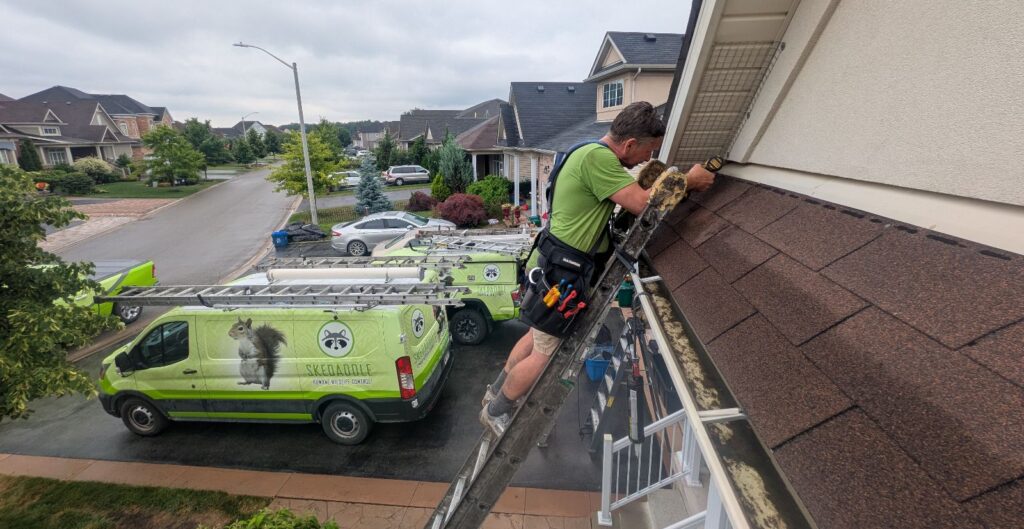
How Can Niagara Properties Reduce Wildlife Pressure During Hot Weather?
Good prevention removes rewards and protects the building before an animal establishes a den or nest.
For homes
- Store garbage and compost in durable, tightly closed containers.
- Feed pets indoors and bring food and water bowls inside overnight.
- Change birdbath water frequently and clean the basin regularly.
- Collect fallen fruit and spilled birdseed.
- Repair loose soffits, damaged fascia, and deteriorated vent covers.
- Trim direct roof access from branches where practical.
- Check beneath decks and sheds for fresh digging.
- Arrange an inspection before closing any opening that may be active.
For businesses
- Keep dumpsters, grease bins, and food waste closed and cleaned.
- Repair leaking fixtures, standing water, and condensation problems.
- Inspect loading docks, rooftop equipment, service doors, and utility penetrations.
- Replace worn door sweeps and secure gaps around pipes or cables.
- Clean outdoor dining and waste areas promptly.
- Train staff to report droppings, odours, gnaw marks, and repeated sightings.
- Use a professional inspection to coordinate removal, sanitation, and repairs.
Frequently Asked Questions About Heat and Wildlife Control
Does hot weather make wildlife enter homes?
Heat can increase pressure around buildings, but it is rarely the only cause. Wildlife is more likely to enter when a property combines food, water, shelter, and an accessible opening. Some animals may also have established a nest or den before the hottest weather arrived. Repeated sounds, droppings, damage, or travel through the same opening warrant a professional inspection.
Should I seal an opening after an animal leaves?
Not until the entire den or nest has been assessed. The animal may be leaving temporarily for food or water while babies remain inside, and another opening may also be active. Sealing too soon can trap adults, separate a family, or redirect wildlife into occupied areas. Humane removal professionals confirm occupancy and use species-appropriate timing before securing the building.
What should I do if I find a bat inside during hot weather?
Keep people and pets away, close interior doors if this can be done safely, and do not touch the bat. A bat that appears weak may be injured or ill rather than overheated. If contact with a person or pet may have occurred, seek prompt public-health or veterinary guidance. A professional can also inspect the building for a roost and entry points.
Can wildlife damage become worse during summer?
Yes. Growing young can increase movement, noise, and contamination, while adults make repeated trips for food and water. Squirrels and rodents may continue gnawing, raccoons can enlarge roof openings, and birds can add nesting material to vents. Summer storms can then introduce moisture through damaged areas. Early removal and repairs help prevent a small opening from becoming a larger building problem.
What are the first signs of rodents in a business?
Early signs include small droppings, gnaw marks, damaged packaging, grease marks along walls, scratching above ceilings, and unusual odours near storage or utility areas. Staff may also notice activity around dumpsters, loading docks, drains, or service doors. Because rodents reproduce quickly and remain hidden, even limited evidence should prompt an inspection of food, water, travel routes, and entry points.
What is the difference between a wildlife rehabilitator and a wildlife removal company?
A licensed wildlife rehabilitator cares for wild animals that are injured, sick, or genuinely orphaned. A humane wildlife removal company addresses animals nesting, denning, or travelling inside a home or business. Skedaddle identifies how animals entered, removes them using species-specific methods, cleans affected areas, and protects the building against re-entry.
Protect Your Niagara Property With Humane Wildlife Control
Hot weather can change wildlife movement, but the lasting property problem begins when animals find food, water, and an opening into a home or business. Warning signs such as scratching, droppings, odours, nesting debris, damaged vents, or repeated activity around one area should not be ignored.
Skedaddle Humane Wildlife Control provides professional wildlife removal throughout the Niagara Region. Our team inspects the entire property, removes animals with humane species-specific methods, clears contamination, and reinforces vulnerable entry points for long-term protection.
If you suspect wildlife has entered your home or business in St. Catharines, Niagara Falls, Welland, Fort Erie, Grimsby, Port Colborne, Niagara-on-the-Lake, or a surrounding Niagara community, contact Skedaddle today to book a professional inspection.
Sources
- Associated Press, “People Aren’t the Only Ones Hit by Heat. What to Do if You See Wildlife Affected by Hot Temperatures,” June 27, 2026
- Ground News summary and source aggregation for the referenced article
- Toronto Wildlife Centre, “Baby, It’s Hot Outside”
- Environment and Climate Change Canada, “Extreme Heat Events and Heat Warnings”
- Environment and Climate Change Canada, Ontario heat-warning criteria
- Environment and Climate Change Canada, “Prevent the Spread of Avian Influenza in Wild Birds”
- Niagara Region, “Climate Change in Niagara”
- Ontario Ministry of Natural Resources, “Bats in Buildings: A Guide to Safe and Humane Exclusions”
- Ontario Wildlife Rescue, authorized wildlife rehabilitation directory
- Skedaddle Humane Wildlife Control, Niagara service area

 Loading...