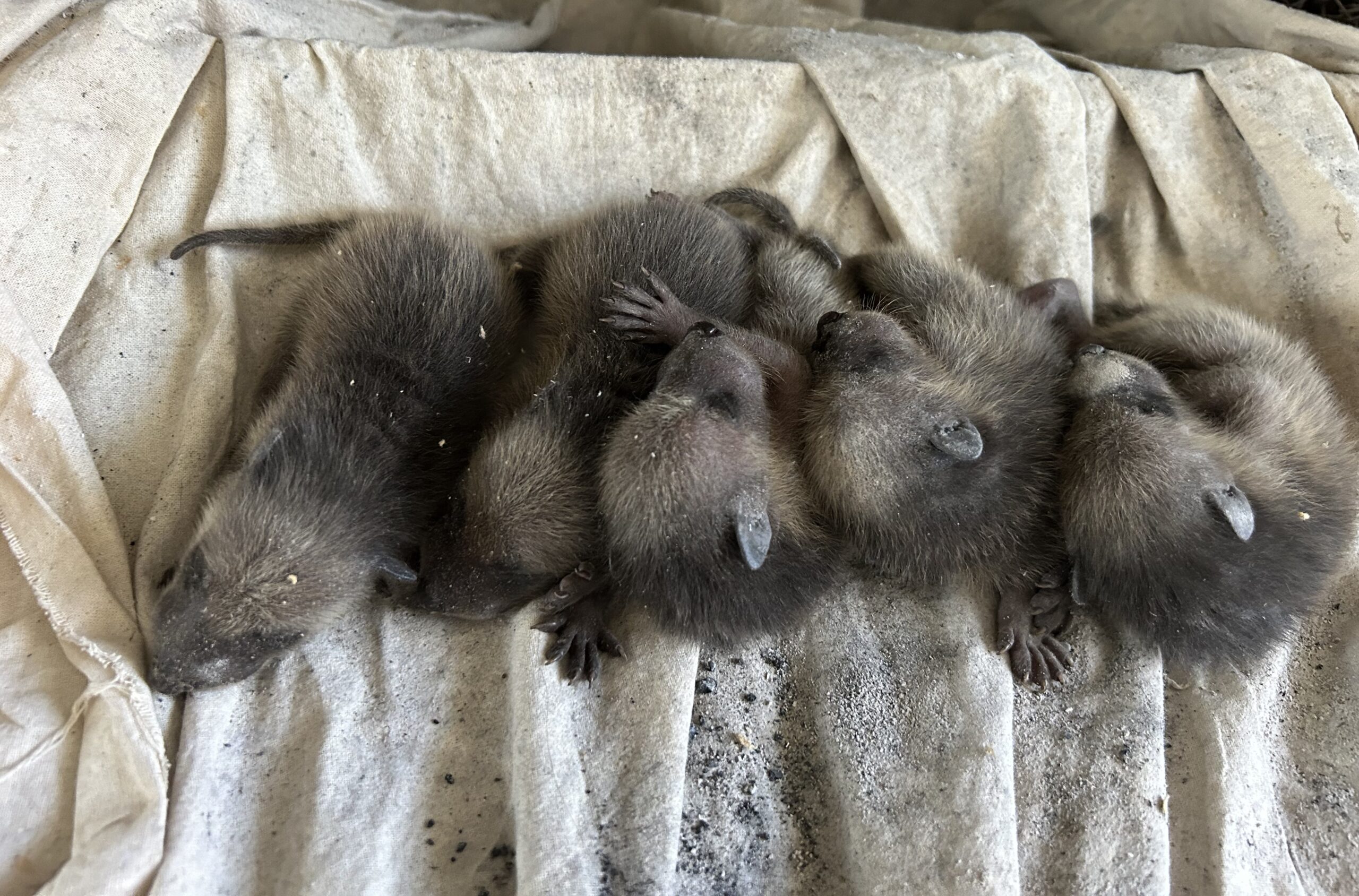
Raccoon communication is a captivating aspect of these mischievous creatures commonly encountered by Niagara homeowners in attics, chimneys, or crawl spaces. Just as the mighty Niagara Falls carries messages between two nations, raccoons have developed their own complex language to interact with one another.
At Skedaddle Humane Wildlife Control, we’ve spent over three decades studying and understanding these clever creatures, giving us unique insights into their communication methods and behaviours. Understanding how raccoons communicate isn’t just interesting—it’s practical knowledge that helps homeowners recognize when these masked bandits might be planning to make your property their next home.
With over 200 different vocalizations in their repertoire, raccoons are far more sophisticated communicators than many people realize, using sounds, body language, and even scent to share information with each other.
The Complexity of Raccoon Communication Methods
Raccoons are highly social animals with a sophisticated communication system that helps them navigate their environment, find mates, protect their young, and warn others of potential dangers. Their communication arsenal includes vocalizations, body language, touch, and scent marking—each serving different purposes in varying contexts.
The Vocal Range of Raccoons
One of the most surprising aspects of raccoon communication is their extensive vocal repertoire. While many people might only be familiar with the chattering or growling sounds these animals make when threatened, they actually produce over 200 distinct vocalizations. Each sound serves a specific purpose in their social interactions:
- Chittering and chattering: Common during mating season, these sounds help raccoons locate potential mates across distances
- Purring: Similar to domestic cats, raccoons purr when content, particularly mothers with their kits
- Growling and hissing: Defensive sounds used when feeling threatened
- Whimpering and crying: Often made by kits to call their mother when hungry or cold
For urban homeowners, hearing high-pitched chirping sounds in your attic between February and July likely indicates a mother with babies. These distinctive sounds are actually a sophisticated form of communication between the mother and her kits, letting her know when they’re hungry or distressed. Meanwhile, loud growling or aggressive chittering around your home might indicate raccoons are establishing territory on your property, potentially looking for entry points.
Body Language and Visual Communication
While vocalizations play a key role in raccoon communication, their body language is equally important. Raccoons use various visual cues to convey messages:
- Raised hackles: When feeling threatened, they raise the hair along their backs to appear larger
- Tail positioning: A relaxed raccoon holds its tail horizontally, while an agitated one may thrash its tail
- Facial expressions: They can bare their teeth, make direct eye contact, or position their distinctive facial mask in ways that communicate with others
- Body posture: Submissive raccoons lower their bodies, while dominant ones stand tall
These visual signals are often used in combination with vocalizations to reinforce messages. For instance, a raccoon defending territory might combine growling with raised hackles and an erect tail to maximize its threatening appearance.
Mother-Kit Communication: A Special Bond
The communication between mother raccoons and their kits represents one of the most sophisticated examples of raccoon communication methods. This relationship, which lasts about nine months, features a rich tapestry of sounds, touches, and learned behaviours.
Vocal Training for Young Raccoons
From birth, kits begin learning their complex language system. Mother raccoons respond differently to various kit vocalizations, teaching them through consistent response patterns:
- Mothers recognize the individual cries of each of their kits (typically 2-6 in a litter)
- Specific distress calls from kits prompt immediate protective responses
- Mothers teach kits different vocalizations through repeated demonstrations
For homeowners in Niagara, understanding these communication patterns helps explain why mothers are so determined to return to attic dens when separated from their babies. At Skedaddle, we use this knowledge to create our humane baby reunion process, allowing mothers to relocate their kits to alternate den sites rather than separating families permanently.
Teaching Through Demonstration
Beyond vocalizations, mother raccoons communicate with their kits through demonstration:
- Foraging techniques: Showing kits how to find food in various environments
- Danger signals: Teaching kits to recognize and respond to warning sounds
- Social boundaries: Demonstrating appropriate interactions with fellow raccoons
This educational period is critical for young raccoons’ survival and explains their highly adaptable nature. By the time they leave their mother’s care, they’ve learned a complete communication system that helps them thrive in both urban and natural environments.
Raccoon Communication in Urban Niagara Settings
Raccoons in urban environments like Niagara have adapted their communication methods to navigate the challenges of living near humans. These adaptations showcase their remarkable intelligence and flexibility.
Territory Marking and Urban Navigation
In urban settings, raccoons use scent marking as a primary form of communication:
- Latrine sites: Communal bathroom areas that serve as information centres
- Gland secretions: Leaving chemical messages by rubbing special glands on surfaces
- Scratch marks: Visual and scented territory markers
When raccoons mark your property as territory, they’re essentially communicating to others that they’ve claimed this space. Our wildlife technicians at Skedaddle are trained to identify these markers and properly clean and deodorize areas to prevent new raccoons from responding to these chemical communications.
Modified Vocalizations in Urban Settings
Raccoons have also adapted their vocal communications for urban environments:
- Lower-volume communication at night in residential areas
- Specific alarm calls for human-related dangers
- Different vocalizations used near roads versus in parks
These adaptations help raccoons successfully navigate the challenges of urban living, explaining why they’ve thrived in cities despite human presence.
The Social Network: How Raccoons Communicate in Groups
While often portrayed as solitary animals, raccoons actually maintain complex social networks, particularly in urban environments where resources are concentrated. Their communication methods facilitate these social structures.
Family Group Communications
Raccoon family units use distinct communication methods:
- Contact calls: Short, quiet vocalizations that help family members locate each other
- Grooming communication: Physical touch that reinforces social bonds
- Food sharing signals: Specific vocalizations indicating willingness to share resources
Mating Season Communication
During mating season (typically January to March in Niagara), male raccoons dramatically change their communication patterns:
- Males travel up to 5 miles from their normal territory, making loud, distinctive calls
- Females respond with specific vocalizations indicating receptiveness
- Competing males use aggressive communication including growling, chattering, and physical displays
This period of increased vocalization and activity often coincides with raccoons seeking attic spaces for denning. At Skedaddle, we see a significant increase in calls about raccoon problems during this time as their communication becomes more noticeable to homeowners.
Reading Raccoon Communication: What Their Sounds Tell You
Learning to interpret vocalizations can help Niagara homeowners understand what’s happening on their property and when professional help might be needed.
Common Raccoon Sounds and Their Meanings
Soft chittering generally indicates contentment or low-stress communication, whereas loud chattering or “singing” often indicates mating behaviours. High-pitched whining is usually made by kits calling for their mother. Growling or hissing are warning signals indicating a perceived threat.
For property owners, consistently hearing raccoon vocalizations in or around your home likely indicates they’ve established a den nearby. Different sounds can help you determine whether you’re dealing with a single raccoon or a mother with babies.
Embracing Wildlife Harmony in Niagara
Understanding raccoon communication is not only a captivating journey but also empowers you to coexist peacefully with wildlife. Knowledge of their sounds and signals provides insights that can guide you in taking appropriate action.
If you’re encountering raccoon issues around your property, reach out to Skedaddle Humane Wildlife Control in Niagara. Our experts are equipped with the know-how to handle wildlife encounters safely and humanely. Take the first step towards harmonious living by contacting our team today.

 Loading...