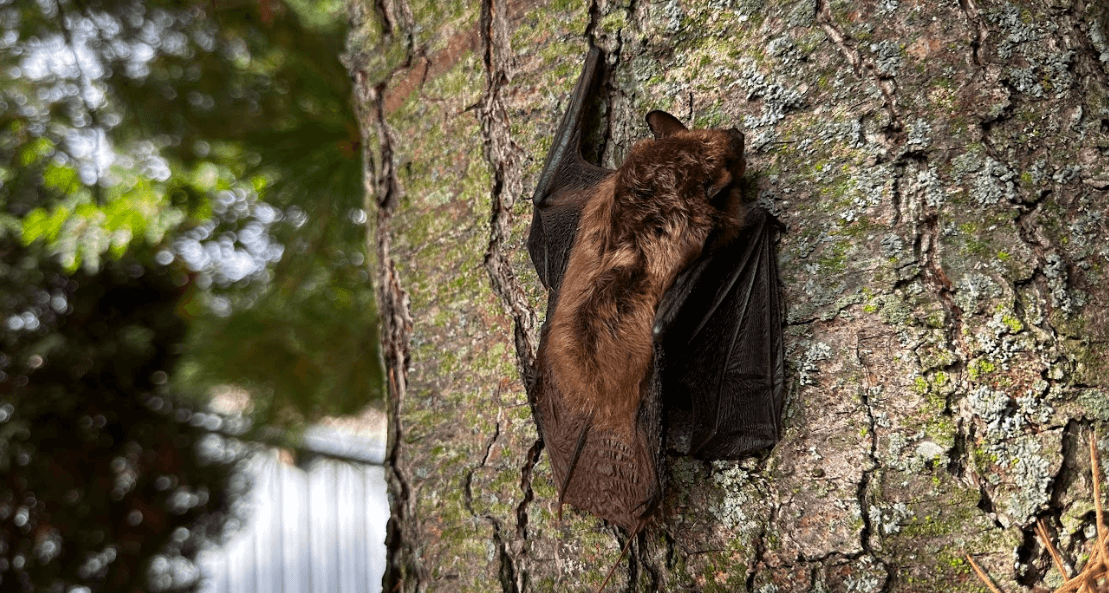
You hear strange scratching sounds coming from your attic at night. Then you notice small, dark droppings near your garage door. These could be signs of bat roosting spots in homes, indicating that your house makes a perfect shelter for them.
If you’re wondering where bats hide in houses, you’re not alone. Many homeowners in Oakville discover these flying mammals have moved into their attics, walls, and other quiet spaces without permission.
Bats typically roost in warm, dark, and undisturbed areas of your home. The most common bat nesting areas include attics, wall cavities, chimneys, and spaces behind shutters or siding. These nocturnal animals seek out spots that feel safe from predators and weather while staying close to their nighttime hunting grounds. When they find the perfect roosting spot, they often return to the same location year after year.
At Skedaddle Humane Wildlife Control in Oakville, we understand how unsettling it can be to discover bats have taken up residence in your home. We’ve helped countless homeowners safely remove these animals using our specialized one-way doors that allow bats to leave but prevent them from returning.
This blog will explore exactly where bats like to hide in houses and what makes these spots so appealing to them.
Your Attic: The Most Popular Bat Hotel
Your attic ranks as the number one choice for bat roosting spots in homes. These spaces offer everything bats need for a comfortable stay. Attics stay warm, remain undisturbed for long periods, and provide plenty of room for bats to hang upside down as they sleep.
Bats particularly love attics because they mimic natural cave conditions. The space stays dark during the day when they rest. The temperature remains fairly stable, and there’s usually minimal human activity to disturb their sleep. Many attics also have small openings or cracks that make perfect entry points for these small mammals.
You might find them roosting in several areas within your attic:
- Near the peak of the roof where it’s warmest
- Behind insulation where they feel hidden and secure
- In the corners where roof lines meet
- Along roof beams where they can easily hang
If bats have moved into your attic, you’ll likely notice their droppings scattered across the floor. You might also hear scratching, chirping, or fluttering sounds, especially at dawn and dusk when they’re most active.
Wall Cavities: Hidden Highways for Bats
Wall spaces rank high among where bats hide in houses. These narrow areas between your exterior and interior walls provide perfect pathways and roosting spots. These animals can squeeze through incredibly small gaps—some as narrow as a pencil—to access these hidden spaces.
They often enter wall cavities through small openings around:
- Windows and door frames where caulking has cracked
- Electrical outlets on exterior walls
- Vents and pipes that pass through walls
- Areas where different building materials meet
Once inside your walls, bats may travel up and down, looking for the perfect spot to roost. They prefer areas that stay warm and remain quiet during the day. You might hear them moving around inside your walls, especially during their active periods at dawn and dusk.
Wall cavities appeal to bats because they offer protection from weather and predators while staying close to exit points. However, having them in your walls can create problems. Their droppings can accumulate and create unpleasant odours. In some cases, they might even chew on electrical wires, creating safety hazards.
Chimneys: Perfect Vertical Roosting Spots
Chimneys create excellent common bat nesting areas because they offer vertical spaces that bats love. These structures stay warm, especially if you use your fireplace regularly. The brick or stone walls provide plenty of small cracks and crevices where they can grip with their tiny claws.
They find chimneys appealing for several reasons:
- Protection from weather elements like rain and wind
- Stable temperatures that don’t fluctuate much
- Easy access from the top opening
- Vertical hanging space that feels natural to bats
If bats have moved into your chimney, you might hear their sounds echoing throughout your house. Their droppings can also fall down into your fireplace, creating a mess and potential health concerns. The smell of bat urine and droppings can become quite strong in enclosed chimney spaces.
It’s especially important to address bats in chimneys quickly. If you light a fire without knowing they’re present, you could harm the animals or create dangerous situations in your home.
Behind Shutters and Siding: Outdoor Hiding Spots
The exterior of your home offers many bat roosting spots that homeowners often overlook. Bats love to squeeze behind shutters, loose siding, and decorative trim pieces. These areas provide shelter while keeping them close to their outdoor hunting grounds.
Common exterior roosting spots include:
- Behind decorative shutters that create narrow spaces
- Under loose vinyl siding where gaps have formed
- Behind downspouts and exterior trim
- Under roof overhangs and eaves
These exterior spots appeal to bats because they offer quick access to flying spaces while providing daytime shelter. Bats can easily slip in and out as they hunt for insects each night. However, exterior roosting spots can lead to problems. Droppings can stain your home’s exterior and create unpleasant odours near windows and doors.
Garages and Sheds: Secondary Roosting Options
Garages and outbuildings serve as popular places where bats hide in houses when main living spaces aren’t accessible. These structures often have more openings than your main house, making entry easier for bats. They also tend to be quieter during the day, providing undisturbed rest areas.
Bats might roost in:
- Garage attics or loft spaces
- Behind stored items like holiday decorations
- In corners near the ceiling
- Under workbenches or storage shelves
Garages appeal to bats because they’re typically less active than main living areas. People might only use garages briefly each day, leaving bats undisturbed for long periods. However, having bats in your garage can create problems when you need to access stored items or work on projects.
Basement Areas: Cool, Quiet Retreats
While less common, basements can become common bat nesting areas under certain conditions. Bats might choose basement spaces if they offer the right combination of temperature, darkness, and access points. Unfinished basements with exposed ceiling joists provide hanging spots that bats find attractive.
Basement roosting typically occurs in:
- Unfinished ceiling areas with exposed beams
- Storage rooms that stay undisturbed
- Near basement windows that provide entry points
- In corners where walls meet ceilings
Bats usually prefer warmer areas, so basement roosting is more likely during milder months. They might use basements as temporary stops while moving between other roosting locations. However, any bat presence in your basement requires attention to prevent larger infestations.
Why Professional Removal Matters
Understanding where bats hide in houses is just the first step in addressing the problem. These animals are protected by law in many areas, making professional removal essential. At Skedaddle Humane Wildlife Control in Oakville, we use specialized one-way door systems that allow bats to exit safely while preventing their return.
Our approach focuses on humane removal without harming the bats. We identify all entry points, install our one-way doors, and seal other openings to prevent future problems. This method ensures bats can leave safely while protecting your home from re-entry.
Attempting to handle bat removal yourself can be dangerous and ineffective. Bats can carry diseases, and improper handling puts both you and the animals at risk. Professional removal ensures everyone’s safety while solving the problem permanently.
Your Next Step to a Bat-Free Home
Now you know exactly why these bat roosting spots in homes attract these nocturnal visitors. From attics and walls to chimneys and exterior areas, bats can find numerous places to set up residence in your home. Understanding these common bat nesting areas helps you identify potential problems early and take appropriate action.
Don’t let bats continue making themselves comfortable in your home. Contact us at Skedaddle Humane Wildlife Control in Oakville today to request an estimate. Our experienced team will inspect your home, identify all roosting areas, and provide a comprehensive solution using our proven one-way door system.
We’ll help you reclaim your home while ensuring the bats find more appropriate places to live.

 Loading...







