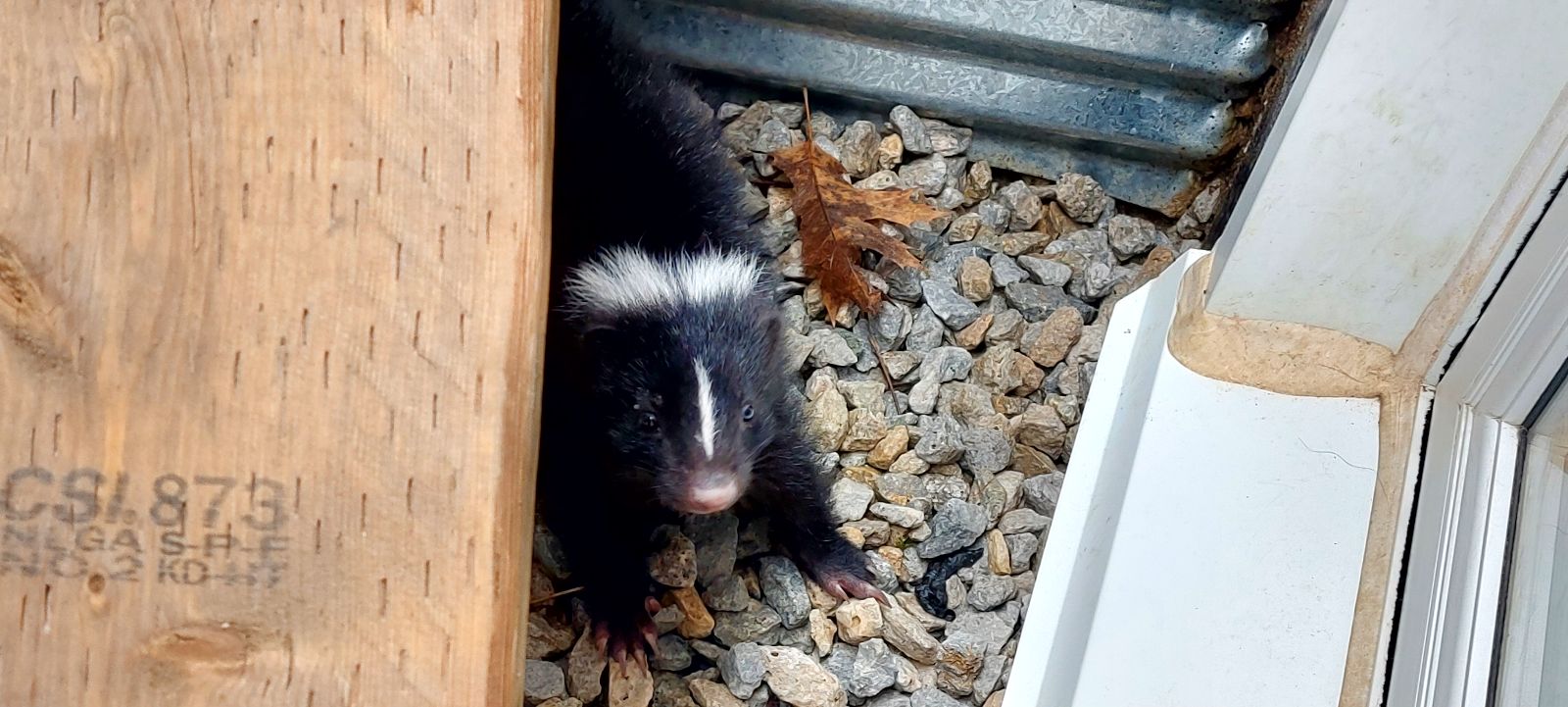
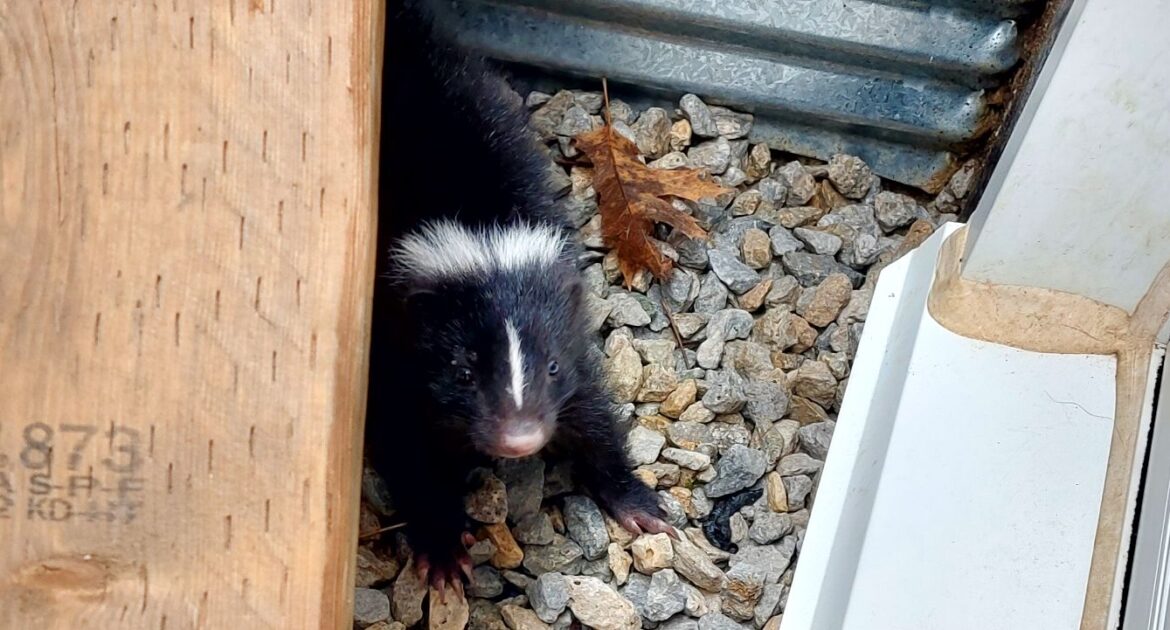
Skunks in Pittsburgh don’t truly hibernate, though their winter activity slows dramatically, leaving many homeowners wondering where these striped creatures go during the cold months. They seek out protected dens under decks, porches, sheds, or in unsealed crawl spaces, often relying on communal living to stay warm. Understanding this behavior is key for property owners, as it explains why skunks may be less visible in winter but can still cause odors, digging, or structural damage if they choose your property as a refuge.
Early awareness and proactive measures can prevent surprises and help maintain a safe, skunk-free home throughout the season.
Skunk Winter Habits: The Basics of Surviving the Cold
Skunks in Pittsburgh don’t actually hibernate, though it may seem like they vanish all winter. Instead, they rely on a unique set of survival strategies. Skunks are well-known for being adaptable, but the harsh Pittsburgh winters push them to use these skills in special ways.
Instead of true hibernation, skunks enter a state called torpor. This is a period of deep rest that allows them to conserve energy while avoiding the worst of winter’s cold. During torpor, a skunk’s body temperature, heart rate, and metabolism drop significantly, but not to the same extreme levels as hibernation. A skunk might sleep for days or even weeks at a time, occasionally waking to feed if conditions improve.
Understanding these patterns helps explain why skunk encounters become rare in winter—yet the risk of odor and property damage persists if they’ve chosen your property as their refuge. Let’s look deeper into the biology that makes these winter behaviors possible.
Biological Adaptations: How Skunks Survive Winter in Pittsburgh
Surviving a Pittsburgh winter requires more than simply finding a warm spot. Skunks have evolved a variety of physical and behavioral adaptations tailored for the climate. From body fat accumulation to their choice of den sites, every detail of skunk winter habits is about surviving until spring.
- They build up fat by feasting through late summer and fall.
- Fur grows thicker for better insulation.
- Skunks seek or dig well-protected dens below the frost line.
- They reduce movement drastically to save energy.
- Internal processes slow down during torpor, which conserves precious stored fat.
Unlike some local wildlife that hibernate, such as groundhogs, skunks need to prepare differently. Their semi-dormant state allows them flexibility. If Pittsburgh experiences a warm spell, skunks can wake up just enough to find food and water before returning to rest.
Torpor vs. Hibernation: What’s The Difference?
One of the most common questions we hear is, “What is torpor and how does it differ from true hibernation in skunks?” The answer provides important insights into how skunks manage cold months without becoming completely inactive.
Hibernation is a deep, long-term sleep where an animal’s body temperature drops close to the environment’s, and metabolic activity almost stops. Bears, bats, and groundhogs are classic hibernators who may sleep for months with little or no interruption.
- Torpor periods may last for several days or weeks.
- Skunks can wake up during milder weather for food or water.
- Their body temperature and metabolism drop, but not as drastically as in hibernation.
- They remain alert enough to react to threats or sudden changes, unlike true hibernators.
This difference explains why homeowners might occasionally spot skunks even in the dead of winter, especially during a Pittsburgh thaw. If a skunk is living on your property, you may notice tracks in the snow or signs of food scavenging on milder days.
Preparing for Winter: Skunk Strategies and Homeowner Considerations
The preparatory phase for winter is critical for skunks—and it’s a prime time for us to help property owners prevent problems. In Pittsburgh, the lead-up to winter is marked by a flurry of activity as skunks fortify their den sites and build up the fat reserves necessary for surviving lengthy torpor.
- Skunks often move beneath structures during autumn in search of shelter.
- Early detection of burrows is essential for homeowners.
- Undetected skunks may remain under decks, porches, or sheds all winter.
- Presence increases the risk of surprise encounters, lingering odors, and hazards for pets and family.
Early intervention—a thorough property inspection, sealing off entry points, and professional exclusion barriers—provides peace of mind and prevents winter denning. Our Skedaddle team specializes in identifying all possible access points and using humane techniques to relocate skunks and secure your property.
Skunk Denning: Communal Survival and Hidden Insights
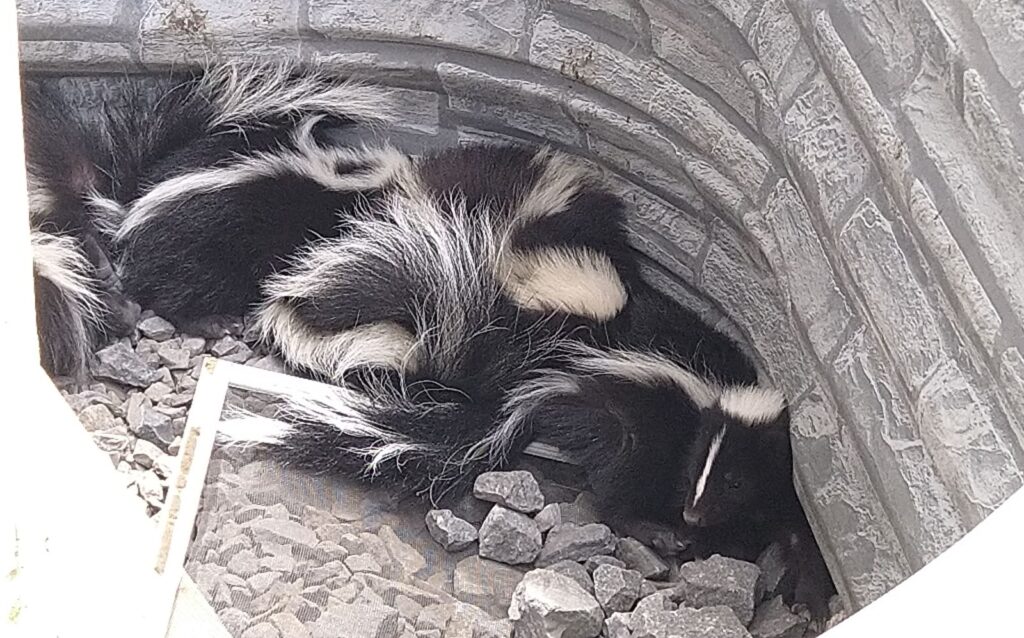
One hidden insight many people don’t realize is that skunks, typically solitary, become surprisingly social in winter. Just as Pittsburgh locals gather together for warmth and companionship during winter storms, skunks often form communal denning groups to conserve heat.
- Winter dens can house up to a dozen skunks, mainly females.
- Males may den alone or join groups during extreme cold.
- Communal living reduces heat loss and improves survival rates.
- Skunks remain non-aggressive toward each other in the den.
- Multiple exit tunnels provide safe escape routes.
This communal denning is a unique example of skunk behavior in winter, as it highlights flexibility and adaptation in the face of adversity. If you suspect multiple skunks have denned on your property, it’s even more important to rely on experienced wildlife technicians—removing adults and babies humanely, and sealing all potential entry points to avoid future problems.
Real-World Property Impacts and the Value of Professional Skunk Removal
Skunk winter habits directly impact your home, especially when they choose your shed, porch, or deck as their seasonal den. Because skunks do not hibernate, there’s always a chance they may emerge during thaws—resulting in encounters with pets or people and the risk of spraying.
Common signs of a skunk winter den on your property include fresh digging along shed or porch edges and strong, lingering odors even in cold weather. You may notice occasional tracks in snow leading to a structure or evidence of nesting materials being dragged under buildings. If these signs appear, it’s best to act quickly—especially before the Pittsburgh winter becomes severe.
At Skedaddle, we inspect all potential den sites with a trained eye. Our team uses humane and spray-free removal strategies, even for mothers and babies. We clean and decontaminate soiled areas safely and install robust exclusion barriers to prevent future digging. We also deodorize and secure your property to discourage new skunks from moving in. Each step is designed to be minimally invasive and effective, letting you enjoy your property even through the toughest months without unpleasant surprises.
Stay Skunk-Free All Winter with Skedaddle
As Pittsburgh’s winters set in, skunks adapt through torpor rather than true hibernation, relying on well-chosen dens and social cooperation to survive the chill. While they may be less visible during the colder months, their presence under decks, porches, and sheds can still cause unwelcome odors and property risk—especially if undetected before the ground freezes. Early understanding and intervention are crucial for preventing winter denning and the challenges of spring baby season.
Don’t let skunks make your property their winter refuge. Trust the experienced team at Skedaddle Humane Wildlife Control to inspect, humanely remove, and safeguard your home with proven exclusion methods—ensuring you enjoy a safe, comfortable, and odor-free space all year round. Take the proactive step now and contact Skedaddle for professional wildlife control that keeps skunks and their headaches at bay, no matter the season.

 Loading...







