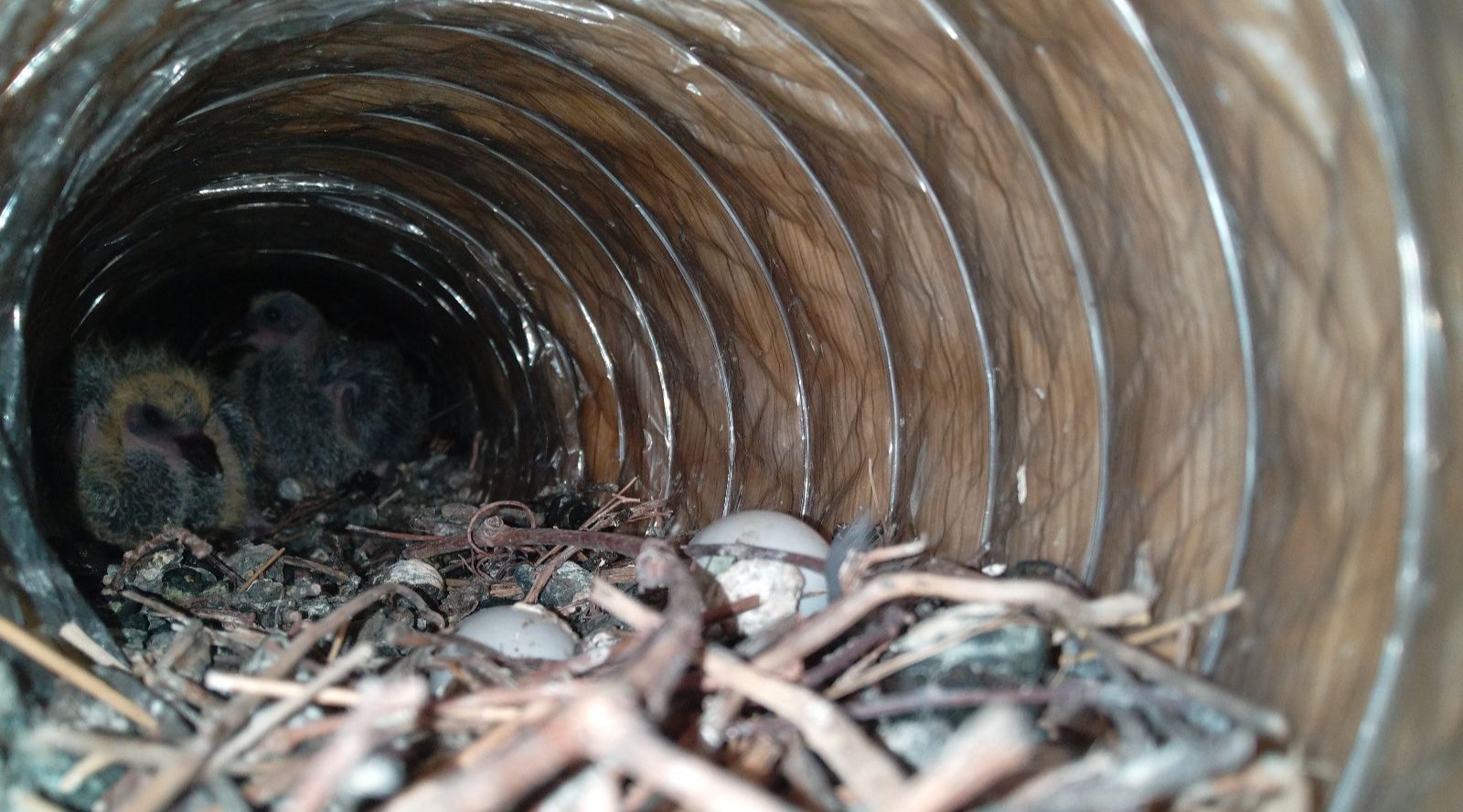

Understanding why birds nest in vents and chimneys instead of trees can provide surprising insights into both their instincts and the challenges Pittsburgh homeowners face. The reasons why birds choose vents and chimneys for nesting go beyond the lure of modern comforts—it’s more about the provision of safety, warmth, and optimal conditions for survival. This behavior, while advantageous for birds, presents significant concerns for homeowners, ranging from fire risks to health hazards.
At Skedaddle Humane Wildlife Control, with over 30 years of experience serving Pittsburgh, we understand the attraction these urban structures have for birds like starlings, sparrows, and pigeons. We also know how essential it is to address these issues to protect your family and property effectively.
Reasons Birds Choose Vents and Chimneys Instead of Trees
Birds nesting in chimneys and vents is a common concern for many homeowners. Despite Pittsburgh’s abundance of parks and trees, these birds favor man-made structures due to a combination of their natural instincts and the unique benefits our homes provide.
Birds select their nesting spots based on three main factors:
- Shelter from predators and weather: Vents, chimneys, and soffits offer more consistent protection than trees, especially with Pittsburgh’s unpredictable weather.
- Stable temperature and warmth: Birds nesting in chimneys benefit from household heat, which is particularly attractive in early spring or during fall cold snaps.
- Easy access and fewer disturbances: Urban birds have adapted to busy neighborhoods, and vents are often less disturbed than tree branches that sway in the wind or get trimmed.
Species like starlings and sparrows, known as cavity nesters, instinctively seek out enclosed spaces. Chimneys and vents mimic these natural cavities, often more effectively than our modern clean landscapes. This nesting preference is not due to a lack of trees but rather the higher likelihood of their young surviving in these endangered urban habitats.
How Birds Select Their Nesting Spots
Birds don’t randomly select their nesting sites. Their choices are influenced by environmental cues, safety considerations, and the needs of their young.
Common attractants for birds when nesting in vents and chimneys include:
- Reliable shelter from rain, wind, and predators
- Physical warmth from vented air or chimney flues
- Relative inaccessibility to larger animals or humans
- Proximity to food sources, as urban habitats often supply insects and discarded food
Additionally, vents and chimneys provide top-down cover, mitigating risk from hawks and other predators. Certain species, such as starlings, favor dry nesting materials packed into tight spaces, enhancing their sense of security and stability.
Compare this to tree nests commonly found in more rural or park-like settings where conditions vary:
- Tree branches are more exposed to storms and pruning.
- Many native trees are losing natural cavities due to disease or development.
- New construction and landscaping trends often remove mature canopy trees, decreasing suitable nesting cavities.
Birds adapt to changing environments, and our modern structures become their preferred choices, even when that means moving closer to our living spaces.

The Ecological Benefits of Urban Birds
The presence of birds nesting in chimneys or vents isn’t all negative. They contribute ecological benefits to urban neighborhoods, particularly in natural pest control.
Birds such as sparrows and starlings feed on a variety of insects and larvae, providing natural pest control for gardens, landscapes, and urban areas. Their foraging helps reduce populations of mosquitoes, flies, and beetles, limits insects that can damage plants or building materials, and supports urban ecosystems by serving as prey for larger wildlife.
Birds also play a role in seed dispersal and pollination, though primarily in rural settings compared to urban areas. Nonetheless, understanding these ecological benefits has to be balanced with acknowledging the risks posed by their specific nesting behavior in chimneys and vents.
The Impact of Bird Nests on Home Ventilation and Safety
Despite their ecological benefits, bird nests in vents and chimneys can lead to serious safety and health issues within Pittsburgh homes. These problems can escalate quickly, especially if homeowners are unaware of their presence.
Common risks include:
- Fire hazards: Dry nesting materials are highly flammable, posing substantial fire risks if lodged near heat sources.
- Clogged airflow: Nests can obstruct airflow, affecting appliances like laundry vents, kitchen exhausts, and bathroom fans—potentially causing heat build-up or carbon monoxide risks in extreme cases.
- Damage to ventilation systems: Bird activities and debris can impair fan blades or motors and introduce moisture into ductwork.
- Increased maintenance and cleaning needs: Bird droppings are acidic and can stain materials, complicating cleaning due to their hazardous nature.
- Health risks: Spores in droppings or dislodged nest material can be inhaled, potentially leading to illnesses like histoplasmosis.
Swift action in detecting bird activity can prevent major repairs or health problems. Recognizing the signs empowers homeowners to act promptly.
Preventing Birds in Vents: What Homeowners Can Do
Preventing birds in vents is easier than addressing an infestation after it occurs. Pittsburgh homeowners can follow practical steps to deter cavity-nesting birds from settling on their property.
Our top prevention tips:
- Inspect vents and chimneys each season for signs of nests, droppings, or loose vent covers.
- Install professionally fitted vent screens and chimney caps to block access while ensuring safe airflow.
- Address maintenance issues like holes in soffits, loose siding, or gaps in walls promptly.
- Remove food sources such as accessible garbage bins or open composters that attract birds and wildlife.
- Trim landscaping and trees to prevent easy access to the roofline or vents.
If you notice frequent bird activity or hear noises from a vent or chimney, seeking professional help can prevent the situation from worsening.
When to Seek Professional Bird Nest Removal—And What Skedaddle Provides
Sometimes, even the best prevention isn’t sufficient. If you find an active nest—or birds continually return to the same spot—professional intervention is necessary for safe, legal, and humane removal.
Skedaddle specializes in safely accessing high and hard-to-reach locations using certified ladder and roof safety techniques. We assess fire and health risks associated with accumulated nesting materials and create custom removal, cleaning, and prevention plans tailored to the species, season, and applicable legal requirements.
Our removal process stands out for several reasons:
- Humane handling: We safely handle situations when baby birds are present, considering options like family relocation and reuniting fledglings with parents.
- Thorough cleaning: We use protective equipment to disinfect and eliminate nesting material and droppings, preventing contamination.
- Effective prevention: We offer screening for vents and recommend deterrents for problem areas, supported by our extensive expertise.
Certain birds, like starlings and pigeons, aren’t protected by law, enabling removal at any time. However, the Migratory Bird Act safeguards native species, necessitating proper identification before removal. Our technicians guide you through options and adhere to all local and federal regulations.
Several signs indicate that professional bird control may be necessary. Persistent chirping or fluttering inside vents or chimneys, recurring bird activity despite regular cleaning, and falling nest materials or soot mixed with feathers in the fireplace are all warning signals. Additionally, unpleasant odors, increased allergies, or frequent pests can point to underlying issues that require expert attention to ensure your home remains safe, clean, and comfortable.
Hiring Skedaddle ensures more than a temporary fix; we provide ongoing support and a lifetime guarantee—keeping your home safe, comfortable, and bird-free.

Protect Your Home and Wildlife with Skedaddle’s Expertise
Understanding why birds choose vents and chimneys reveals a delicate balance between urban wildlife behavior and homeowner safety. Although these adaptations help birds remain warm and secure, they introduce risks such as fire hazards, health concerns, and property damage when nests develop in crucial ventilation areas.
When prevention doesn’t suffice, or you’re concerned about signs of bird activity, expert intervention becomes crucial. Skedaddle’s seasoned team combines over three decades of experience with humane, comprehensive removal strategies—ensuring your property is cleaned, protected, and future-proofed against returning flocks. Don’t let birds turn your home into theirs; contact Skedaddle Humane Wildlife Control today to restore peace of mind with Pittsburgh’s trusted wildlife professionals. Safeguard your space, your family, and the birds—let’s keep everyone in the right habitat.

 Loading...