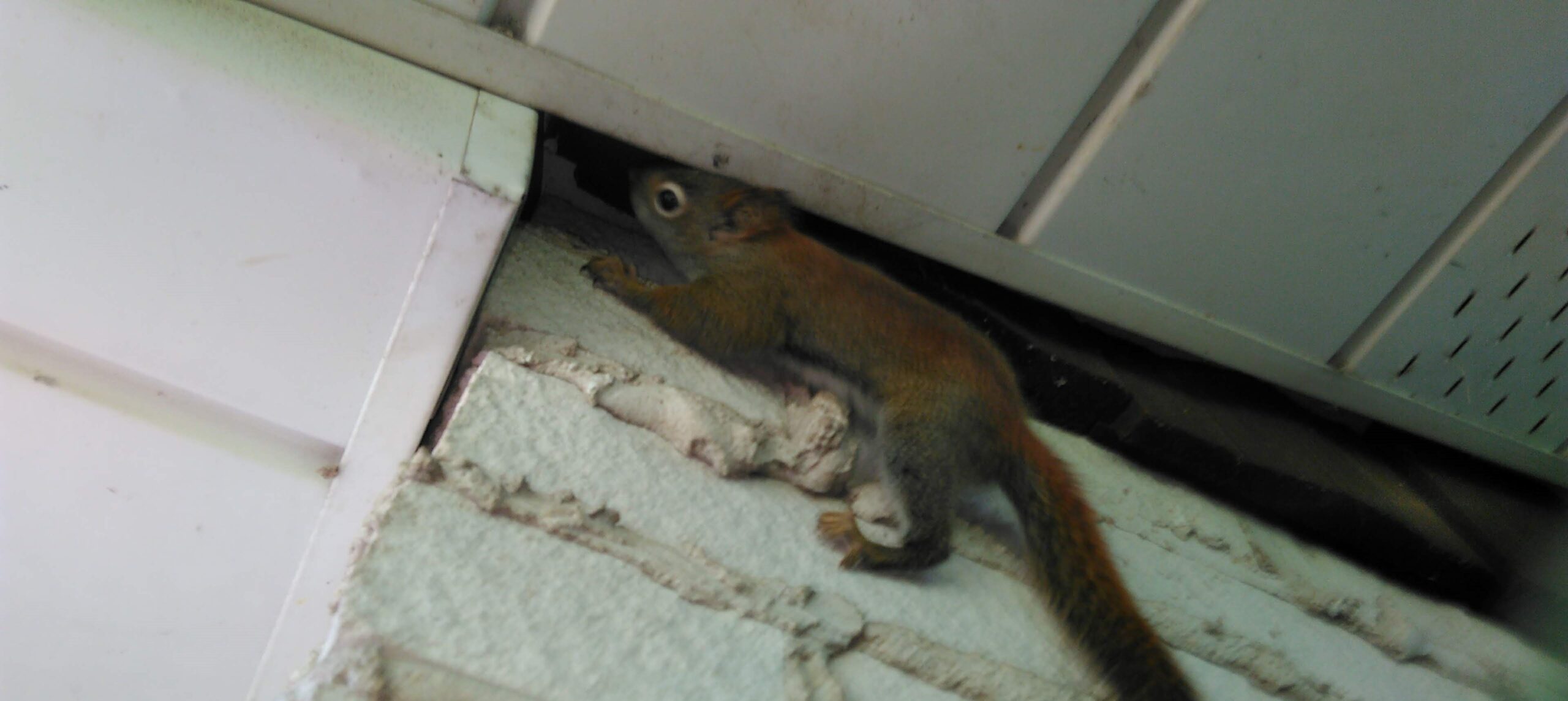
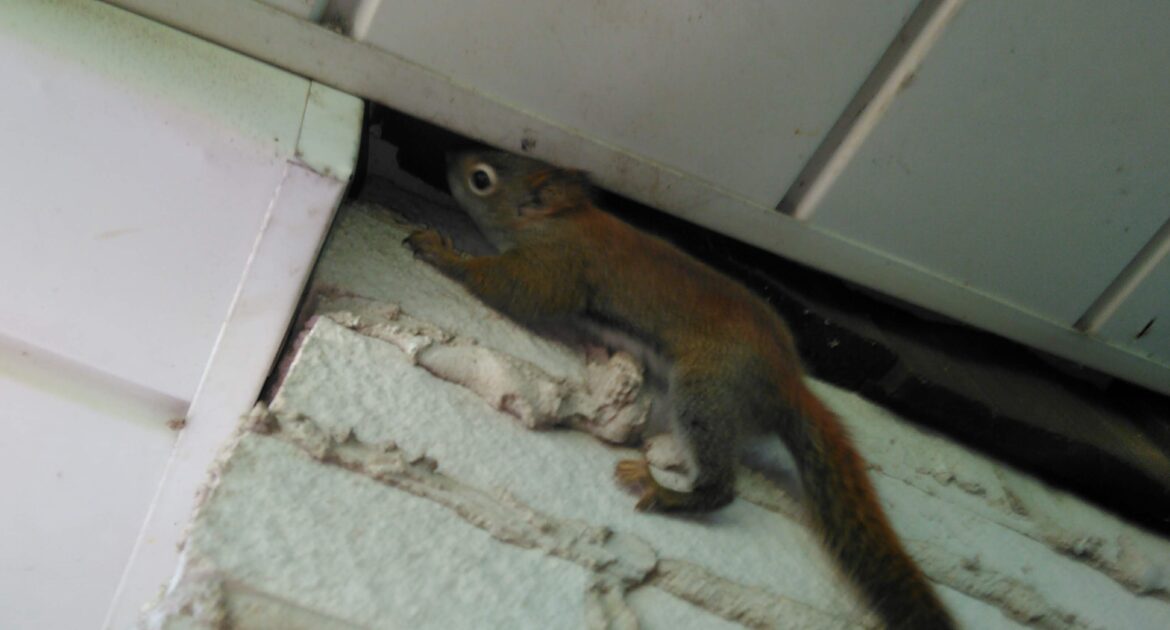
You may not think much about your roofline in the winter, but February is one of the busiest months for squirrel activity for your roofline in February. You might not see them right away, but these animals stay active all winter, and your roof is warm, dry, and high off the ground — everything they love.
You might be wondering what signs to watch for, how to identify squirrels near roof areas, and what roofline squirrel signs winter often brings. At Skedaddle Humane Wildlife Control in Scarborough, we see how busy February can be, and we help homeowners catch early signs before things get worse.
You notice the most activity this time of year because squirrels start looking for safe places to raise their young. Trees do not always give enough warmth in winter, so your home becomes a target. When you understand the signs of squirrel activity for your roofline in February, you can protect your home before damage grows. You also avoid surprises, because these animals move fast, chew fast, and can spread out across a home in only a few days.
Below, you will find the clearest signs to watch for, the patterns that matter most in winter, and when you should call our team for help. We also explain how our humane methods, including our one-way doors help wildlife leave safely and never get back inside.
Chewing Damage Along Your Roofline
One of the biggest roofline squirrel signs winter brings is chewing. You may not see it the moment it happens, but you will often notice the results. Squirrels need to chew all year long because their teeth never stop growing. When you see bite marks along wood, shingles, or flashing, you might be looking at one of the first signs of squirrel activity for your roofline in February.
You will often spot chewing in places like:
- Roof edges
- Soffits
- Fascia boards
- Shingle corners
- Roof vents
Chewing damage shows up as rough, uneven edges, missing pieces of wood, or broken vents. You may also spot areas that look shredded or splintered. This is a sign that the animal is testing weak points, trying to widen openings, or working on a way inside. You should never poke at these areas or try to block them. Once squirrels feel trapped, they will chew harder and go deeper into your home. Our team steps in to assess these spots safely.
Strange Sounds Coming From the Roof or Walls
You may hear the activity before you see it. Sounds are one of the easiest ways to identify squirrels near roof spaces. February is when movement gets louder, because squirrels prepare nests, search for food, and sometimes move in pairs.
Typical sounds include:
- Light scratching
- Quick running or scurrying
- Soft thumping
- Digging noises
- Chewing from inside the roofline
These sounds often happen early in the morning or late afternoon, when squirrels are most active. You might also hear small rolling noises if they are moving nuts or nesting materials. If you hear sounds in more than one area, it may mean the animal is traveling through wall gaps, attic floors, or roof soffits. When we arrive, we listen for patterns, follow noise trails, and locate every entry point so nothing gets missed.
Visible Openings and Gaps Along the Roof
Some signs are easy to spot from the ground. If you look up and notice openings, cracks, or gaps, you may be seeing early signs of squirrel activity for your roofline in February. Winter weather can loosen materials, and squirrels take advantage of weak spots.
Common openings include:
- Gaps where soffits meet the roof
- Loose siding
- Broken roof vents
- Lifted shingles
- Holes around pipes or wires
- Gaps in the fascia
These openings do not need to be large. A squirrel can squeeze through a very small space, and once inside, it will stretch the hole wider. You should not try to patch gaps on your own, because it can trap wildlife inside your home. Our team finds every weak point, guides wildlife out using humane one-way doors, and seals the home afterward.
How We Help Prevent Squirrel Activity Before It Spreads
Once you spot roofline squirrel signs winter usually brings, you need a safe and humane plan. This is where we step in. You should not try to scare animals out or block holes yourself. When homeowners do this, squirrels may panic, hide deeper inside, or cause more damage.
Our prevention work includes:
- Full roofline inspections
- Safe exit through one-way doors
- Protection of young wildlife
- Sealing and securing weak areas
- Long-term defenses designed for your home
We make sure wildlife leaves safely and cannot get back inside. You stay safe, your home stays protected, and nothing harmful is used.
A Safer Home Starts With Spotting the Signs Early
When you learn how to identify squirrels near roof areas and spot roofline squirrel signs winter brings, you protect your home from bigger problems. You now understand the most common signs of squirrel activity for your roofline in February and why early help makes a big difference.
If you think something is moving along your roofline or you notice any of the signs above, you can reach out to us for support.
At Skedaddle Humane Wildlife Control in Scarborough, we use humane methods, including one-way doors, to guide wildlife out safely and keep them from returning. Request an estimate to learn more about how we can protect your home this winter.

 Loading...