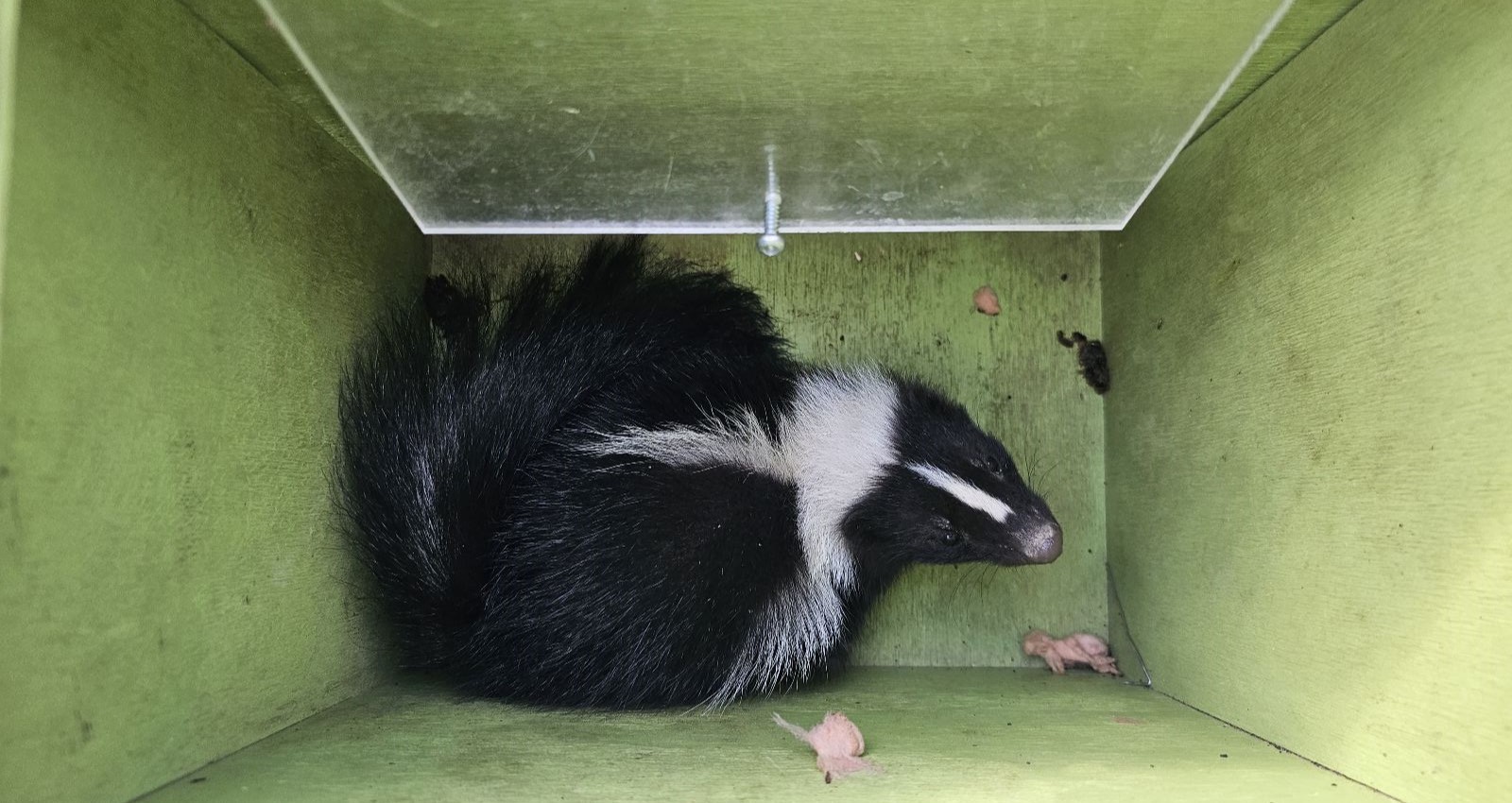
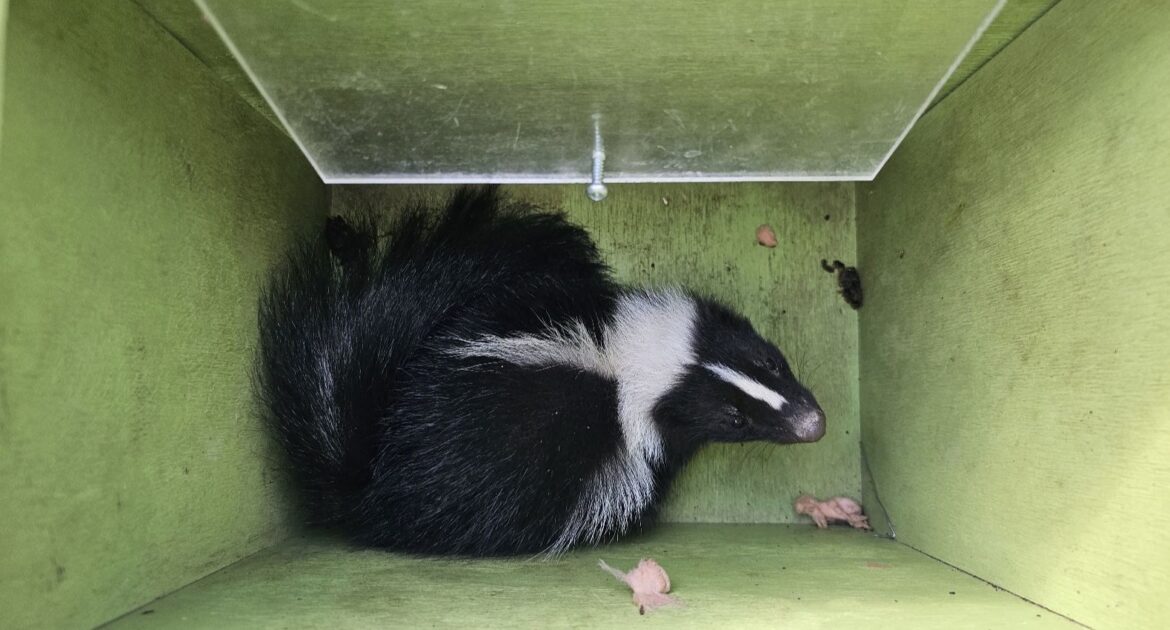
You step outside one morning and notice small, cone-shaped holes all over your yard. Maybe the grass looks torn up or rolled back in patches. If this happens in the colder months, you might think moles or raccoons are to blame. But often, it’s skunks damaging lawns in winter.
You don’t see them during the day, but they’re busy at night, digging for bugs, grubs, and worms. Their sharp claws and strong noses make them excellent diggers. When food gets scarce, they head straight for soft lawns, and yours could be their next target.
At Skedaddle Humane Wildlife Control in Toronto, we often get calls from homeowners surprised to see lawn damage in December or January. You might not expect winter skunk food habits to cause issues, but skunks don’t fully hibernate. Instead, they nap for a few days at a time and wake up to search for meals — often right under your grass.
This guide explains how they damage lawns, why it happens in winter, and what you can do to prevent skunk lawn damage before spring arrives.
Digging for Grubs Beneath the Surface
The main reason skunks dig is food. When you see small holes or flipped patches of turf, that’s a sign they’ve been hunting grubs, the soft larvae of beetles that live in soil.
During winter, these insects move deeper into the ground for warmth. But skunks have a powerful sense of smell. They can detect food even under frost or snow. You might notice:
- Circular Holes About Two Inches Wide: Skunks use their claws to dig fast and precise holes.
- Flipped or Rolled Sod: Sometimes, they pull up entire sections of grass to reach more food.
- Scattered Soil or Mulch: Their searching can spread dirt and ruin the appearance of your yard.
You may also smell a faint musky odour where they’ve been. Once they find a good food source, they’ll return every few nights until it’s gone, leaving your lawn patchy and uneven.
When the Ground Is Frozen, They Get Creative
You might assume frozen soil stops digging, but skunks adapt. Winter skunk food habits change with the weather. When the ground becomes too hard, they look for other ways to reach their meals.
Here’s what you might see:
- Torn Garden Beds: They’ll dig in softer soil near foundations or compost piles.
- Disturbed Mulch or Leaf Piles: These spots hold insects even when it’s cold.
- Damage Near Patios or Sheds: Skunks often find warmer soil where snow doesn’t sit long.
If snow covers the ground, they may focus on areas close to your home where heat escapes through the foundation. These pockets of warmth make insects easier to find and attract wildlife searching for their next snack.
How Their Claws and Noses Cause the Damage
Skunks don’t mean to ruin your yard, their digging is instinctive. But their bodies are built perfectly for the job. They have long, curved claws that act like small shovels, and their strong front legs help them tear through layers of grass quickly.
Their noses are even more impressive. A skunk can smell food hidden several inches underground. Once it locks onto a scent, it digs with determination until it uncovers what it wants.
When you combine that strength with persistence, lawns can take a beating. Even a single skunk can dig dozens of holes in one night. If several share the same territory, the destruction spreads quickly.
You might wake up to find soil mounds, exposed roots, and thin patches of grass. Left unchecked, this can lead to long-term problems like erosion and weed growth come springtime.
The Ripple Effect of Lawn Damage
It’s not just about appearance. Lawn damage can lead to deeper issues that affect your property long after winter ends.
When skunks dig, they expose roots and disturb soil structure. This weakens grass, making it harder for it to grow back in spring. The holes also create uneven surfaces that can collect water, attract insects, and even pose tripping hazards.
If they find steady food sources, skunks may also start denning nearby, often under decks or sheds. Once they settle in, they leave behind droppings, odours, and nesting materials. That’s when you’ll need professionals to inspect and secure your property.
What Professionals Look for During Inspection
When you call Skedaddle Humane Wildlife Control, our team looks beyond the visible lawn damage. We search for signs of ongoing activity and determine if skunks are still nearby.
Our inspection may include checking for:
- Burrows or dens under sheds, decks, or foundations.
- Entry holes leading beneath porches or crawl spaces.
- Soil disruption patterns that show regular digging spots.
If we confirm that skunks are damaging lawns in winter, we install one-way doors to let them leave safely without coming back. Once they’re gone, we repair access points to stop future digging.
Protect Your Lawn Before Spring Returns
Call Skedaddle Humane Wildlife Control in Toronto to schedule a professional inspection. We’ll check your property, install humane one-way doors, and seal entry points to prevent skunk lawn damage before it spreads. Request an estimate today to keep your lawn healthy and your home safe all year long.

 Loading...

