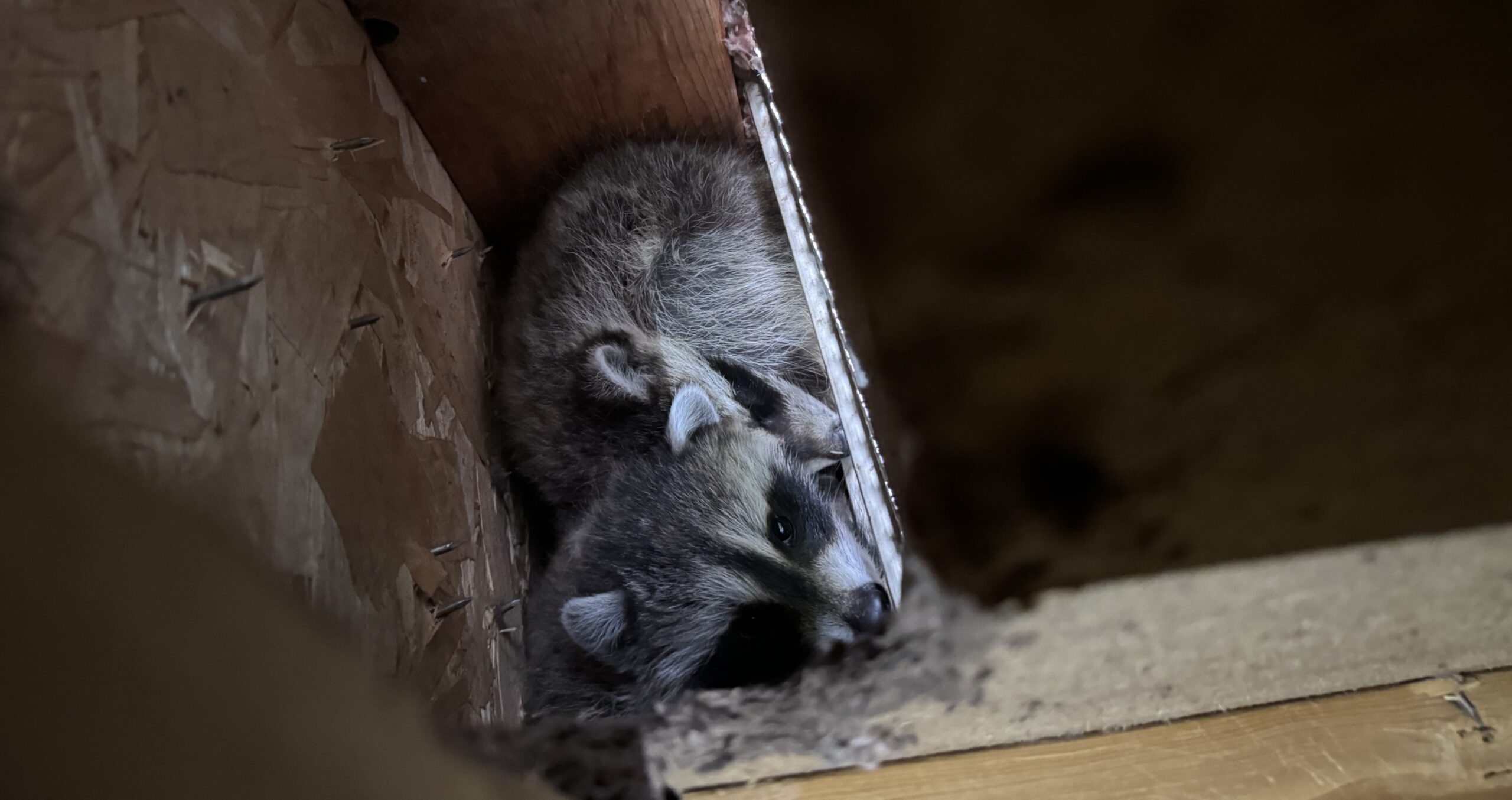
You might think larger cities like St. Paul belong only to the full-time residents, but raccoons would disagree. If you’ve ever seen one climbing a fence, tipping over a garbage bin, or even scaling a downtown building, you’ve seen how adaptable these animals truly are.
You may be surprised to learn that urban raccoons in St. Paul are thriving like never before. They’ve learned how to live among people, using city resources to survive year-round. From finding food in trash cans to nesting in attics, these clever creatures have made the city their permanent home.
At Skedaddle Humane Wildlife Control, we’ve seen firsthand how raccoons adapt to cities and how easily homes become part of their survival plan. Let’s take a closer look at their skills, habits, and why raccoon urban survival is something every homeowner should understand.
Nighttime Experts
Raccoons are rarely seen during the day. That’s because they’re nocturnal, meaning most of their activity happens while you’re asleep. In a busy city like St. Paul, this nighttime behavior helps them avoid people, cars, and loud noises.
Their excellent night vision, strong sense of smell, and nimble paws make them perfect urban scavengers. At night, they can quietly explore neighborhoods, climb fences, and find meals in garbage bins or pet food left outdoors.
It’s no accident that they’ve earned a reputation as “masked bandits.” Their ability to sneak around unseen makes them successful survivors and tough to catch once they move in.
Finding Shelter in Urban Spaces
You’d be surprised how resourceful urban raccoons in St. Paul can be when it comes to finding shelter. In the wild, they use hollow trees or rock crevices, but in cities, they’ve upgraded to human-made spaces.
Their favorite hiding spots include:
- Attics and Chimneys: warm, quiet, and high above predators.
- Garages or Sheds: close to food and often left open.
- Decks and Crawl Spaces: dark, sheltered areas easy to access.
- Abandoned Buildings: perfect for raising young in peace.
Once they find a spot, they’ll use insulation, leaves, or even shredded paper to build a nest. That’s why homeowners often hear rustling or scratching at night, it’s the sound of raccoons making themselves comfortable.
City Buffets: How Raccoons Find Food
If there’s one thing that defines raccoon urban survival, it’s food access. These animals are omnivores, meaning they eat just about anything. And in St. Paul, that “anything” is everywhere.
You might not realize how much food raccoons find in a single night. Their city diet often includes:
- Garbage Leftovers: Pizza crusts, fruit peels, and anything that smells edible.
- Pet Food: Left on decks or porches.
- Birdseed: From feeders knocked over or opened.
- Insects and Worms: Found in lawns and gardens.
- Urban Fruit Trees: Apples, berries, or garden vegetables.
Their strong sense of smell helps them locate meals from far away. Once they find a steady source, they’ll return night after night. That’s why secure garbage lids and sealed storage areas are key to keeping them away.
You’d be amazed how quickly they can lift lids, open latches, or climb up to bird feeders. Proof that how raccoons adapt to cities is all about intelligence and persistence.
Smart Hands and Sharp Minds
You might not know it, but raccoons have one of the most sensitive and skilled sets of front paws in the animal world. They can open jars, twist doorknobs, and even unlatch cages. Scientists say their paw dexterity rivals that of primates.
In a city environment, that gives them a huge advantage. They can:
- Open garbage bins and compost lids.
- Climb siding, gutters, and fences to reach rooftops.
- Remove vent covers or soffit panels to access attics.
- Turn knobs or lift handles to enter garages and sheds.
This adaptability makes them one of the smartest wild animals living near people. Over time, they even learn from experience, remembering where they found food or shelter before.
If you’ve ever had the same raccoon return after being scared off, it’s likely because it remembered your property as a reliable food source.
Raising Families in the City
In some ways, cities offer better conditions for raccoon families than the wild does. Warm buildings, fewer predators, and constant food make urban life comfortable.
Female raccoons, or “mothers,” usually have babies (called kits) in spring. A litter can include three to five kits, all raised inside secure shelters like attics or chimneys. These young raccoons stay with their mother through fall before venturing off to find their own territory, often not far away.
Once one generation learns how to live among people, the next picks up the same skills quite easily. That’s why urban raccoons in St. Paul continue to thrive even as the city grows. Each new generation becomes a little smarter and more comfortable living alongside humans.
Adapting to Noise and Light
You might think all the cars, lights, and sounds of city life would scare animals away, but raccoons have learned to adjust. Their hearing helps them detect danger even with background noise. Bright streetlights or porch lamps don’t bother them much anymore; they’ve grown used to the urban glow.
Many even alter their routes to avoid traffic or busy streets. They use fences, rooftops, and tree branches like secret highways, traveling above ground to stay safe. This flexibility is another reason their populations keep growing across Minnesota cities.
Raccoons and Human Habits
As part of their survival skills, raccoons pay close attention to people. They learn your patterns – when garbage goes out, when lights turn off, even when you feed pets outside. Over time, they time their visits around your schedule.
This behavior shows how advanced their memory and awareness have become. In some neighborhoods, they even move through yards in groups, sharing safe routes to avoid danger.
That’s why prevention matters. If raccoons see your home as easy access to food or shelter, they’ll keep returning and might eventually move inside.
Challenges of City Life for Raccoons
Even with their success, raccoon urban survival isn’t without risks. City living exposes them to cars, diseases, and sometimes toxic waste. Young raccoons especially face dangers when exploring rooftops or crossing streets.
Common urban risks include:
- Traffic: Vehicle collisions are a leading cause of death.
- Garbage Hazards: Spoiled food or sharp objects.
- Disease Exposure: From close contact with pets or other wildlife.
- Trapped Spaces: Getting stuck in chimneys, vents, or walls.
That’s where humane removal plays an important role. Our team at Skedaddle helps raccoons leave safely through one-way doors, then seals entry points so they can’t get trapped or return later.
Why Raccoons Keep Thriving in St. Paul
It all comes down to intelligence, opportunity, and adaptability. Cities like St. Paul give raccoons everything they need: warmth, food, and hiding spots. Once they discover how easy life can be, they rarely go back to the wild.
Urban environments change, but raccoons evolve right along with them. Whether it’s surviving winter storms or scaling tall buildings like the famous St. Paul skyscraper climber, their resilience continues to amaze researchers and residents alike.
How Skedaddle Helps You Take Back Your Space
You don’t need to handle this on your own. If you notice scratching sounds, tipped garbage bins, or damage near your attic or vents, urban raccoons in St. Paul could already be nesting nearby.
At Skedaddle Humane Wildlife Control, we specialize in humane removal using one-way doors that allow wildlife to exit but not re-enter. Once the animals are safely gone, we secure your home with durable materials designed to prevent future nesting.
We’ve helped countless homeowners protect their space while keeping wildlife safe.
When Street Smarts Turn Into Home Invasions
Now that you know how raccoons adapt to cities, you can see why they’re such successful urban survivors. Their intelligence, agility, and determination make them one of the most adaptable animals in Minnesota.
If urban raccoons in St. Paul have made their way into your attic, garage, or yard, our team is ready to help. Skedaddle Humane Wildlife Control uses humane, long-lasting solutions to keep your home secure and your nights quiet.
Request an estimate to learn more about how we can protect your property while giving wildlife a safe way out.

 Loading...







