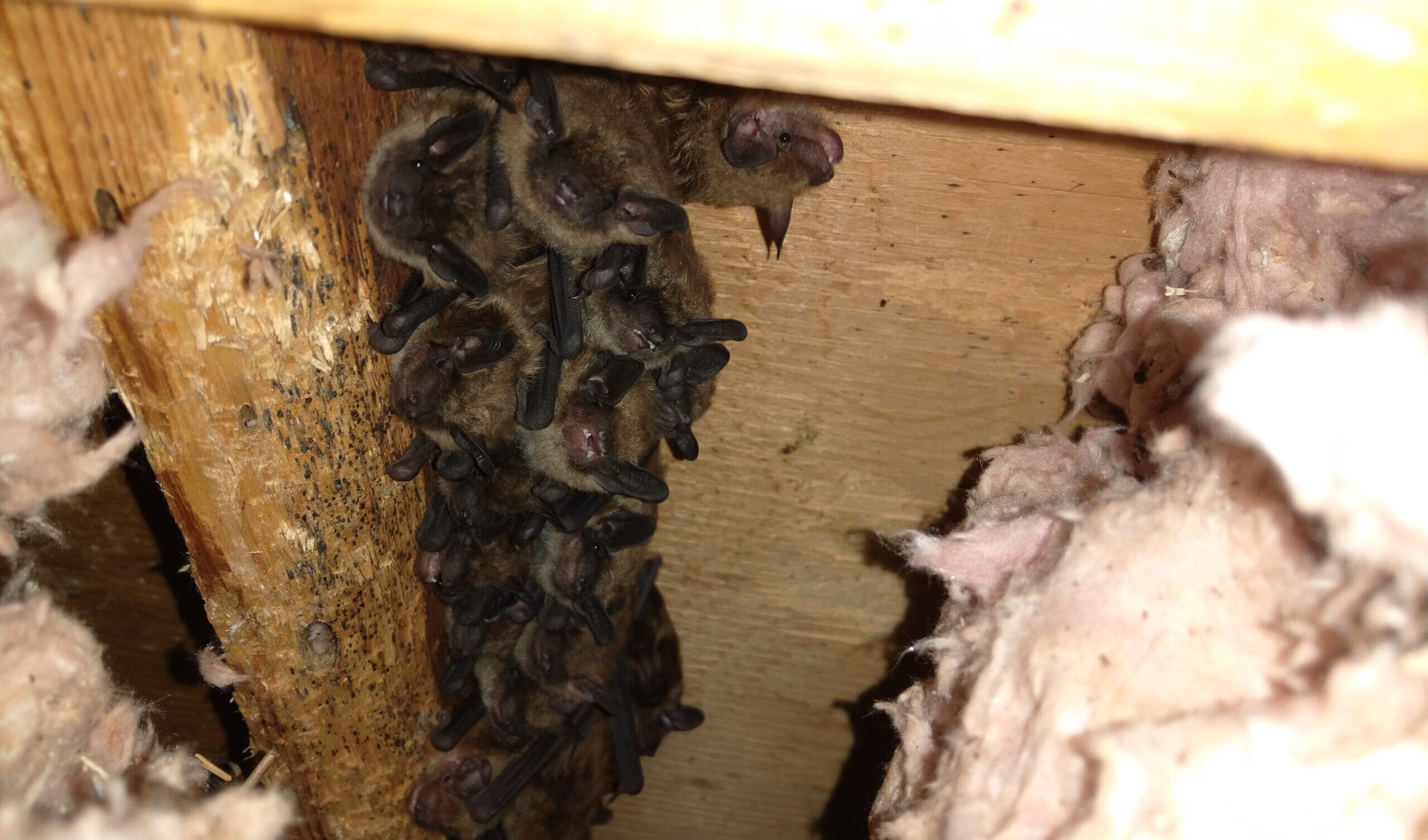
If you’ve ever noticed fluttering sounds in your attic or bats flying around your yard at dusk, it’s natural to wonder what these animals are doing during the colder months. Many Atlanta homeowners ask whether bats actually hibernate in attics. Understanding their behavior helps you protect your home while respecting these fascinating mammals.
At Skedaddle Humane Wildlife Control in Marietta, we often receive questions about bats and their winter habits. While bats may visit attics in winter, their behavior is different from full hibernation. Learning about bats hibernating in Atlanta attics, spotting signs of activity, and knowing when to involve professionals can help you keep your home safe and your attic undisturbed.
Understanding Bat Behavior in Atlanta
Bats are unique mammals with behaviors that change depending on the season. In northern states, many bat species hibernate for several months to conserve energy. In Atlanta, however, winters are milder, so their behavior differs. Rather than full hibernation, bats enter periods of torpor, where their metabolism slows and they rest but may still become active during warmer nights.
Common species in the area include the little brown bat, eastern red bat, and evening bat. These bats seek sheltered areas that protect them from the cold, predators, and disturbances. While attics are not their preferred long-term hibernation sites, they can offer a temporary refuge when outdoor temperatures drop.
Some important aspects of bat behavior in winter include:
- Bats are mostly nocturnal, so any activity inside or around a home typically occurs at night.
- Winter roosting locations may include hollow trees, abandoned buildings, and sometimes attics.
- Bats are social creatures and may gather in small groups for warmth and protection.
Understanding these behaviors helps homeowners recognize potential bat activity and take appropriate steps to maintain a safe attic.
Do Bats Hibernate in Atlanta Attics?
Many homeowners assume that if bats are in their attic during winter, they must be hibernating. The reality is more nuanced. Attics may serve as temporary shelter, but full hibernation in Atlanta attics is uncommon. True hibernation generally requires a stable, low-temperature environment that maintains consistent cold conditions, which attics rarely provide in this region.
Key points to consider:
- Bats may enter torpor for several hours or even a few days when temperatures drop.
- They use attics for warmth, safety, and protection from predators rather than as long-term hibernation sites.
- True hibernation in Atlanta is more likely to occur in caves or naturally insulated spaces.
Even though full hibernation in attics is rare, homeowners may still notice temporary activity. Bats resting in your attic during a cold snap is normal, and understanding this behavior can prevent unnecessary alarm.
Signs of Bat Activity in Winter
Even if bats are only using an attic temporarily, there are signs homeowners can watch for to identify their presence:
- Small droppings or urine stains near attic entry points.
- Scratching or fluttering noises during the night or early morning.
- Stains around small vents, eaves, or rooflines where bats may rest.
- Faint odors caused by droppings or urine accumulation.
- Tiny bits of fur or nesting material tucked in corners.
It’s important to note that not all activity indicates a large colony. Even a few bats can leave noticeable signs, and early detection can make professional assessment and maintenance much easier.
Risks and Considerations for Homeowners
Although brief visits from bats are generally harmless, homeowners should be aware of potential risks. Droppings can accumulate and create minor damage or health concerns if not properly managed. Nests and urine stains can also affect insulation and other attic materials.
Some of the main risks include:
- Structural concerns: Over time, droppings can degrade insulation or cause staining on beams and ceilings.
- Health considerations: Bat guano may carry bacteria that could irritate the respiratory system if disturbed.
- Odors: Accumulated droppings can create unpleasant odors in an attic.
Understanding these risks emphasizes the importance of monitoring your attic and consulting professionals when needed. Attempting to manage bats yourself can increase these risks, especially in winter when bats are more vulnerable.

Professional Support and Prevention
Working with trained wildlife experts is the safest way to address any bat activity in your attic. At Skedaddle, we focus on thorough inspections, identifying entry points, and providing humane, effective solutions.
Professional support includes:
- Inspecting attics, rooflines, and other potential entry points to determine where bats are entering or resting.
- Offering recommendations for structural adjustments to make attics less attractive without harming the bats.
- Providing guidance on ongoing monitoring and maintenance to prevent future activity.
- Implementing humane exclusion measures that ensure bats cannot reenter once they leave naturally.
Professionals help homeowners avoid the pitfalls of DIY attempts and provide peace of mind that both the home and the bats are protected.
Tips for Homeowners
Even if bats are only visiting temporarily, there are ways homeowners can maintain a safe attic and reduce potential issues. Preventive maintenance, awareness, and professional support go a long way in keeping both property and wildlife safe.
Some useful tips include:
- Schedule regular inspections of attics and rooflines, especially before and after winter.
- Keep attics well-ventilated and minimize gaps or openings that could allow entry.
- Maintain trees and vegetation around your home to reduce easy access to rooflines.
- Observe any signs of wildlife activity and contact professionals if needed.
- Document noises, droppings, or other signs to assist experts during inspections.
These steps focus on prevention and early intervention rather than reactive measures, ensuring a safer environment for everyone.
Key Takeaways for Homeowners
Understanding bats and their winter behavior helps homeowners make informed decisions about their attics. While bats hibernating in Atlanta attics is uncommon, temporary visits are normal. Recognizing signs of activity, understanding potential risks, and working with professionals ensures safe and humane management.
Some essential points include:
- Attics may provide short-term shelter for bats but are not typical hibernation sites.
- Droppings, odors, and nighttime noises are common indicators of bat activity.
- Professional assessment is the safest way to manage winter visits.
- Routine maintenance and monitoring reduce the likelihood of future activity.
- Being informed helps homeowners protect both their property and local wildlife.
By understanding bat attic facts for Atlanta homeowners, you can confidently maintain your home while coexisting safely with bats. Professional support is the key to ensuring your attic remains secure throughout the winter months.
Maintaining a Safe and Bat-Free Attic
Even brief visits can be managed effectively without harming the bats. Regular inspections, structural maintenance, and professional guidance are the most reliable ways to keep attics free from unwanted winter visitors.
At Skedaddle Humane Wildlife Control in Marietta, we provide expert assistance in identifying bat activity, offering humane solutions, and preventing long-term issues. Homeowners benefit from peace of mind knowing that both their home and the bats are protected.
Whether bats are resting temporarily or just exploring, understanding their behavior allows homeowners to take appropriate precautions. Being proactive and working with experts ensures that your attic remains a safe, undisturbed space while supporting the important ecological role bats play in the environment.

 Loading...







