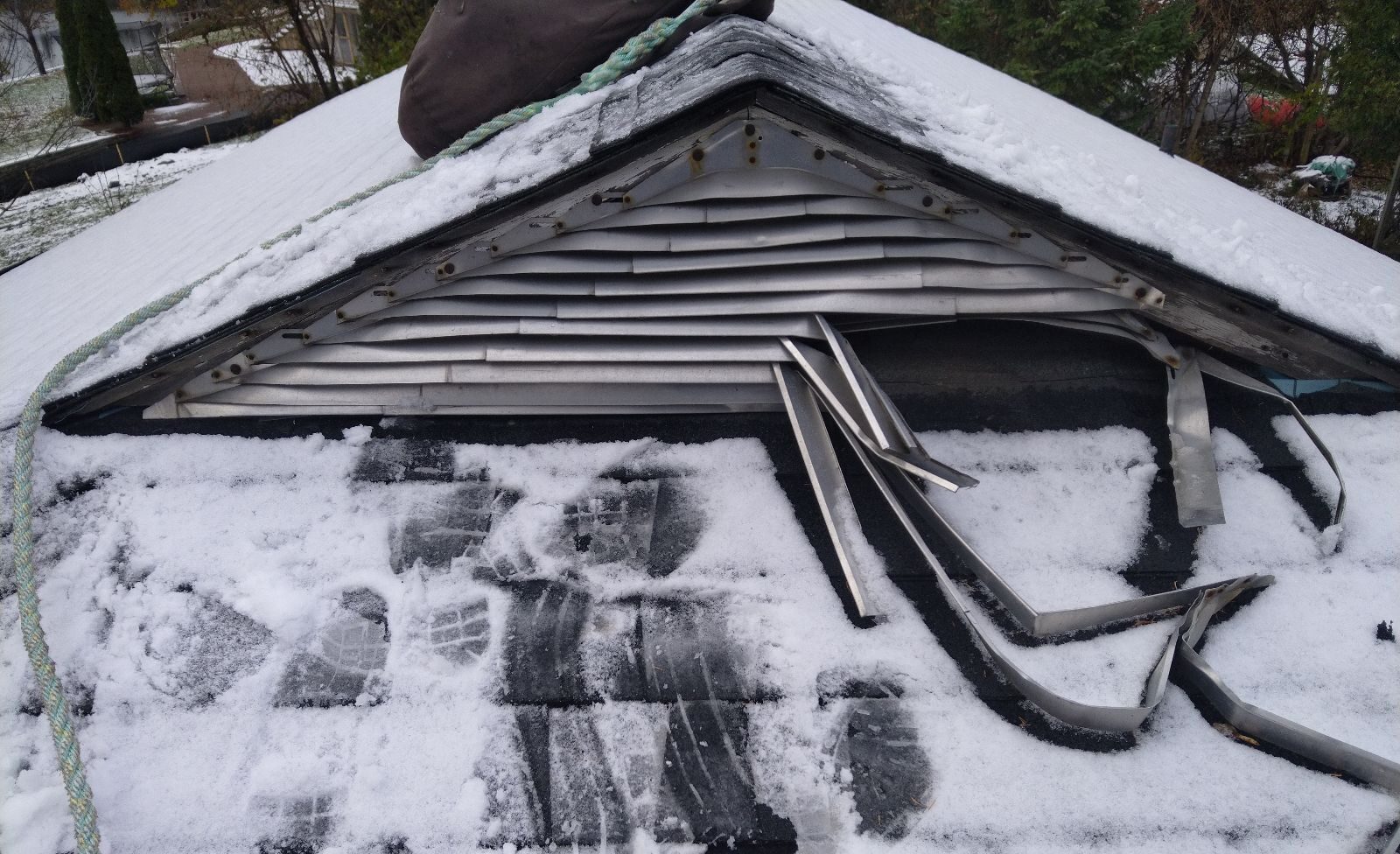
You feel winter in Denver in more ways than one. Snow piles up on your roof, temperatures drop fast, and the nights get quiet, until you hear scratching or thumping above your ceiling. That’s often how raccoons in Denver homes during the winter first make themselves known. They follow warmth, weak spots, and frozen roofline openings, turning small gaps into clear entry points.
You might wonder how they get inside so easily. Frozen roofline raccoon entry happens because snow and ice soften materials, loosen vents, and bend soffits. The animals use strength and climbing skills to pull at anything that’s already worn down. At Skedaddle Humane Wildlife Control in Denver, we see this all season long, and we help prevent raccoons in Denver during the winter from settling into attic spaces.
This guide explains how frozen rooflines help them enter, the main spots they target, what happens after they get inside, and how our team keeps your home protected for future winters.
Why Winter Pushes Raccoons Toward Your Roof
You feel the cold snap as soon as winter hits. The animals do too. Food gets harder to find, open water freezes, and natural den spots like hollow logs or old sheds are not always enough. A home offers something they want most in winter: steady warmth and a dry, hidden place to rest.
Attics and roof spaces stay warmer than the outside air because heat escapes from your living areas. Even small gaps around vents or roof edges leak warm air. The animals can feel that warmth with their paws and whiskers. When snow and ice sit on the roof, they also hold heat and moisture, which breaks down building materials more quickly. That combination makes raccoons in Denver homes during the winter much more likely.
Frozen rooflines, ice dams, and heavy snow also bend gutters and strain metal flashing. Once things start to pull away, the animals don’t need to create a new hole from scratch. They only need to make an existing weakness a little bigger.
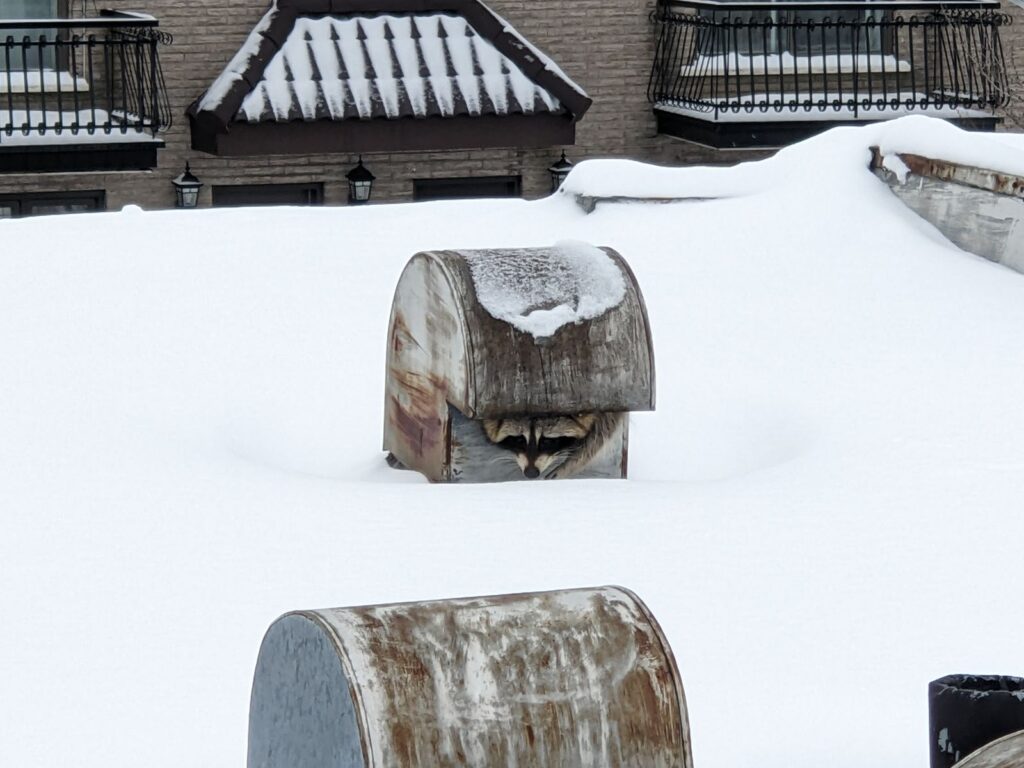
How Frozen Rooflines Help Raccoons Break In
Cold weather is tough on your roof. The freeze–thaw cycle slowly opens the door for wildlife. Our team often sees the same chain of problems on winter calls.
Key roofline issues include:
- Weather Damage That Weakens Materials: Snow and ice collect along edges, in gutters, and where two roof slopes meet. During the day, some of that snow melts. At night, it freezes again and pushes against wood, shingles, and metal. Over time, this creates cracks, soft spots, and gaps. The animals feel those soft areas under their paws and know they can tear them open.
- Hidden Weak Spots Under Snow and Ice: A roof may look fine from the ground in winter, but snow piles can hide loose soffits, lifted shingles, and old repair work. The animals don’t care what it looks like; they test it with their weight. If they can push a panel up or pull a corner loose, they’ve found an entry point. Homeowners often don’t see this damage until we inspect the roof.
- Warm Air Leaks That Act Like Beacons: Heat escaping from your attic rises up through gaps, vents, or poorly sealed edges. That creates warm spots on a frozen roof. The animals are very good at finding those spots. They follow the heat, test the area, and focus their efforts there because they know it leads to a safe interior space.
- Extra Leverage from Snowbanks and Nearby Structures: When snow piles up along a lower roof or deck, it gives the animals a step up closer to the roofline. Nearby fences and branches do the same thing. From there, they can grab the edge of a soffit or vent cover and use their body weight to pry it open. Frozen roofline raccoon entry often starts from these “boosts” around the house.
All of this means winter roof damage and animal activity work together. The more worn the roofline becomes, the easier it is for them to break in.
Favorite Entry Points Along Denver Rooflines
Once the animals reach the roof, they don’t just wander. They check specific areas first, and our team at Skedaddle sees the same patterns across many homes.
Common targets include:
- Roof–Soffit Intersections: Where two roof slopes meet or where the roof connects to the wall, panels and trim often overlap. If those pieces are loose from weather or age, they provide an easy grip. The animals can push up soffit panels, break thin materials, and climb inside the space above the wall.
- Roof Vents and Exhaust Openings: Plastic or thin metal roof vents are not designed to stop a strong animal. The animals can rip off covers, bend thin metal, or chew the edges until there is a gap big enough to squeeze through. From there, they drop straight into attic spaces, which is a common source of raccoons in Denver homes during the winter.
- Chimneys Without Proper Caps: An open chimney feels like a hollow log. It offers shelter from wind and snow, and in some cases, direct warmth from a furnace or fireplace. Without a secure, wildlife-resistant cap, a chimney can turn into a den site or a pathway into wall and ceiling spaces.
- Plumbing Vent Flashing: Around vent pipes, roofers cut holes in the roof deck and seal them with rubber or metal flashing. Over time, that flashing can crack or pull up. The animals grab the edge and tear it away, exposing a larger opening that leads inside.
- Loose Shingles and Damaged Flashing: If shingles are already curling, cracked, or missing, they become a doorway. The animals can pull up more shingles, remove rotted wood underneath, and open a gap. Metal flashing around dormers or chimneys can also be pried up when it’s rusted or bent from ice.
Every one of these weak spots becomes more vulnerable when rooflines are frozen and stressed.
What Happens Once They Get Inside
Getting in is only the first step. Once the animals enter your attic or wall space, they start to change the inside of your home in ways you can’t always see.
They often pull insulation into piles to make nests. This flattens nearby insulation and lowers its ability to hold heat. You may notice higher energy bills or cold spots in certain rooms. They can also damage air ducts and tear vapor barriers as they move around, which affects airflow and moisture levels.
These animals also leave droppings and urine behind. Over time, that waste soaks into wood and insulation. It can create strong odors and health concerns if not cleaned safely by trained professionals. They sometimes chew on wood, wires, and plastic as they explore or keep their teeth worn down. All of this adds up to more repair work if the problem is left alone.
This is why raccoons in Denver homes during the winter are more than just a noise in the ceiling. The longer they stay, the more damage they cause.
Why Frozen Rooflines Make Damage Grow Faster
Cold weather doesn’t slow down damage; it speeds it up in different ways. Snow and ice add weight to already weak sections. As the roof shifts under that weight, gaps can widen. The animals respond quickly to any new opening that forms.
Moisture is another big factor. When snow melts around an entry hole, water seeps into wood and insulation. At night, it freezes again, expanding inside small cracks. That makes wood split and paint peel faster. The animals then have even softer material to pull apart.
Because of this, frozen roofline raccoon entry often starts small but grows quickly over a single winter. What begins as one loose panel can turn into a large opening if it isn’t sealed properly by experts.
Protecting Roofs and Vents with Professional Help
Rooflines are not the only problem area. Vents also give access to warm air and hidden spaces. Dryer vents, bathroom vents, and kitchen exhaust vents can become targets if their covers are loose or made from thin material.
Here’s exactly how our professionals approach the situation.
- Inspect vent covers and surrounding siding or shingles for gaps that are easier to see in winter light.
- Replace weak or broken covers with strong, wildlife-resistant options.
- Ensure vents stay open for airflow while staying closed to wildlife.
- Address any signs of droppings or nesting material around vent exits safely and thoroughly.
When roof repairs and vent protection work together, your home becomes much harder for wildlife to enter. You get better air movement inside and fewer risks from animals using those openings as hidden doors.
A Safer Winter Home Starts at the Roofline
When frozen rooflines in Denver and smart wildlife behavior meet, your home can quickly turn into a winter den site. Raccoons in Denver homes during the winter follow warmth, weak roof edges, loose vents, and hidden gaps to find their way inside. The sooner those issues are found and fixed, the easier it is to protect your home and your family.
If you want to prevent raccoons in Denver during the winter from turning your attic into their shelter, you can request an estimate to learn more.
Our team at Skedaddle Humane Wildlife Control in Denver is ready to inspect your frozen roofline, use humane one-way doors to remove wildlife, and secure every entry point so frozen roofline raccoon entry doesn’t become a yearly problem.

 Loading...







