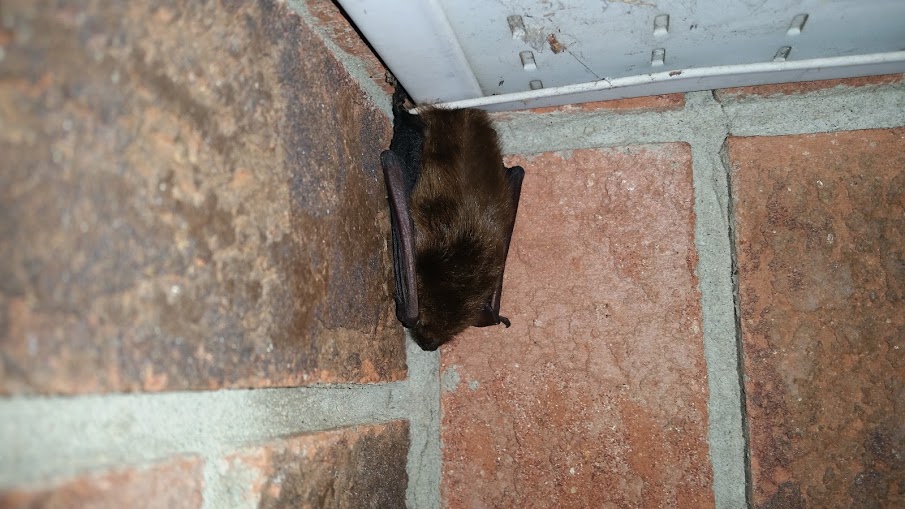
When most people think about rabies, they picture raccoons, skunks, and other wildlife during the fall months. However, in Ontario, bats have become the wildlife species most commonly associated with confirmed rabies cases, making summer an important time for homeowners to understand the facts and potential risks.
For homeowners in Kitchener, summer is also when bat activity reaches its peak. As maternity colonies settle into attics, soffits, and wall cavities to raise their young, encounters between people and bats become more common. While the vast majority of bats are not infected with rabies, knowing how to respond to bat activity and when to seek professional help can go a long way toward protecting your home and family.
What Percent of Bats Have Rabies in Ontario?
The good news is that only a small percentage of bats carry rabies. However, because rabies is almost always fatal once symptoms appear, any direct contact with a bat should be taken seriously. It’s also important to remember that bats submitted for testing are often sick, injured, or involved in human or pet encounters, which can make the percentage of positive cases appear higher than it is in the general bat population.
Why Public Health Is Paying More Attention to Bats
Ontario has made tremendous progress reducing rabies in other wildlife species through extensive vaccination programs targeting raccoons and foxes. These successful initiatives have dramatically lowered the number of rabies cases in many traditional wildlife carriers across the province.
As those numbers declined, bats became the wildlife species responsible for the majority of laboratory-confirmed rabies cases reported each year.
This doesn’t necessarily mean more bats are becoming infected. Rather, it reflects how successful Ontario has been at reducing rabies among other wildlife populations.
Public health agencies continue to educate homeowners because bat encounters are relatively common, especially during the warmer months. Unlike many other wildlife species, bats often share buildings with people without immediately being noticed. Their ability to enter homes through incredibly small openings means homeowners may unknowingly have bats living overhead for weeks or even months.
Several factors have made bats an increasing focus for public health officials:
- Bats account for most confirmed wildlife rabies cases in Ontario.
- Bat encounters frequently occur inside homes rather than outdoors.
- Bat bites can be extremely small and difficult to detect.
- People may not realize contact has occurred, particularly if they were asleep.
- Summer maternity colonies increase the likelihood of bats being found in residential areas.
- Public awareness helps ensure potential exposures receive prompt medical guidance.
It’s equally important to remember that bats are not aggressive animals. They do not seek out people or pets, nor do they intentionally enter homes to interact with occupants. Most indoor encounters occur because bats have established a colony inside a structure or accidentally entered a living space while searching for an exit.
Understanding these facts allows homeowners to respond calmly and appropriately rather than out of fear.
Summer Is Peak Bat Season in Kitchener
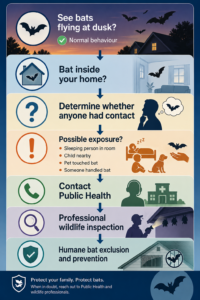 While bats remain active throughout much of the warmer months, summer represents one of the busiest periods of their annual life cycle.
Beginning in late spring, female bats gather together to form maternity colonies. These colonies provide a safe, warm environment where mothers can give birth and care for their pups until they are old enough to fly and forage independently.
Natural roosting sites such as hollow trees and rocky crevices have become less common in many urban areas. As neighbourhoods continue to expand, bats have adapted by using human-made structures that offer similar conditions. Unfortunately, residential homes often provide everything a maternity colony needs.
Common locations where bats establish summer colonies include:
- Attics
- Soffits
- Wall cavities
- Roof vents
- Gaps beneath flashing
- Fascia boards
- Chimney intersections
- Small openings along the roofline
These spaces remain warm, protected from predators, and largely undisturbed during daylight hours, making them ideal nursery sites.
As the summer progresses, homeowners may begin noticing signs that bats have taken up residence.
Some of the earliest indicators include bats flying around the roof shortly after sunset, increased activity near roof peaks, or faint chirping noises coming from above ceilings during the day. Because bats leave to feed at dusk and return before sunrise, many homeowners don’t realize they’re sharing their home with a colony until weeks after it has become established.
Later in the season, young bats begin learning to fly. During this time, homeowners may notice increased evening activity around entry points as juvenile bats make their first flights. Occasionally, inexperienced young bats may accidentally find their way into living spaces, leading to unexpected encounters inside the home.
Understanding the timing of maternity season is especially important because it directly influences how and when humane bat removal can be performed. Young bats remain dependent on their mothers for several weeks after birth and cannot survive on their own. Professional wildlife technicians carefully plan exclusion work around this life cycle to avoid separating mothers from their pups while still providing homeowners with an effective, long-term solution.
For this reason, discovering bats during the summer doesn’t necessarily mean immediate removal is possible. Instead, it often requires a carefully timed approach that protects both the homeowner and the colony while ensuring the problem is resolved permanently.
Understanding How Rabies Is Transmitted
Rabies is a viral disease that affects the central nervous system of mammals, including humans. Once symptoms begin to appear, the disease is almost always fatal, which is why public health officials encourage people to take any potential exposure seriously. Fortunately, rabies transmission requires specific types of contact, and simply seeing a bat flying outside does not put you at risk.
The virus is spread through the saliva of an infected animal. In most cases, transmission occurs through a bite, although scratches that become contaminated with infected saliva can also present a risk. Unlike some viruses, rabies is not spread through the air, by touching a bat’s fur, or by seeing bats flying around your property.
One of the reasons bats receive so much attention is that their bites can be much smaller than those of larger animals. In some situations, a bite or scratch may leave little or no visible mark, making it difficult for someone to know whether exposure has occurred. This is particularly important when young children, sleeping individuals, or people with certain medical conditions may not be able to accurately report contact.
Situations that should always be taken seriously include:
- A bat found in a room where someone was sleeping
- A bat discovered near an unattended child
- A bat found in the room with a person who is unable to communicate whether contact occurred
- Someone handling a bat without proper protection
- A pet catching or playing with a bat
- Any suspected bite or scratch, even if it appears very minor
These situations don’t automatically mean rabies transmission has occurred. Instead, they represent circumstances where public health professionals recommend further evaluation to determine whether medical follow-up is necessary.
On the other hand, many common encounters with bats pose little to no risk. Watching bats fly overhead while you’re sitting on your deck at dusk, seeing one feeding around streetlights, or observing bats emerging from a nearby wooded area are all normal parts of living alongside wildlife in Ontario.
The important distinction is direct contact. Homeowners should never attempt to catch, handle, or release a bat themselves if there is any possibility that exposure has occurred. Instead, contact your local public health unit for guidance while arranging for professional wildlife assistance to assess the situation.
Signs Bats May Be Living in Your Home
Because bats are nocturnal and remarkably quiet animals, many homeowners are surprised to learn that a colony has been living inside their home for weeks—or even months—before it is discovered. Unlike squirrels or raccoons, which often create noticeable daytime activity, bats spend most daylight hours resting silently inside hidden spaces.
This ability to remain out of sight makes it important to recognize the subtle warning signs that may indicate a colony has established itself inside your home.
One of the earliest signs homeowners notice is increased bat activity around the roofline shortly after sunset. Rather than flying randomly through the neighbourhood, bats emerging from a colony often appear to come from the same location each evening before dispersing to feed.
You may also hear faint sounds coming from above ceilings or inside walls. During the day, maternity colonies often communicate with one another using soft chirping or squeaking sounds. While these noises are usually much quieter than those made by squirrels or raccoons, they can become more noticeable as the colony grows throughout the summer.
Other common signs include:
- Bats regularly flying around the same section of your roof at dusk
- Chirping, squeaking, or light scratching sounds in the attic or walls
- Dark staining around small gaps or entry points caused by body oils
- Small piles of bat droppings beneath roof openings
- A musty odour developing in attic spaces over time
- Bats accidentally appearing inside the home’s living areas
The staining found around entry points is often overlooked by homeowners. As bats repeatedly squeeze through narrow openings, natural oils from their fur gradually leave dark marks around the edges of the gap. These stains can help experienced wildlife technicians identify active entry points during a professional inspection.
Bat droppings, known as guano, are another common indicator. Since bats often return to the same roost night after night, droppings can accumulate beneath entry points or within attic spaces. Over time, large accumulations may create unpleasant odours and contribute to damage within the insulation.
It’s also important to understand that seeing a single bat indoors doesn’t always mean it entered accidentally through an open window or door. In some cases, an individual bat inside the living space may indicate that a larger colony is present elsewhere in the home. This is why professional inspections focus on identifying every potential entry point rather than simply removing the bat that was found inside.
The sooner a colony is identified, the easier it is to develop a humane exclusion plan before larger accumulations of droppings, staining, and structural contamination occur.
Common Myths About Bats and Rabies
Despite their important role in Ontario’s ecosystem, bats are surrounded by myths that often create unnecessary fear and confusion. Separating fact from fiction helps homeowners respond appropriately if they encounter bats around their property.
Myth: Every bat has rabies.
This is one of the most common misconceptions. In reality, only a small percentage of bats carry the rabies virus. Most bats are healthy animals that spend their nights feeding on insects and actively avoid interactions with people. While any potential exposure should be treated seriously, homeowners should not assume every bat they see is infected.
Myth: Bats will attack people.
Bats are not aggressive toward humans. They are shy, cautious animals that prefer to avoid confrontation whenever possible. If a bat appears to fly close to someone, it is usually chasing insects attracted by outdoor lighting rather than intentionally approaching a person.
Myth: Seeing bats outside means your home has a problem.
Bats naturally forage over neighbourhoods, parks, ponds, and wooded areas every evening. Seeing them flying overhead at dusk is completely normal and often indicates a healthy local ecosystem. Concern only arises if bats are consistently entering or exiting your home’s roofline or are being found inside the structure.
Myth: Bat droppings spread rabies.
Rabies is not transmitted through bat droppings. The virus spreads through the saliva of an infected animal, usually via a bite or scratch. However, large accumulations of guano can create other health and sanitation concerns if left undisturbed inside attics, making professional cleanup an important part of resolving a bat colony.
Myth: Closing the hole immediately solves the problem.
Many homeowners believe that sealing the opening where bats enter will immediately resolve the issue. Unfortunately, doing so while bats are still inside can trap them within the structure or separate mothers from flightless pups during maternity season. Humane bat exclusion requires careful timing and specialized one-way devices that allow bats to leave safely before entry points are permanently sealed.
Understanding these common misconceptions allows homeowners to appreciate the ecological value of bats while also recognizing when professional assistance is needed to protect both the wildlife and the home.
Why DIY Bat Removal Can Create Additional Risks
Finding bats inside your home can be unsettling, and many homeowners’ first instinct is to solve the problem as quickly as possible. However, bat removal is very different from dealing with many other types of wildlife. Bats are protected under Ontario’s Fish and Wildlife Conservation Act, and their annual maternity season means removal efforts must be carefully timed to avoid harming flightless young.
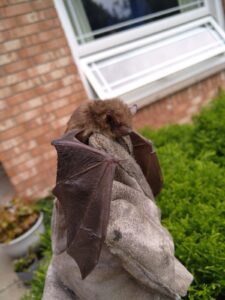 Attempting to remove bats without understanding their behaviour often creates additional problems instead of solving the original one. Sealing an entry point too soon, for example, can trap bats inside the home or separate mothers from pups that are unable to fly. This not only creates an animal welfare concern but can also result in increased odours, noise, and bats finding alternative routes into living spaces.
DIY bat removal can also increase the likelihood of direct contact between people and bats. Whether someone is trying to catch a bat flying through a room or investigate activity in the attic, unnecessary handling raises the risk of bites or scratches and may require follow-up with public health officials.
Other common issues associated with DIY bat removal include:
- Overlooking secondary entry points that allow bats to return.
- Using repellents or devices that fail to solve the problem.
- Accidentally trapping bats inside walls or attic spaces.
- Separating mothers from dependent young during maternity season.
- Damaging roofing materials or ventilation components while attempting repairs.
- Leaving behind guano and contaminated insulation that continue to cause odours and sanitation concerns.
Professional bat removal focuses on understanding the colony’s behaviour first, then using humane exclusion methods at the appropriate time of year. This approach protects the bats while providing homeowners with a long-term solution that addresses both the wildlife issue and the vulnerabilities that allowed bats to enter in the first place.
How Skedaddle Humanely Removes Bats from Homes
Successfully resolving a bat problem requires much more than simply getting bats out of the attic. Lasting results depend on understanding how bats use a structure, identifying every possible entry point, and preventing future access without harming the animals.
At Skedaddle Humane Wildlife Control, every bat removal begins with a comprehensive inspection of the property. Our technicians examine the roofline, attic, soffits, vents, fascia, siding, and other areas where bats commonly enter homes. Because bats can squeeze through openings as small as 15 millimetres, even tiny construction gaps can become access points.
Once active entry locations have been identified, we develop a customized removal plan based on the home’s construction and the time of year. During appropriate periods, specialized one-way doors are installed over active entry points. These devices allow bats to leave naturally during their nightly feeding flights but prevent them from re-entering.
Our bat removal process typically includes:
- A detailed inspection of the roofline and structure.
- Identification of all active and potential entry points.
- Installation of humane one-way exclusion devices.
- Monitoring to ensure the colony has successfully exited.
- Permanent sealing of vulnerable openings.
- Recommendations for long-term prevention and home protection.
Timing is especially important during maternity season. Because young bats cannot fly for several weeks after birth, exclusion work must be carefully planned to avoid separating mothers from their pups. Our technicians understand these seasonal considerations and schedule removal work accordingly, ensuring both effective wildlife control and humane treatment.
After the colony has safely left the home, we permanently secure identified entry points using professional exclusion materials designed to withstand weather and future wildlife activity. If bats have occupied the attic for an extended period, we can also assess whether cleanup or insulation restoration may be beneficial.
By focusing on prevention rather than temporary fixes, we help homeowners resolve their current bat problem while reducing the likelihood of future activity.
Protecting Your Home Before Bat Problems Begin
Preventing bats from entering your home is far easier than dealing with an established maternity colony. Since bats naturally search for warm, protected spaces each spring and summer, even well-maintained homes can develop small vulnerabilities over time.
Weather, seasonal expansion and contraction of building materials, aging roofing components, and routine wear can all create openings large enough for bats to enter. Because these gaps are usually located high on the home, many homeowners never notice them from ground level.
Some of the most common bat entry points include:
- Roof vents
- Soffit and fascia gaps
- Roof intersections
- Construction joints
- Expansion gaps
- Damaged siding
- Openings around utility penetrations
- Chimney flashing
- Loose trim or roofing materials
Regular exterior inspections can help identify these vulnerable areas before bats begin searching for maternity roosts. Paying attention to damaged roof components, loose flashing, or deteriorating building materials can reduce opportunities for wildlife to move inside.
It’s also helpful to remain observant throughout the summer. If you consistently notice bats entering or exiting the same location on your roof at dusk, hearing unusual noises in the attic, or finding droppings around the home’s exterior, arranging a professional inspection early can prevent a relatively small issue from becoming a much larger one.
Because every home is different, professional wildlife inspections provide homeowners with customized recommendations based on their property’s unique construction. Addressing small vulnerabilities before bats discover them is one of the most effective ways to avoid future conflicts while continuing to support the important role bats play in the local environment.
Frequently Asked Questions About Bats and Rabies
Do most bats in Ontario have rabies?
No. Only a small percentage of bats carry rabies. However, because rabies is a serious disease with severe health consequences, any potential exposure should be taken seriously. It's also important to remember that bats tested for rabies are often sick, injured, or involved in human encounters, which can make infection rates appear higher than they are among the overall bat population.
What should I do if I find a bat inside my house?
If you find a bat indoors, avoid touching or handling it. If there is any possibility that a person or pet had direct contact with the bat, contact your local public health unit for guidance. Even if no exposure occurred, it's important to determine how the bat entered the home, as there may be additional bats or an active colony present.
Can you get rabies from bat droppings?
Rabies is not transmitted through bat droppings. The virus spreads through the saliva of an infected animal, typically through bites or scratches. However, bat droppings can create other concerns when they accumulate inside attics or wall spaces. If you discover signs of a bat colony, it's best to have the situation professionally assessed rather than disturbing affected areas yourself.
Why are bats more active during the summer?
Summer is maternity season for many bat species in Ontario. Female bats gather in colonies to give birth and raise their young in warm, sheltered spaces such as attics and wall cavities. As colonies grow and young bats begin developing, homeowners may notice more activity around their property, particularly at dusk when bats leave to feed.
Is bat removal legal during maternity season in Ontario?
Bat removal during maternity season requires careful planning because young bats are unable to fly for part of the summer. Removing adult bats too early can leave pups trapped inside the structure. Professional wildlife technicians understand the timing requirements and use humane exclusion methods that comply with regulations while protecting both the bats and the homeowner's property.
Stay Informed About Summer Bat Activity
Although rabies is often associated with the cooler months, Ontario’s current wildlife trends show that bats deserve attention throughout the summer as well. The good news is that bats remain an essential part of the province’s ecosystem. They provide valuable natural insect control, support healthy environments, and generally avoid contact with people whenever possible.
Understanding when bat activity is most likely, recognizing the signs of a colony inside your home, and knowing when to seek professional guidance allows homeowners to respond with confidence rather than concern. Most encounters with bats do not involve rabies, but every potential exposure should be evaluated carefully to protect both people and pets.
If you suspect bats have moved into your attic, walls, or roofline, acting early can help prevent a small colony from becoming a larger issue. A professional inspection can identify how bats are entering your home, determine whether a maternity colony is present, and develop a humane exclusion plan that provides a long-term solution.
Since 1989, Skedaddle Humane Wildlife Control has helped homeowners safely resolve bat conflicts using humane, science-based exclusion methods that protect both families and wildlife. If you’ve noticed bats around your Kitchener home this summer or believe a colony may be living inside your attic, contact our team today to schedule a professional assessment and learn how we can help keep your home protected for years to come.

 Loading...







