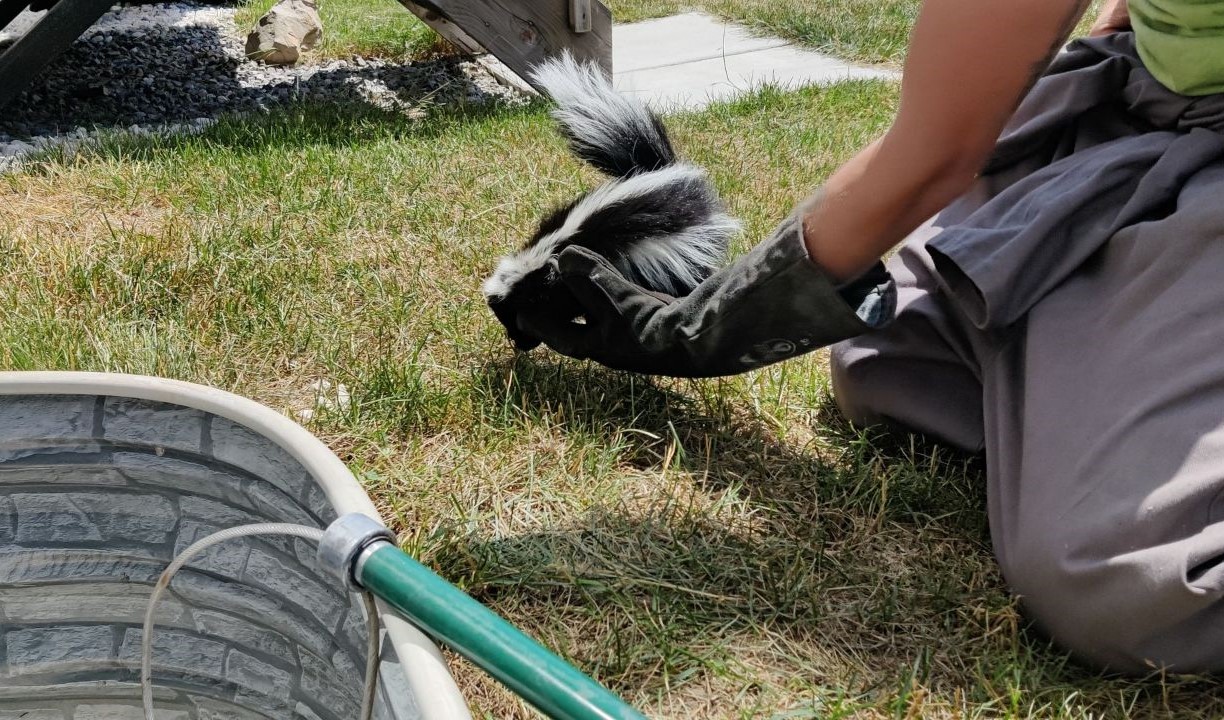
Discovering skunks beneath your shed is a common yet challenging wildlife issue faced by many Anoka County homeowners. Finding effective solutions requires understanding both the animals’ behavior and the appropriate removal techniques.
At Skedaddle Minnesota, we’ve assisted countless property owners across Oak Grove and surrounding areas in resolving these situations with our humane wildlife management approach. Unlike typical pest problems, skunk infestations demand specialized knowledge and careful handling to prevent defensive spraying that can render your outdoor spaces unusable for weeks.
Signs You Have Skunks Under Your Shed
Before implementing any wildlife removal strategy, confirm what you’re dealing with. Skunks leave behind several telltale indicators of their presence:
- Fresh soil excavation: Look for piles of dirt along the perimeter of your shed or porch—skunks are expert diggers.
- Small, cone-shaped holes: These appear in lawns and gardens where skunks forage for grubs and insects.
- Persistent musky odor: Even when not spraying, skunks emit a distinctive smell that lingers around their den sites.
- Nocturnal activity: Though occasionally active during daylight (especially mother skunks with young), you typically hear scratching or digging sounds at night.
- Entry point evidence: Fresh dirt around 4–6-inch holes at the base of your shed indicates active burrowing.
Understanding these signs is crucial for addressing wildlife nesting problems effectively. Misidentification could lead to inappropriate control methods and wasted resources. Let’s examine why skunks choose your structures in the first place.
Why Skunks Choose Your Shed as Home
Skunks under shed structures aren’t there by accident. These clever animals deliberately select these locations for several reasons:
- Protection from predators: The enclosed space beneath a shed offers security from natural threats.
- Weather protection: These locations provide shelter from extreme temperatures, rain, and snow.
- Proximity to food sources: Many Anoka County properties offer abundant food opportunities through gardens, compost, pet food, and grub-filled lawns.
- Nesting potential: The protected environment makes an ideal location for female skunks to birth and raise their young (typically 4–7 kits) during the May-June breeding season.
The combination of shelter and resources makes your property particularly attractive to these animals. Once established, skunks can be difficult to remove without professional assistance, especially when babies are present.
The Dangers of DIY Skunk Removal
When facing wildlife nesting problems, many homeowners attempt removal themselves, often with counterproductive results:
- Spray risk: Skunks spray when threatened, creating a persistent odor that can permeate your home and belongings.
- Baby complications: During the breeding season (May-June), mothers become highly protective and more likely to spray when their young are threatened.
- Incomplete removal: Addressing only the adults without considering babies or entry points typically results in recurring problems.
- Legal considerations: Wildlife handling in Minnesota may be subject to regulations requiring proper permits and handling procedures.
One homeowner in Oak Grove attempted to remove skunks with store-bought repellents, only to discover that the ineffective treatment allowed the skunk family to grow larger, creating more extensive damage to their property’s foundation. Professional wildlife management services understand the seasonal patterns and behaviors that influence effective removal strategies.
Professional vs. DIY Approaches to Remove Skunks from Shed Areas
When comparing professional wildlife control to DIY methods, consider these important differences:
Professional Removal Benefits
- Technician safety: Trained professionals know how to approach skunks without triggering defensive spraying.
- Humane handling: Companies like Skedaddle use gentle, hands-on techniques for baby removal and specialized equipment like thermal imaging to locate hidden young.
- Complete solutions: Professionals address the entire problem, including:
– Removing all skunks (adults and babies)
– Cleaning contaminated areas
– Installing preventive barriers
– Deodorizing affected spaces - Guaranteed results: Reputable wildlife control companies stand behind their work with service guarantees.
DIY Removal Limitations
- Temporary solutions: Most DIY approaches address symptoms rather than root causes.
- Increased spray risk: Improper handling almost always results in defensive spraying.
- Ineffective methods: Common DIY recommendations like mothballs, ammonia-soaked rags, or ultrasonic devices have limited effectiveness against determined skunks.
Our experience handling wildlife nesting problems throughout Anoka County has shown that professional intervention typically provides faster, more complete, and longer-lasting results than DIY approaches.
Skunks Under Shed Solutions
Once skunks have been removed, preventing their return requires a comprehensive approach.
Physical Barriers
The most effective way to keep skunks from re-establishing under your shed is to install physical barriers:
- Buried screening: At Skedaddle Minnesota, we install heavy-gauge steel mesh 8–12 inches into the ground around vulnerable structures, creating an impenetrable barrier against digging.
- L-shaped barriers: By extending the mesh outward at the bottom, we create a horizontal barrier that prevents skunks from burrowing underneath.
- Professional installation: Proper installation ensures barriers remain effective while maintaining your property’s aesthetic appearance.
Habitat Modification
Making your property less attractive to skunks involves:
- Removing food sources: Regular yard maintenance to reduce grub populations, securing garbage, and removing fallen fruit.
- Eliminating shelter: Clearing brush piles, woodpiles, and other potential temporary shelters.
- Reducing access to structures: Sealing gaps, cracks, and openings in sheds, decks, and other outbuildings.
- Grub control: Treating lawns for grubs can reduce a primary food source that attracts skunks.
These preventative measures provide long-term protection against wildlife nesting problems when implemented correctly and maintained regularly.
Understanding Skunk Behavior for Better Management
Effective skunk management requires understanding their natural behaviors.
- Seasonal patterns: Skunks are most active during summer months when food is plentiful and young are being raised. In winter, they become less active but don’t fully hibernate.
- Feeding habits: Primarily insectivores, skunks dig for grubs and insects in lawns and gardens. They also opportunistically eat fruits, berries, small rodents, bird eggs, and human food waste.
- Defensive behaviour: Contrary to popular belief, skunks prefer not to spray unless they feel threatened. They typically provide warning signs before spraying, such as:
– Stomping front feet
– Raising tail
– Turning back toward a perceived threat
– Short forward charges - Territorial nature: While not strictly territorial, skunks establish home ranges of 0.5–2 miles, often with overlapping boundaries. Thus, removing one skunk without proper exclusion work often results in another taking its place.
Understanding these behaviors helps both homeowners and wildlife professionals develop more effective management strategies tailored to specific situations. For permanent solutions, addressing the underlying attractants is essential.
How Skedaddle Provides Humane Skunk Solutions
Our approach to wildlife management focuses on humane and long-lasting solutions that respect both the animals and your property.
Our Comprehensive Process
- Thorough inspection: We locate all entry points and assess the extent of the infestation, including checking for babies.
- Customized removal: Using specialized techniques, we safely remove all skunks from under your shed or other structures.
- Baby reunification: During breeding season, we use heated baby boxes to safely hold young skunks while their mother relocates them to an alternate den site.
- Exclusion work: Properly implementing physical barriers and habitat modifications ensures skunks do not return.
If you suspect skunks have taken up residence under your shed, don’t risk the challenges and potential hazards of DIY removal. Contact Skedaddle Minnesota for safe, professional, and humane solutions tailored to your property. Let our experienced team restore peace to your outdoor spaces, guaranteeing effective prevention and protection. Reach out today to schedule your inspection and take the first step toward a skunk-free environment.

 Loading...







