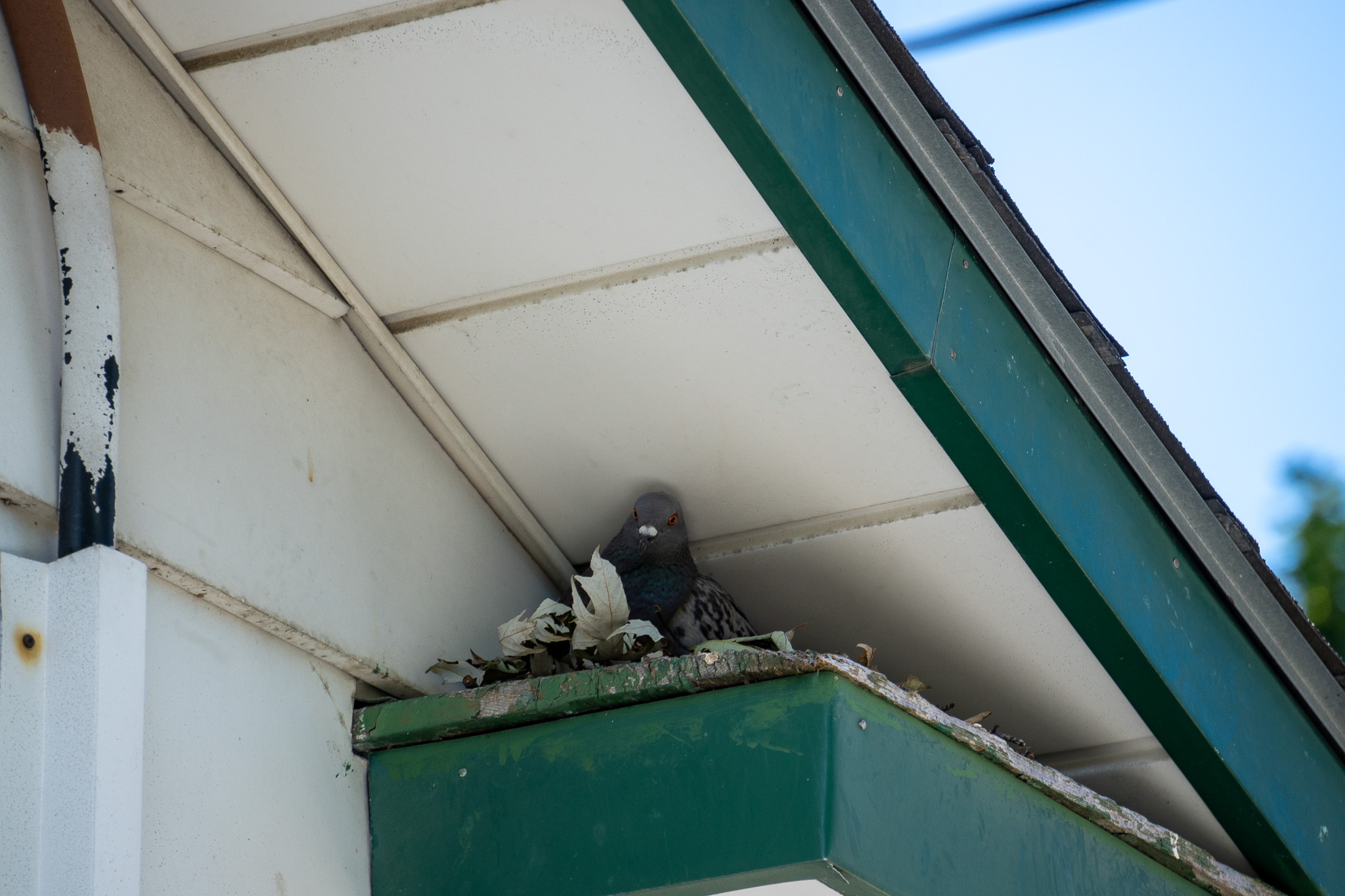
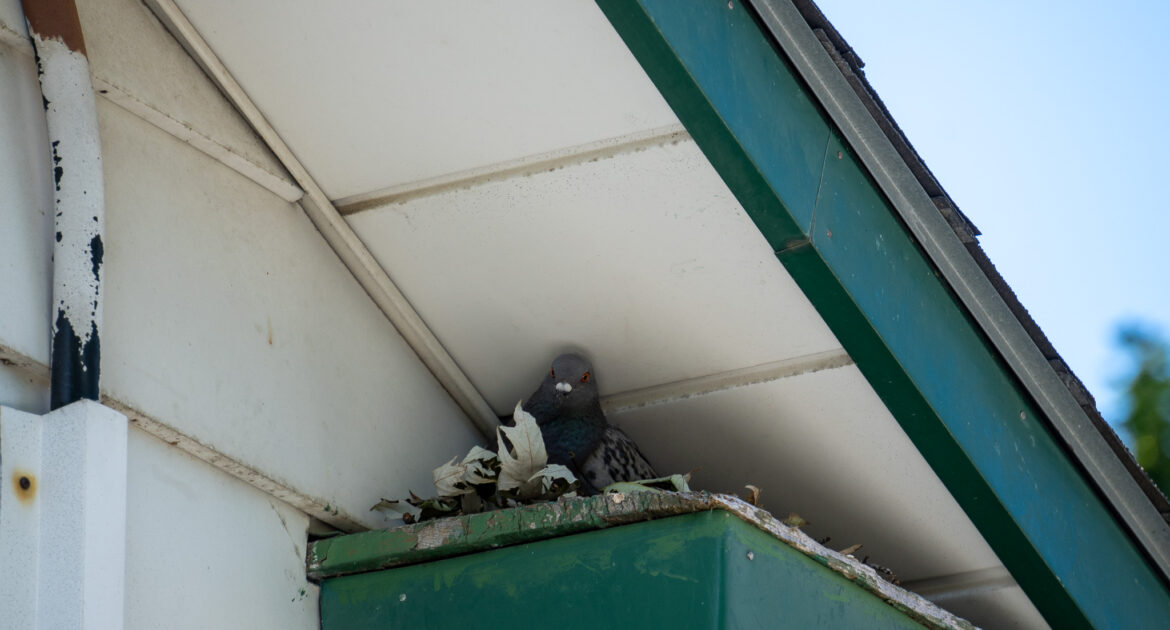
Pigeons thrive in urban environments like Blaine because cities provide abundant food sources, sheltered nesting sites, and relatively few natural predators. Their adaptability allows them to coexist closely with people and other urban wildlife, making rooftops, ledges, and building crevices ideal habitats year-round. While pigeons are often considered a nuisance, understanding why they flourish in cities helps property owners address challenges humanely.
At Skedaddle Humane Wildlife Control, we’ve spent decades assisting homeowners with bird management, offering insights into why pigeons live in cities and their impact on the urban landscape.
What Makes Pigeons Urban Survival Experts?
Pigeons possess a remarkable array of traits that enable them to flourish even in the busiest city environments. The story of their city adaptation is not merely about scavenging for food—it is one of resilience, intelligence, and remarkable biological readiness.
Key Adaptations for Urban Pigeon Survival
Urban pigeons are true masters of survival, showcasing unique characteristics that help them thrive where other birds might falter:
- Flexible diets allow them to consume cracked corn, bread, seeds, or almost any leftover food.
- Strong homing instincts enable them to find their way back with ease.
- Their ability to nest on ledges, rooftops, and building crevices mimics the cliffs their wild ancestors used.
- They breed year-round in mild urban microclimates, unfettered by seasonal limitations.
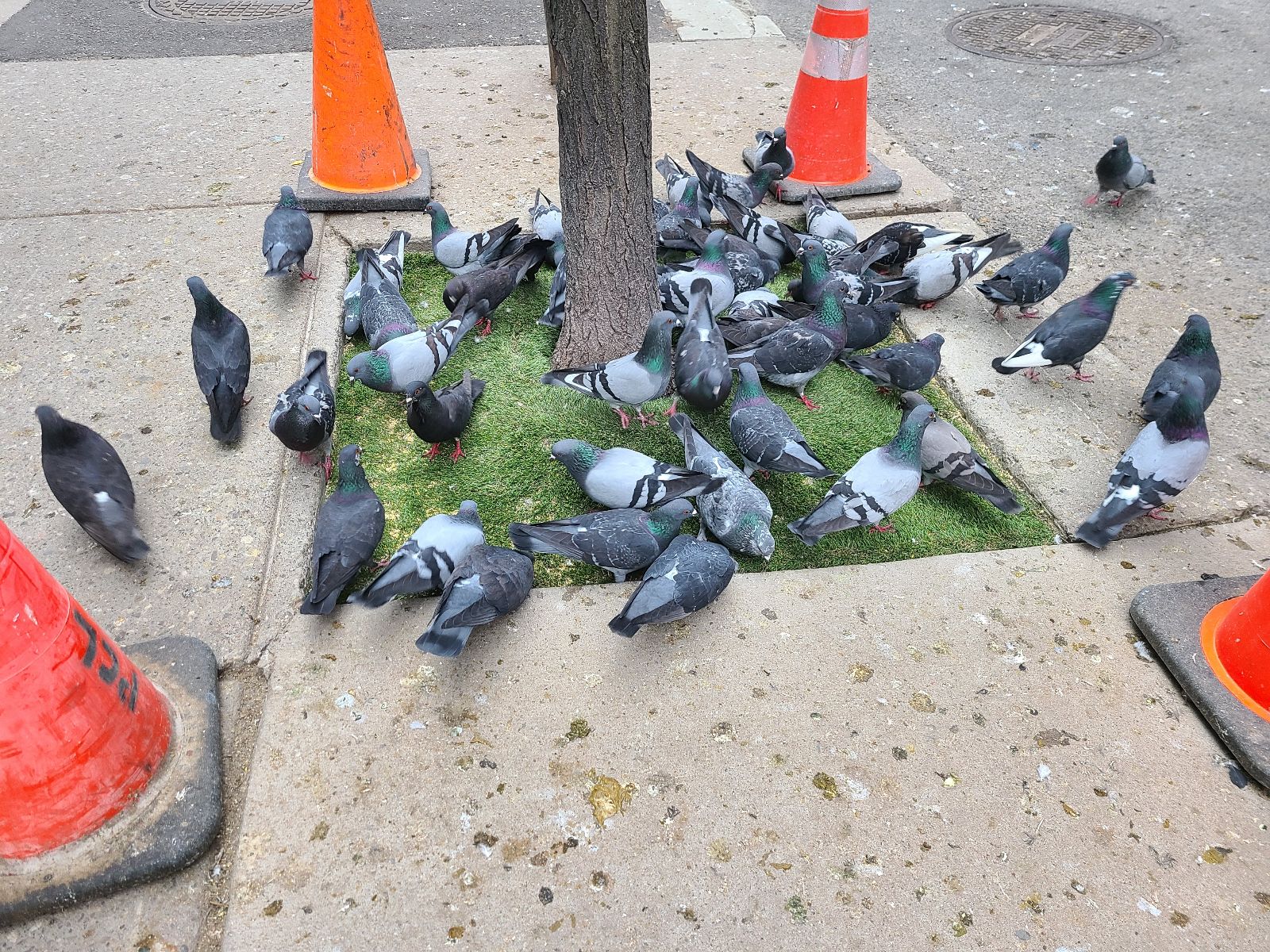
- Social structures permit them to live in flocks, enhancing their safety and warmth.
While other birds may migrate, pigeons remain active through Minnesota’s harsh winters, often staying close to heat vents, attics, or other warm human-made shelters. Their success in areas like Blaine illustrates their impressive adaptation to human-shaped environments.
Recognizing these adaptations leads us to explore what allows them to become familiar sights in our neighborhoods.
Why Are Pigeons More Successful in Cities Than Other Birds?
While many birds pass through cities, few settle as successfully as pigeons. Their urban success stems from an intricate blend of physical traits, behaviors, and environmental accommodations.
Distinct Advantages in Urban Environments
Pigeons possess several advantages that tilt the scale in their favor:
- Remarkable tolerance for noise, crowds, and heavy traffic that can drive away more timid species.
- A neutral coloration that aids in evading predators.
- An ability to utilize bustling areas like public squares, parks, and parking lots as food sources.
- The capacity to survive on minimal water, often obtained from gutters or puddles.
Unlike many common birds that struggle with these challenges, pigeons thrive in urban environments.
This isn’t merely luck—pigeons’ adaptations contribute to their role in urban ecosystems, vitalizing the balance of city life and leading us to consider their place in biodiversity.
The Balance: Nuisance or Urban Biodiversity Asset?
Pigeons often face criticism due to their droppings and nesting habits, which can sometimes be a public nuisance. However, shifting our perspective on their ecological benefits reveals their true value as more than mere nuisances.
How Pigeons Contribute to City Biodiversity
Consider pigeons as essential contributors to the urban ecosystem:
- They serve as prey for local predators like hawks or urban falcons, sustaining local food chains.
- Their droppings, although occasionally troublesome, fertilize urban green areas, promoting plant growth.
- Their nesting behaviors provide insights into climate changes and urban environmental shifts.
- By consuming small bugs mixed with seeds and scraps, pigeons help to control insect populations.
Striking a balance between their nuisance factor and their ecological contributions is of utmost importance. While we aim to minimize property damage, pigeons play a crucial role in enriching place-based biodiversity across locations like downtown Minneapolis and community centers in Blaine.
Recognizing their positive impact paves the way for citywide strategies to protect property while respecting these birds. This discussion naturally continues into strategies for successful coexistence.
Strategies for Coexisting with Urban Pigeons
Coexisting with pigeons doesn’t have to be adversarial. Proper management and prevention strategies are key to ensuring peaceful coexistence, clean environments, and harmony for families and businesses throughout Anoka County.
Effective Pigeon City Adaptation Measures
A combination of humane solutions and preventative measures is recommended:
- Seal entry points to attics, vents, and eaves with wire mesh.
- Maintain tidy outdoor eating areas to reduce food scraps.
- Schedule regular roof and gutter cleanings to disrupt nesting cycles.
- Utilize sound deterrents or motion-detecting sprinkler systems on congregation ledges.
- Preserve green spaces for falcons and other predators.
City-wide collaboration ensures pigeons remain part of our urban landscape without overwhelming residents or businesses. When difficulties arise, turning to experienced professionals with knowledge of pigeon adaptation ensures lasting resolutions.
Let’s delve into how Skedaddle provides expert assistance for Minnesota homeowners and business owners facing urban pigeon challenges.
Skedaddle’s Humane Approach to Pigeon Control
Managing pigeons effectively involves more than simply driving them away. Their nesting habits, strong social bonds, and frequent breeding cycles demand thoughtful, humane approaches—a specialty of Skedaddle for over 30 years.

What Skedaddle Provides
Our technicians utilize expert species identification, building assessments, and advanced safety training to yield sustainable results:
- Comprehensive inspections to locate nests, droppings, and fire hazards.
- Humane removal of adult birds with special attention to eggs or young ones, postponed until safe.
- Thorough cleanup of nesting sites and droppings to protect health.
- Sealing of entry points with durable exclusion materials.
- Installation of tailored deterrent systems for both historical and commercial properties.
Our understanding of seasonal nesting cycles minimizes stress for homeowners and birds alike. Importantly, our service comes with a lifetime guarantee, ensuring effective results long into the future.
Our commitment extends to educational support, helping you recognize signs of bird activity and offering ongoing prevention advice.
From professional management, let’s explore practical steps city inhabitants and managers can take to prevent pigeon-related issues moving forward.
Practical Tips for Minnesota Homeowners and Businesses
Pigeon challenges need not disrupt your peace. Here’s how you can secure your space while respecting local wildlife:
- Thoroughly check your property for loose tiles, exposed vents, or broken soffits.
- Trim foliage that provides access to nesting sites on rooftops.
- Secure garbage in sealed containers near populated areas.
- Encourage education among tenants, family, and staff to discourage feeding pigeons.
- Collaborate with experts to implement humane deterrent systems for persistent cases.
By proactively addressing concerns and fostering community collaboration, the right balance can be achieved—embracing the contributions pigeons make to urban biodiversity while preventing negative impacts on homes and businesses.
Recognizing the advantageous role of pigeons as adaptable urban residents transforms them from nuisances into valuable contributors within dynamic and vibrant ecosystems like those in Blaine and Bunker Hills. Whether it’s safeguarding property or promoting harmonious coexistence, progress starts with increased awareness and decisive action.
Discover the Skedaddle Difference in Urban Wildlife Management
Pigeons’ remarkable adaptability cements their enduring presence in Minnesota’s urban landscapes, enriching biodiversity while sometimes posing challenges. By understanding their behaviors, we appreciate their role not just as occasional nuisances but as integral symbols of resilient urban ecosystems. However, unmanaged pigeon populations can lead to health risks and property damage, impacting peace of mind.
When preventative measures fall short, trust Skedaddle Humane Wildlife Control for expert insight and humane solutions. With over 30 years of experience and dedication to comprehensive, safe, and lasting results, our team ensures respect for both people and wildlife. Don’t let bird activity disrupt your life—contact Skedaddle today and embark on the journey to a cleaner, safer, and more harmonious urban environment.

 Loading...







