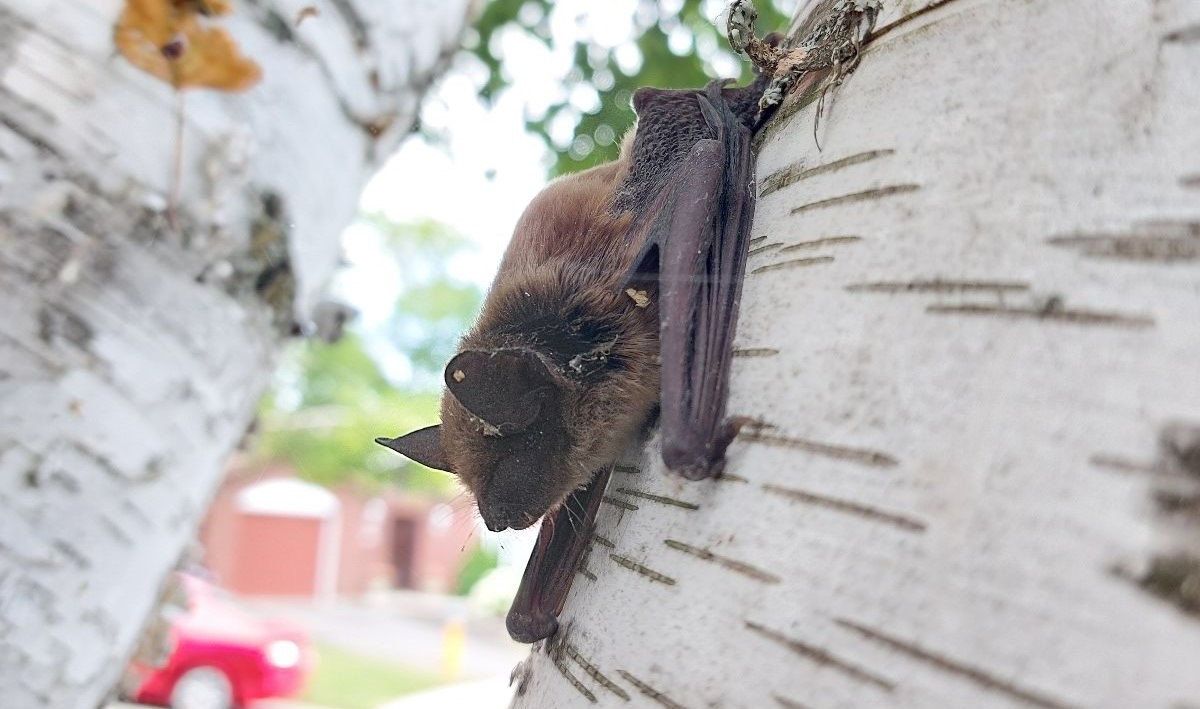
You notice something odd at dusk. Small dark shapes dart out from under your roofline, one after another, and disappear into the evening sky. You might not think much of it at first. But when it happens again the next night, and the night after that, from the same spot on your home, that is not a coincidence. That is a colony, and it is living inside your attic.
Older brick Baltimore homes turn into summer roosting spots because aging buildings develop small gaps and cracks that give bats an easy way in. These animals only need an opening the size of a dime to squeeze through. Old wood, crumbling mortar, and worn vent covers all create the kind of entry points they look for. Baltimore summers make those attics even more attractive because the heat inside is exactly what breeding colonies need to raise their young.
At Skedaddle Humane Wildlife Control in Baltimore, we inspect and resolve these situations in older homes across the city every summer. In this blog, you will learn why Baltimore’s brick rowhomes and historic houses are so easy to get into, what makes summer the busiest season, and why calling our team first is the most important step you can take.
Do Bats Carry Rabies?
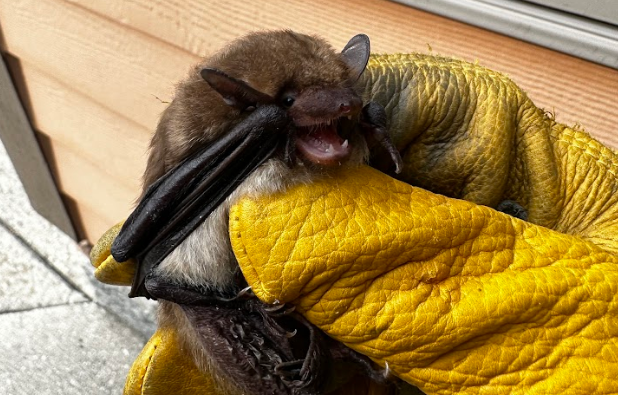
Yes, these animals can carry rabies. That is one of the biggest reasons homeowners should never try to handle them or disturb an active roost. Not every bat carries the virus, but the risk is real. If you come into direct contact with one, or wake up to find one in your bedroom, call a health professional right away.
Bats can also carry other health risks. Their droppings, called guano, can contain a fungal spore that causes a lung illness called histoplasmosis. When guano dries out and gets disturbed, those spores go into the air and can be breathed in. An attic with an active colony builds up guano fast, and that creates a real health hazard for anyone who goes in without the right protective gear. Homeowners should stay out of any attic where bats are present.
The health risks alone are reason enough to call our team the moment you think something is roosting in your attic. We have the training and equipment to go in safely, check the size of the colony, and handle removal the right way. Do not go into the attic, touch any droppings, or try to disturb the roost on your own. Call Skedaddle and let our team handle it.
Older Homes
Baltimore’s older brick homes are easy targets because the building materials break down over time and create gaps that were not there when the home was built. Years of settling, rain, heat, and cold wear things down and open up the small spaces bats look for. Here is what makes older homes such a reliable target every summer:
- Settling Creates Gaps Along the Roofline: As a brick home settles over the years, small shifts happen in the walls and roofline. Those shifts open up tiny gaps along the soffits, fascia boards, and the spots where the roof meets the outer wall. These gaps may be hard to see from the ground but are big enough for bats to slip through. The older the home, the more settling has happened and the more small openings are likely to exist.
- Old Mortar Breaks Down and Leaves Holes in the Brick: The mortar between bricks wears down over time from moisture, cold winters, and age. When it crumbles or falls out, it leaves small holes in the brick that these animals can use to get in or rest on the outside of the home. These gaps show up most often around chimney bases, near window tops, and along the upper rows of brick close to the roofline. A small mortar gap that looks minor from the street can be a direct path into the attic above.
- Old Wood Trim Warps and Pulls Away From the Wall: Fascia boards and soffit panels on older homes go through decades of sun, rain, and temperature swings. Over time, the wood dries out, warps, and pulls away from the wall behind it. That leaves a narrow gap between the trim and the brick or roof deck that these animals use to get inside. Any home with original wood trim that has never been replaced is likely to have several of these openings along the roofline.
Roof Gaps
The roof is where most entry happens on older Baltimore homes. The gaps that form along aging rooflines are often the main way bats get in, and they tend to show up in spots that are almost impossible to see from the ground. These openings do not need to be large bats can fit through a space smaller than your thumb.
Rotting wood along the roof edge is one of the most common entry spots our team finds. When the wood at the edge of the roof breaks down from moisture and age, it shrinks and pulls away from the materials around it. That leaves a narrow gap that is dark, sheltered, and just the right size. Because the rot happens slowly, most homeowners never notice it until something is already living inside the attic.
Warped and lifting trim creates the same kind of problem. Wood trim expands and contracts as the seasons change, and over time it lifts away from the surface it is attached to. That leaves a gap along one edge that may only be a centimeter wide but that is enough. These animals fly close to the roofline and can detect warm air escaping through small gaps. When they find one, they check it out and move in fast if the space inside feels right.
Chimneys
Older Baltimore homes often have original brick chimneys with no protective cap or mesh cover. Those open chimneys are one of the most direct ways bats get into a home. Here is why chimneys are targeted so often:
- Uncapped Chimneys Are Open Shafts Into Your Home: A chimney with no cap is basically an open tube going straight into the top of your house. These animals can fly in from the top and roost inside the flue or find their way into the attic through gaps around the chimney. Old brick chimneys are especially at risk because the mortar around the flue breaks down over time and opens up gaps that connect the inside of the chimney to the attic space. Once they find that opening, the chimney becomes a regular way in and out.
- Old Chimney Caps and Crowns Break Down: Even chimneys that have caps can become a problem when those caps age. Concrete chimney crowns crack from winter freeze-thaw cycles. Metal caps rust, shift, or blow loose in storms. A cracked crown or a cap that no longer sits flat leaves gaps at the top of the chimney that bats can squeeze through. These problems are nearly impossible to spot from the ground and need a close look to find.
- Brick Chimneys Are Easy to Climb: The rough surface of an old brick chimney gives bats an easy grip. They can land on the chimney, move along the outside of the brick, and find gaps around the base where the chimney meets the roofline. The chimney becomes a launch point for getting into other weak spots on the roof. Our team always checks the full chimney, not just the top opening, during every inspection.
Vents
Attic vents are supposed to move air in and out of your home, but on older Baltimore homes they often end up being entry points instead. Screens rust, covers crack, and worn materials leave gaps that bats find and use. Here is what our team checks when looking at vents on older homes:
- Torn and Rusted Gable Vent Screens: Gable vents on older homes usually have wire mesh screens that rust and tear over time. A screen with even a small hole gives these animals a way to push through and get into the attic. Damage to these screens is easy to miss because you cannot see them from inside the home and they are hard to check from the ground. Our team looks at every gable vent screen during an inspection because they are one of the most common entry points we find.
- Unprotected Ridge Vents at the Roof Peak: Ridge vents run along the top of the roof and let hot air escape from the attic. On older homes, these vents may have loosened or never had proper mesh fitted to them. A gap along the edge of a ridge vent creates an opening right at the highest point of the roof, exactly where bats want to be. The roof peak is warm, out of the wind, and far from any ground-level activity, which makes it a top choice for a roosting spot.
- Soffit Vents With Broken or Missing Covers: Soffit vents sit on the underside of the roofline and help air move through the attic. The plastic and aluminum covers on these vents crack, warp, and fall away over time. When a cover is missing or no longer fits right, the space behind it is wide open. These vents are almost never visible from the ground, which is exactly why a professional inspection is the only reliable way to find problems before they become a bigger issue.
Warm Summer Nights
Summer is the busiest season for roosting activity in Baltimore. The heat inside an older brick attic and the insects outside at night make the city a great place for bats to spend the summer.
Baltimore summers are hot, and older brick attics hold onto that heat all day long. By late afternoon, the inside of an attic can be much hotter than the air outside. Breeding colonies are made up mostly of females and their young during summer. They look for these warm spaces because the heat helps keep newborns alive. Young that are just born cannot control their own body temperature, so the warmth of the roost is what keeps them going in those first few weeks.
Warm nights in Baltimore also mean a lot of insects in the air. These animals eat only insects and can eat thousands in one night. Hot, humid evenings bring out large numbers of insects across the city, so there is always a reliable food source right outside the roost. A colony living in a Baltimore attic gets both a warm, safe place to sleep and plenty of food just outside the door every single night.
When you put the heat and the food together, summer is when colonies grow the fastest. Females give birth once a year, usually in late spring or early summer, and the young grow quickly over the warm months. By late summer, a colony that was small in May can be much larger. All of that growth happens inside your attic where you cannot see it. By the time the signs are easy to notice, the colony is usually well settled in. Acting early in summer is always better than waiting until fall.
Do Not Seal Without an Inspection
If you think bats are roosting in your attic, the most important thing to know is this: do not seal any entry points before calling our team. Sealing an active opening while animals are still inside traps them in the attic and makes everything much worse. Here is why an inspection always has to come first:
- Sealing an Active Entry Traps Bats Inside: If a colony is living in your attic and you seal the opening they use to get in and out, bats inside have no way to leave. When they are trapped and stressed, they push further into your home looking for another way out. Young that cannot yet fly are stuck completely. What started as a roosting situation in the attic can turn into these animals showing up inside your bedrooms and living spaces. That situation is much harder and more expensive to fix than an open entry point.
- Maryland Law Protects Bats During Maternity Season: In Maryland, bats are protected by state wildlife rules. Exclusion work cannot be done during maternity season when young are present and unable to fly. Trying to seal entry points during this time is not only harmful, it may also be against the law. Our team knows Maryland’s rules and schedules all exclusion work to follow them. Calling our team first makes sure the job gets done at the right time and the right way.
- A Professional Inspection Finds Every Entry Point: These animals often use more than one opening to get in and out. If you seal the most visible entry point but miss the others, the colony just starts using a different gap. Our team checks the full roofline before any exclusion work starts and finds every active opening so the job can be done completely. Sealing just one spot is not a solution, it only moves the problem somewhere else on your roofline.
Bat Problems in Baltimore
Baltimore is one of the most active cities for summer bat roosting in the Mid-Atlantic. The city has a large number of old brick rowhomes and historic houses that give these animals exactly the kind of aging roofline conditions they look for. Our team at Skedaddle works across Baltimore every summer and sees active roosting situations in neighborhoods all over the city, from Hampden and Remington to Roland Park and Guilford.
Maternity season in Maryland runs from late spring through mid-summer. This is when colonies are at their biggest and most protected under state law. Females give birth during this time, and the young cannot fly for the first several weeks of their lives. Any exclusion work done during this window risks trapping young inside the attic. That is why timing is just as important as the work itself. Our team always plans around Maryland’s rules when handling any roosting situation.
Late summer and early fall are the best times to do exclusion work safely and legally in Maryland. By then the young have grown enough to fly and can exit on their own. If you notice signs of activity during summer, call our team right away — not to start the exclusion immediately, but to get an inspection scheduled and a plan in place. Waiting until fall to make the call can mean missing the best window to get the work done before the same colony comes back next spring.
Bat Removal and Prevention with Skedaddle
When you call our team at Skedaddle, we start with a full inspection of your roofline, attic, and exterior. We find every active entry point, check the size of the colony, look for young, and figure out exactly where bats are roosting inside the attic. That full picture lets us plan the exclusion work the right way and in line with Maryland’s wildlife rules.
Once the timing is right and all the young can fly, we put one-way exclusion devices over the active entry points. These let the bats fly out at dusk but stop them from getting back in. After the colony has fully left, we take the devices off and seal every entry point with strong materials that hold up long-term. Homeowners should never try to put up exclusion devices or seal openings on their own. Without a professional inspection, there is no way to know if young are still inside.
Cleanup and prevention are the last steps. Our team removes the built-up guano safely, treats the affected areas, and fixes every roofline condition that made your home a target. Do not go into the attic, touch any droppings, or disturb the roosting area for any reason. The moment you notice bats coming out of your roofline at dusk, hear sounds in the attic, or spot damage along your roofline, call our team at Skedaddle Humane Wildlife Control in Baltimore and let us take care of every step.
Frequently Asked Questions
How do I know if bats are roosting in my attic?
The clearest sign is seeing them fly out from the same spot on your roofline at dusk, night after night. You may also hear high-pitched squeaking or scratching in the attic at night, smell a strong ammonia-like odor coming from the attic, or find small dark droppings near the outside walls or along the roofline.
Can one bat in my house mean there is a colony in the attic?
Yes. A single bat found inside your living space is often a young one that has wandered from a colony in the attic above. This happens most in summer when young are just learning to fly and end up in the wrong part of the house. A bat inside your home means you should call for a professional attic inspection right away.
How long do bats roost in Baltimore attics?
Breeding colonies usually move into Baltimore attics in late spring and stay through early fall. They come to give birth and raise their young over the summer, then leave when the weather cools down. But if the entry points are not sealed, the same colony comes back to the same spot the next spring, sometimes for many years.
Will bats leave my attic on their own in fall?
They will leave when it gets cold, but they will be back next spring if nothing is sealed. Leaving for the winter does not mean the problem is fixed. Our team does exclusion work in late summer and early fall so the openings can be sealed after the colony leaves and before they return.
Is guano in my attic dangerous?
Yes. Guano can grow a fungus that causes a lung illness called histoplasmosis. When dry guano gets disturbed, spores go into the air and can be breathed in. This is why no one should go into an attic where bats are or have been without proper protective gear. Our team handles all cleanup safely.
How many bats can roost in a Baltimore attic?
It varies a lot. A small roost might have around a dozen bats. A large, well-established colony in an older home can have hundreds. The size of the colony is something our team checks during the inspection because it affects how much work and cleanup is involved.
Your Attic Should Not Be a Summer Roost
If you are seeing bats fly out from your roofline at dusk, hearing sounds in the attic on warm nights, or spotting damage along the roofline that was not there before, do not wait and do not try to seal anything on your own. Acting without an inspection first can make things much worse and put your household at risk.
At Skedaddle Humane Wildlife Control in Baltimore, our team knows older brick homes, understands Maryland’s rules, and has the experience to handle every step the right way. We inspect the full roofline, plan the work around the right time of year, seal every entry point after the colony leaves, and take care of all the cleanup safely. You do not need to go into the attic, and you do not need to handle any of this yourself. Request an estimate today and let our team protect your home before the same colony comes back next spring.

 Loading...