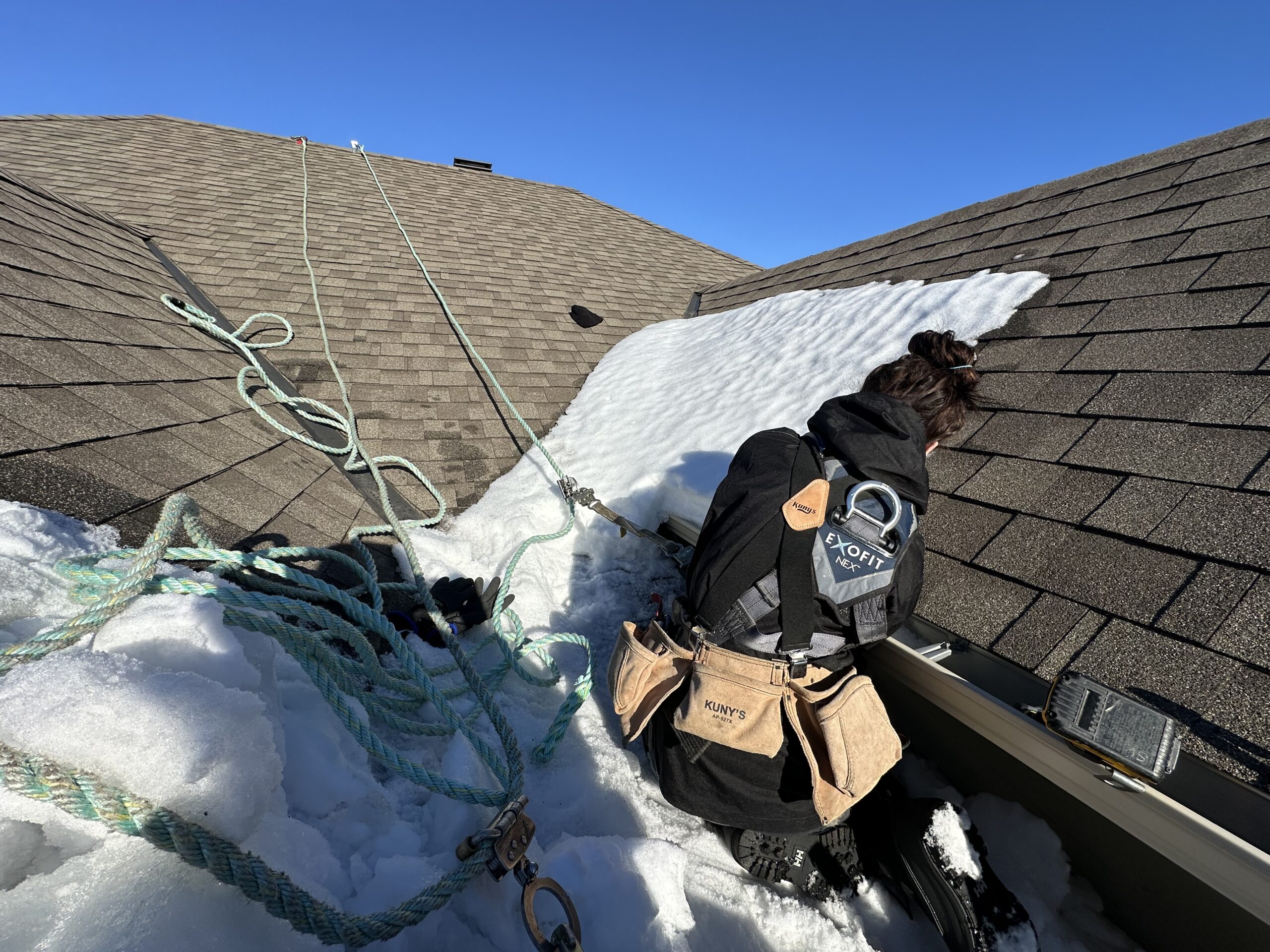
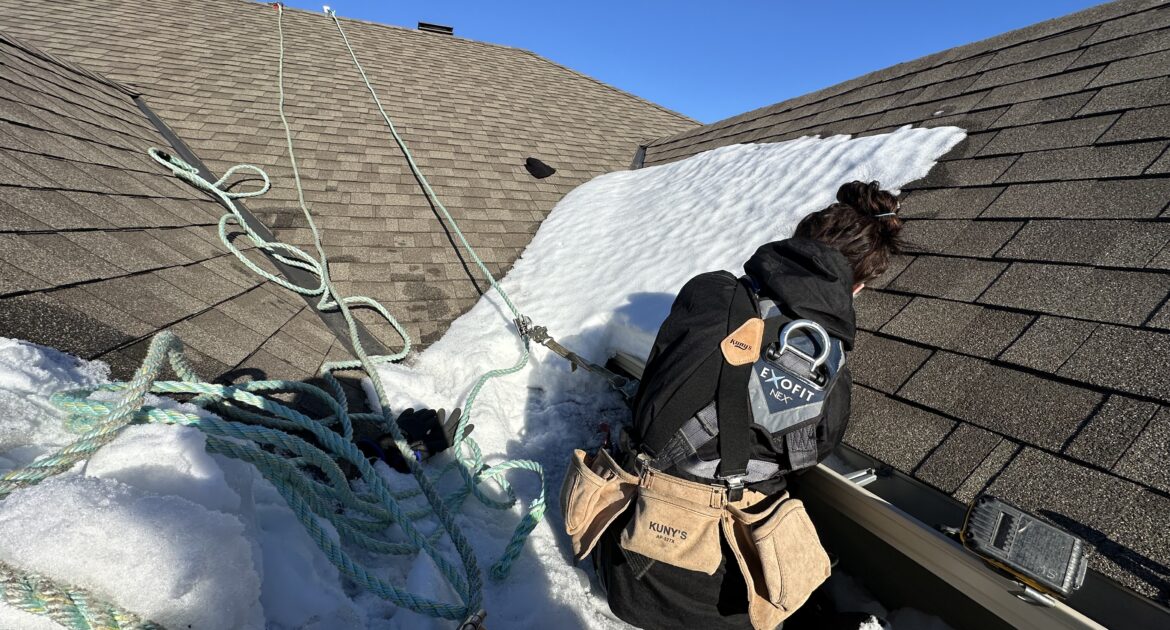
You notice a strange noise above the ceiling. Maybe it sounds like thumping, scratching, or slow shuffling. After a heavy snowfall, these signs often point to something many residents don’t expect to see raccoons in Ohio homes over the winter. When the temperature drops fast and the snow piles up in Columbus, raccoons start searching for warm places to ride out the season.
You aren’t imagining it. Heavy snow makes homes easier for animals to enter. Ice, wind, and freezing temperatures create frozen entry points for raccoons, and once those weak spots open up, raccoons can break in fast. You see the signs after storms because raccoons move toward heat, safety, and shelter when the outdoors becomes too harsh.
Our team at Skedaddle Humane Wildlife Control in Columbus helps homeowners understand how this happens and how to prevent raccoons after heavy snow.
Below, you’ll learn the most common ways heavy snow leads to break-ins, why attics become long-term winter dens, and how our team keeps families safe.
Heavy Snow Weakens Roof-Soffit Intersections
One of the top ways raccoons enter homes after storms is through the spot where the roof meets the wall. This joint is already a weak point, but snow makes it worse. When snow sits on the roof, it adds moisture and weight. Ice then forms inside tiny gaps and slowly pries them open. The freeze-and-thaw cycle pushes panels out of place, leaving a hole big enough for a strong animal to pull wider.
Raccoons are skilled climbers. They use nearby trees, fences, or even downspouts to reach this area. When they find a weak soffit, they simply push upward or tear it aside. You may not hear the break-in when it happens. Instead, you hear movement later, once they settle into the attic.
Heavy snow makes this entry point even easier because:
- The wood softens as moisture builds
- Vinyl or aluminum soffits bend or crack
- Wind lifts loose panels even further
- Warm attic air melts snow, revealing heat and guiding raccoons to the opening
This is one of the biggest reasons raccoons in Ohio homes over winter become more common after storms.
Frozen Vents Become Easy Break-In Spots
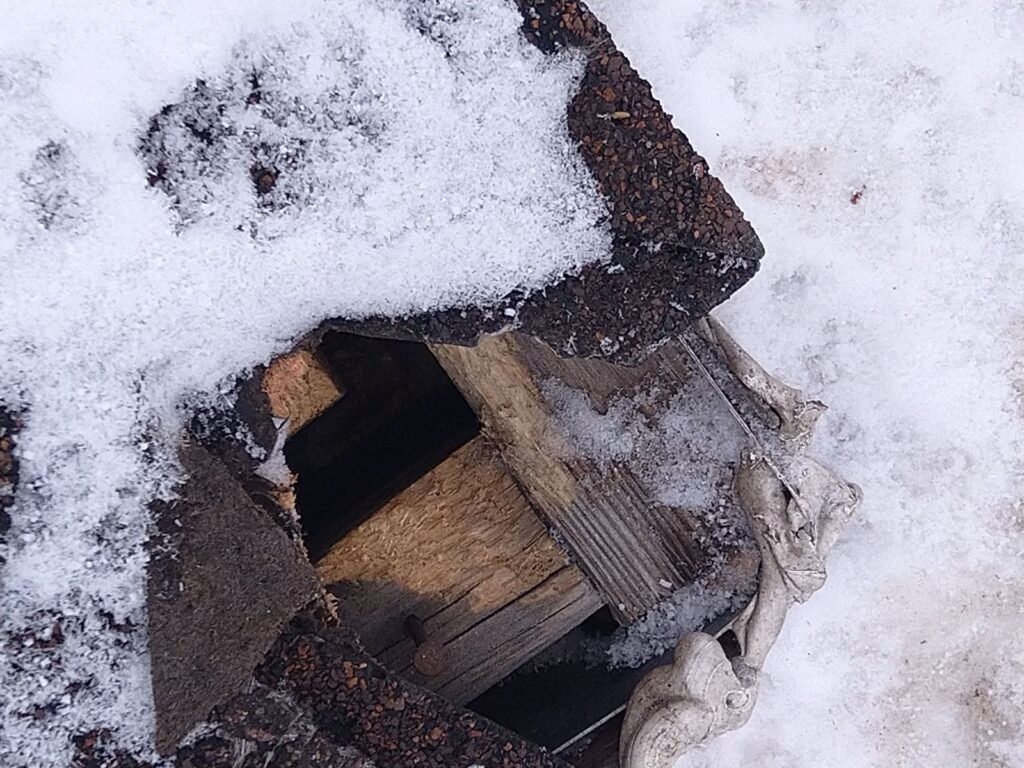
Another major issue happens when roof vents freeze. Many roof vents are made from thin plastic or metal. Under normal conditions, they hold up fine. But after heavy snow and cold snaps, these materials become brittle. A raccoon only needs a few seconds to claw or pull them apart.
You might see vents on your roof that look sturdy, but animals know how to test them. Warm air escaping from inside your home rises through these vents. That warm air melts the snow directly above, showing raccoons exactly where heat is leaking. Once they find it, they act fast.
This is why frozen vents turn into frozen entry points for raccoons:
- Plastic cracks easily in freezing temperatures
- Metal bends or warps when ice forms around it
- Melted snow creates small openings that grow quickly
- The warm scent coming from the vent draws the animal in
After breaking the vent open, the raccoon drops straight into the insulation, giving it an instant winter den.
Ice Dams Lift Shingles and Create Gaps
Ice dams cause more damage than many homeowners realize. When snow melts and refreezes, ice forms along the lower edge of the roof. This thick ice pushes shingles upward. Once that happens, water gets underneath and weakens the wood. Raccoons take advantage of this right away.
A raccoon has the strength to rip or pry shingles, especially if they are already lifted. When heavy snow sits on a damaged spot, the weight makes the area even softer. A raccoon can dig through this weakened section and enter your attic in a matter of minutes.
You may not notice this damage from the ground. You simply notice new activity, noises, or droppings. But up on the roof, a small gap caused by ice dams can quickly turn into a full attic break-in.
This is one of the top ways raccoons get inside Columbus homes after storms.
Uncapped Chimneys Act Like Open Doors
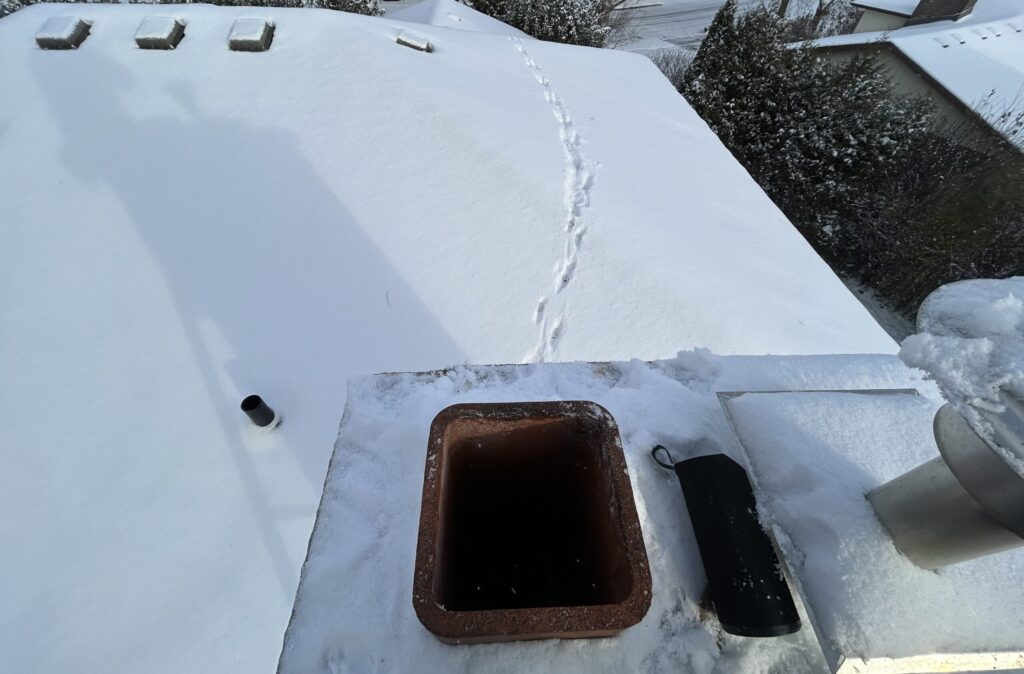
Chimneys are warm, safe, and sheltered. A raccoon sees them the same way you see a quiet basement in winter: a place to rest, stay warm, and wait out bad weather. After heavy snow, chimneys become even more inviting. Heat rising from the fireplace melts snow around the chimney opening, creating a clear path.
If a chimney has no cap, a raccoon can slip in easily. They climb brick and metal with no trouble. Once inside, they may stop at the smoke shelf or even move toward the damper if it’s not fully closed. Homeowners often hear loud thumps or scratching when this happens.
Common ways raccoons enter chimneys after snow include:
- Chimney caps are missing or damaged
- Warm air melts snow, exposing the entry point
- Loose bricks or mortar weakened by freeze-thaw cycles
- Open or faulty dampers inside the home
Because of this, chimneys are one of the most common frozen entry points for raccoons in the Columbus area.
Moisture-Softened Wood Lets Raccoons Break Through
When snow piles up on your home, moisture slowly sinks into wood surfaces. Over time, this weakens rooflines, siding, and fascia boards. A raccoon knows how to test these spots. They press, pull, or scratch until the soft wood begins to break apart.
Frozen wood becomes brittle. Wet wood becomes soft. Both conditions make it easy for raccoons to rip open a new hole. A single weakened plank is often all they need. Once they get a grip, they can tear away the damaged section and enter your attic or wall space.
This kind of break-in often goes unseen because the damaged area is hidden behind gutters or snow. You may only realize something is wrong when you hear noises or see insulation pushed out of place.
Snow-Covered Food Sources Push Raccoons Toward Homes
During harsh winters, raccoons struggle to find food outdoors. Snow covers grass, soil, dumpsters, and natural foraging spots. When this happens, they look for areas with dependable warmth and steady food smells, which often leads them toward homes.
Trash bins, pet food stored in garages, and compost piles all attract raccoons. But during winter storms, the main draw is heat. A warm home signals a place where food and shelter may be nearby. This encourages raccoons to explore the roofline, siding, and vents until they find a weak spot.
Even if you don’t leave food out, raccoons may still follow scent trails created by normal daily habits. Snow removes their natural food sources, so they focus all attention on man-made ones.
This behavior helps explain why raccoons in Ohio homes over the winter are so common after storms.
Once Inside, Raccoons Stay Until Spring
When a raccoon finally finds an entry point after heavy snow, it doesn’t leave right away. Attics are warm, dry, and protected from storms. This makes them one of the best winter dens an animal can find. Once inside, raccoons settle in and stay for weeks or even months.
They enter a state similar to deep rest during the coldest days. This helps them save energy. You may not hear them every day, but signs show up over time. Movement at night, damage to insulation, or scratching sounds.
Raccoons stay inside all winter because:
- Attics stay warmer than the outdoors
- They don’t want to risk searching for new dens in dangerous weather
- Snow blocks their usual ground-level paths
- They know they are safe from predators and storms
This is why homeowners often discover raccoons long after the original break-in happened.
How Our Team Helps Prevent Raccoons After Heavy Snow
You should never try to remove or handle wildlife yourself. When you hear noises, see damage, or suspect you have raccoons in Ohio homes over winter, you need trained help right away. Our team at Skedaddle Humane Wildlife Control in Columbus uses humane methods to guide raccoons out safely.
We use one-way doors that let the animal leave but stop it from returning. After that, we seal every weak point so snow can’t open those spots again. You get peace of mind knowing the home is protected for future storms.
Our work focuses on:
- Keeping the animal safe
- Protecting your home’s structure
- Stopping future break-ins
- Using durable materials to secure all entry points
You don’t have to guess where the damage is or how big the problem might be. We handle the full process from start to finish.
Keep Raccoons Out This Winter: Protect Your Home Today
You deserve a home free from the stress of wildlife invasions, especially during harsh winter weather. If you’re dealing with raccoons in Ohio homes over winter or want to prevent raccoons after heavy snow, our team is ready to help. Skedaddle Humane Wildlife Control in Columbus can inspect your home, install humane one-way doors, and secure all frozen entry points for raccoons.
Reach out and request an estimate to learn more. We’re here to keep your home safe, warm, and raccoon-free all season long.

 Loading...







