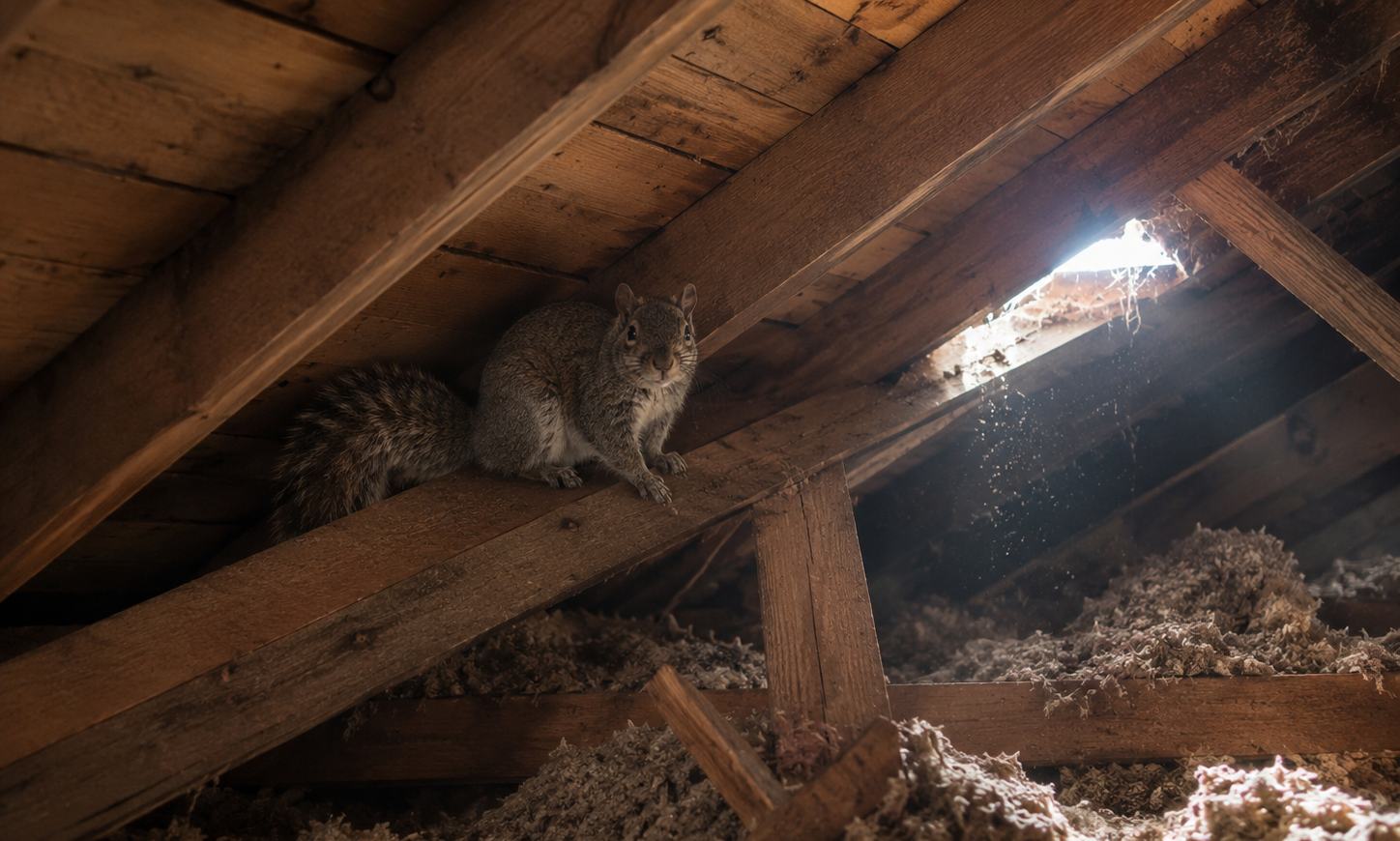
You may see a squirrel run across your roof and wonder how it got there. These animals can jump from branches, balance along utility lines, follow fences, and climb drainpipes or rough exterior walls. Once on the roof, they search for weak areas around soffits, fascia, vents, and roof intersections.
Reaching the roof does not always mean they have entered your attic. However, repeated visits to one roof area, chewing sounds, or movement above the ceiling may point to an active opening. A small weakness can grow when it is chewed or used each day.
You should never climb onto the roof, block an opening, or handle nesting material yourself. At Skedaddle Humane Wildlife Control in Coquitlam, we inspect the entire route from the yard to the attic. In this blog, we explain how squirrels reach your roof, where they enter, and how professional removal and prevention protect your home.
How Long Will Squirrels Stay in the Attic?
Squirrels may remain in an attic for weeks, months, or longer when they have warmth, shelter, and a reliable entrance. An adult may leave during the day to find food and return later. The attic can remain part of its daily routine throughout the season.
A mother may stay longer when she is raising dependent young. She may leave the attic for short periods while they remain hidden in a nest. Quiet moments do not mean the space is empty.
The opening should never be sealed until a professional checks the attic. Closing it too soon may trap an adult or separate a mother from her young. Skedaddle confirms that everyone has left before completing lasting exclusion.
Overhanging Tree Branches Create a Direct Route
Nearby branches can give squirrels a raised path toward your roof. They can travel through the tree canopy without crossing the open ground. A limb does not need to touch the house to provide access.
A short space between the tree and roof may be easy for them to jump. Wind, rain, and the weight of wet leaves may also move branches closer to the shingles. Coquitlam’s mature trees make this route common around many properties.
Our technicians examine branch positions, nearby trunks, landing areas, and signs of regular roof activity. We also look at where the animal travels after reaching the building. You will not be asked to climb or trim high branches yourself.
Utility and Communication Lines Act Like Raised Paths
Overhead electrical, cable, and communication lines can lead toward a roof or exterior wall. Squirrels are able to balance along these narrow routes. Lines connecting several properties may support movement across an entire neighbourhood.
A line may end near fascia, soffits, roof peaks, or utility attachment points. Once on the building, the squirrel can begin checking nearby materials for an opening. A route that looks unimportant from the ground may end beside a weak roof feature.
You should never touch, cover, move, or alter a utility line. Our inspection records where the lines meet the building and which roof areas they make easier to reach. Concerns involving the lines themselves must be handled by the proper utility provider.
Fences and Retaining Walls Connect the Yard to the House
Fences and retaining walls can create raised travel routes through several properties. They reduce the amount of open ground squirrels must cross. These routes may end beside a garage, tree, shed, or exterior wall.
- Fence Tops: Wide fence tops provide steady paths through the yard. They may connect trees or neighbouring properties with the side of your home. Repeated travel can turn the route into part of a daily pattern.
- Fence Posts: Tall posts can act as climbing and jumping points. A post near a garage or low roof may shorten the final jump. This can place a squirrel beside a soffit, gutter, or roof edge.
- Retaining Walls: Stone and concrete walls contain rough areas that are easy to grip. They may run beside a sloped yard and lead toward the house. A raised wall can also connect with a fence or lower roof.
- Neighbouring Connections: Shared fences can link several yards without requiring ground-level travel. One property may provide food while another offers roof access. Our technicians consider these connected routes during an exterior inspection.
Removing access to one fence does not always stop roof activity. Another route may remain through a tree, wall, or nearby structure. The full property must be assessed before a prevention plan is created.
Drainpipes and Exterior Fixtures Support Climbing
A squirrel does not always need a branch to reach the eaves. Features attached to the building may provide enough support for a vertical climb. Several small gripping points can work together as one route.
- Drainpipes: Downspouts run from ground level toward the roof edge. Brackets, seams, and nearby walls may provide support during a climb. The route often ends close to gutters, fascia, and soffits.
- Exterior Cables: Cables attached to a wall can create narrow paths. They may lead toward utility openings or roof connections. Homeowners should never pull, cover, or alter these lines.
- Mounted Fixtures: Lights, boxes, brackets, and other fixtures may act as resting points. One surface can help bridge the distance to another part of the wall. A series of small features may lead toward the roof.
- Corners and Trim: Building corners and trim pieces provide extra gripping points. They can make a difficult climb easier when located beside a pipe or fixture. Our team examines the full route rather than checking only the final opening.
These routes can be hard to recognize from the yard. The squirrel may move quickly and use several features during one climb. Our professional inspection can connect the ground-level path with the roof area receiving activity.
Rough Walls and Siding Can Be Climbed
Brick, stone, textured siding, and wood trim provide small surfaces for gripping. Squirrels are strong climbers and do not always need a clear ladder-like route. Exterior corners may provide even more support.
Window trim, siding edges, seams, and decorative details can break up a flat wall. These features may help them travel from a fence or lower roof toward the main roofline. Closely spaced buildings can make the route even shorter.
Removing one obvious access point may not stop the activity. They may switch from a branch to a drainpipe, fence, or wall. Our assessment looks at every likely approach before removal and prevention begin.
How These Routes Lead to a Roof Opening
Reaching the roof is only the first stage of the journey. A squirrel must still find an existing gap or create a larger opening. Roof edges provide many covered spaces that can be tested without much exposure to people or weather.
Warm air leaving the attic may draw attention to vents and loose roof materials. They may also investigate an area that already provides shelter from rain. Repeat visits can turn a small weakness into an active entrance.
Our inspection follows the full route from the yard to the roof and into the attic. We do not focus only on the most visible hole. This helps us find nearby weak areas that could be used after the first entrance is repaired.
Roof Features That May Become Entry Points
Several roof features may contain small gaps or materials that can be chewed. These areas often sit high above the ground and require a close professional inspection.
- Soffit Panels: A loose or bent panel may provide access to the roof space. Corners and roof returns can be especially vulnerable. Once behind the panel, a squirrel may reach the attic.
- Fascia Boards: Moisture can weaken wood along the roof edge. A soft or open seam may be easier to chew. Continued use can enlarge the opening and expose more material.
- Roof Vents: Plastic covers and damaged screens may be pulled or chewed. Warm air can make vents easier to locate. A broken cover may lead directly into the attic.
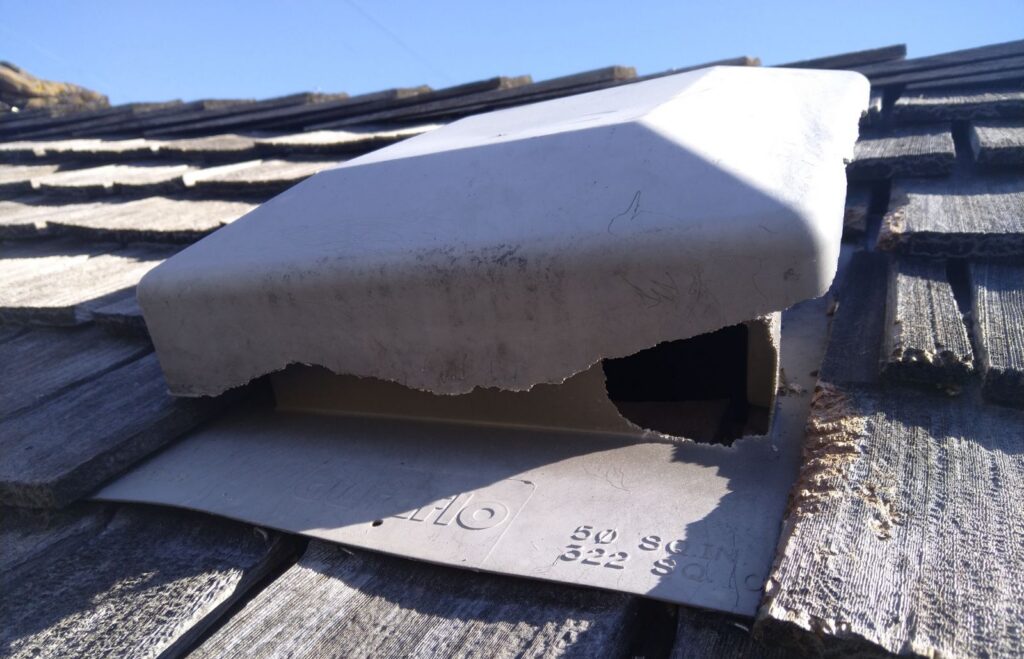
- Dormers and Intersections: Valleys and places where roof sections meet contain many seams. Flashing and trim can hide narrow spaces beneath them. Complex rooflines may have several possible entrances.
- Chimneys and Flashing: Gaps may appear around a chimney cap or where the chimney meets the roof. These openings can lead into the attic or another hidden cavity. Our team checks the full chimney connection before recommending repairs.
You should not inspect these features from the roof. Wet shingles, steep slopes, and damaged materials create fall hazards. A technician can examine the area with the proper training and equipment.
How Chewing Changes a Small Weakness
Squirrels have front teeth that continue growing throughout their lives. Chewing helps wear those teeth down. Wood, plastic vents, shingles, and thin exterior materials may become targets.
A narrow construction gap may not provide enough room at first. Repeated chewing can widen it until entry is possible. Fresh damage may expose lighter wood or leave rough edges around the hole.
A larger opening may allow rain into the roof structure. Moisture can damage insulation, wood, and ceilings over time. Our professional repairs address both the entrance and the weakness that made it usable.
Signs the Route Continues Into the Attic
Running across the roof does not always mean the attic has been entered. The location, timing, and pattern of the activity provide important clues. Several signs together make indoor occupation more likely.
- Sounds That Stop Near One Area: Fast running may repeatedly end beside a vent or soffit. Movement may then continue more quietly inside. This pattern can point to an entrance near that location.
- Scratching and Chewing: You may hear activity above the ceiling or inside a wall. Sounds are often clearer in the early morning or late afternoon. Noise alone cannot confirm the exact entrance.
- Fresh Gnaw Marks: New chewing may expose clean, lighter-coloured wood. Plastic or metal covers may also look bent or damaged. A technician should inspect these signs at roof level.
- Nesting Material: Leaves, twigs, or insulation may appear near an opening. Material may also be visible inside the attic. You should never touch or pull it free.
- Droppings and Odours: Waste may collect near the nest or regular travel route. Droppings should not be swept, vacuumed, or handled by homeowners. Professional cleanup may be needed.
An attic inspection can confirm whether the sounds are inside or above the roof. Our team also checks whether dependent young are present. This information shapes the humane removal plan.
Damage That Can Develop Inside the Attic
Attic activity may flatten, tear, or move insulation as squirrels travel and build nests. Damaged insulation may no longer control indoor temperatures as well. Nesting material can also spread across a large area.
Chewing may affect wood, vents, stored items, and electrical wiring. Damaged wire coverings can create a fire risk. Electrical concerns should be assessed by the right qualified professionals.
Droppings, urine, food remains, and nesting waste may contaminate the space. Homeowners should never clean this material themselves. Our trained team can remove affected materials and sanitize the area when required.
Why a Roof Opening Must Not Be Sealed Immediately
An adult may be outside feeding while dependent young remain in the attic. Sealing the entrance could separate the family or trap them inside. The adult may also chew another opening while trying to return.
A trapped squirrel can move deeper into walls, ceilings, or living areas. The visible hole may not be the only active route. Closing one entrance without checking the structure can make the problem harder to solve.
Our professional removal must happen before lasting exclusion. We identify all occupants and active openings before work begins. The attic is confirmed empty before the roof is permanently secured.
Squirrel Removal and Prevention with Skedaddle: What to Know
When squirrels enter your attic, our professional wildlife team begins with a full inspection. We examine nearby trees, exterior travel routes, soffits, fascia, vents, the chimney, and the attic. Our technicians locate active entrances and check for dependent young. You do not need to climb or enter a contaminated space.
We then create a humane removal plan based on the family situation. When suitable, our one-way doors allow wildlife to leave but prevent them from returning. We make sure dependent young are handled with care and confirm that the attic is empty. At Skedaddle, we does not use live trapping or relocation.
Our team can then remove contaminated nesting material, clean affected areas, and secure the entry point. We use durable exclusion materials suited to the roof feature. Nearby weak areas are also protected so activity does not shift across the roof. This complete approach helps prevent another squirrel from using the same route.
Frequently Asked Questions
Does seeing a squirrel on the roof mean it is in the attic?
No, the roof may only be part of an outdoor travel route. A squirrel may cross the shingles while moving between trees or properties. Repeated stops near one opening, indoor sounds, or nesting evidence make attic entry more likely. A professional inspection can confirm what is happening.
How far can a squirrel jump to reach a roof?
Squirrels can cross gaps that may look too wide from the ground. The exact distance depends on height, angle, and the surface used for launching. Branches, fences, posts, and nearby structures can all shorten the jump. You should not climb or alter high access routes yourself.
What does a squirrel in the attic sound like?
You may hear scratching, rolling, chewing, or quick movement above the ceiling. Activity is often strongest in the early morning or late afternoon. Sounds can travel through framing, so the nest may not be directly above you. An inspection is needed to locate the source.
Can one squirrel cause serious attic damage?
Yes, one squirrel can disturb insulation, widen an entrance, and chew building materials. Wiring may also be damaged over time. The risk can grow when the same route is used each day. A nest with young can increase the amount of activity.
Should a roof hole be sealed when the squirrel leaves?
No, seeing an adult leave does not mean the attic is empty. It may return later, and dependent young could remain in the nest. Blocking the entrance can trap them or force the adult to create another hole. Humane removal must happen before exclusion.
Should homeowners clean nesting material or droppings?
No, homeowners should not touch, sweep, or vacuum contaminated materials. Dry waste can release particles into the air when disturbed. Hidden contamination may also extend beneath the insulation. Our trained professionals should complete the cleanup.
Stop the Route Before It Leads Back Into Your Attic
Squirrels can reach your roof from branches, utility lines, fences, retaining walls, drainpipes, fixtures, and rough exterior surfaces. Once there, they may test soffits, fascia, vents, dormers, and chimney connections. A small weak spot can become an attic entrance after repeated chewing.
You should not climb onto the roof, seal the opening, or handle nesting material yourself. An adult or dependent young may still be inside. Our professional inspection and humane removal must happen before the structure is secured.
At Skedaddle Humane Wildlife Control in Coquitlam, we can trace the full route from your yard to the attic. We remove the current occupants, clean affected areas, and protect vulnerable roof features with lasting exclusion work.
Contact us to schedule a professional assessment. You can request an estimate to learn more about squirrel removal and long-term roof protection for your Coquitlam home.

 Loading...