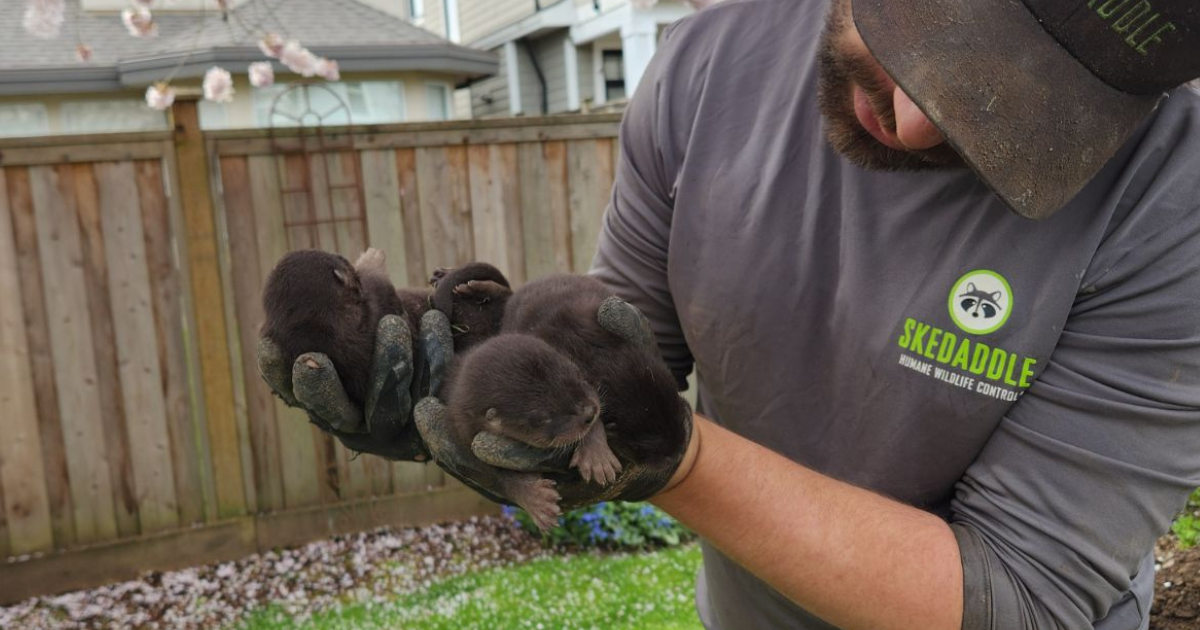
In places like Vancouver, Coquitlam and surrounding areas, where neighbourhoods blend seamlessly with rivers, forests, and green spaces, wildlife encounters are simply part of everyday life. Most of the time, these interactions happen at a distance, something glimpsed on a quiet walk or through a backyard window. But every so often, wildlife moves much closer than expected, turning an ordinary property into the centre of an unusual and memorable situation.
That’s exactly what unfolded in this case, one that recently drew wider attention after being featured on CTV News. A homeowner reached out after noticing unusual activity beneath their shed, including a river otter repeatedly slipping through a large opening while carrying nesting material. Even more surprising, the otter was seen moving her babies during the day, clear signs that the space had become an active den. What began as a curious observation quickly evolved into a situation that required careful, informed intervention.
For us at Skedaddle Humane Wildlife Control, this was more than just another service call. It marked a rare and remarkable first: our team’s initial experience handling baby otters on a residential property. What followed was a detailed, hands-on process rooted in careful assessment, precision, and a strong commitment to protecting the animals.
The Initial Call: A Homeowner’s Unusual Discovery
When Alex Ritz, owner of Skedaddle Vancouver and Coquitlam, arrived on-site, he and his team were greeted by a concerned homeowner who had been closely observing unusual wildlife activity around their shed. What they described was not something most people expect to see in a residential setting. A river otter had been repeatedly visiting the property, gathering nesting material and entering beneath the shed through a large, visible opening.
The homeowner also reported something even more telling. They had seen the otter carrying babies outside during the day, a strong indication that the space beneath the shed was being used as a den. This kind of behaviour is rarely witnessed so clearly, especially so close to a home, and it immediately signalled that a closer inspection would be necessary.
To support their observations, the homeowner provided video evidence showing the otter actively entering and exiting the space. This confirmation allowed us to move forward with a focused inspection, knowing that the activity was ongoing and that young animals were likely involved.
Confirming the Activity Beneath the Shed
With clear information from the homeowner, we began a detailed inspection of the shed and the surrounding area. Right away, our technician identified a well-used entry point along the base of the structure. The opening was large enough for repeated access and showed signs of ongoing digging, suggesting the space beneath the shed had been actively maintained and could easily be expanded.
To better understand what was happening below the surface, we performed a tapping test along the perimeter of the shed. This technique helps us detect movement without disturbing the area directly. Almost immediately, there was a noticeable response. Rapid movement beneath the shed confirmed that the space was actively occupied.
At this stage, however, there were still unknowns. Despite the confirmed activity, no sounds from babies could be heard during the inspection. This left two possibilities. The young otters were either positioned deeper within the den, out of reach of sound, or they had already been moved by the mother. With these uncertainties in mind, the next step was to proceed carefully and gather more information before taking action.
Planning a Safe and Humane Approach
With strong evidence of active denning beneath the shed, the next step was to develop a clear and careful plan. Situations involving young animals require a thoughtful approach, especially when their exact location is still uncertain. Our goal was to gather more information while preparing the structure to prevent future access, all without causing unnecessary stress to the animals.
After reviewing our findings with the homeowner, we received approval to move forward with a deeper investigation and protective work around the shed. From there, we outlined a plan focused on both immediate and long-term outcomes.
Our approach included:
- Confirming the presence and location of the babies to ensure no young were left behind during the process
- Carefully accessing the area beneath the shed using minimally invasive techniques
- Preparing for structural reinforcement, including trenching and screening to secure the perimeter
- Monitoring for continued activity to better understand the mother’s behaviour and timing
- Prioritizing a safe reunion process, allowing the mother to retrieve her young naturally
By taking these steps, we ensured that every action moving forward was intentional and aligned with our humane approach. With a plan in place, our technicians were ready to begin the hands-on work needed to fully assess what was happening beneath the shed.
Investigating Beneath the Shed
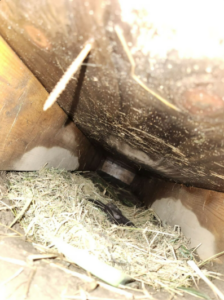 With the plan in place, our technicians began carefully preparing the area around the shed for a closer inspection. Trenching work was started along the perimeter to gain better access beneath the structure while also preparing the foundation for long-term screening. This step allowed us to work methodically without disturbing the hidden space more than necessary.
As the work progressed, we introduced a small camera to help us see into areas that were otherwise impossible to reach. This gave us a clearer view of what was happening beneath the surface and quickly confirmed that the space was actively being used.
During the inspection, we discovered several important clues:
- Fresh nesting material gathered in a concentrated area beneath the shed
- Evidence of ongoing movement and disturbance within the soil
- Moisture buildup in one section that suggested a deeper, more protected nesting pocket
Each of these signs reinforced what we were beginning to suspect. The den was not only active, but carefully maintained and likely contained young animals nearby. With more clarity emerging, we continued adjusting the camera position to get a better view of the deeper sections beneath the structure.
A Rare Discovery: Finding Baby Otters
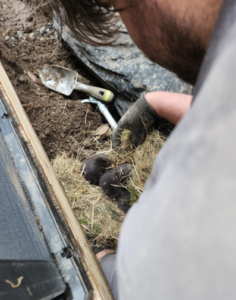 As we continued adjusting the camera to explore deeper beneath the shed, we finally gained a clear view of the concealed nesting area. What we saw confirmed that the space was being actively used and that the mother had created a secure, hidden pocket for her young.
With careful and controlled excavation, we were able to access the nesting site. Inside, we discovered three baby otters nestled together within the protected area. At this point, every step of the process became even more deliberate, as our priority was ensuring the safety and comfort of the young animals while maintaining the integrity of the surrounding structure.
This moment was significant for our team for several reasons:
- It confirmed the presence of young animals in a deeply concealed den
- It marked the first time Skedaddle Humane Wildlife Control had encountered baby otters in a residential setting
- It highlighted just how adaptable wildlife can be when choosing den sites near human homes
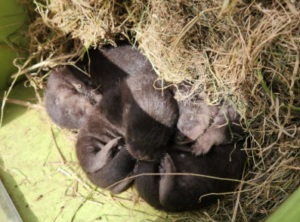
Once safely accessed, the three baby otters were carefully placed into a heated reunion box to keep them warm and secure while the process continued.
Ensuring the Safety of the Otter Family
With the three baby otters safely secured in a heated reunion box, our focus immediately shifted to maintaining their comfort and preparing the property for a safe and successful reunion with their mother. Keeping the young animals warm and protected was especially important, as they had been removed from a hidden nesting area and needed a stable environment while the work continued around them.
At the same time, we continued the structural work around the shed to ensure the space could no longer be accessed. Trenching and screening were completed along the base of the structure, sealing off the entry point and reinforcing vulnerable areas to prevent any future use of the space as a den site.
Throughout the process, we also took additional precautions due to the weather conditions. Because of the heat, a shaded tarp was set up to protect the reunion box and reduce stress on the animals while they waited. Every detail, from temperature control to positioning, was considered to support the best possible outcome for the family.
By the end of this stage, both the property and the animals were in a secure position, setting the stage for the final and most important step: allowing the mother to safely reunite with her young.
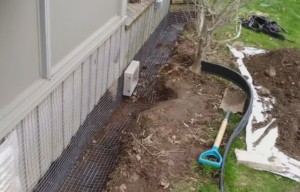
The Outcome: A Successful Reunion
With the work complete and the area fully secured, the final step was to allow nature to take its course. The baby otters remained safely in the heated reunion box while the mother continued to monitor the area from a distance. Everything had been done to ensure she would still recognize the site and feel comfortable returning.
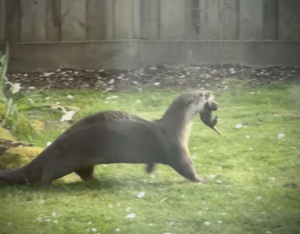 Later that evening, the homeowner provided the update we were hoping for. The mother otter had returned and successfully located her young. One by one, she retrieved all three babies and moved them from the property. It was a calm and natural reunion, exactly as intended.
The outcome was a complete success:
- All three baby otters were safely reunited with their mother
- The den site beneath the shed was fully secured
- The family was able to move on without disruption or harm
For our team, it was a memorable conclusion to a highly unusual case, marking a rare first while reinforcing the importance of patience, precision, and a humane approach in every situation we encounter.
Why This Case Was So Unique
Otters are highly adapted to life near water, typically staying close to rivers, lakes, and shoreline habitats where they can hunt and travel freely. This incident occurred in Richmond, within reach of interconnected waterways, shoreline habitat and green space, near the village of Steveston and the mouth of the Fraser River.
While they are occasionally seen moving through urban green spaces, it is extremely uncommon for a river otter to establish a den beneath a residential structure. In this case, the behaviour we observed, including the use of a shed as a nesting site and the visible movement of young, made the situation especially rare.
For us at Skedaddle Humane Wildlife Control, this was the first documented instance of baby otters being found in a residential den and safely supported through a full reunion process. That made this case not only unique, but also a meaningful milestone for our team. It required careful observation, adaptability, and a willingness to respond to behaviour that does not often present itself in typical wildlife situations.
It also served as a reminder of how closely wildlife and residential spaces can overlap in communities like Coquitlam. As natural habitats intersect with developed areas, animals will sometimes make unexpected choices when seeking shelter, especially when raising young.
What Homeowners in Coquitlam Should Watch For
While cases like this are rare, wildlife activity around sheds, decks, and outbuildings is not uncommon in Coquitlam due to the city’s close proximity to rivers and forested areas. Early signs are often subtle, but recognizing them quickly can help prevent a situation from escalating into an active den site.
Homeowners should keep an eye out for changes around their property, especially near ground-level structures where animals may find shelter. In many cases, the signs begin before any animals are actually seen.
Common indicators include:
- Fresh digging or new holes appearing along the base of sheds or decks
- Repeated wildlife activity in the same area, especially at dawn or dusk
- The movement of nesting materials such as leaves, grass, or debris into a specific location
- Unusual sounds coming from beneath structures, including scratching or movement
- Visible trails or worn pathways leading to a single entry point
If any of these signs are present, it is important to avoid disturbing the area. Early observation and professional assessment can make a significant difference in safely resolving the situation before it develops further.
Protecting Your Property From Future Wildlife Intrusions
Once wildlife identifies a sheltered space under a structure, it can continue to return or encourage other animals to investigate the same area. Preventing this starts with making sure the property is no longer an attractive or accessible option, especially in areas like Coquitlam where natural habitats are close by.
After resolving an active situation, we focus on reinforcing vulnerable parts of the structure so that wildlife cannot re-establish entry points. This step is just as important as the initial response, as it helps ensure the problem does not repeat itself.
Key prevention measures include:
- Securing the base of sheds, decks, and outbuildings with durable screening materials
- Closing off existing gaps or weakened areas where digging or entry has occurred
- Reducing attractants around the property, such as clutter or stored materials that provide cover
- Maintaining regular property checks, especially after seasonal changes or heavy weather
- Monitoring high-risk areas near greenbelts or waterways, where wildlife activity is more common
By taking a proactive approach, homeowners can greatly reduce the likelihood of future wildlife activity. Consistent maintenance and early attention to small changes around the property are often the most effective tools in prevention.
A First for Skedaddle, A Lasting Resolution for the Homeowner
This case was one our team will not soon forget. What began as a homeowner noticing unusual activity beneath a shed quickly developed into a rare and complex situation involving a river otter den and three young. Through careful observation, detailed investigation, and a steady, humane approach, we were able to fully understand what was happening beneath the structure and respond appropriately.
For us at Skedaddle Humane Wildlife Control, this marked a first. Encountering baby otters in a residential den and guiding the situation through to a successful reunion was an uncommon experience that highlighted just how adaptable wildlife can be when choosing shelter close to human homes. It also reinforced the importance of patience and precision when working through unfamiliar wildlife behaviour.
In the end, the outcome was exactly what we aim for in every case. The otter family was safely reunited, and the homeowner’s property was fully secured against future activity. It is a reminder that even the most unusual wildlife situations can be resolved successfully with the right approach and respect for the animals involved.
If you suspect wildlife has moved onto your property or into your home, don’t hesitate. Contact us today for an assessment.

 Loading...







