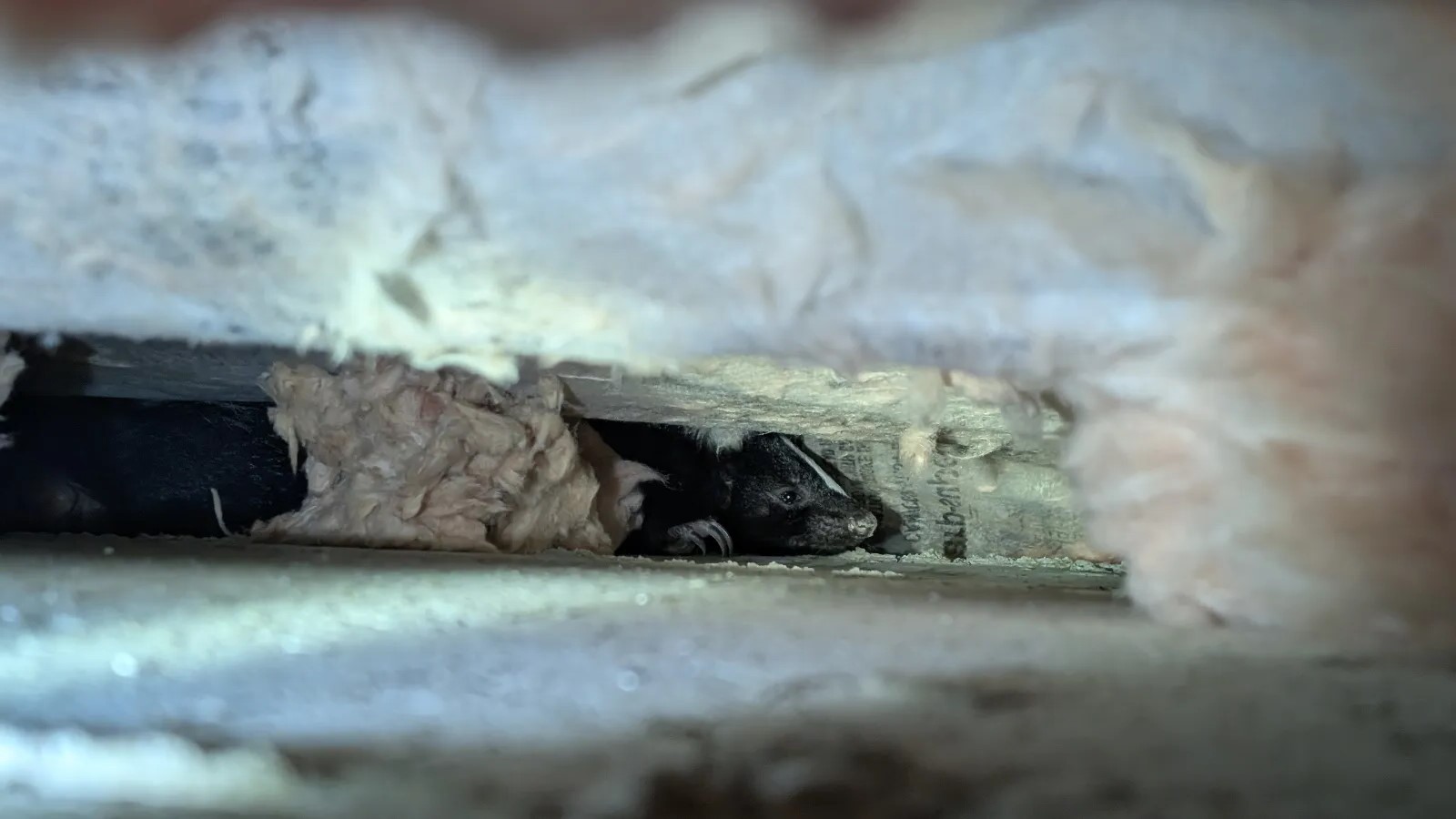
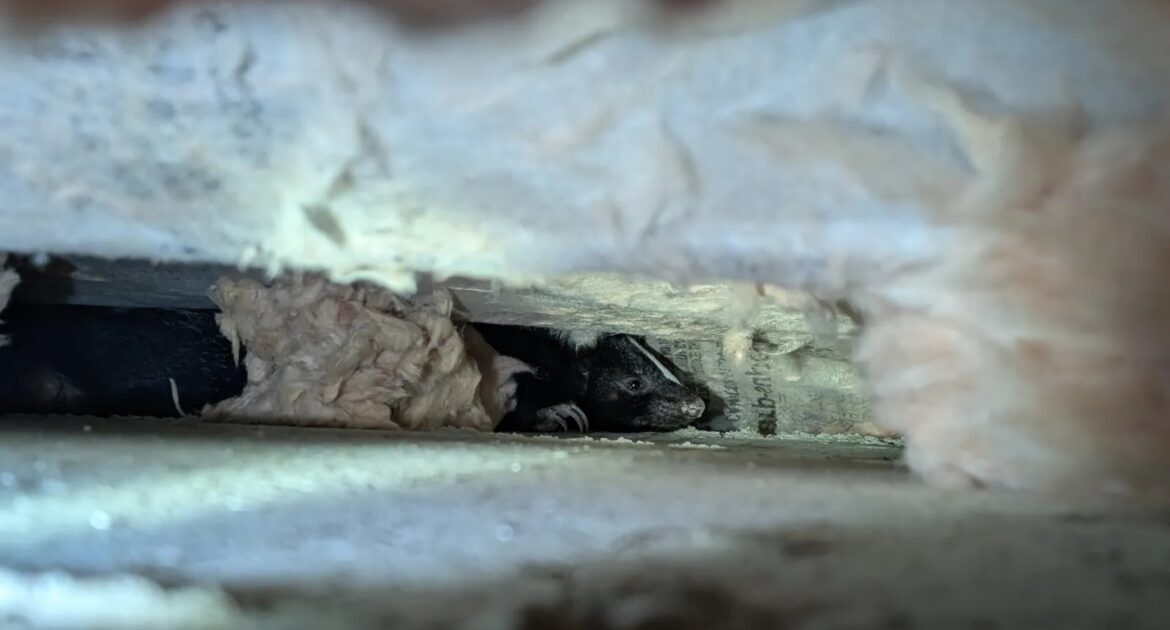
You might think that skunks are harmless visitors, only leaving behind their distinct smell if provoked, but that’s one of the biggest skunk myths, causing property damage. The truth is, skunks don’t need to spray to create chaos. Their burrowing habits can ruin lawns, damage foundations, and even compromise structures like decks or sheds.
Many people in Dublin believe another myth—that skunks spray unprovoked. While this isn’t entirely true, the fear of spraying often leads to panicked DIY removal attempts that make the problem worse. At Skedaddle Humane Wildlife Control in Dublin, we’ve seen how quickly these misconceptions turn into costly problems for homeowners.
If you assume skunks will move on by themselves, you’re not alone. Unfortunately, this misunderstanding often results in even greater skunk damage to property. From tearing up lawns in search of grubs to nesting under homes, skunks can cause significant destruction before you even realize they’ve settled in. That’s why understanding skunk myths is so important—you’ll learn how to respond the right way and stop issues before they escalate.
This blog will break down the most damaging skunk myths and show you why professional help is the safest, most effective solution. You’ll gain practical knowledge about skunk behavior, learn how to spot the signs of damage early, and understand why trusting Skedaddle’s humane approach is the best choice for protecting your Dublin home.
Do Skunks Spray Unprovoked?
No, skunks do not spray people or pets without a reason. They have a limited supply of the fluid they use for spraying, and it takes their bodies a long time to make more. Because of this, they only spray as a last resort when they feel their life is in danger.
Most of the time, an animal will try to run away or hide before it uses its defence. If you or a pet corners it, the animal will give you several warnings first. If you back away slowly, you will usually avoid any trouble. Understanding this helps you stay calm and avoid the actions that lead to a smelly situation.
Myth 1: Skunks Are Mean and Will Attack You
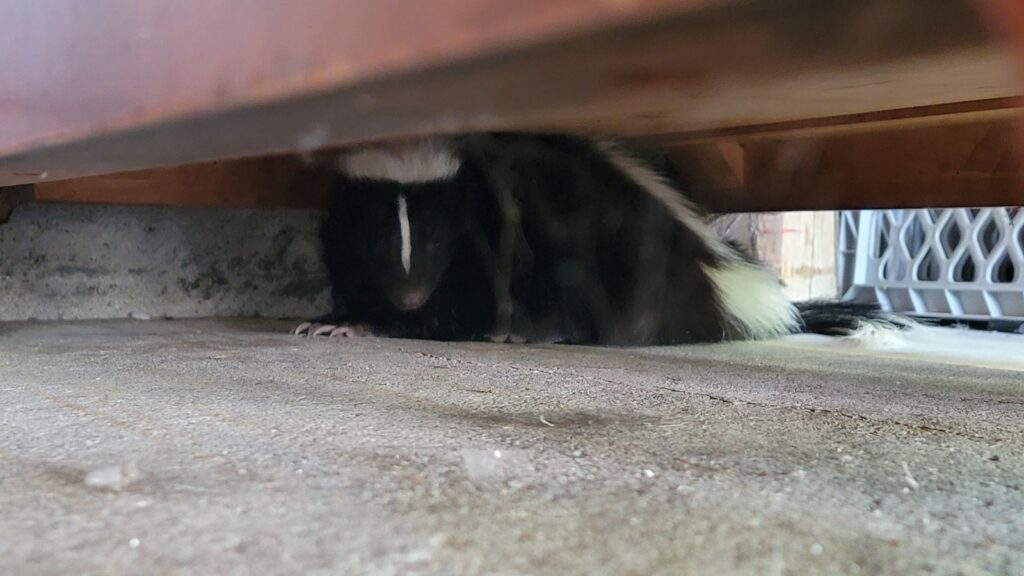
One of the biggest skunk myths is that these animals are looking for a fight. This could not be further from the truth. In reality, they are very shy and prefer to keep to themselves. They want to avoid you just as much as you want to avoid them.
However, believing they are aggressive causes homeowners to react poorly. If you scream, run at the animal, or try to chase it off with a broom, you are threatening it. This is when the spraying happens.
Warning signs a skunk is about to spray:
- Stomping Feet: The animal will hit its front paws on the ground to make a noise.
- Raising the Tail: This is a clear signal that the animal is getting ready to defend itself.
- Hissing or Growling: These noises are meant to tell you to back away immediately.
When you panic and scare the animal, it sprays. This yellow oil is very hard to clean. It contains sulphur, which smells like rotten eggs, but much stronger. If the skunk sprays under your deck or near a ventilation intake, that odour can travel through your entire house. It can soak into wood, concrete, and insulation. We often see cases where furniture, carpets, and even drywall need to be replaced because the smell simply will not come out.
Myth 2: Seeing a Skunk in the Day Means It Is Sick
Many people think that because these animals are nocturnal (active at night), seeing one during the day means it has rabies. While it is true that they are most active after dark, they do come out during the day for normal reasons.
During the spring and summer, mother skunks have a lot of work to do. They need to find extra food to feed their babies. This means they might have to forage while the sun is up. In the colder months, the skunk might come out during a warm spell to find a snack.
If you see a skunk during the day and assume it is sick, you might be afraid to go near that area of your yard. Alternatively, you might ignore it, thinking it is just passing through and will die soon. While you ignore the signs, the skunk is likely building a den under your home. By the time you realize the animal is healthy and living there, it has already dug extensive tunnels. These burrows can cause concrete steps to sink or water to pool around your foundation.
Myth 3: Skunks Only Live in the Country
It is a common belief that these black and white animals only live in forests or rural farm areas. People living in suburbs like Dublin often feel safe from wildlife intrusions. The truth is that urban areas are perfect for them.
Our neighborhoods provide everything a skunk needs to survive. There is plenty of food, water, and shelter. In fact, city animals often live longer and grow larger than their country cousins because life is easier for them in our backyards.
Things in your yard that attract them:
- Garbage cans: Open bins are an easy buffet for a hungry animal.
- Pet food: Bowls left outside for cats or dogs are a major attractant.
- Fallen fruit: Apples or berries on the ground are a sweet treat they love.
When you believe skunk myths about where they live, you might not protect your property. You might leave gaps under your shed or deck open. Skunks are excellent diggers. They will excavate huge amounts of dirt to create a safe den under a structure. This digging removes the support from under concrete slabs, porches, and sheds. Over time, this causes expensive structural damage, cracking foundations and causing structures to lean or collapse.
Myth 4: Skunks Don’t Do Anything Useful
People often view these animals as useless pests that only exist to cause trouble. This is not true. They are actually helpful to the ecosystem because they eat a lot of things that homeowners dislike even more.
They are omnivores, which means they eat plants and animals. A large part of their diet consists of insects and small rodents. They act like natural pest control agents, keeping populations of other unwanted creatures down.
What skunks like to eat:
- Insects: They eat beetles, crickets, and grasshoppers.
- Grubs: These are the larvae of beetles that live in the soil.
- Mice: They will hunt and eat small rodents that might otherwise enter your home.
While eating bugs is good, the way they find them is destructive. This is where the skunk damage to property becomes visible on your lawn. To find grubs, the animal will dig small, cone-shaped holes in the grass. If there are a lot of grubs, they can roll back large sections of sod in a single night. It looks like a rototiller went through your yard. Homeowners who don’t understand this behaviour might try to fix the lawn without removing the animal, leading to a cycle of expensive landscaping repairs.
Myth 5: You Can Handle the Problem Yourself
Perhaps the most dangerous myth is the idea that you can solve a wildlife intrusion on your own. The internet is full of bad advice about using mothballs, bright lights, or loud radios to scare animals away. Other sources might suggest blocking the hole when the animal leaves.
These methods rarely work for long. Animals are smart and adaptable. They get used to noises and lights very quickly. If you block a hole without knowing for sure the animal is out, you might trap it inside.
If you trap an animal under your house, it will panic. It may spray in a confined space, ensuring the smell seeps up into your floorboards. Even worse, it may try to dig its way out, destroying wiring, insulation, and ductwork in the process. If a mother is locked out while her babies are inside, she will tear through wood and siding to get back to them. Trying to handle this yourself usually leads to higher repair costs than calling us at Skedaddle in the first place.
How We Prevent Wildlife Damage
At Skedaddle, we know that the only way to stop the damage is to remove the skunk humanely and keep it out for good. We do not use traps that stress the animal. Instead, we use a process that works with the animal’s natural biology.
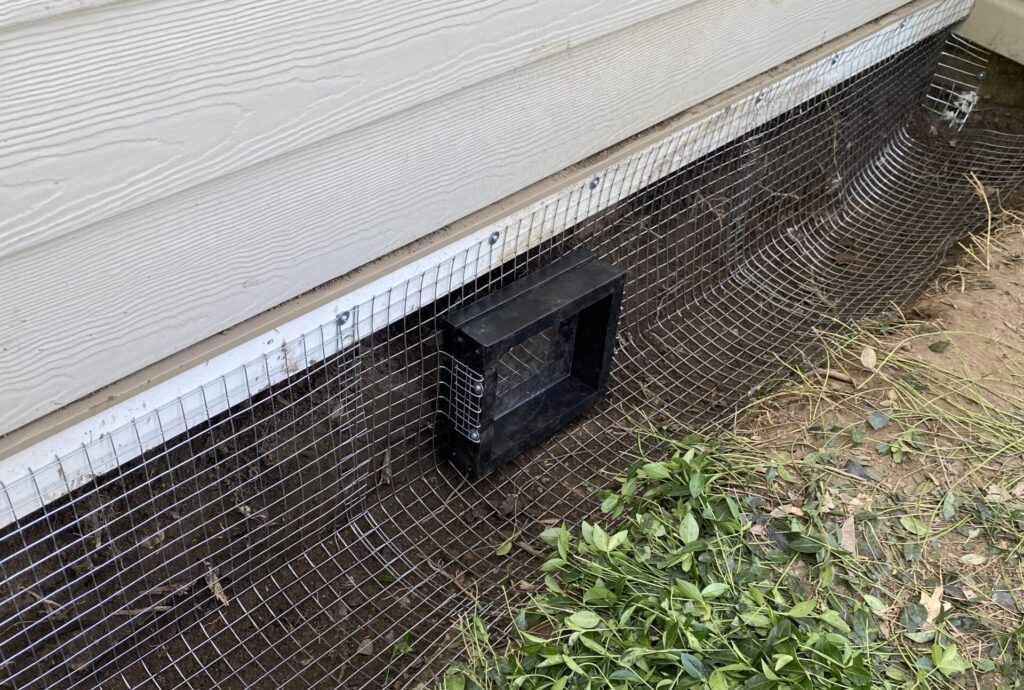
First, our technicians perform a complete inspection of your home. We look for the entry point and any other weak spots. Once we find the den, we install a specialized one-way door over the opening. This device allows the skunk to leave the den to find food, but it cannot open the door to get back in.
Once the skunk is gone, we secure the entry point with heavy-gauge steel screening. This material is too strong for skunks to chew through or rip off. We dig a trench and bury the screening deep into the ground. This prevents the animal from digging back under the barrier. We protect your deck, shed, and porch so you never have to worry about unwanted guests again.
Frequently Asked Questions
Will the skunk leave on its own?
Rarely. If a skunk has found a warm, dry, and safe place under your home, it will want to stay there. This is especially true in the winter or during baby season. Ignoring the problem usually leads to more damage over time.
Can skunks chew through wood?
While they are not known for chewing as much as rats or squirrels, they have strong claws and teeth. If they are trapped or determined to get into a space, they can rip through rotten wood, lattice, and weak vents.
How deep do they dig?
These animals are powerful diggers. They can dig burrows that are several feet deep and extend far back under a structure. This is why our protection services involve burying the screen deep into the ground to stop them.
Does light scare them away?
Motion-sensor lights might startle an animal at first, but they quickly learn that the light cannot hurt them. They will eventually ignore the light and continue to live under your property.
Don’t Believe the Myths, Let Us Handle the Skunks for You!
Believing common skunk myths can lead to costly problems for homeowners. Whether you think a skunk will spray you without warning or assume they won’t harm your property, these ideas can stop you from acting quickly. The truth is, skunks rarely spray unless threatened, but they can still cause significant damage to your home if they take up residence. From digging under foundations to leaving a strong odor behind, the longer a skunk stays on your property, the more repairs and cleaning you may face.
At Skedaddle Humane Wildlife Control in Dublin, we understand the challenges of dealing with nuisance wildlife like skunks. That’s why we offer safe, humane solutions to remove skunks and prevent future problems. With the right tools and expert knowledge, we can help protect your home while respecting the animals. Don’t wait until the damage gets worse—take action now. Request an estimate today and trust us to keep your property safe, secure, and odour-free.

 Loading...







