You’ve probably smelled one before you’ve seen one. That strong, unmistakable scent is often your first clue that a skunk has passed by. But when winter hits, you might wonder — where do they go? And do they really disappear until spring?
Here’s the truth: skunks don’t hibernate the way bears do. Instead, they slow down and spend most of the cold months resting in cozy dens. If you’re a homeowner in Durham Region or anywhere in Canada, knowing more about skunk behaviour in winter can help you understand what’s happening around your property — and why you might still see signs of activity even when snow is on the ground.
At Skedaddle Humane Wildlife Control in Durham Region, we’re often asked, “Do skunks hibernate in Canada?” The short answer is no — they go into a deep sleep called torpor. It helps them save energy until temperatures warm up. But they don’t vanish completely. They still wake up for short periods, look for food, and sometimes move into warm, protected spaces — like under decks or sheds.
Let’s explore how these animals handle winter, what makes them seek shelter near homes, and what you should know as a homeowner.
Winter Survival: How Skunks Handle the Cold
You might expect skunks to sleep through the entire winter, but that’s not what happens. When cold weather sets in, they slow down their heart rate and lower their body temperature to save energy. This state, called torpor, isn’t true hibernation — it’s more like a long nap.
During torpor, skunks stay in dens for several days or even weeks at a time. But when the temperature rises above freezing, they wake up and go looking for food.
Here are a few Canadian skunk hibernation facts that may surprise you:
- Skunks can share dens with several others, sometimes up to a dozen females will huddle together for warmth.
- Males usually den alone, only joining others when spring mating season begins.
- They eat more in late fall to build up body fat for the colder months.
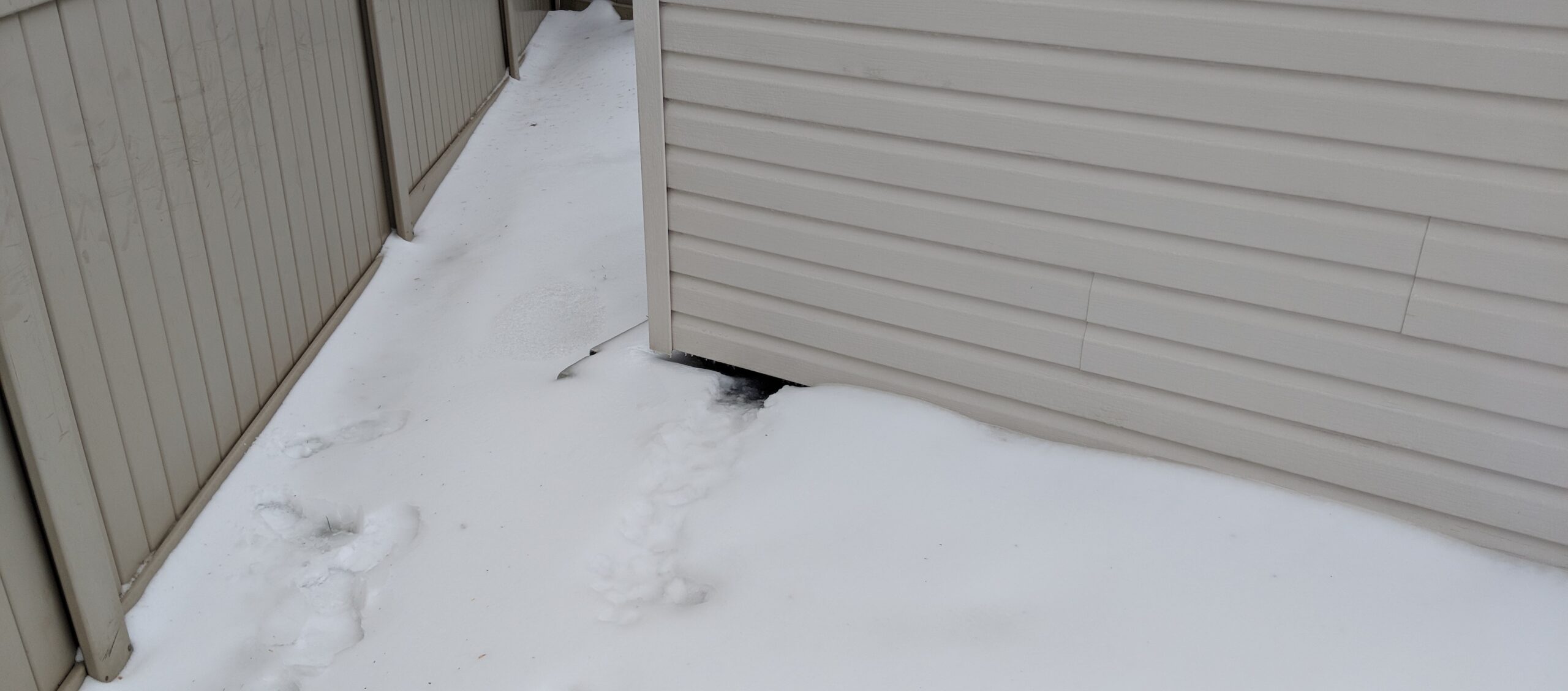
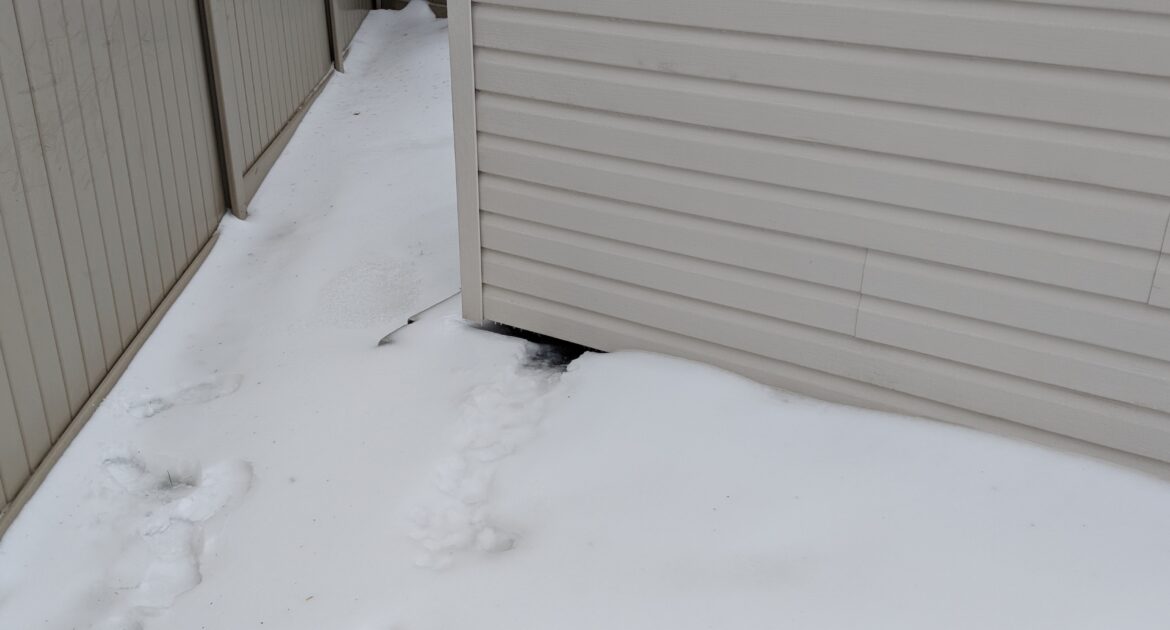
- You might see skunk tracks in the snow after a mild winter night; proof they’re still active.
You might not notice them often, but they’re still there, staying close to reliable food sources like garbage bins, compost piles, or pet dishes left outdoors.
Where Skunks Spend the Winter
When you think about skunk behaviour in winter, it helps to imagine what they need most: warmth, darkness, and safety. In the wild, skunks dig burrows or take over abandoned dens from other animals. Around neighbourhoods, though, human spaces make tempting alternatives.
Common winter hiding spots include:
- Under decks, porches, or sheds
- Inside old woodpiles or unused crawl spaces
- Beneath steps or foundations where insulation provides warmth
- Around garages or barns with easy access
You might never see the animal itself, but there are clear signs that a den is nearby.
Watch for:
- Small, cone-shaped holes dug in the snow or soil
- Patches of disturbed ground near decks or sheds
- Faint musky smells that linger around an opening
- Claw marks or tracks leading toward dark corners
If you spot these signs, don’t panic, but don’t block the entrance, either. Skunks can spray when startled, and closing off a space too soon could trap them inside.
What Skunks Eat During Winter
You might wonder what keeps a skunk going when insects and fruit aren’t available. Their diet changes with the seasons.
During winter, skunks rely on whatever they can find. Because they’re omnivores, they’ll eat almost anything that provides calories and warmth.
Typical cold-season meals include:
- Small rodents or leftover pet food
- Garbage scraps and compost
- Birdseed that falls from feeders
- Carrion (dead animals) if they can find it
They don’t travel far, usually just enough to grab a quick meal before retreating to their den again. That’s why it’s common to see small dig marks in the snow or disturbed soil near fences and gardens after a thaw.
As temperatures drop again, they return to their den to rest and conserve energy.
Why Skunks Choose Human Properties
You might think your property wouldn’t attract wildlife in the middle of winter — but for a skunk, your home offers everything it needs. Warmth from your foundation, easy access to food, and protection from predators make residential areas ideal.
Here’s why skunks sometimes settle near homes:
- Food Sources: Open trash cans or pet bowls are easy targets.
- Shelter: Decks, sheds, and crawl spaces mimic natural dens.
- Quiet Spots: Skunks prefer calm areas away from foot traffic.
- Safety: Human neighbourhoods often have fewer predators like coyotes or owls.
Once they find a good location, they’re likely to stay until spring. That’s why winter is a great time to inspect your property for potential hiding spots, but leave any removal or sealing work to professionals.
Common Signs of Winter Activity
Even though they rest most of the season, skunks leave clues behind. If you’re paying attention, you can often tell one is nearby before ever seeing it.
Here are a few things you might notice:
- Tracks in fresh snow — five toes on each paw with visible claws.
- Small holes or disturbed soil where they’ve been digging for grubs.
- A faint musky odor around a deck, crawl space, or shed.
- Pets showing sudden curiosity or barking near a specific spot outside.
If you notice these signs, it’s best to contact experts like our team before the problem grows. Skunks may become defensive if startled, especially during mating season in late winter.
What Homeowners Should Know About Skunk Dens
When temperatures drop, a skunk den can be more complex than it looks. A single entrance may lead to several tunnels and chambers, designed for warmth and protection.
Each chamber serves a purpose: one for sleeping, one for waste, and sometimes one for raising young. During cold spells, skunks seal off openings with leaves or soil to trap heat.
A few key Canadian skunk hibernation facts about dens:
- They stay close to reliable food and water.
- Some dens are reused year after year.
- Females sometimes share dens with their young from the previous season.
- Most dens are built two to four feet underground, safe from frost.
Understanding how dens work helps explain why our professional help is so important. Simply blocking an entrance can trap animals inside or cause damage as they dig their way out.
How We Prevent Winter Problems Safely
At Skedaddle Humane Wildlife Control, we focus on humane and lasting prevention. You should never attempt to move or scare away wildlife on your own, especially in winter when temperatures are extreme and animals rely on stored fat to survive.
Here’s how we safely manage and prevent skunk problems:
- Detailed Inspection: We identify every entry point, den site, and area of concern.
- One-Way Door System: This allows the skunk to leave naturally without re-entering.
- Secure Sealing: Once we confirm the space is empty, we seal and reinforce vulnerable spots.
- Cleanup and Protection: We clean contaminated areas and apply materials that deter future nesting.
You can trust our team to handle every step safely and humanely, keeping both your family and the animals protected.
Steps You Can Take to Reduce Attraction
While we handle removal and prevention, there are simple habits you can follow to make your property less appealing in the first place.
- Keep garbage cans sealed and stored indoors if possible.
- Bring pet food inside overnight.
- Clear away debris, woodpiles, or leaves near your home.
- Fix small gaps under decks or sheds after confirming they’re empty.
- Keep outdoor lights on motion sensors — sudden light can discourage activity.
These small changes go a long way in reducing future visits. And if you ever suspect a den nearby, give us a call, we’ll take it from there.
Winter Brings Hidden Activity
It’s easy to assume winter means wildlife goes quiet, but skunks are proof that life keeps moving beneath the snow. They’ve adapted remarkably well to Canadian winters. Their bodies conserve energy, their dens trap heat, and their instincts guide them to safety, sometimes right under our homes.
If you’ve ever wondered, “Do skunks hibernate in Canada?” now you know. They don’t truly hibernate, but they do slow down and stay cozy until spring. Understanding skunk behaviour in winter helps you stay one step ahead, protecting your home while letting nature run its course.
Stay Ahead of Winter Skunks
When the snow piles up and temperatures drop, wildlife looks for warmth and your property can become the perfect spot. Knowing the truth about Canadian skunk hibernation facts helps you recognize early warning signs and take safe, humane action.
If you think a skunk may be sheltering nearby, request an estimate to learn more about our proven prevention methods. At Skedaddle Humane Wildlife Control in Durham Region, we’ll make sure the animals leave safely and can’t return, so you can enjoy a peaceful winter without any surprises.

 Loading...