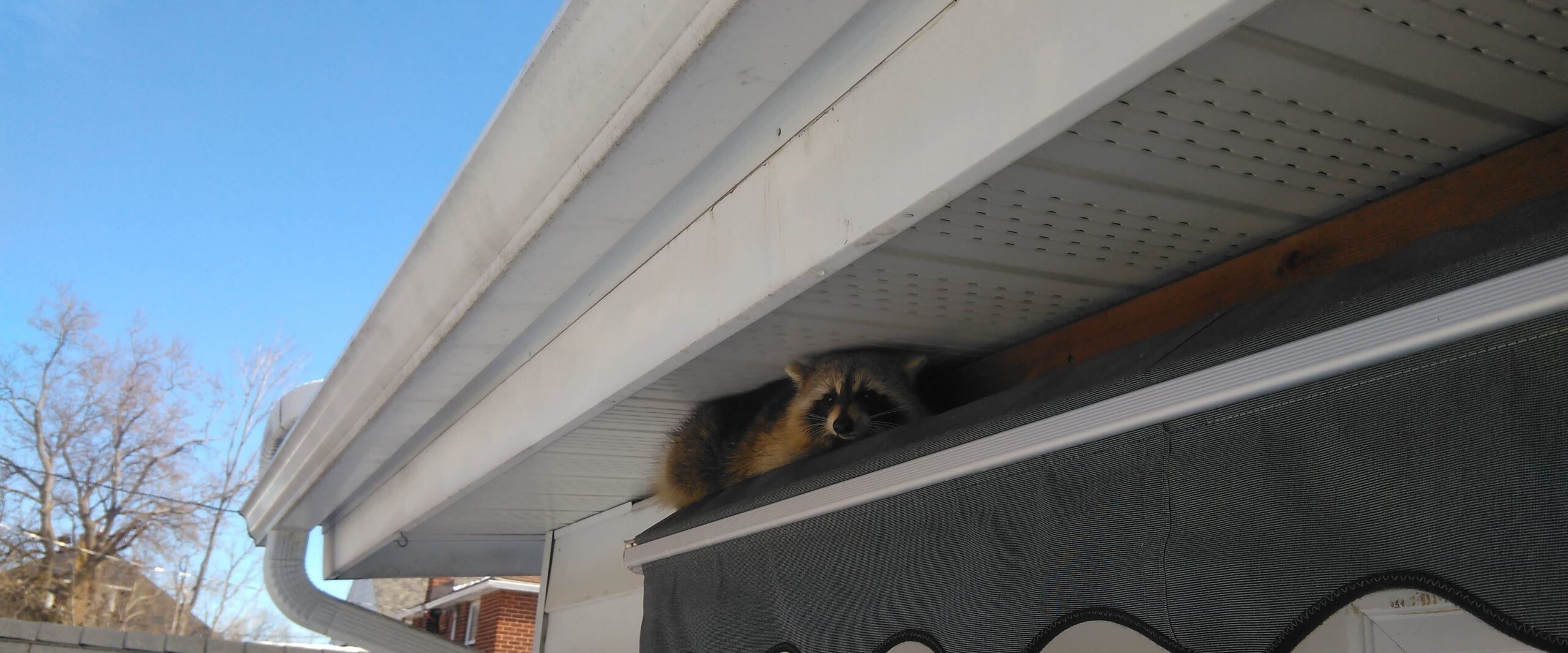

You wake up one cold morning and hear thumping or scratching above your ceiling. It might sound like someone is walking around up there. Chances are, you have raccoons in your attic in winter.
It’s a common problem in Ontario when the temperature drops. These animals don’t truly hibernate; instead, they look for warm, safe spots to spend the cold months. Your attic checks every box: warm, dry, and quiet.
At Skedaddle Humane Wildlife Control in Durham Region, we see this happen every winter. The reason is simple: homes give animals easy access to shelter when natural dens are frozen or flooded.
Let’s look at why raccoons break into attics during the winter, what they’re looking for, and how you can prevent raccoon attic entry before the damage gets worse.
They’re Looking for Warmth and Shelter
Winter in Ontario can be brutal. Freezing nights, snowstorms, and icy winds make it tough for wildlife to survive outdoors. Winter raccoon behaviour changes as temperatures fall; they seek dry, warm areas to sleep for days at a time.
An attic offers:
- Warm Air: Heat rises from your living space, creating a cozy environment. That steady warmth helps animals stay comfortable when the temperatures outside drop below freezing.
- Protection From Snow: Rooflines keep snow and rain out, giving them a dry den. Even during storms, the attic stays dry, which makes it the perfect place to rest and hide.
- Quiet Shelter: Attics are free from predators and mostly undisturbed. The calm, dark space makes it easy for them to sleep and raise their young without being noticed.
It’s not just comfort they’re after, it’s survival. In the wild, they might hide in hollow trees or old sheds, but as forests shrink and temperatures drop, homes become the next best thing.
That’s why we often find raccoons tucked between insulation or sleeping near vents. Your home becomes their winter cabin.
Attics Make the Perfect Nesting Spot
When raccoons in attics in winter make themselves at home, they aren’t just keeping warm. They’re preparing for the next season. Female raccoons often use attics as denning sites to give birth in late winter or early spring.
Your attic offers everything they need for a nursery:
- Soft Insulation: It feels like nesting material.
- Stable Temperature: The attic rarely drops below freezing.
- Safety: Predators like coyotes or foxes can’t reach them.
Once inside, they tear insulation, chew wires, and flatten ducts to create a den. It’s not just a mess; it’s a serious fire hazard and health concern.
Because raccoons are strong climbers, they can get in through roof vents, loose shingles, or even damaged soffits. Once one finds a way in, others often follow the scent.
Easy Access Points Make Homes an Easy Target
You might be surprised at how clever raccoons can be. They have strong paws that work almost like hands, allowing them to lift shingles, pry open vents, and tear through weak wood.
Common entry points include:
- Roof vents or fans without screens
- Loose soffits or fascia boards
- Chimneys without caps
- Gaps around rooflines or dormers
Even a small gap can invite trouble. Once they squeeze in, they can widen the hole fast. The longer they stay, the more damage they cause, from insulation destruction to droppings that carry harmful bacteria.
This is why prevention matters. Our technicians use secure screening and durable materials to seal off vulnerable areas. When combined with one-way doors, this ensures animals leave safely and can’t return.
You get peace of mind knowing your attic and your family are protected.
Food Sources Keep Them Nearby
Raccoons are survivors. If they find easy food and shelter in one place, they’ll stay there all season. Garbage bins, pet food, bird feeders, and compost piles all attract them. Once they’re hanging around your yard, finding their way into your attic isn’t far behind.
Winter raccoon behaviour often includes nightly food searches. Even though they rest for long periods in extreme cold, they wake up during mild spells to eat and explore.
Ways raccoons find food near homes:
- Tipping garbage cans that aren’t secured
- Eating from open compost or recycling bins
- Searching sheds or garages for pet food or seed bags
If they know there’s a steady food source close by, they’ll keep returning to your property. When they find a way into your attic, they turn your home into their full-time shelter.
That’s why we recommend keeping trash sealed and removing outdoor food sources; it reduces the temptation for them to move in.
Your Home Is Safer Than the Wild
Wild animals face many dangers in winter: cold, hunger, predators, and flooding from melting snow. An attic feels like a luxury compared to those risks. It’s safe, warm, and has no competition.
Raccoons in attics in winter often stay hidden for weeks. They create nests, store bits of food, and sleep for long stretches when the temperature drops. When they wake, they may move around, scratch, or knock things over; that’s when homeowners usually notice them.
Their strong sense of smell also helps them remember which homes are safe from previous years. Once they’ve found shelter, they may return each winter if the entry isn’t sealed.
That’s why professional help is so important. When Skedaddle removes wildlife, we don’t just get them out; we secure every weak spot to stop them from coming back.
Signs You Have Raccoons in Your Attic
Sometimes the signs are obvious, but other times, they’re easy to miss until the damage is done.
Watch for:
- Loud Noises at Night: Scratching, thumping, or dragging sounds.
- Damage to the Roof or Vents: Bent metal, torn soffits, or chewed edges.
- Strong Odours: Urine and droppings can create a strong, musty smell.
- Visible Stains or Leaks: Moisture and droppings can damage ceilings.
If you notice any of these, don’t ignore them. The longer raccoons stay, the more costly the repairs become.
How We Humanely Prevent Raccoon Attic Entry
At Skedaddle, our goal is to protect both people and wildlife. We never trap or relocate animals. Instead, we use humane systems that let them leave on their own and then prevent future access.
Our process includes:
- Detailed Inspection: We check every inch of the roof and attic to locate entry points.
- One-Way Door Installation: This device lets raccoons exit but blocks re-entry.
- Permanent Sealing: Once the animals are gone, we secure openings with durable materials that match your home.
- Clean-Up and Protection: We remove contaminated insulation and install new barriers to protect your attic long-term.
Our methods ensure no babies or adults are trapped inside. Everything we do follows humane wildlife removal standards, so the animals stay safe while your home stays secure.
This process doesn’t just solve today’s problem; it prevents it from happening again.
Keep Your Home Safe This Winter
When it comes to raccoons in attics in winter, they aren’t trying to cause trouble; they’re trying to survive. But the damage, mess, and health risks they bring make quick action essential.
With help from Skedaddle Humane Wildlife Control in Durham Region, you can protect your home or business safely and permanently. Our team uses proven humane methods, including one-way doors to remove animals, repair damage, and keep your space secure.
If you suspect you have raccoons in your attic, reach out today to request an estimate and learn how we can help you prevent raccoon attic entry before winter gets worse.

 Loading...