Have you noticed a strange smell around your property lately? Maybe you have seen some holes in your lawn that were not there yesterday.
These could be clues that you have some uninvited guests. Finding animals living on your property can be stressful for any homeowner. You want your yard to be a safe place for your family and pets to play. However, wildlife often sees our decks, sheds, and gardens as the perfect place to make a home.
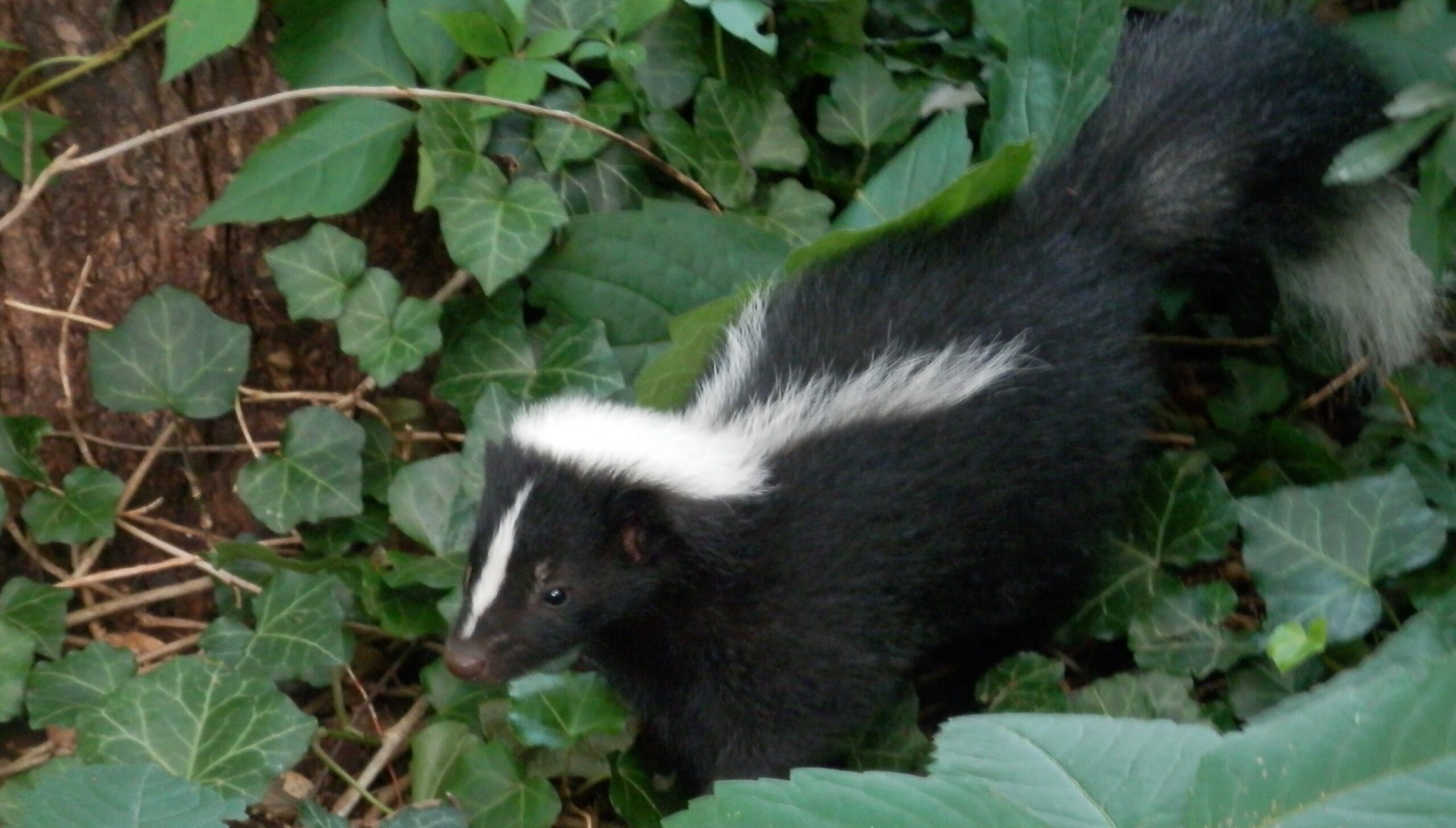
One of the most common visitors in our area is the skunk. While they are usually quiet and keep to themselves, they can cause big problems when they move in too close. It is important to know what to look for so you can handle the issue quickly.
If you know the skunk nesting signs, you can catch the problem before it gets worse. You definitely do not want a family of these animals getting comfortable under your porch.
At Skedaddle Humane Wildlife Control in Etobicoke, we specialize in providing reliable and humane removal solutions for skunk intrusions.
In this blog, we will walk you through the top clues that indicate these black and white animals have moved into your yard. We will explain exactly what the damage looks like and how to spot their hiding spots.
The Smell That Just Won’t Go Away
The most obvious sign of skunks in your backyard is usually the smell. Everyone knows that musky, strong odour. It is very hard to miss. However, the type of smell can tell you different things about what the animal is doing. You might think the smell only happens when they spray, but that is not true.
If you smell a faint, musky scent that lingers around your shed or deck, this is a big clue. It often smells a bit like garlic or burnt rubber. This usually means a male is in the area looking for a female, or a female is nesting nearby. You will notice this smell more in the morning or late at night. If the smell is constant and does not go away after a breeze, the animal is likely living right there on your property.
Here are some specific things to notice about the odour:
- Faint and Lingering: A low-level smell that hangs around specific areas like a porch or woodpile usually points to a den. It means the animal is spending a lot of time there.
- Sudden and Sharp: If the smell suddenly becomes very strong and makes your eyes water, the animal has likely sprayed. This happens when they are scared, fighting with another animal, or marking their territory.
- Morning Mystery: Since these animals are active at night, you might wake up to the smell. If you smell it every morning while drinking your coffee, the animal is probably sleeping very close to your house.
Holes and Damage to Your Lawn
Another clear way to spot skunk nesting signs is by looking at the ground. These animals are excellent diggers. They have strong front claws that are built for moving dirt. They are not digging just for fun; they are usually hungry. Their favorite foods are insects, worms, and grubs that live in the soil.
When skunks in your backyard go hunting for food, they leave behind a mess. You might wake up to find your nice green grass looks like a rototiller went through it. This usually happens overnight because they are nocturnal, meaning they are active while you are sleeping. If you see damage, look closely at the shape and size of the holes.
Here is what foraging damage usually looks like:
- Cone-Shaped Holes: The most common sign is small, shallow holes. They are usually about 3 to 4 inches wide. They look like little cones pressed into the dirt. This is where the animal pushed its nose into the soil to grab a grub.
- Rolled Back Sod: Sometimes, if the grubs are hiding under the grass roots, the animal will roll back sections of sod. It can look like someone started to peel up your lawn.
- Messy Gardens: If you have a vegetable garden, they might dig around the base of your plants. They are looking for bugs in the soft soil or maybe even eating some of your low-hanging crops.
Finding the Den Entrance
Finding the actual home, or den, is the most important part of skunk den identification. These animals do not usually build their own homes from scratch. Instead, they like to move into spaces that are already there. They look for dark, quiet, and safe spots to sleep during the day and raise their babies.
In a city or suburb, the best spots are often part of your house or yard structures. They love to live under solid things that offer a roof over their heads. This keeps them safe from predators and bad weather. If you suspect an animal is living on your property, you need to check the base of all your outdoor structures.
Keep an eye out for these structural clues:
- Holes Under Foundations: Look for a hole that is about 4 to 8 inches wide. You will often find these under concrete steps, porches, decks, or sheds.
- Fresh Soil: When they move in, they have to clear out space. Look for a pile of fresh dirt right outside the hole. It might be hidden behind some leaves or grass, so look carefully.
- Depressions in the Ground: Sometimes they dig under a fence or a wall. You might see a dip in the dirt where they have squeezed their body through to get to the other side.
Strange Droppings and Paw Prints
Sometimes you do not see the animal or the den, but you see what they leave behind. Tracking these animals can be a bit like detective work. You have to look at the ground for physical proof that they have been there. Two big clues are their droppings (scat) and their footprints (tracks).
Identifying droppings can be unpleasant, but it is a helpful way to know what kind of wildlife you are dealing with. Their droppings often look a little bit like what a cat would leave behind, but there are differences. Also, if you have mud or snow in your yard, you might get a clear look at their footprints.
Here are the details to help you identify these signs:
- Droppings Appearance: The droppings are usually tubular and about 1 to 2 inches long. They often have blunt ends. Because these animals eat a lot of insects, you might see undigested bug parts, like beetle wings or shells, inside the droppings.
- Paw Prints: Their tracks show five toes on both the front and back paws. The front paws might show long claw marks because of their digging nails. The tracks are usually close together because they have a shuffling walk.
- Location: You will often find droppings near the entrance of the den or along the path they walk every night to find food.
Other Clues and Behaviours
There are a few other signs that might not be as obvious as a hole in the ground or a bad smell. Sometimes, the behaviour of other animals or strange noises can tip you off. Since skunks in your backyard want to stay hidden, they try to be quiet. However, they are not silent.
Your pets might know about the wildlife before you do. Dogs and cats have much better hearing and smelling abilities than humans. If your pet is acting strange, pay attention. They might be trying to tell you that something is living under the deck.
Watch and listen for these behavioural signs:
- Anxious Pets: Is your dog barking at the shed for no reason? Or maybe sniffing obsessively at the cracks in the deck? If your pet seems nervous or focused on one spot, trust their instincts.
- Night Noises: You might hear scratching, rustling, or low thumping sounds coming from under your house or porch at night. These heavy-set animals can make noise as they move around or renovate their den.
- Raided Garbage: These animals are scavengers. If your garbage cans are tipped over and trash is spread out, it could be them. They will rip open bags to get to food scraps.
How Skedaddle Solves the Problem
At Skedaddle Humane Wildlife Control, we use a proven and humane approach to wildlife problems. Traps and relocation are not used, since moving animals far away often leads to serious harm. Instead, a safer and more effective system is followed.
The process starts with a full inspection of your home and yard. All entry points are identified, along with den or nesting areas. A one-way door is then installed at the main access point. This device allows animals to leave for food but prevents them from getting back inside.
When the animals cannot return, they move on naturally to another safe den nearby. This keeps families together and avoids unnecessary stress or harm. Afterward, barriers are installed using heavy-gauge screening to block future entry. Cleanup and sanitizing services are also provided to remove smells and bacteria that could attract other animals.
Got Skunks? Protect Your Yard Today
Finding skunk nesting signs around your home can be worrying. Nobody wants to deal with the smell, the holes in the lawn, or the worry of a pet getting sprayed. But now that you know what to look for, you are ahead of the game. Remember to watch for the tell-tale digging, the distinct odour, and the holes under your structures.
If you spot these clues, do not wait. The longer they stay, the more damage they can do. And please, do not try to fix it yourself. It is not worth the risk of getting sprayed or hurting the wildlife. Let the experts handle it for you.
At Skedaddle Humane Wildlife Control in Etobicoke, we are ready to help you reclaim your backyard. We have the experience and the tools to solve the problem for good. If you suspect skunk den identification is needed on your property, reach out to us.
Protect your home and family from unwanted wildlife. Request an estimate from Skedaddle today!

 Loading...