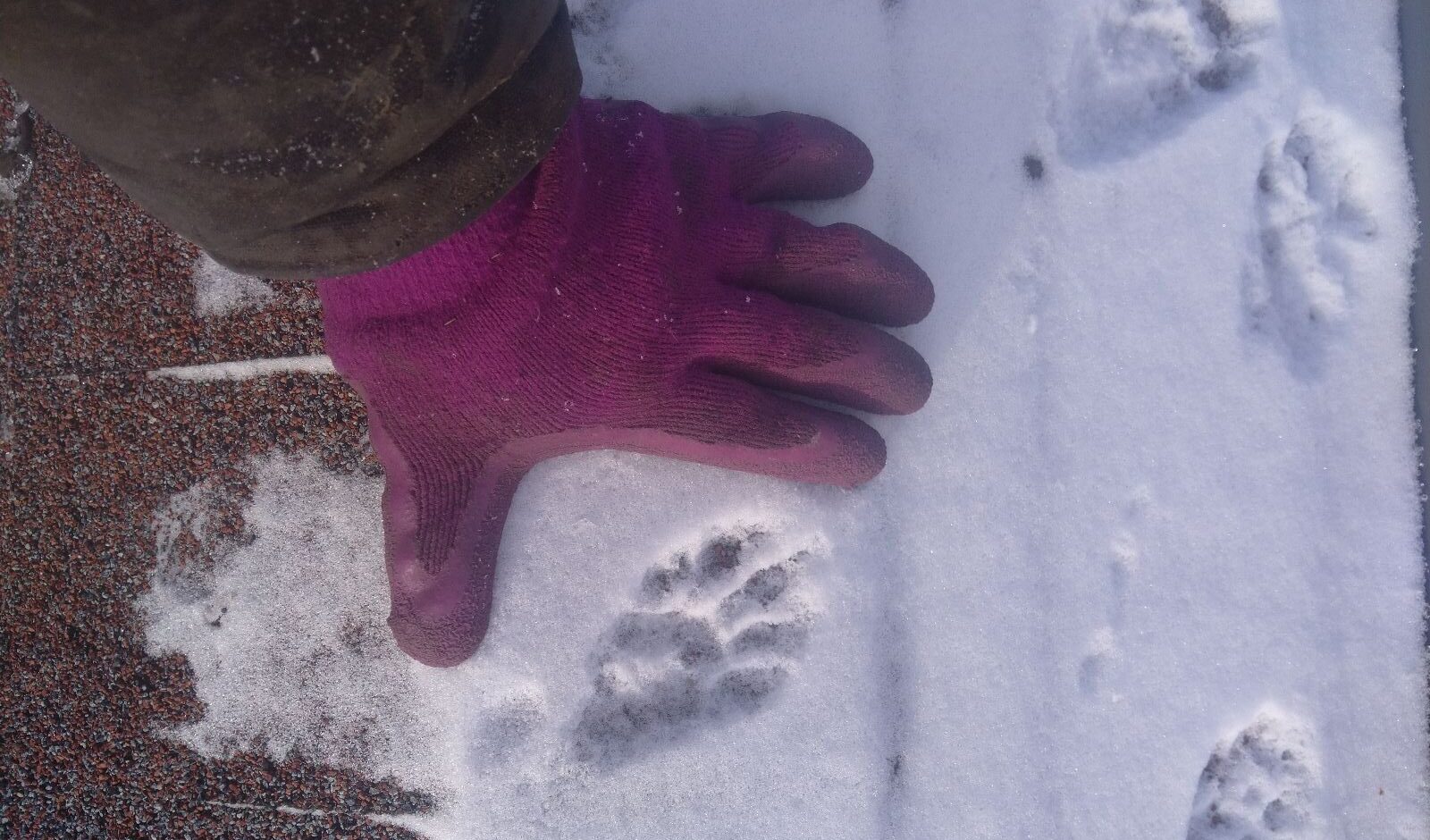
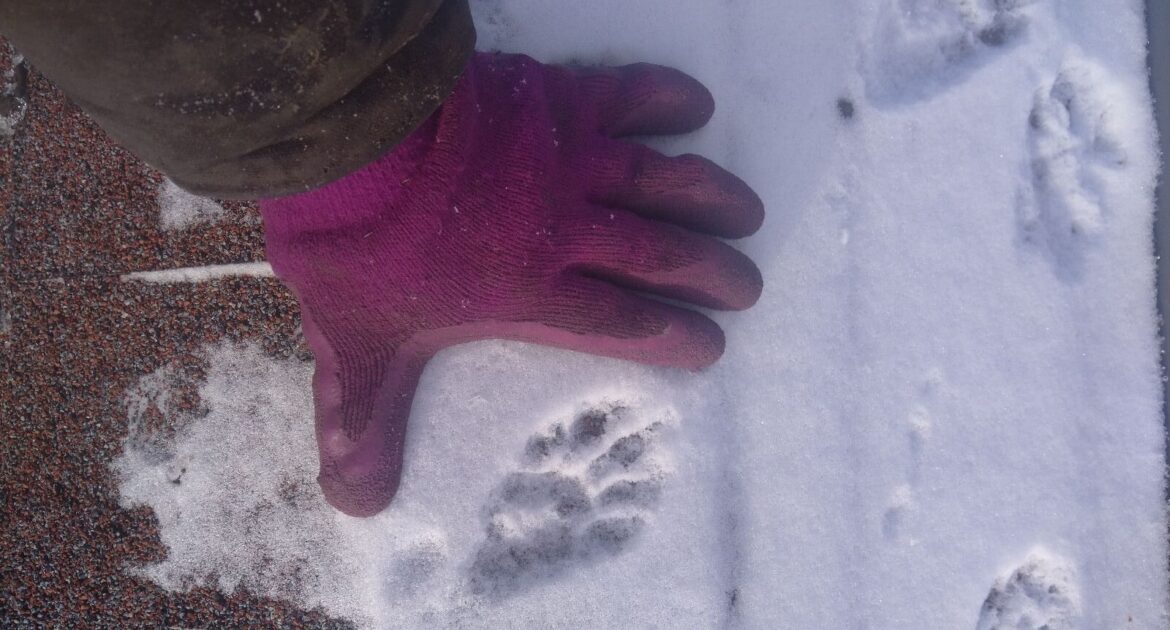
When snow blankets Ohio, it can reveal more than just a picturesque landscape. Homeowners may notice unusual markings in their yards—raccoon tracks in snow. These tracks are more than a curiosity; they can indicate raccoons are active near your home, searching for food, warmth, and potential shelter during the colder months. Understanding these signs early is crucial for preventing property damage and ensuring your home remains safe throughout winter.
At Skedaddle Humane Wildlife Control in Gahanna, we help homeowners interpret these signs and take professional steps to protect their properties. From identifying winter raccoon infestation signs to monitoring activity, learning what raccoon tracks in snow reveal is the first step toward keeping your home secure.
How Raccoons Behave in Winter
Raccoons do not hibernate, but their activity patterns change in winter. These nocturnal mammals remain busy foraging for food, often venturing into residential areas when natural food sources are scarce. Their movements are mostly at night, but they may occasionally be active during the day, especially in areas where food or shelter is accessible.
Studies show raccoons can travel up to three miles in a single night while foraging. Homes near wooded areas, streams, or neighborhoods with unsecured garbage and bird feeders are particularly attractive to them. Winter raccoon activity is often more concentrated in areas where humans inadvertently provide easy food and shelter options.
Recognizing raccoon activity in winter allows homeowners to anticipate potential property issues before they escalate. While raccoons appear harmless, their presence can lead to property damage, fire hazards, and sanitation concerns if left unchecked.
Identifying Raccoon Tracks in Snow
Raccoon tracks in snow have distinct characteristics that make them recognizable once you know what to look for. Tracks typically measure 2–3 inches in length and display five toes on each paw. The hind paw is longer and narrower, often resembling a tiny human footprint. Sharp claw marks are usually visible at the tips of each toe.
Tracks often follow a direct register walking pattern, where the hind paw steps directly into the front paw’s previous print. Observing these patterns over time helps homeowners determine whether raccoons are merely passing through or actively using their property.
Tracks are most commonly seen in:
- Driveways and sidewalks
- Around garbage bins or compost areas
- Near sheds, gardens, and outdoor structures
- Along rooflines and near attic entry points
Paying attention to repeated patterns, track size, and direction provides valuable insight into raccoon activity in winter. When multiple signs appear together, it may indicate a larger, ongoing presence near your home.
Signs That Tracks Indicate Nearby Activity
Not all raccoon tracks indicate a significant issue, but multiple indicators can suggest that raccoons are taking up residence or frequently exploring your property. Winter raccoon infestation signs include repeated track patterns, droppings near the tracks, disturbed soil or plants, and chewed or displaced outdoor items.
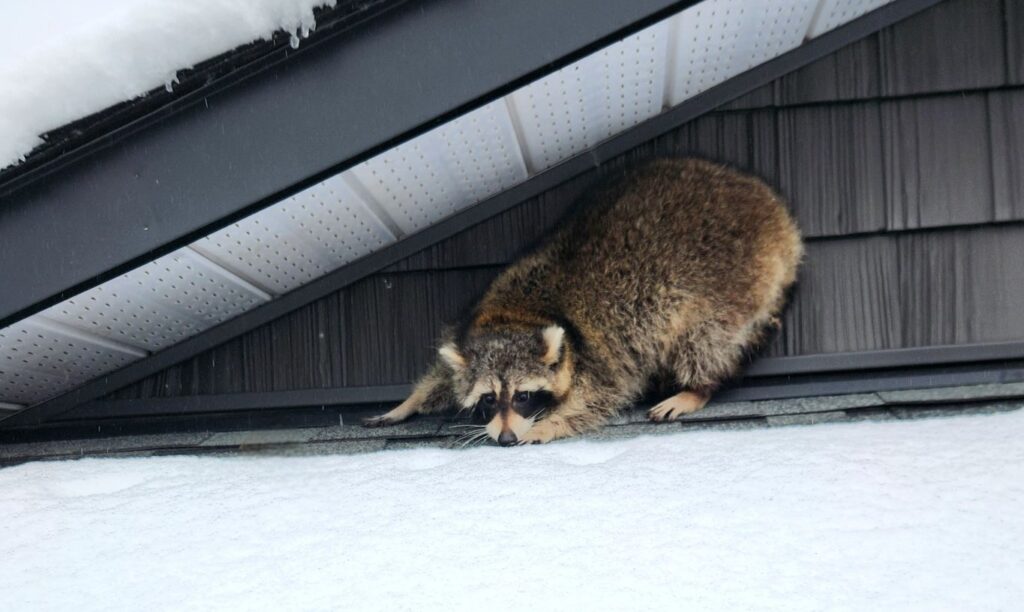
Raccoons are curious and opportunistic, often investigating rooflines, vents, chimneys, and attic spaces for potential shelter. If these areas show signs of tampering, it could point to active exploration or nesting attempts.
Evidence of raccoon activity can be subtle. Tracks combined with odors, scattered nesting materials, or partially gnawed insulation are often overlooked until the problem becomes more serious. Observing these signs early allows homeowners to act before damage occurs.
Risks Associated With Raccoons Near Your Home
Raccoon activity in winter comes with several potential risks. While they may seem harmless at first glance, their presence near homes can cause serious property and health concerns.
- Property damage: Raccoons may chew on rooflines, vents, insulation, and siding. Even minor damage can lead to expensive repairs.
- Fire hazards: Gnawed electrical wiring in attics or walls increases the risk of fire.
- Contamination: Raccoon droppings and urine can introduce bacteria that affect indoor air quality, creating potential health risks for families.
- Energy efficiency losses: Shredded insulation reduces the effectiveness of your home’s heating system, leading to higher energy costs.
Statistics suggest that homes with repeated outdoor raccoon activity are significantly more likely to experience property damage or indoor intrusion. Addressing the presence of raccoons proactively can prevent costly repairs and reduce health hazards.
Professional Steps Homeowners Can Take
Preventing damage from raccoons requires professional inspection and guidance. Homeowners should focus on creating a secure environment that discourages raccoon activity while maintaining safety for the household.
- Schedule professional inspections of rooflines, vents, and potential entry points.
- Reinforce vulnerable areas with professionally installed barriers or screens.
- Keep outdoor areas clean and free of accessible food sources, including pet food and unsecured garbage.
Trimming trees and branches that provide easy roof access is also crucial. At Skedaddle, we provide tailored solutions that address the specific risks of each property. Our team ensures that preventive measures are effective and implemented safely, giving homeowners peace of mind throughout the winter months.
Monitoring and Professional Support
Even minor raccoon activity can escalate into significant property damage if left unchecked. Consistent monitoring and professional assessment are essential to protect homes from immediate and long-term risks.
Professionals can differentiate between casual outdoor exploration and signs of active nesting near your property. Identifying winter raccoon infestation signs early allows homeowners to implement preventive strategies before serious damage occurs. Continuous monitoring ensures that high-risk areas like attics, vents, and rooflines remain secure throughout the season.
Skedaddle Humane Wildlife Control in Gahanna specializes in assessing raccoon activity in winter, interpreting tracks in snow, and providing expert guidance on preventive strategies. By relying on professional expertise, homeowners can safeguard their homes without risk to themselves or their families.
Protecting Your Home This Winter
Raccoon tracks in snow are more than a visual curiosity—they are a warning signal. Understanding winter raccoon behavior, monitoring tracks and other signs, and implementing professional guidance helps homeowners protect their property from potential damage and contamination.
Winter raccoons can cause both safety and property concerns if ignored. Routine inspections, preventive reinforcement, and ongoing monitoring are essential steps in effective protection.
At Skedaddle, we help homeowners:
- Interpret raccoon tracks in snow accurately
- Identify winter raccoon infestation signs early
- Implement preventive measures to reinforce vulnerable areas
- Monitor ongoing activity to maintain home security
By addressing these concerns proactively, Ohio homeowners can enjoy peace of mind throughout the winter months. With professional guidance, you can protect your property, prevent costly repairs, and ensure a safe, comfortable environment for your family.

 Loading...