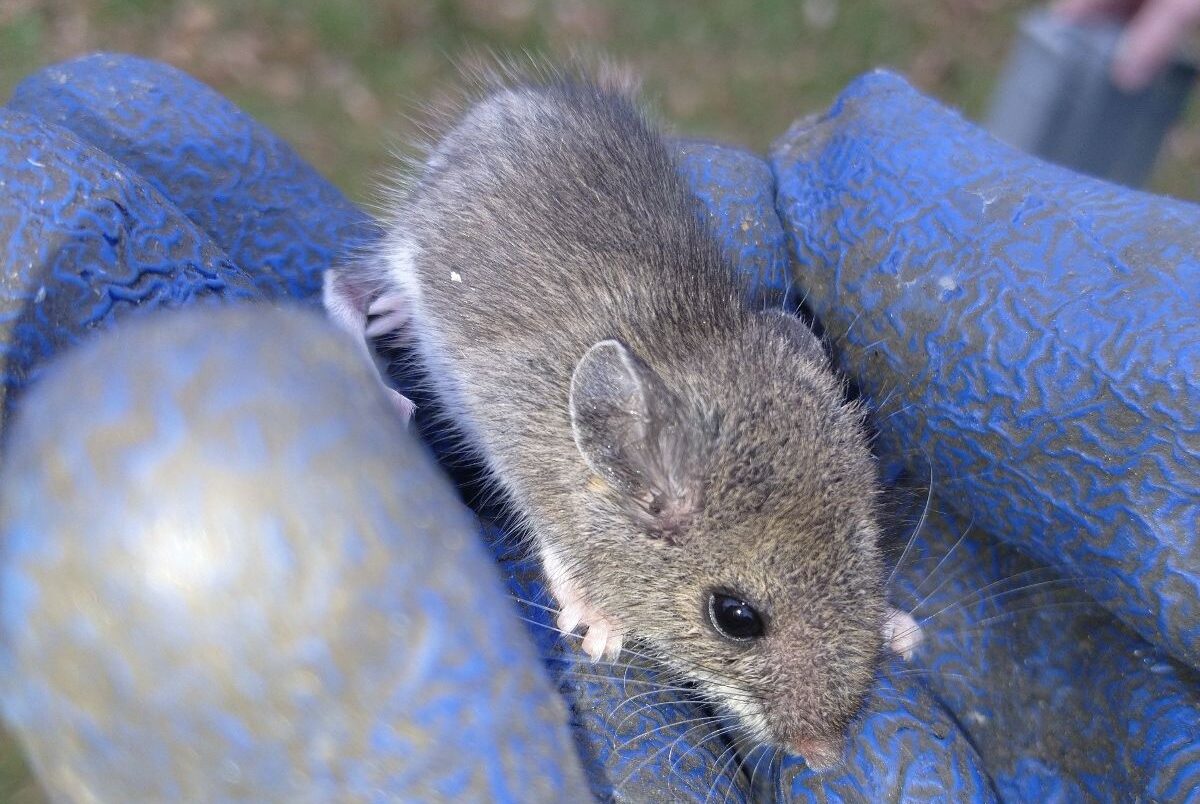
If you’ve ever heard scratching or chewing sounds behind your walls at night, you’re not alone. Many homeowners in Plymouth notice strange noises but don’t realize what’s causing them — tiny teeth hard at work.
Mice chew on just about everything they find. From wood and drywall to wires and furniture, their gnawing never seems to stop. But have you ever wondered why mice gnaw so much? These small animals aren’t trying to be destructive; they’re following natural instincts that help them survive.
At Skedaddle Humane Wildlife Control in Plymouth, we’ve seen firsthand how serious mouse damage in homes can become. Understanding mice chewing habits helps you recognize the warning signs and take action before the problem grows. Let’s explore why mice are always chewing, what kind of destruction they cause, and how professionals can keep them out for good.
Why Mice Need to Gnaw
Unbeknownst to most people, a mouse’s teeth never stop growing. That’s the main reason behind their constant chewing. Just like how you trim your nails, mice must wear down their teeth to keep them from getting too long.
Their front teeth, called incisors, grow up to 0.3 millimeters every day. If they didn’t file them down, they would quickly become too long for the mouse to eat or close its mouth properly.
To manage this, mice gnaw on:
- Wood and drywall
- Plastic pipes and wiring
- Cardboard boxes
- Furniture and baseboards
This natural habit might help the mouse survive, but it creates expensive problems inside your home.
How Mice Damage Homes Through Chewing
Constant gnawing causes more than just annoying noise. Over time, mice can cause serious structural and electrical problems. You may not notice the full extent of the damage until repairs become costly.
Here’s how their chewing leads to trouble:
- Electrical Hazards: When mice chew through wires, they can spark electrical fires.
- Plumbing Leaks: They sometimes gnaw through plastic pipes to reach water.
- Damaged Insulation: Shredded insulation makes perfect nesting material, but weakens your home’s energy efficiency.
- Ruined Storage: Cardboard boxes and fabric items become chewed nests.
Even one small mouse can create a surprising amount of damage in just a few weeks. And because they multiply quickly, the destruction can spread fast.
Why Attics and Walls Are Favorite Targets
Attics are quiet, warm, and close to food sources. Once inside, mice chew through insulation and wires to build tunnels and nests. Walls give them protection from predators and people, and they can travel easily through tiny gaps to move from room to room.
In homes around Plymouth, we often find chewed wiring, damaged ductwork, and piles of shredded material where mice have been nesting. It doesn’t take long for these quiet spaces to become full of activity.
Mice Chewing Habits and Nighttime Activity
You’re most likely to hear gnawing at night. That’s because mice are nocturnal; they sleep during the day and get busy once your home is quiet.
You might notice:
- Light scratching sounds inside walls or ceilings
- Small holes near baseboards or cupboards
- Shredded paper or insulation near stored boxes
- Droppings close to food or water sources
These are all signs that mice are active nearby. Their chewing habits help them navigate, gather materials, and even communicate with one another.
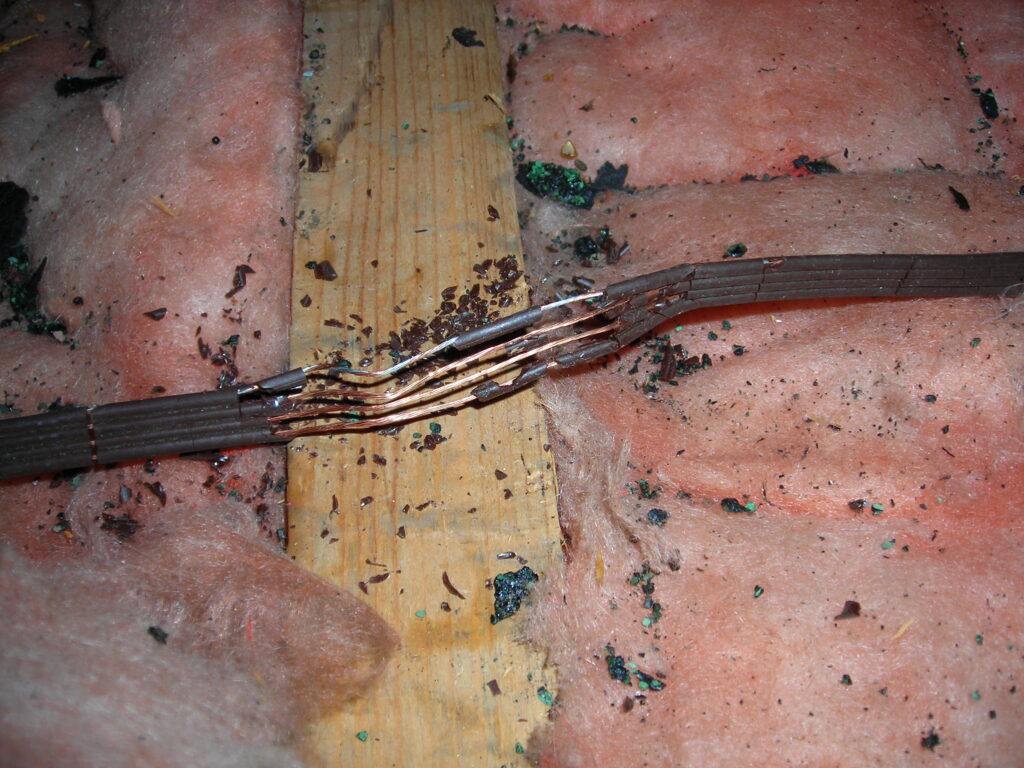
The Hidden Dangers of Chewed Wires
One of the most serious risks from mouse damage in homes is electrical wiring. When a mouse gnaws through insulation on wires, it can expose live electricity and cause sparks.
Many house fires each year are linked to rodent activity. Because mice travel through walls and ceilings, they can reach hard-to-spot places that homeowners rarely inspect.
Their teeth are sharp and strong enough to cut through soft metal and plastic coatings. When you think about how many wires run through a modern house, you can see how quickly the danger adds up.
If you notice flickering lights, tripped breakers, or an unusual burning smell, it could be more than a faulty wire. It might be mouse activity.
Why Food and Clutter Make Things Worse
Mice don’t just chew for dental health; they also chew to find food and make nests. Your home offers plenty of both, especially during cold months when outdoor food sources run low.
They’re especially drawn to:
- Pantry Goods: Cereal, rice, pasta, and pet food.
- Garbage Cans: Easy access to leftovers and crumbs.
- Cluttered Storage Areas: Full of nesting materials like paper and fabric.
A cluttered basement or garage gives them everything they need: warmth, shelter, and endless items to gnaw on. Once they’ve settled in, mice can breed rapidly, creating a large colony before you even realize it.
How Mice Gnaw Their Way Indoors
In order to gain access to your home, mice only need a gap as small as a dime.
When the weather turns cold in Plymouth, they look for ways inside to escape freezing temperatures. Common entry points include:
- Gaps around doors and garage seals
- Open vents or utility line openings
- Cracks in foundations or siding
- Holes around pipes or cables
Once inside, they use their powerful teeth to widen openings and move between walls. They can fit through even the smallest cracks, making exclusion nearly impossible without expert help.
The Costly Damage You Might Not See
What makes mouse damage in homes so frustrating is how much goes unnoticed. While you might spot droppings or hear sounds at night, most of the destruction happens behind walls or above ceilings.
Mice build hidden tunnels and chew insulation into small pieces to make nests. Over time, this reduces your home’s energy efficiency and increases heating costs. In humid spaces, their droppings and urine can also lead to mold growth and bad odors.
That’s why professional inspections are so important; they reveal the damage you can’t see and stop the problem before it spreads.
Mice Prevention With Skedaddle
You deserve a home that’s safe, clean, and quiet, not one filled with unwanted chewing sounds. That’s where our team at Skedaddle Humane Wildlife Control in Plymouth can help.
We use proven, humane techniques to keep mice out for good. Our approach protects your home without using harmful traps or poisons. When you work with us, you can expect:
- A full inspection to find how and where mice are getting in.
- The use of one-way doors that let animals leave safely but not come back.
- Sealing of entry points with durable, mouse-resistant materials.
- Guidance on keeping your home protected through every season.
Our goal is to make sure your home stays rodent-free and your family stays comfortable.
Keep the Gnawing Outside, Not in Your Home
Now that you know why mice gnaw constantly and how much mouse damage in homes they can cause, it’s easy to see why quick, professional help matters. Their constant chewing can destroy insulation, ruin wiring, and create expensive repairs fast.
Let Skedaddle Humane Wildlife Control in Plymouth take care of the problem humanely and permanently. We understand mice chewing habits and use the safest, most effective methods to keep them out.
Request an estimate to learn more and protect your home before small teeth create big problems.

 Loading...







