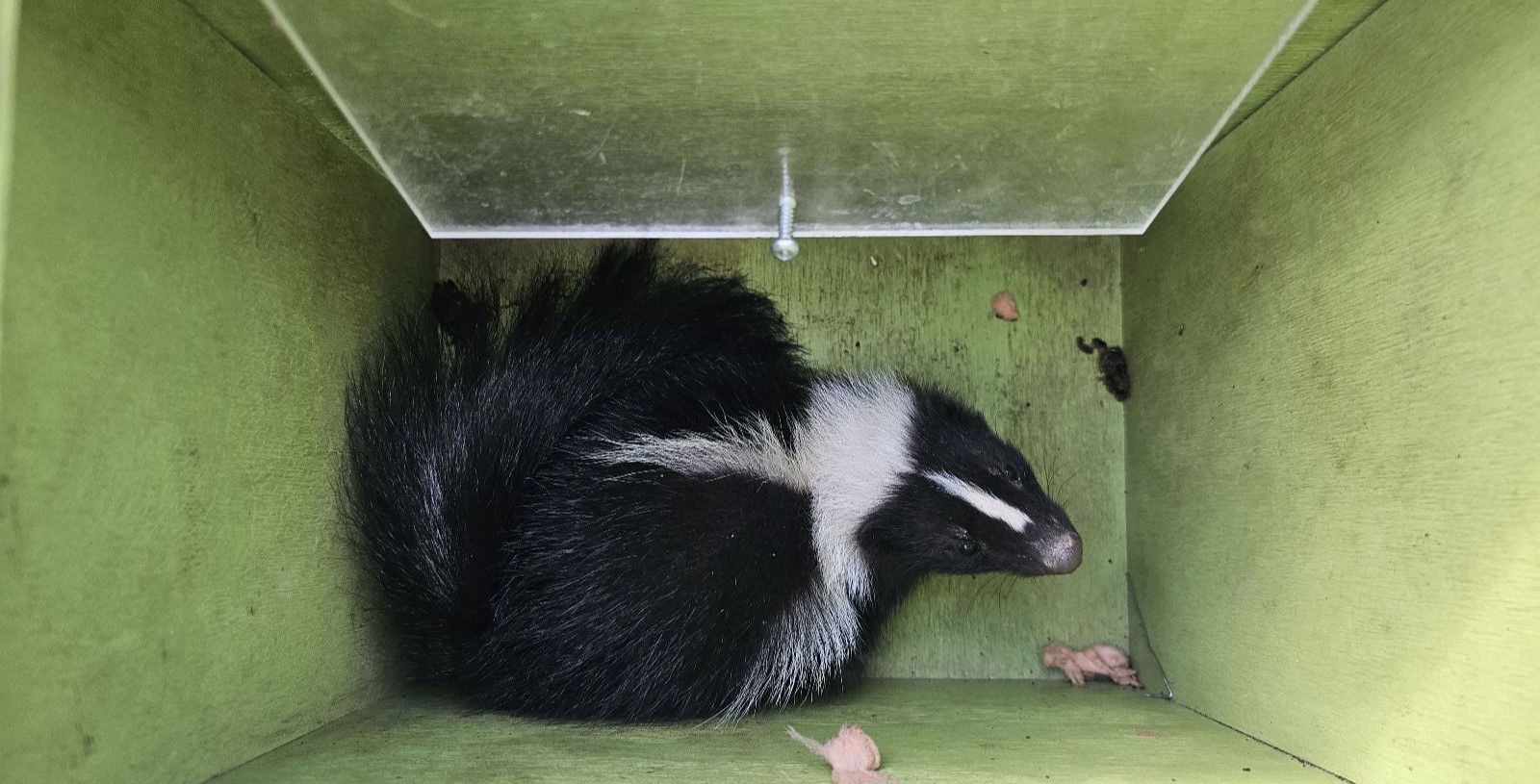
You step onto your back porch to enjoy a quiet morning coffee, but something stops you in your tracks. It is not the fresh air you notice first. It is the smell. A strong, sharp scent that makes your nose wrinkle right away.
As you look across the lawn, you see small holes dug throughout the grass, as if the ground has been poked again and again. Then you spot it—a black-and-white tail slipping under your shed.
It is a moment no homeowner wants to experience. You have skunks on the property. While it may feel like bad luck, there is usually a clear reason this happens. Skunks are not trying to cause trouble. They are simply searching for food, water, and a safe place to rest. Many yards unknowingly offer all three, especially when skunk food sources like insects, fallen fruit, or unsecured garbage are easy to find.
When you understand what attracts skunks, it becomes easier to see your property from their point of view. A healthy lawn can be full of insects, gardens can provide snacks, and the space under decks or sheds can feel like perfect shelter. These features can quickly turn a yard into an inviting place for skunks to settle.
In this blog, we explain what draws skunks in, how properties become attractive to them, and how professionals at Skedaddle Humane Wildlife Control in Kitchener/Waterloo help homeowners address the problem safely and prevent skunks from returning.
The Hunt for Grubs and Insects
One of the biggest reasons skunks end up on the property is found right under the lawn. Skunks love insects, and their favourite food is the white grub. Grubs are beetle larvae that live in the soil beneath grass. They are full of fat and protein, which makes them an easy and filling meal for skunks.
Skunks have strong noses and sharp front claws that help them find food underground. They can smell grubs in the soil and dig small, cone-shaped holes to pull them out. This is why lawns often look torn up overnight. If beetles and grubs are common in your yard, it can quickly turn into a feeding spot for skunks.
Skunks do not stop at grubs. They will also eat other insects commonly found in yards, including:
- Earthworms: These come to the surface after rain and are easy to find.
- Crickets and Grasshoppers: Skunks will search through tall grass to catch them.
- Beetles: Adult beetles are just as appealing as their larvae.
- Bees and Wasps: Skunks may dig up nests to reach the larvae inside.
Your Garbage Is an Easy Buffet
Garbage may smell bad to people, but to a skunk, it smells like food. One of the most common skunk food sources is trash left outside. Skunks are scavengers, which means they will gladly eat leftovers if they can reach them. An open bag or loose lid can quickly turn a garbage can into an easy meal.
Skunks are active at night, so putting garbage out the evening before pickup gives them plenty of time to explore. Plastic bags are easy for them to tear open, and light bins can be tipped over with little effort. Once inside, skunks will spread trash across driveways and lawns while searching for food.
Here are some of the things in your trash that skunks go crazy for:
- Meat Scraps: Bones, fat, and leftover meat from dinner.
- Dairy Products: Old cheese or yogurt containers.
- Eggshells: They love the smell and the taste.
- Sweet Wrappers: Anything that smells sugary or fruity.
Keeping your trash secure is very important. If a skunk learns that your house has the best leftovers on the block, it will keep coming back night after night.
Gardens and Fallen Fruit
Gardens and fruit trees are great to have, but they can also attract wildlife. Skunks eat both plants and meat, and they enjoy fresh produce just as much as people do. When food is easy to reach, skunks are more likely to spend time in the yard.
Vegetable gardens are especially easy for skunks to access because they are close to the ground. Skunks can walk right in and feed on tomatoes, peppers, or corn without much effort. Fruit trees can also cause problems when fruit falls to the ground and begins to rot. The sweet smell spreads through the air and signals an easy food source to skunks.
If you want to make your yard less interesting to them, you have to be careful with your plants:
- Berries: Skunks love strawberries and raspberries.
- Root Vegetables: They will dig up carrots and radishes.
- Fallen Fruit: Apples and stone fruits left on the grass are a huge draw.
- Compost: An open compost pile with fruit scraps is like a beacon for hungry animals.
Pet Food and Bird Seed
Pet food and bird seed can attract more than just pets and birds. Leaving food outside, even for a short time, is one of the easiest ways to draw wildlife into a yard. Pet food smells strong and is full of nutrients, making it very appealing to skunks. Even empty bowls can attract them because of the scent left behind.
Bird feeders can cause problems as well. Birds often spill seed onto the ground, creating an easy food source. This spilled seed can also attract mice and rats, which skunks hunt. Over time, this creates a chain reaction that brings skunks into the area.
Things to watch out for include:
- Full Bowls Left Overnight: This is a guaranteed way to get a visitor.
- Spilled Kibble: Even a few pieces on the deck can be a snack.
- Overflowing Bird Feeders: Too much seed on the ground is a problem.
- Suet Cakes: These high-fat treats are very popular with skunks if they can reach them.
Easy Access to Water
All living things need water to survive. While skunks get some water from the food they eat, they still need to drink. If there is a drought or if it has been a very hot summer, water becomes even more important. They will travel quite a distance to find a good drink.
You might have water sources in your yard that you don’t even think about. A pet’s water bowl left outside is the most obvious one. But there are others. A bird bath that is low to the ground is an easy drinking fountain for a skunk. If you have a fish pond or a decorative fountain, skunks will stop by for a sip.
Even smaller sources of water can attract them. A leaky garden hose that creates a puddle is enough. The condensation that drips from your air conditioning unit can create a wet spot that skunks will find. Plant saucers that collect rainwater are also convenient. If your yard offers a reliable place to drink, a skunk is more likely to stay nearby.
The Perfect Place to Sleep
Food and water matter, but skunks on the property are often searching for one main thing: a safe place to sleep. In nature, skunks live in dens that are dark, quiet, and protected from weather and predators. In neighbourhoods, homes often provide the same conditions without homeowners realizing it. Skunks are not strong climbers, so they look for shelter at ground level. They are also skilled diggers, which means they will clear out soil if they find a space that feels secure.
Decks, porches, and sheds are some of the most common places where skunks settle. The space underneath these structures offers cover from rain and snow, limited light, and protection from people and pets. Even small gaps between the ground and a structure can be enough for a skunk to move in.
Once a den is established, damage can occur as the skunk digs and shifts soil, and odours can begin to spread into the home. This is why sealing these areas before a skunk finds them is an important step in preventing long-term problems.
How We Help Protect Your Home
If you think a skunk is living under your deck or shed, it is important not to handle the situation on your own. Skunks can spray when they feel threatened, and they may carry disease. Blocking an entry point while a skunk is still inside can cause damage to your home or harm the animal. That is why professional help is the safest option.
At Skedaddle Humane Wildlife Control, we use a humane, hands-on process to resolve skunk issues. Our technicians begin with a full inspection to locate entry points and signs of activity. A one-way door is then installed to allow the skunk to leave but not return. After the animal has exited, the opening is sealed with buried screening to prevent future access. This approach protects your home while keeping the animal safe.
Leave the Skunk Control to the Pros
Seeing a skunk in your yard or smelling that familiar odor can be stressful. But remember, they are just looking for the basics: food, water, and shelter. By knowing what attracts skunks, you can understand why they are there. Whether it is the grubs in your lawn, the skunk food sources in your trash, or the cozy den under your porch, your property has something they want.
However, sharing your home with a skunk is not a good idea. They can damage your lawn and your house, and the smell can be overwhelming. If you have skunks on the property, don’t panic, and don’t try to fix it alone.
If you need help, reach out to the professionals. Skedaddle Humane Wildlife Control in Kitchener/Waterloo is here to assist you. We can safely remove the animals and secure your home so they don’t come back.
Request an estimate today to learn more about how we can help you reclaim your yard!

 Loading...







