Older homes in Kitchener-Waterloo are some of the hardest properties to seal against mice. Stone foundations, aged brickwork, and decades of renovations leave behind a patchwork of small gaps, cracks, and hidden voids. These entry points are often spread across the full structure, from the basement to the roofline, and many of them are impossible to spot without a professional inspection.
Historic neighbourhoods like downtown Kitchener, uptown Waterloo, and Westmount are full of homes built over a century ago. These properties were constructed with materials that wear down over time. Lime mortar crumbles. Wood sill plates warp. Utility upgrades leave oversized holes in thick stone walls. Each of these changes adds another possible way in.
You may notice droppings, sounds in the walls, or chewed materials and not know where these animals are getting inside. That is a common experience in older homes because the entry points are rarely obvious. At Skedaddle Humane Wildlife Control in Kitchener-Waterloo, we inspect the full property, handle humane removal, and seal entry points built to last. In this blog, we cover stone foundations, renovations and additions, utility penetrations, aging rooflines, local building history, and removal and prevention.
How to Mouse-Proof an Old House?
Mouse-proofing an older home is not a simple job. New builds have consistent materials, clean edges, and predictable gaps. Older homes in Kitchener-Waterloo are different. They have been repaired, renovated, and updated many times over the decades, and each change can leave behind new openings. The structure may also have shifted, settled, and worn down in ways that create gaps too small to see but large enough for mice to use.
A mouse can squeeze through a gap roughly the size of a dime. That means even a small crack in a stone foundation, a slightly warped sill plate, or an unsealed hole around a pipe can become a regular entry point. These openings are easy to miss because they are often located in crawlspaces, behind walls, or beneath structures that are difficult to access safely.
Mouse-proofing an older home should always be handled by a professional wildlife team. At Skedaddle Humane Wildlife Control in Kitchener-Waterloo, we begin with a full inspection of the property to find every gap, crack, and potential entry point. Where appropriate, we use one-way doors that allow mice to leave the structure but prevent them from coming back in. After the animals have exited, we seal the openings with durable materials matched to the age and construction of your home.
Stone Foundations Let Mice In
Older homes in Kitchener-Waterloo were often built on stone foundations using materials that were not designed to last forever. Over time, these foundations develop gaps, cracks, and weak spots that give mice a direct path inside. Our inspection always begins at the foundation because it is one of the most common sources of entry in century-old homes.
Here are some of the most common foundation-related problems we find:
- Fieldstone and Rubble Foundations: Many older homes in the region were built on fieldstone or rubble foundations held together with lime mortar. That mortar breaks down over decades, leaving behind irregular gaps between the stones. Mice do not need a large opening. They can navigate the naturally uneven spaces that appear as the mortar weakens and falls away. Our team inspects the full foundation perimeter to find where these gaps are allowing entry.
- Weep Holes and Spalling Brick: Century-old brickwork along exterior walls often suffers from spalling, which is when the surface of the brick begins to crumble and flake. Structural weep holes, which are small intentional gaps built into brick walls to allow moisture to escape, can also provide a direct path into wall cavities. These openings may look too small to matter, but they are large enough for mice to use repeatedly. We examine the full exterior for signs of spalling and open weep holes that need to be addressed.
- Unsealed Sill Plates: The sill plate is the wooden beam that sits on top of the foundation wall and supports the frame of the house above it. In older homes, this junction between wood and stone often warps, shifts, and pulls away from the foundation over time. The result is a long, horizontal gap at ground level that runs along the base of the home. You may not be able to see it from the outside, but our professional team knows where to look and how to assess the full length of the sill.
Renovations and Additions Create Hidden Gaps
Many older homes in Kitchener-Waterloo have been renovated multiple times over the years. Each renovation adds new materials, new edges, and new joints to a structure that was originally built in a completely different way. Where an old stone foundation meets a newer addition, or where a modern wall ties into a century-old frame, the connection is rarely perfect. These intersections leave behind hidden voids that mice can find and use without ever being seen.
The spaces created by additions are especially difficult to seal because they often run beneath dropped ceilings, behind finished walls, or through false floors. A mouse that finds its way into one of these cavities has access to a transit route that runs through the home invisibly. You may hear movement in the walls or ceiling without being able to pinpoint where these animals are coming from. That is because the route they are using may begin far from where the sound is loudest.
Older additions were also frequently built over shallow crawlspaces with dirt floors. These areas offer little barrier between the ground and the interior of the home. Mice can burrow up from underneath the structure and enter through gaps in the subfloor. Skedaddle inspects every addition, crawlspace, and junction point on the property so that no part of the structure is overlooked during the removal and prevention process.
Utility Penetrations Leave Entry Points
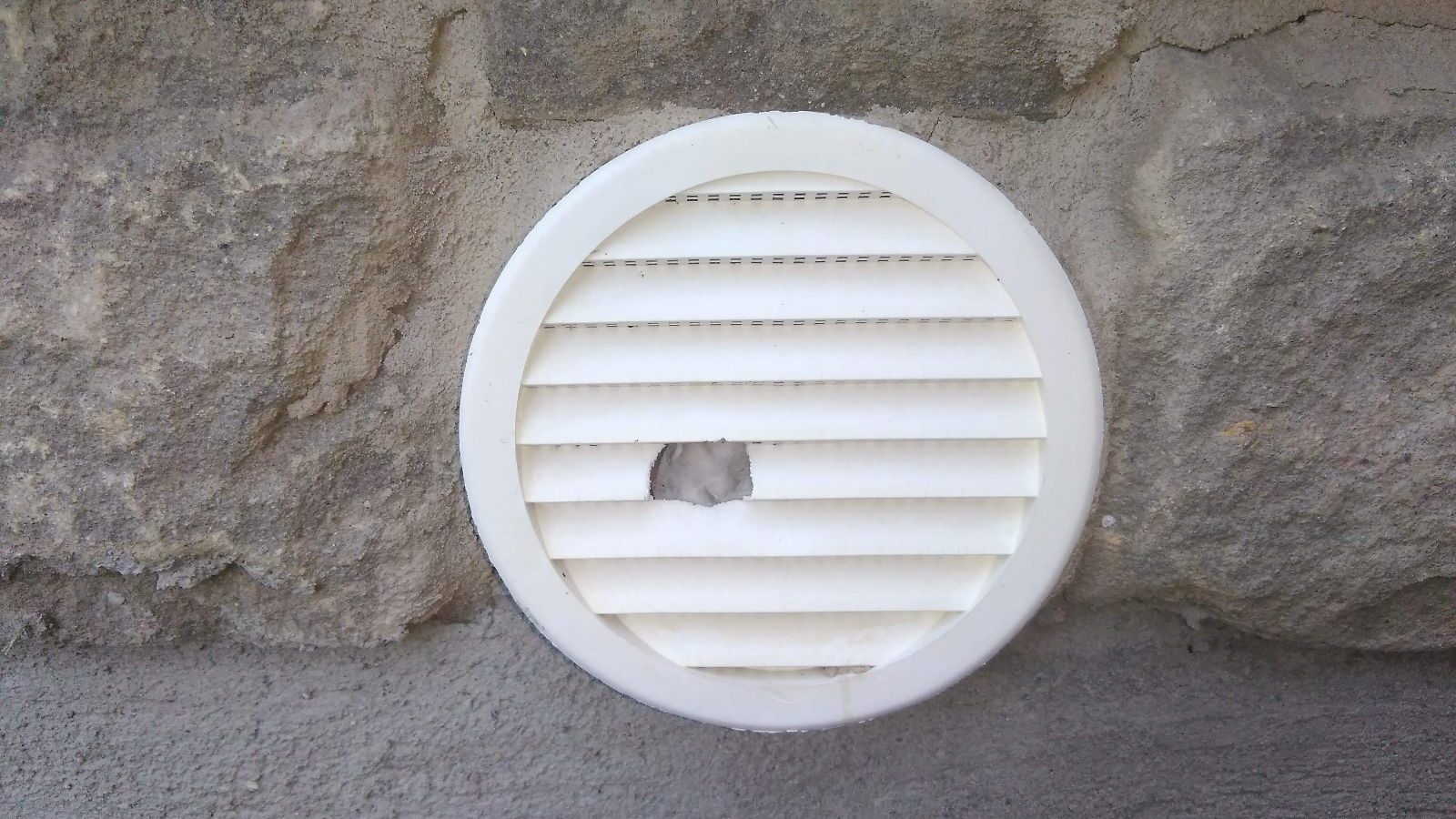
Older homes need updates over time. That means drilling holes through thick stone or brick walls to run new pipes, vents, and wiring. Those holes are not always sealed properly after the work is done. Over time, they become easy ways for mice to get inside. Our inspection covers every utility opening on the outside of your home.
Here are the most common utility-related entry points we find in older Kitchener-Waterloo homes:
- Oversized Utility Holes: When new plumbing, heating, or electrical lines are added to an older home, contractors often drill holes bigger than the pipe needs. The extra space around the pipe is rarely filled in. Even a small gap is enough for mice to squeeze through and get into the walls. We check every pipe and vent opening for gaps that need to be properly sealed.
- Old and Abandoned Infrastructure: Many century homes in Kitchener-Waterloo still have pieces of old systems inside their walls. Old oil lines, coal chutes, and outdated wiring openings can act like tunnels that lead straight into the basement or wall spaces. These openings are easy to miss because they have not been used in years and may be partly hidden. Our team finds them during the inspection and checks whether they are letting mice in.
- Gaps Around Exterior Pipes and Vents: Dryer vents, exhaust pipes, and gas lines that pass through exterior walls are common entry points in older homes. The seal around these openings can crack or pull away over time. A gap of just a few millimetres is wide enough for mice to push through. You should never try to seal these openings yourself. Skedaddle uses the right materials for each type of opening to make sure the repair holds.
Aging Rooflines and Shifting Structures
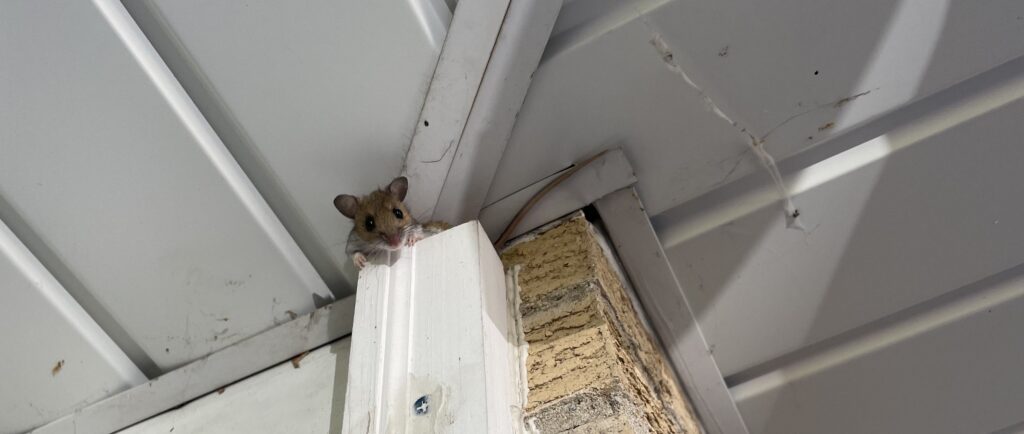
Wood rot along the roofline is a common problem in older Kitchener-Waterloo homes. The soffits, fascia boards, and areas around dormers and eaves can all break down over time. As the wood rots, gaps open up along the upper edges of the home. Mice are good climbers. They use trees, vines, downspouts, and rough wall surfaces to reach these high entry points. Once inside the attic or upper wall space, they can move down through the home and settle almost anywhere.
The climate in Waterloo Region also plays a big role. Every year, the region goes through many freeze-thaw cycles. Water gets into small cracks, freezes, and pushes those cracks open a little more. Over many years, this happens to foundation walls, brick exteriors, and wood framing. By the time you notice signs of mice, your home may already have far more gaps than you can see from the yard.
Older repairs do not always hold up either. A gap that was sealed a few years ago may have opened again after another cold winter. This is why older homes need ongoing professional attention. Skedaddle does not just seal what is visible today. We look at the full structure and recommend protection that accounts for the way older homes keep changing over time.
Why Kitchener-Waterloo’s Older Neighbourhoods Are Especially Vulnerable
Kitchener-Waterloo has many century homes in its older neighbourhoods. Downtown Kitchener, uptown Waterloo, and Westmount are full of homes built between the late 1800s and mid-1900s. These homes have been repaired, updated, and added to many times over the years. The result is a structure made up of many different materials from many different eras, sitting on a foundation that has been shifting for over a hundred years.
The local climate makes things harder. Waterloo Region gets cold winters, heavy snow, and repeated freeze-thaw cycles every year. These conditions break down mortar, wood, and exterior seals faster than in milder climates. A home that looks solid from the outside may have a foundation with missing mortar, a roofline with early rot, or utility holes that were never sealed after the last renovation.
No two older homes in this area are exactly alike. Each one has its own building history, its own materials, and its own wear and tear. A professional inspection from Skedaddle Humane Wildlife Control in Kitchener-Waterloo looks at all of that. We do not use a one-size-fits-all approach because older homes in this region do not work that way.
Mice Removal and Prevention with Skedaddle
When you contact Skedaddle, our professional wildlife team starts with a full inspection of your property. We do not ask you to crawl under a structure, reach into a gap, or touch anything that may be contaminated. Our team handles the work from start to finish. Here is what that includes:
- Full Property Inspection: We check the foundation, roofline, utility openings, additions, crawlspaces, and all other possible entry points on your property. Older homes often have more entry points than expected. Our inspection is built to find all of them. You will get a clear picture of where these animals are getting in and why.
- One-Way Doors: Where it makes sense, we install one-way doors at active entry points. These let mice that are already inside leave on their own but stop them from coming back in. This is a humane approach that does not involve trapping or moving the animals. The doors stay in place until we confirm the space is clear.
- Professional Sealing: Once the space is clear, we seal entry points using strong materials that match the construction of your home. Stone foundations, brick walls, wood framing, and utility openings each need a different approach. We do not use quick fixes that will fail when the structure shifts again in winter.
- Contamination Assessment: Mice leave behind droppings, urine, and nesting material. None of this should be handled by a homeowner. Our team checks the extent of the contamination and determines what professional cleanup is needed. You should not touch, sweep, or vacuum anything these animals have left behind.
Frequently Asked Questions
How do mice get into older homes?
Mice enter through small gaps in stone foundations, cracks in exterior brick, unsealed utility holes, and deteriorated wood along the roofline. In older homes, these openings are often spread across the full structure and may be hidden behind walls or beneath additions. Our professional inspection is the most reliable way to find all of them.
Can mice chew through mortar or brick?
Mice can chew through weakened lime mortar, which is common in older stone foundations across Kitchener-Waterloo. They do not need to chew through solid brick, because older brickwork often already has weep holes, spalling surfaces, and open mortar joints that provide access. Our team identifies these specific weak points during the inspection.
How do I know if mice are inside my walls?
Scratching or rustling sounds, especially at night, are a common sign. You may also notice droppings along baseboards, chewed materials, or a faint odour in certain rooms. In older homes, these signs can appear far from the actual entry point because mice travel through wall cavities and floor spaces throughout the structure.
Is one mouse a sign of a larger problem?
In an older home, yes. A single mouse that has found a way inside has likely used a gap that others can also find and use. Older homes with deteriorated foundations, aged brickwork, and multiple renovations rarely have just one entry point. Skedaddle inspects the full property rather than addressing only the location where activity was first noticed.
How long does mouse-proofing take on an older home?
The timeline depends on the size of the property, the number of entry points found, and the condition of the structure. Older homes typically require more time than newer builds because the inspection is more complex and the sealing work involves more varied materials. Our team will give you a clear picture of the scope after the initial inspection.
Should I try to seal gaps myself before calling Skedaddle?
You should not attempt to seal any opening on your own. Blocking an active entry point without confirming the space is clear can trap mice inside the structure. It can also cause damage to older materials if the wrong products are used. Skedaddle handles all sealing work after a full inspection confirms that the structure has been properly cleared.
Stop Mice From Using Your Home as Their Own
Older homes in Kitchener-Waterloo give mice a lot to work with. Stone foundations with crumbling mortar, decades of renovations that leave hidden gaps, utility holes that were never properly sealed, and rooflines worn down by years of freeze-thaw cycles all make these properties genuinely difficult to protect. The entry points are often small, hidden, and spread across the entire structure.
You should not attempt to find or seal these openings on your own. Handling droppings, reaching into gaps, or blocking an active entry point without our professional guidance can make the problem worse. Older homes also continue to shift and settle, which means new gaps can open up even after previous repairs.
Skedaddle Humane Wildlife Control in Kitchener-Waterloo inspects the full property, handles humane removal using one-way doors where appropriate, and seals entry points with materials built to last in older construction. Contact us today to request an estimate and find out what it takes to properly protect your home.

 Loading...