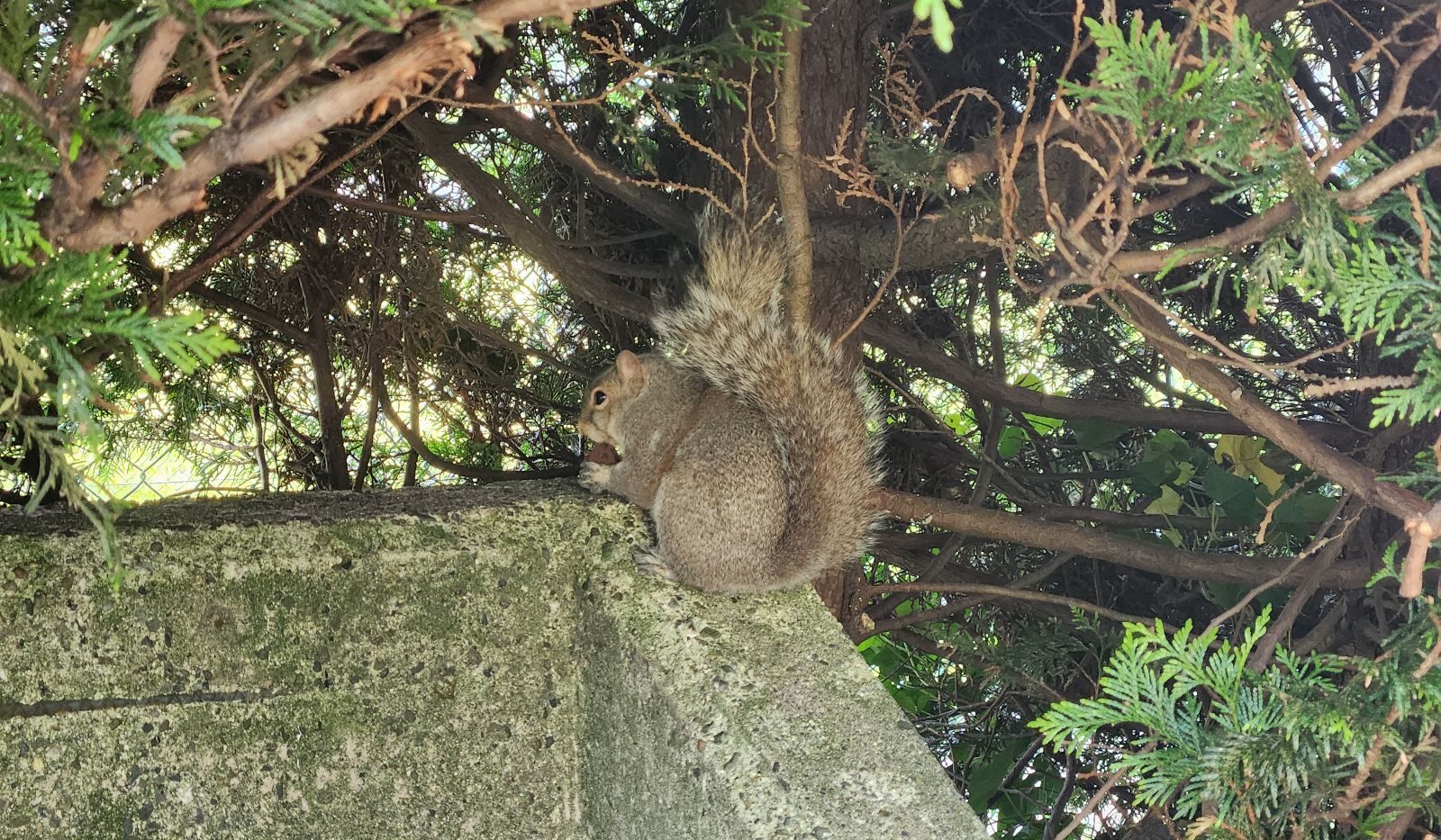
Why are squirrels in my attic in October? Gray squirrels in Alabama breed twice a year, in February/March and again in July/August, and their young stay in the nest for 10 to 12 weeks before they are weaned. A litter born in late summer can still be in your attic in October. A safe fall removal therefore starts with an inspection for young, followed by a one-way exclusion, permanent sealing of every entry point, and cleanup of the space they used.
At a glance
- What you hear: scratching, rolling, or running overhead, mostly in the early morning and late afternoon
- Why now: a second litter from July/August may still be in the nest, and fall food-storing keeps adults busy
- The risk: chewed wiring (a potential fire hazard), damaged roof vent boots, soiled insulation
- The right order: inspect for young, then one-way exclusion, then seal, then clean and restore
- Who to call in Birmingham: Skedaddle Humane Wildlife Control, 659-241-0018
If you live in Mountain Brook, Vestavia Hills, Homewood, Hoover, or anywhere else under Birmingham’s tree canopy, you often first notice the sounds in October. Footsteps cross the ceiling just after sunrise. Something rolls across the attic floor in the late afternoon. Then it goes quiet at night.
Those sounds are worth taking seriously, but many homeowners’ first instinct, to find the hole and close it, can make things worse in the fall. Here is why, and what a humane, lasting fix looks like.
What Does a Squirrel in the Attic Sound Like?
Timing is the biggest clue. Gray squirrels are diurnal. According to the Alabama Cooperative Extension System, they forage just before daylight and for several hours into the morning, then again from late afternoon until dusk, and usually rest at midday. In the fall, Extension notes that they “may spend most of the day foraging for and storing acorns.”
So if most of the activity happens in daylight, especially early and late in the day, a squirrel is a likely suspect. Common signs include:
- Scratching, scurrying, or a rolling sound (often a stored nut) above a ceiling
- Chewed or splintered siding, soffit, or fascia board near the roofline
- Gnaw marks on the soft lead boots around roof vent pipes
- Shredded or tunneled insulation, along with nut shells or stored food in the attic
- Staining or odor where the animals have been nesting
Sounds at night point to a different animal, so they deserve their own inspection. Our post on roof rats, Norway rats, and house mice covers the rodents that are most often heard after dark.
Why Fall Is a Busy Season for Squirrels in Birmingham Homes
Two things overlap in October.
The first is the breeding calendar. Gray squirrels breed in February/March and July/August and typically have two to four young per litter. Because juveniles stay in the nest for 10 to 12 weeks, a summer litter may still be living in an attic well into fall.
The second is shelter and food storage. Extension describes squirrels as cavity nesters and calls attics “warm, dry, and typically free from predators,” with insulation that makes “ideal nesting material for young squirrels.” Squirrels are also scatter-hoarders, so it is not unusual to find caches of pecans, seeds, and other nuts tucked inside a home.
Neighborhoods with mature oaks, pecans, and other nut trees close to the house give squirrels both the food and the route to the roof. Extension notes that squirrels can jump up to 4 feet vertically and about twice that distance horizontally, which is why branches near a roofline matter.
How Do Squirrels Get Into an Attic?
The Alabama Cooperative Extension System lists the usual entry points:
- Siding, soffit, and fascia. Squirrels often chew through these boards to reach attics and wall spaces.
- Eaves and ridge vents. Loose siding and holes in the eaves or soffits make easy openings.
- Crawl spaces. On homes built over a crawl space, squirrels may come in from underneath and climb up inside the walls to the attic.
A single visible hole is rarely the whole story. Squirrels gnaw constantly to keep their growing teeth in check, so a home with one active opening often has other weak spots along the same roofline. That’s why a Skedaddle inspection follows the entire roofline instead of stopping at the spot where the noise is.
Is a Squirrel in the Attic Dangerous?
Squirrels aren’t aggressive toward people, but they can cause real damage to a home.
- Fire risk from chewed wiring. Extension notes that squirrels gnaw wiring inside homes and that “exposed wiring in the home is a potential fire hazard.”
- Roof leaks. Squirrels chew the lead boots that cover roof vent pipes, and extensive damage can let water leak into the attic.
- Contaminated insulation. Long-term use of an attic builds up feces and urine that soak into boards and insulation, causing “staining, odors, and the potential for bacteria growth.”
- Parasites. Squirrels can carry fleas and ticks that may pose a risk to people.
The longer squirrels stay, the more insulation they soil and the more material they chew. This is why cleanup and restoration are part of the job, not an optional extra.
Why Sealing the Hole First Can Backfire in the Fall
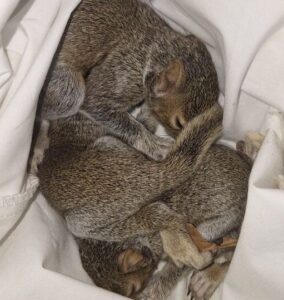
This is the most important point in the post, and the most common mistake.
Extension warns that excluding the adult squirrels while juveniles are still in the nest “could result in mortality for the juveniles left inside the structure.” The same guidance cautions that installing an exclusion device or sealing an entrance in the middle of the day or at night, when a squirrel may still be inside, “could result in trapping the squirrel inside the space.”
In practice, sealing too early can lead to:
- Young squirrels left behind without their mother, which is inhumane and can lead to odor problems
- An adult chewing a new hole to get back to its young, often right beside the one you closed
- Repeat damage, and the need to start over
A fall removal has to answer one question before anything is sealed: are there young in the attic?
How Humane Squirrel Removal Works
Skedaddle’s process is built to remove squirrels humanely and keep them out for good. It runs in this order:
- Inspection. A technician inspects the accessible interior, the exterior, the roofline, and the attic. They identify the animal, find the active and potential entry points, and check for dependent young. You get a written, itemized quote before any work starts.
- Humane removal. Adult squirrels leave through a one-way exclusion device that lets them out but not back in. If young are present, the plan accounts for them so the mother and her young are not separated.
- Sealing. Once the squirrels are out, every entry point is permanently sealed, along with any other vulnerable openings found during the inspection.
- Cleanup and decontamination. Nesting material, droppings, stored food, and soiled insulation are removed, and the affected areas are decontaminated.
- Attic restoration. Insulation that was damaged is restored where needed, so the attic performs the way it should.
- Guarantee and follow-up. Skedaddle provides a lifetime guarantee on all workmanship and materials used to seal your home for life. If wildlife gets back in through an opening Skedaddle sealed, the team returns and reseals it at no additional charge.
Find out more about how this works on our squirrel removal in Alabama page.
A Quick Fall Checklist for Homeowners
Use this list on a dry afternoon. Check from the ground, and leave ladder work to a professional.
- Walk the perimeter and look along the soffits, fascia, and eaves for chewed edges or gaps.
- Look at roof vent pipes for chewed or misshapen lead boots.
- Note any tree limbs that reach toward the roof. Extension recommends keeping branches at least 8 feet from buildings.
- Listen at the ceiling at sunrise and late afternoon, and write down where and when you hear activity.
- If you go into the attic for storage, look for nut shells, nesting material, and flattened insulation, but don’t disturb an active nest.
- Don’t seal an opening until you know nothing is inside.
Areas We Serve for Squirrel Removal
Skedaddle Birmingham serves homeowners throughout the metro area, including dedicated service in Mountain Brook, Vestavia Hills, Homewood, and Hoover. You can see the full service area on the Skedaddle Birmingham page.
You don’t need to know what animal it is before you call. Tell us where and when you hear the activity, and we’ll handle the rest.
Frequently Asked Questions
What time of day are squirrels active in the attic?
Gray squirrels are active during the day, mostly from just before sunrise into the morning and again from late afternoon until dusk, and they usually rest at midday. In the fall they may stay active most of the day while storing acorns.
Can there be baby squirrels in my attic in October?
Yes. Gray squirrels have a second breeding season in July and August, and the young stay in the nest for 10 to 12 weeks, so a late-summer litter may still be present in October.
Should I seal the hole squirrels are using?
Not until you are sure no squirrels, including young, are inside. Sealing an entrance while animals are still in the attic can trap them and separate young from their mother. Have the attic inspected first, then use one-way exclusion before sealing permanently.
Can squirrels in the attic cause a fire?
Squirrels gnaw on wiring, and the Alabama Cooperative Extension System notes that exposed wiring in the home is a potential fire hazard. Gnawed wiring should be evaluated as part of the inspection.
What happens to the insulation after squirrels are removed?
Feces and urine can soak into insulation and boards and cause staining, odors, and possible bacterial growth. Skedaddle's process includes removing nesting material and soiled insulation, decontaminating the area, and restoring attic insulation where needed.
Does Skedaddle guarantee its squirrel exclusion work?
Yes. Skedaddle provides a lifetime guarantee on all workmanship and materials used to seal your home for life. If wildlife returns through an opening Skedaddle sealed, the team returns and reseals it at no additional charge.
Hearing Something Overhead? Book a Birmingham Squirrel Inspection
If you hear scratching, rolling, or running in the attic this fall, don’t wait for the damage to spread, and don’t seal the hole yet. Call Skedaddle Birmingham at 659-241-0018 or book your inspection online. We’ll find out what’s in your attic, check for young, remove the animals humanely, seal your home, and restore the space they damaged.

 Loading...








