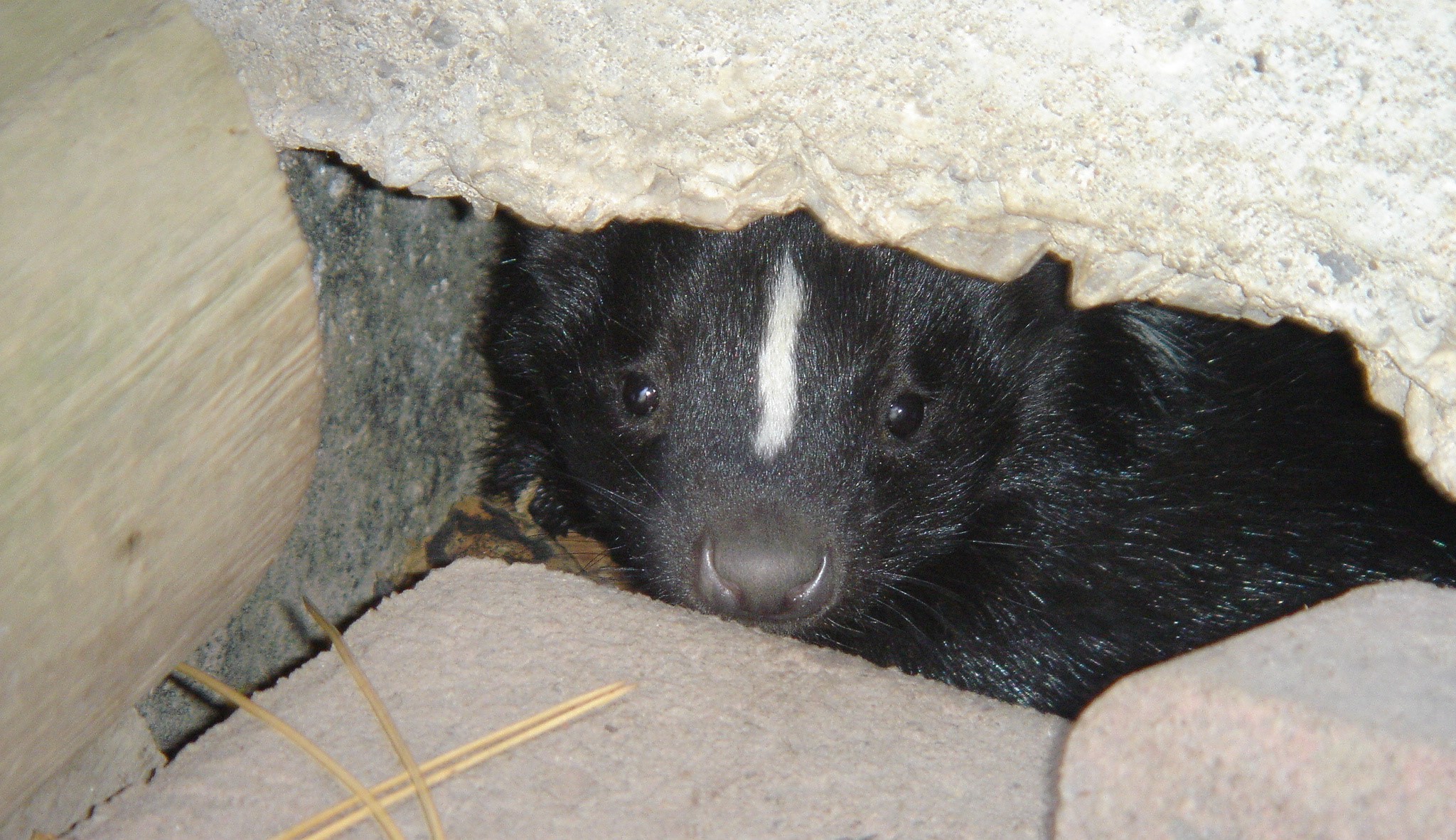
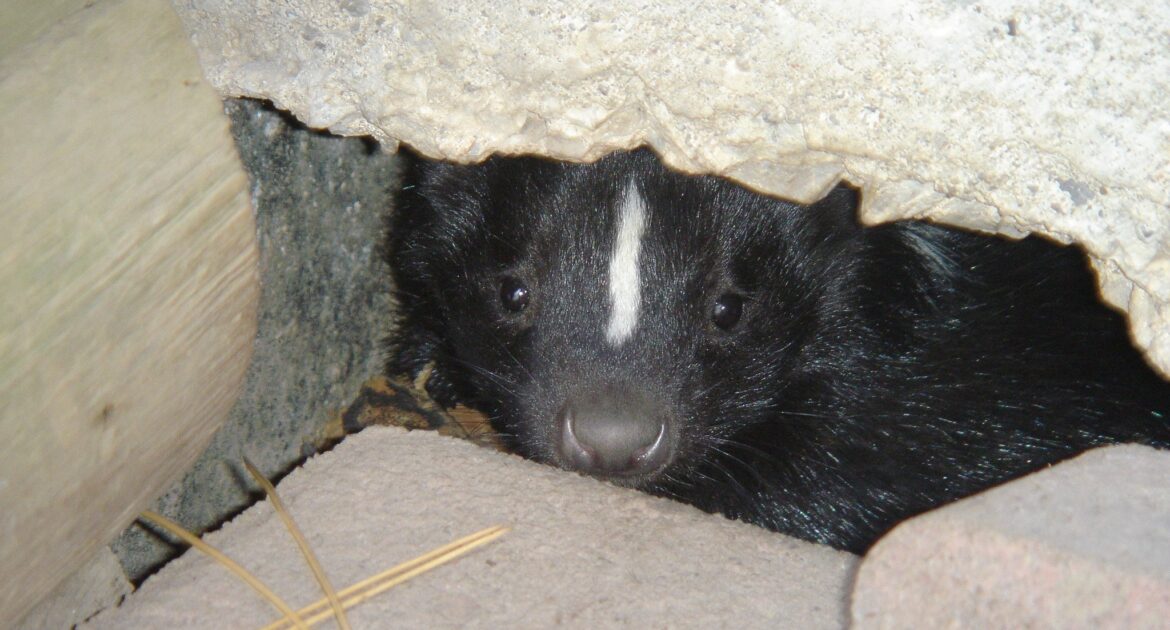
You might think winter would send all wild animals into hiding. But when temperatures drop, skunks digging near foundations become one of the most common cold-season problems for Canadian homeowners.
You may notice small holes near the base of your house, loose soil, or even a faint smell after dark. What’s happening? During their winter skunk warmth search, these animals aren’t just passing through, they’re trying to move in.
At Skedaddle Humane Wildlife Control in London, we see this every winter. Skunks dig near foundations to find steady warmth, protection from snow, and places to rest through the coldest months. Once they burrow close to your home, they can damage soil, siding, or wiring and those problems don’t just go away when spring returns.
Let’s break down why they do it, what keeps them coming back, and how to prevent skunks near your home with help from professionals.
The Search for Warmth Beneath Your Home
When freezing winds roll through Ontario, the ground above frost level becomes rock hard, but soil near your foundation stays warmer. Skunks sense that warmth and start digging.
Your home releases heat through the basement and foundation walls, which softens surrounding soil. This creates an inviting micro-climate that’s perfect for burrowing. Once they find that warm pocket, they line it with leaves or insulation to trap heat.
You might hear soft digging noises at night or notice small piles of dirt near the base of your house. Those are early signs that a skunk has found your foundation appealing.
Food Sources That Keep Them Close
You may not realize it, but your yard offers plenty of late-season snacks. Garbage bins, compost, bird feeders, and even pet food left outside become a buffet. Once a skunk discovers food, it looks for a shelter nearby and that’s often your foundation.
Common attractants include:
- Open garbage or compost bins
- Fallen fruit or bird seed on the ground
- Pet dishes left outdoors
- Insects or grubs under frozen lawns
Because skunks are nocturnal, you might not catch them in the act. But if you wake up to fresh soil mounds or disturbed garden beds, they’ve likely been digging overnight.
Loosened Soil and Gaps Around Your Foundation
Older homes often have tiny openings where the foundation meets the ground. As frost pushes and pulls at the soil, these gaps widen. That’s when skunks digging near foundations find easy entry.
Here’s what they look for:
- Loose soil near steps or window wells
- Small cracks where concrete meets siding
- Gaps under porches or patios
- Unsealed vents or utility openings
Once they start digging, those small openings can expand quickly. Skunks can burrow up to a foot deep, and their tunnels weaken soil around the structure. Over time, this can lead to drainage or pest problems.
Urban Adaptation and the Perfect Hideout
You’ve probably noticed that wildlife keeps moving closer to cities and suburbs. That’s because natural habitats keep shrinking, forcing animals to adapt.
Urban skunks are resourceful. They’ve learned that decks, sheds, and house foundations stay warmer than frozen ground. In a single night, they can create a den large enough for an adult and her offspring.
This winter skunk warmth search isn’t random, it’s survival. Your home simply happens to provide the same conditions nature once did.
Breeding Season Starts Early
Female skunks begin preparing for motherhood long before spring arrives. By late January or February, they’re scouting secure nesting spots to raise their young. Foundations, crawl spaces, and soil beneath decks become prime real estate.
If one settles near your home, she’ll often stay through the birth season, raising her kits close to your walls. That’s why taking action early, before spring, is essential.
Burrows Built for Safety
Skunks are careful diggers. Their burrows are small but strong, usually hidden near walls, tree roots, or large rocks for support. When they dig near your foundation, they create a tunnel that protects them from predators and wind.
A typical burrow has:
- A single main entrance and one hidden exit
- Leaves and grass for bedding
- Soil pushed outward into a mound
- A dry, enclosed sleeping chamber inside
Once they’ve built this den, it becomes difficult to remove them safely without our professional help.
Frozen Ground Elsewhere Drives Them to Homes
When the rest of the ground freezes solid, skunks have limited options. Soil near your home stays thawed longer because of rising heat and moisture. That’s why foundations, sheds, and garages are prime spots during deep cold spells.
You might notice activity after snowstorms or rapid temperature drops. These are times when skunks relocate to find shelter fast and your home’s perimeter becomes their best option.
Poor Drainage and Soil Conditions
Wet, loose soil makes digging easy. If your yard has poor drainage or mulch near the house, it practically invites skunks digging near foundations.
You can spot potential problem areas when you see:
- Muddy or damp patches around the perimeter
- Rodent or insect activity
- Soft soil near downspouts or gutters
These conditions make burrowing effortless and often go unnoticed during winter.
Shelter From Predators
In the wild, skunks face threats from coyotes, foxes, and large birds. Around homes, predators rarely approach. This safety makes your foundation a perfect winter refuge.
By burrowing close to structures, skunks enjoy warmth and security. That’s why they often choose residential areas over forests or fields.
Why They Keep Coming Back
Even if one skunk moves out in spring, others may follow its scent trail. Burrows carry odours and pheromones that attract new occupants year after year.
Without proper sealing, these dens remain open invitations. Professional exclusion, not temporary fixes, is the only way to keep them from returning.
Signs You Might Have Burrowing Activity
You don’t always see the animal itself, but subtle clues can reveal its presence.
Watch for:
- Small holes or loose soil near foundation edges
- Faint musky smells around decks or vents
- Nighttime digging or scratching sounds
- Damaged insulation near crawl spaces
If you spot two or more of these, it’s time for an inspection. Acting quickly prevents structural damage and unpleasant odors.
How to Prevent Skunks Near Your Home
You should never try to block or fill burrows yourself, trapped animals can panic, dig deeper, or spray under your home. That’s where our team at Skedaddle Humane Wildlife Control in London comes in.
Here’s how our professionals safely manage winter skunk warmth search issues:
- Inspect the full property to locate every burrow and weak point
- Install one-way doors that let animals leave but not re-enter
- Seal and reinforce foundations, vents, and decks after exit
- Clear and clean the area to remove scents that attract others
- Add durable barriers to prevent digging in the future
We never use poisons or relocation methods. Our focus is humane, effective prevention, protecting both your home and local wildlife.
Acting Before Damage Spreads
Small burrows can quickly turn into structural issues if ignored. Soil erosion weakens foundation edges, and persistent digging can expose cables or pipes.
You save time and money by acting early. Our professionals can handle the issue before spring breeding begins, ensuring your home stays secure year-round.
Take Back Your Yard This Winter
You deserve to enjoy your home without worrying about skunks digging near foundations or burrows spreading under your walls. Once they’ve moved in, they rarely leave on their own: warmth, food, and shelter keep them coming back year after year.
At Skedaddle Humane Wildlife Control in London, we handle Canadian skunk problems with care, safety, and proven methods. Our humane techniques protect your home while keeping local animals unharmed.
If you’ve noticed loose soil, strong odours, or digging marks near your home, it’s time to act. Request an estimate to learn more about how we can help you prevent skunks near your home this winter and keep them from coming back when spring arrives.

 Loading...







