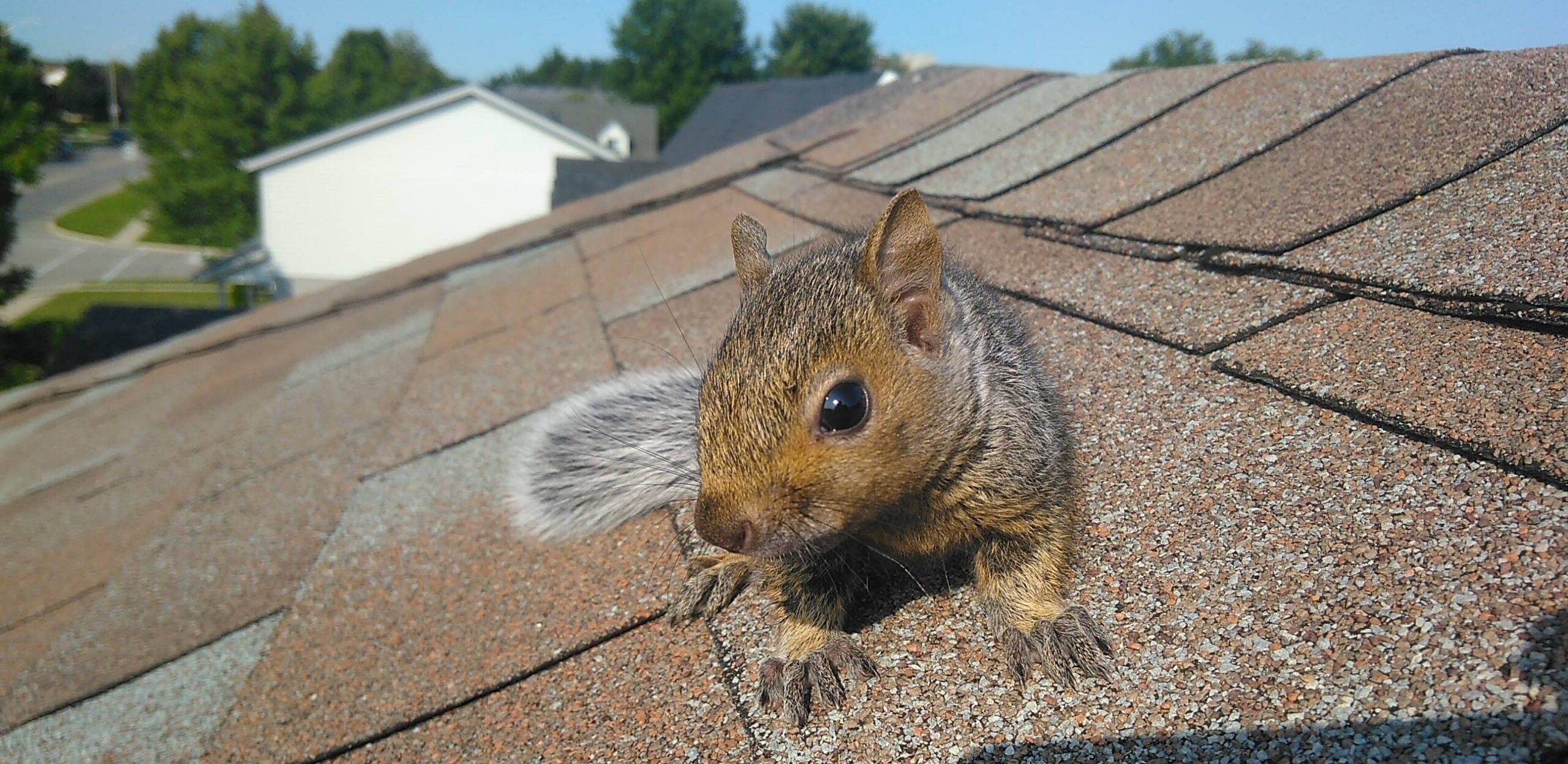
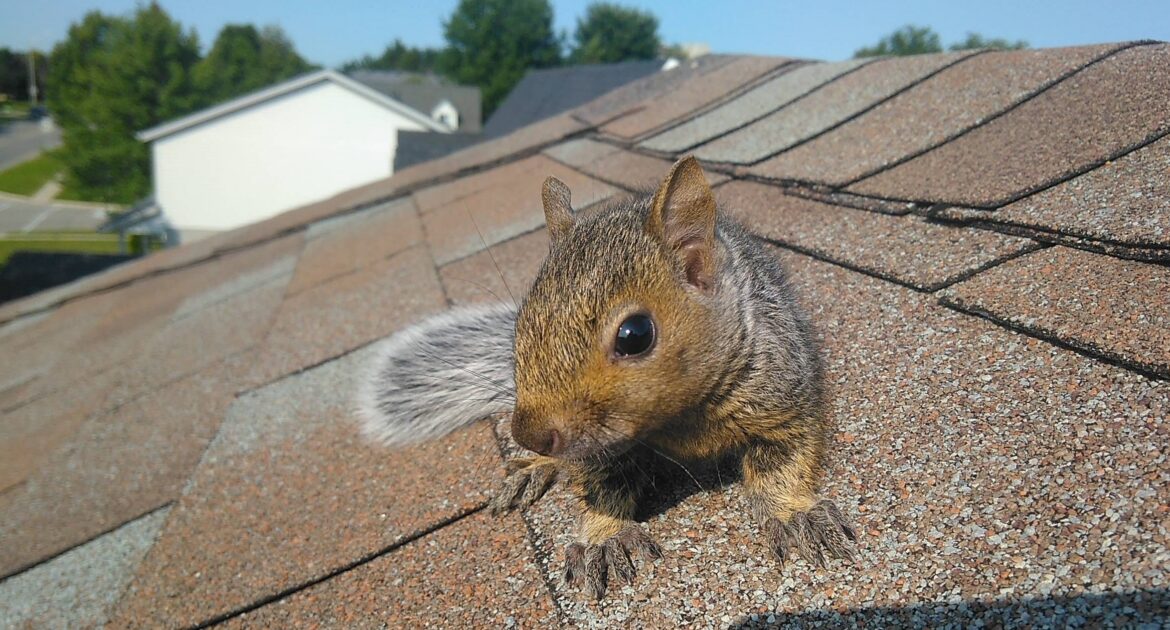
If you live in a townhouse, you already know the perks: shared walls, efficient layouts, and neighbourhoods that feel connected. Unfortunately, squirrels love “connected living” too and in attached homes, a squirrel problem can spread faster (and farther) than most homeowners realize.
In a recent Facebook reel, Reubin, owner of Skedaddle London, demonstrates something that surprises many townhouse residents: one small opening along the roofline can give squirrels access to a shared attic space, allowing them to move from unit to unit. That’s why townhouse wildlife issues often require a professional approach because fixing one spot in one unit usually isn’t enough.
This blog explains why squirrels target attached homes, how they travel through connected attic spaces, what signs to watch for, and how Skedaddle London solves the problem humanely and permanently through removal + sealing (exclusion) that keeps squirrels out for good.
Why Squirrels Love Townhouses
Squirrels are smart, persistent, and surprisingly athletic. They don’t “want” to live in your attic, but they do want three things your townhouse can provide better than many detached homes:
1) A warm, dry nesting space
Townhouse attics are insulated, protected from wind and rain, and often quieter than outdoor nesting options, especially during colder weather or stormy seasons. To a squirrel, an attic can feel like a secure tree cavity with better temperature control.
2) A built-in travel network
Attached homes create long, continuous rooflines, soffits, fascia boards, and shared transitions. For squirrels, that’s a highway system: jump to a roof, run the line, locate a weak spot, and slip inside.
3) More “opportunities” per square foot
Townhouse rows have repeated structural features, such as vents, soffit lines, roof returns, junction points, and small gaps created by settling or aging materials. Even if each unit has only a couple of vulnerable areas, the row can have many. If squirrels test enough spots, they often find one that works.
What Reubin Shows in the Reel: “One Small Opening” Can Become a Shared Problem
Reubin’s key point is simple, and it’s exactly what makes townhouse squirrel issues so frustrating:
A single gap can allow squirrels into one unit’s attic… then into the connected attic space… and then into neighbouring units.
That’s why you can do what feels like “everything right” (patch a spot, replace a soffit panel, add mesh somewhere) and still hear squirrels again later. It may not be that squirrels “came back” to the exact same hole. It may be that the shared attic space is still accessible somewhere along the row, and squirrels are simply moving within that space.
In attached homes, wildlife control often needs to be handled as a system, not a single entry point.
The Shared Attic Factor: Why You Might Hear Squirrels But Not See the Entry
Many townhouse designs include attic spaces that are continuous or partially connected through structural voids, soffit channels, or gaps at party-wall junctions. Even when fire separation exists, there can still be travel pathways squirrels exploit, especially if building materials have shifted over time or if previous repairs left gaps.
What does that mean in real life
- You hear running or scratching above your bedroom… but the entry point could be one or two units over.
- Your neighbour replaces a loose soffit panel… and suddenly the noise moves.
- You seal what looks like “the hole”… but squirrels find another weak point nearby, because the shared roofline has multiple vulnerabilities.
Why this matters
If squirrels can enter the shared space anywhere along the row, they can:
- relocate nests within the attic system
- avoid areas that feel threatened
- continue using the space as shelter—even if sightings decrease
So it can look like the problem is gone, while the structure remains accessible.
Where Squirrels Commonly Get Into Townhouses
Squirrels don’t need a huge opening. They need a weak spot: a gap, a lifted edge, a deteriorated panel, or a vulnerable transition where materials meet.
Here are the most common access points Skedaddle London sees in attached homes:
Roofline and soffit returns
Soffits are a frequent target because they’re lightweight compared to roof decking, and they often have seams or corners that loosen over time. A squirrel can pry, chew, or widen small vulnerabilities.
Fascia boards and roof edges
Fascia boards take weather exposure year after year. Rot, warping, or small separations can create entry opportunities, especially where multiple units share a continuous fascia line.
Vents and venting systems
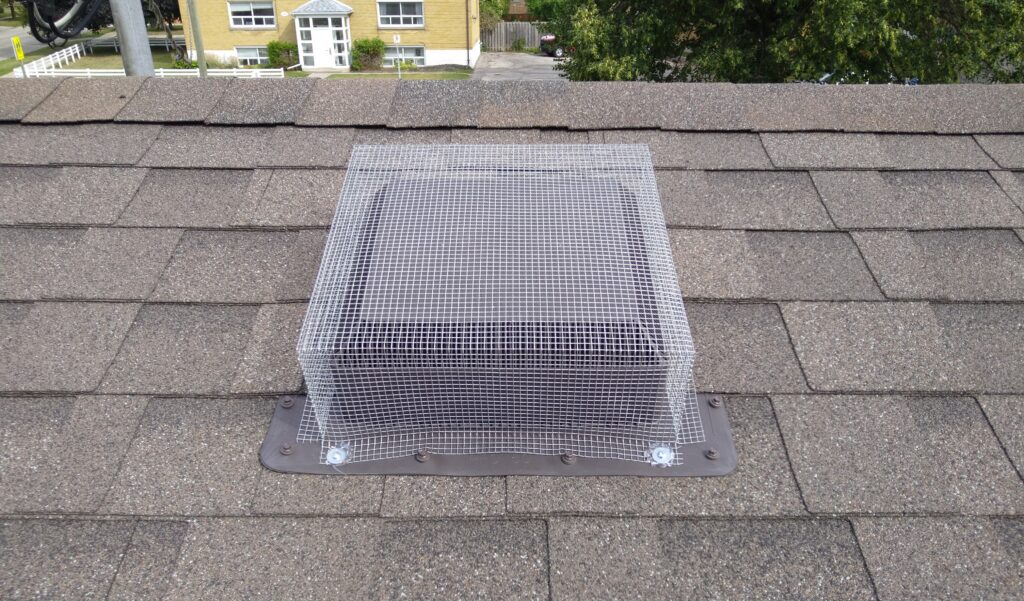
Roof vents, bathroom exhaust vents, and attic vents can be compromised by age or previous repairs. If screening is weak or missing, it can become a direct pathway into the attic.
Junctions and transitions (the townhouse “multiplier”)
Townhouses have repeated transitions across a row: brick-to-siding, soffit-to-wall, roof returns, valleys, and utility penetrations. Each transition is a potential weak point—especially after storms, freeze/thaw cycles, or shifting over time.
Why “Fixing One Hole” Usually Fails in Attached Homes
In a detached home, a single entry point repair sometimes works—if it truly was the only access and the animals are confirmed out. In townhouses, single-spot fixes fail more often because:
1) Secondary entry points are common
Squirrels rarely rely on one access point forever. If they’ve been inside long enough to nest, they often explore options—especially along a continuous roofline.
2) The shared structure changes the game
You can repair your unit perfectly, but if another vulnerable point remains open on the row, the shared attic can still be used. That can lead to repeat issues that feel mysterious or “unfair.”
3) DIY sealing can create bigger problems
Sealing the wrong area at the wrong time can trap animals inside, separate mothers from young, or force squirrels to chew their way out somewhere else, creating more damage.
Townhouse squirrel issues usually need a professional plan that addresses the structure as a whole—not just the most obvious hole.
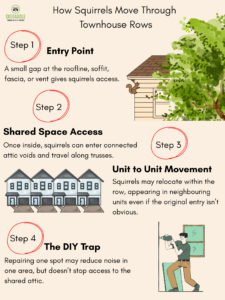
When you look at how easily squirrels can turn one small opening into access to a shared attic space, the biggest takeaway is that townhouse problems rarely stay contained to one unit or one repair.
Wildlife can easily move between connected attic spaces, shifting noise and damage from one home to another. A gap in any of the following areas can become an entry point:
- Roofline
- Soffit
- Fascia
- Venting
This is why quick patch jobs often seem to work, only for the scratching to return somewhere else. In attached homes, lasting protection comes from stopping the entire pathway, not just reacting to the most obvious spot.
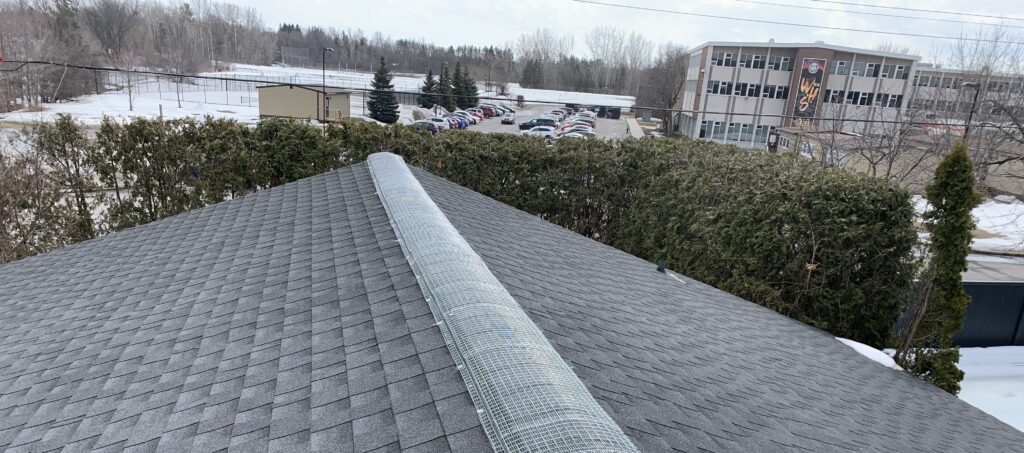
That’s exactly where Skedaddle London makes the difference. Our trained wildlife technicians take a whole-home approach built for townhouse realities: we start with a detailed inspection to identify entry points and the routes squirrels are using, then complete humane removal and follow through with professional exclusion durable sealing and reinforcement designed to prevent re-entry.
We don’t just aim to quiet the attic; we work to protect the structure by addressing the vulnerabilities that allow squirrels to get inside and move unit to unit in the first place. If you’re dealing with townhouse squirrel activity in London, Skedaddle can help you move from temporary fixes to a long-term solution that keeps wildlife where it belongs outside.
Are Squirrels Good to Have Around Your Property?
This is a common question—and the honest answer is: it depends where they are.
Outdoors: Yes, squirrels are normal
Squirrels are part of local ecosystems and are common in tree-lined neighbourhoods. Seeing squirrels outside doesn’t automatically mean you have a problem. In many cases, they’re simply living their lives moving through yards, trees, and green spaces.
Inside your townhouse attic: no, that’s a problem
When squirrels move into an attic, the risks increase quickly:
- Structural damage: chewing, prying at soffits, widening openings
- Insulation damage: compressed insulation reduces performance and increases energy costs
- Noise and disruption: running, scratching, and thumping overhead
- Possible secondary issues: damaged ducts, disturbed venting, and more entry points for other wildlife later
So while squirrels belong outside, they don’t belong in your home. The goal isn’t to harm them it’s to keep them out humanely and permanently.
Do Squirrels Come Back to the Same Place?
Yes—they often can, especially if the conditions that attracted them remain.
Squirrels are creatures of habit. If they find a warm, safe, repeatable nesting location and especially if it’s part of a convenient travel route they may return seasonally or repeatedly. In attached homes, this can be even more noticeable because the “same place” might mean the same row, the same roofline, or the same shared attic system.
Here’s the key: squirrels don’t return because they’re “vengeful.” They return because access is still available.
That’s why Skedaddle’s focus on exclusion is so important. When entry points are professionally sealed and reinforced, the property stops being an easy option even if squirrels are active in the neighbourhood.
DIY Fix vs. Skedaddle London Solution
| Issue in Attached Homes | What Often Happens With DIY “One-Spot” Fixes | What Skedaddle London Does Instead |
| Small openings at the roofline/soffits | The most visible gap gets patched, but hidden gaps remain | Full inspection to identify all vulnerabilities along the structure |
| Shared attic spaces | Noise may shift to another area/unit | Plans based on how squirrels move through connected spaces |
| Repeat the activity weeks later | “They’re back,” but the shared space was never fully secured | Exclusion that stops re-entry, reducing repeat incidents |
| Risk of trapping animals inside | Sealing without confirming that animals are out can create bigger issues | Humane removal approach designed to clear the home safely |
| Ongoing damage potential | Squirrels may chew out elsewhere | Reinforced sealing materials + repair strategy to prevent new damage |
| Multiple stakeholders (neighbours/boards) | One unit fixes one spot, but the row stays vulnerable | Professional guidance for coordinated approaches where needed |
Why Professional Squirrel Removal Is the Most Effective Solution in Townhouses
Townhouse squirrel issues need more than a reaction they need a plan. Professional service works best because it targets the entire system behind the problem: entry points, nesting areas, travel routes, and the structural vulnerabilities that make attached homes so attractive.
At Skedaddle London, Reubin and the team focus on humane removal and professional sealing (exclusion) the combination that stops the cycle.
1) Assess: A thorough inspection that finds what you can’t see
Townhouse squirrel problems are often deceptive. You may hear noise in one place while the entry is somewhere else. Skedaddle’s trained wildlife technicians inspect the structure to map:
- Entry points (including small, high, and hidden gaps)
- Vulnerable roofline and soffit areas across connected segments
- Nesting and activity zones inside attic spaces
- Damage patterns that indicate how squirrels are moving through the structure
This is especially important in attached homes because the “real” access point may not be directly above the room where you hear noise.
2) Remove: Humane removal that clears the home safely
Squirrels are persistent, but humane removal is absolutely possible and it’s the responsible choice. Skedaddle’s approach focuses on resolving the problem without putting your family, pets, or wildlife at unnecessary risk.
This is also where professional timing matters. In some seasons, squirrels may be nesting, and removing them requires careful steps to avoid creating bigger issues (like the separation of young or animals trying to escape through new holes).
3) Protect: Exclusion that prevents re-entry (and stops unit-to-unit movement)
This is the step that changes everything and it’s why “just fixing one spot” usually fails in townhouses.
Exclusion removes the cause by sealing and reinforcing access points so squirrels can’t re-enter. The goal isn’t just to stop today’s noise it’s to prevent next month’s repeat call. In attached homes, this often includes:
- reinforcing vulnerable soffit/fascia areas
- securing potential travel and entry routes along roofline transitions
- addressing weak points that allow access into shared attic spaces
Done properly, exclusion keeps squirrels out long-term and helps protect neighbouring units by reducing access to the shared structure.
Why Townhouse Squirrel Issues Often Work Best With Neighbour Coordination
Not every townhouse situation requires every neighbour to act at the same time but it’s helpful to understand when coordination matters.
If squirrels are using the shared attic space, a single repair in one unit may not fully solve the issue. When possible, it’s worth:
- talking to immediate neighbours about the signs they’ve noticed
- informing property management or a condo board (if applicable)
- encouraging consistent repair standards across shared roofline/soffit elements
A simple script for neighbours/boards:
“We’re hearing squirrel activity in the attic and learned that attached homes can have shared attic spaces. We want a professional inspection to identify entry points and prevent movement unit-to-unit.”
Coordinated action reduces the chance of repeat activity and helps protect the row as a whole.
Signs Squirrels Are Using Your Townhouse Attic
If you suspect activity, early intervention usually means less damage. Common signs include:
- Scratching, running, or thumping overhead (often morning and evening)
- Noises that seem to move across ceilings or between rooms
- Visible soffit/fascia damage or lifted edges along the roofline
- Chew marks near vents or corners of soffit panels
- Insulation disturbed near the attic access
- Pets staring at ceilings or reacting to noises above
Even if signs seem small, in attached homes, they can point to a larger shared-space issue.
What to Do Next If You Suspect a Shared Townhouse Squirrel Problem
If you’re hearing noises or seeing damage:
- Document the signs
Note times, locations, and what you hear. Take photos of exterior damage if visible from the ground. - Avoid sealing holes yourself
Especially if you haven’t confirmed that animals are out. This can create bigger problems. - Talk to neighbours (briefly, calmly)
You don’t need to alarm anyone just share that shared attic spaces can allow movement across units. - Book a professional inspection
This is the fastest path to identifying entry points and creating a plan that actually sticks.
For residents in the London area, start here: Skedaddle London Squirrel Removal
Prevention Tips for Townhouse Owners
Prevention won’t replace professional exclusion, but it can reduce risk and help you catch issues early:
- Trim branches away from rooflines where possible (especially near corners)
- Keep garbage secured and limit attractants (like spilled bird seed)
- Watch the roofline/soffit areas after storms and high winds
- Address small exterior wear early (loose panels, rot, gaps)
- Consider periodic professional inspections, especially before the spring nesting season or the fall shelter-seeking
Protect the Whole Home, Not Just One Spot
Townhouse squirrel problems aren’t always “your unit’s problem.” As Reubin shows in the reel, one small opening can allow squirrels into a shared attic space and once they’re in, they can move along the row and keep the issue going.
That’s why lasting results require more than a quick patch. Skedaddle London focuses on humane squirrel removal and professional exclusion that seals vulnerabilities and prevents re-entry. In attached homes, that approach doesn’t just solve today’s noise it helps protect your home (and often your neighbours) from repeat issues.
Call Skedaddle London at the first sign of attic activity for a thorough inspection and a plan built for townhouse realities:

 Loading...