You keep the garage organized, store food carefully, and cannot find an obvious hole in the house. Yet there are droppings beside a storage bin, or a mouse disappears behind the shelving. How did it get inside when the building looks well maintained?
In Hartland homes, overlooked gaps around construction connections, utility installations, and doors deserve attention. At Skedaddle Humane Wildlife Control, we look beyond visible damage to assess possible access routes, then coordinate humane removal with exclusion, cleanup, and appropriate restoration.
How are mice getting into my newer home?
Mice can enter newer homes through overlooked gaps around foundations, utility lines, dryer-vent penetrations, and garage doors. Some openings originate during construction; others develop through wear or later installations. We inspect possible routes and assess activity before coordinating humane removal and repairs that preserve necessary ventilation and drainage.
Why Can Newer Homes Still Have Mouse Entry Points?
A home does not need a large, chewed opening to have an access concern. Places where building materials meet or services pass through the exterior can be easy to overlook during ordinary maintenance.
Some gaps may date back to construction. Others can develop around worn seals, deteriorated materials, or later installations. A new cable, replacement vent, or renovation may change an area that previously appeared intact.
That does not mean every visible space is a construction defect or an animal entrance. Buildings also contain intentional openings that serve important functions.
The useful question is whether a gap provides a route into an accessible space. The Wisconsin Department of Health Services recommends looking for gaps inside and outside the home and addressing openings that allow rodent entry.
We assess the building itself rather than assuming it is protected because it is relatively new. That applies across established neighborhoods and newer developments throughout Lake Country.
Which Five Gaps Should Homeowners Check First?
Start with observations you can make from the ground. Photograph concerns without removing siding, disturbing utilities, or attempting to reach elevated areas.
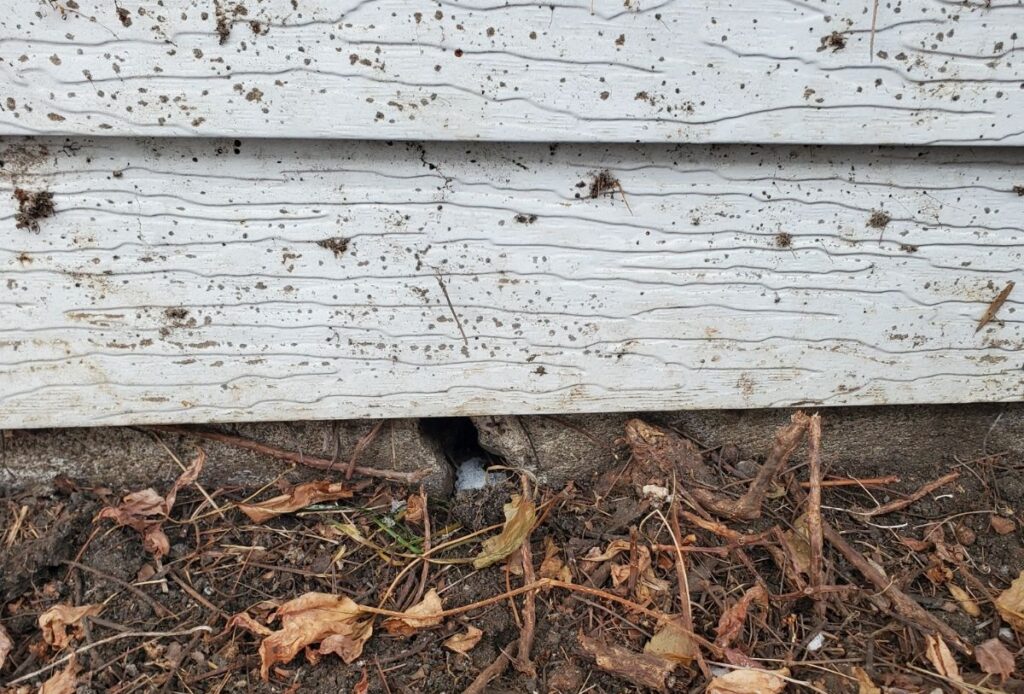
Foundation-to-Sill Connections
The sill plate is part of the framing where the building meets the foundation. From outside, the relevant transition may be partly concealed behind siding or other finishes.
Look for visible separation, deteriorated joints, or damaged materials along accessible sections. A concern in one location may warrant checking the surrounding transition rather than patching that spot alone.
Visual check: Can you see an unintended opening where the foundation meets the exterior wall above it?
Dryer-Vent Penetrations
A dryer duct passes through the exterior wall, creating a connection that needs appropriate finishing around its perimeter.
Distinguish a gap around the duct from the functioning exhaust outlet. The outlet must remain unobstructed, and repairs must not create places where lint can accumulate.
Visual check: Does the cover appear intact, and is there visible separation around the penetration?
Utility and Gas-Line Openings
Pipes, cables, and service sleeves create additional places to inspect. Deteriorated surrounding materials or unfinished installation work can leave gaps.
Avoid pulling on cables or moving pipes to investigate. Work involving gas or electrical components may require a qualified tradesperson.
Visual check: Is there an open space around a service penetration that needs professional assessment?
Garage-Door Bottom Seals
A garage door may close while leaving spaces at its lower corners or along an uneven surface. Side weatherstripping can also become damaged.
Inspect the door in its closed position. Consider whether stored items interfere with closing and whether the door routinely stays open longer than necessary.
Visual check: Are the seals intact and making consistent contact with the surrounding surfaces?
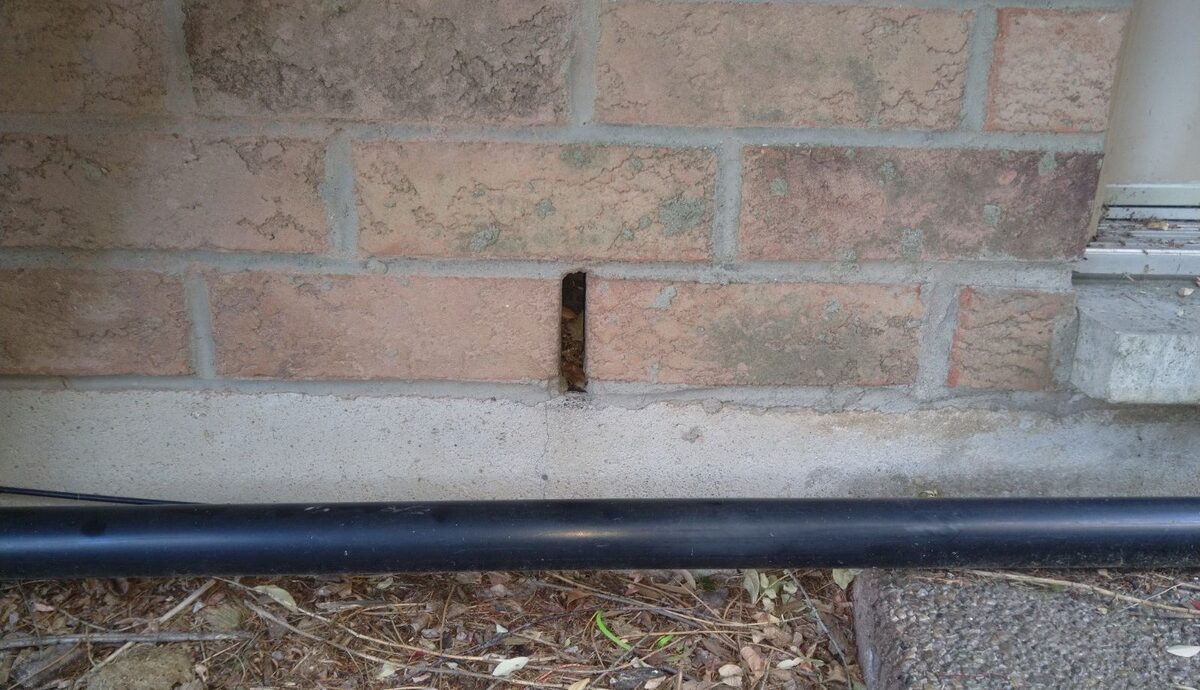
Brick-Veneer Weep Openings
Some openings in brick veneer are intentional drainage features. They should not be treated like ordinary gaps to fill with caulk.
A visible weep opening does not prove there is a route into the living space. The wall assembly and any connections behind it need consideration.
Visual check: Identify possible concerns for assessment, while leaving drainage openings functional. Any protective treatment must suit the wall system and preserve drainage.
Why Does the Garage Deserve Particular Attention?
Garages combine frequently used doors with storage areas that may remain undisturbed for long periods. This makes them useful places to begin checking for access concerns and evidence.
Door condition matters, but so do everyday routines. An intact seal cannot protect an opening while the door is raised. Shelving and accumulated boxes can also hide the wall edges you would otherwise inspect.
Practical steps include:
- Storing pet food and birdseed in sturdy, tightly closed containers.
- Removing unnecessary cardboard.
- Keeping accessible wall edges visible.
- Cleaning ordinary food spills promptly.
- Maintaining door seals and closing doors after use.
For attached garages, we also assess relevant connections toward the rest of the building. A garage sighting does not establish that living spaces are affected, but it does not confirm they are unaffected either.
Tell us where the animal appeared and disappeared. Those details help guide our inspection without requiring you to move potentially contaminated belongings.
What Signs Suggest Mice Have Already Moved In?
You do not need repeated sightings before arranging an assessment. One encounter provides a reason to investigate, particularly when other evidence is present.
Observations worth reporting include:
- Droppings near stored supplies or wall edges.
- Gnawed food packaging or damaged boxes.
- Shredded material gathered in a sheltered location.
- Recurring scratching or rustling.
- Damage around possible access points.
These clues do not reveal everything on their own. Sounds cannot reliably identify the animal, and the location of droppings does not necessarily identify the exterior entrance.
Record dates, locations, and photographs where possible. Avoid handling suspected nests or disturbing waste.
Some rodents, including deer mice and white-footed mice, are associated with hantavirus. That does not establish that a particular animal is infected. Wisconsin DHS recommends prevention and appropriate precautions around rodent contamination.
We consider the evidence alongside the building layout to determine which areas need closer attention.
What Should You Avoid When Trying to Close Mouse Gaps?
Finding an opening can make an immediate repair tempting. However, the timing, material, and purpose of the opening all matter.
Before beginning, keep these distinctions in mind:
- Suspected occupied entrances need assessment. Closing a route too soon can leave animals inside.
- Trapping does not repair access. Capturing mice does not close the openings through which entry may continue.
- Ventilation and drainage must remain functional. Exhaust outlets, wall drainage features, and vents require suitable protection.
- Utility connections need appropriate handling. Do not disturb gas lines, wiring, or other services.
- Contaminated areas require different cleaning methods. Treat suspected waste separately from ordinary dust and clutter.
The CDC’s rodent-cleanup guidance advises against sweeping or vacuuming untreated rodent waste. It explains appropriate disinfectant use, protective equipment, disposal, and additional precautions for heavy infestations.
A quick application of foam should not be treated as a complete exclusion plan. We assess the opening and surrounding materials before recommending a durable repair.
How Do We Address Mouse Access and Protect the Home?
Our approach to mouse removal in Hartland begins with an inspection of the evidence and accessible building areas. We assess possible entrances and relevant connected spaces before explaining the proposed work.
An opening nearest an indoor sighting may not be the original entrance. We consider access across the property rather than limiting the assessment to the room where a mouse was seen.
Our plan brings together:
- Assessment of current activity and occupancy.
- Identification of relevant entrances and access concerns.
- Humane removal coordinated with exclusion.
- Durable repairs suited to the surrounding construction.
- Maintenance recommendations that support prevention.
- Appropriate cleanup, decontamination, and attic restoration.
We explain which materials or areas are affected before recommending restoration. A sighting alone does not mean all attic insulation requires replacement.
We offer a “lifetime guarantee on all workmanship and materials used to seal your home for life.” We explain the applicable terms and identify the covered sealing work in your service plan.
We also assist homeowners in Pewaukee and surrounding Lake Country communities. Each property receives an assessment suited to its construction and the evidence found, followed by appropriate cleanup, decontamination, and attic restoration.
Frequently Asked Questions
How do mice get into a newer house?
Possible routes include gaps at foundation transitions, utility penetrations, vent surrounds, and door seals. Some originate during construction, while others develop later. We assess the actual openings and evidence before identifying a route rather than assuming every newer home has the same access problem.
Should I seal my brick weep holes?
Do not simply caulk them shut. Weep openings have a drainage purpose, and modifying them can interfere with the wall system. Have potential wildlife access assessed and use a suitable approach that preserves drainage. The presence of an opening does not automatically establish indoor access.
Why have I seen mice in the garage but not the house?
A sighting confirms activity in the garage at that moment. It does not establish whether other spaces are affected or how the animal entered. We inspect relevant connections and additional evidence to determine the scope without assuming either an isolated visit or activity throughout the home.
Are mice in Lake Country a health concern?
Rodent contamination requires appropriate precautions. Wisconsin DHS identifies certain rodents as hantavirus carriers, but a sighting does not prove infection. Avoid handling mice or disturbing suspected waste. Follow public-health cleanup guidance and seek appropriate assistance when contamination is extensive or difficult to access.
Does Skedaddle guarantee its mouse exclusion work?
Yes. We offer a “lifetime guarantee on all workmanship and materials used to seal your home for life.” We explain the applicable terms and covered repairs as part of your service plan. Keep those details with your home maintenance records for future reference.
How Can You Book a Hartland Mouse Inspection?
You do not need to find a large hole before asking for help. Droppings, damaged packaging, or recurring scratching deserve investigation, even when your home’s exterior appears well maintained.
Contact us at Skedaddle Humane Wildlife Control serving Hartland to arrange an assessment. We can explain the access concerns and develop a plan for humane removal, exclusion, cleanup, decontamination, and appropriate attic restoration.

 Loading...