
You are lying in bed, just about to drift off to sleep, when you hear it. Scratch, scratch, scratch. The sound is coming from inside your wall or maybe right above your head in the attic. Your heart starts to beat a little faster. You know you likely have an unwanted guest, but you aren’t sure exactly what it is. Is it a small, curious mouse? or is it a large, heavy rat?
Knowing exactly what has moved into your house is the first step to getting them out. While both animals are rodents, they behave very differently. They leave different clues behind. Spotting these rats vs mice signs early can help you understand what you are up against.
It can be scary to think about mice or rats in your house, but you don’t have to face it alone. At Skedaddle Humane Wildlife Control in Mississauga, we have years of experience reading these clues. We know how to spot the rodent infestation symptoms that most homeowners miss. We are here to help you figure out if you are dealing with a tiny mouse or a much bigger rat, so we can help you take your home back.
In this blog, we’ll guide you through the key signs of a rodent infestation so you can better understand what might be hiding in your home.
Droppings: The Most Common Clue
One of the first things you will likely find is droppings. It is gross to think about, but poop is the biggest clue we use to identify the animal. Rodents are not potty trained. They go to the bathroom wherever they walk. This means you will often find droppings in your kitchen cupboards, under the sink, or along the walls where they run.
When our technicians inspect a home, we look closely at the size and shape of these droppings. It is the easiest way to tell the difference without actually seeing the animal.
Here is what you need to look for to tell them apart:
- Mouse Droppings: These are very small. Think about a grain of rice. They are usually black or dark brown and have pointed ends. They are about 6 mm long. Mice produce a lot of droppings, so you might find huge piles of them in one spot.
- Rat Droppings: These are much bigger. They look more like a capsule or a small raisin. They are usually thick and have blunt ends, not pointed ones. They can be up to 19 mm long. That is about three times the size of a mouse dropping.
- Location: Both animals leave droppings near food. However, rats often leave them in specific paths or groups, while mice tend to scatter them everywhere they go.
Strange Noises In The Night
Since you rarely see these animals during the day, your ears are often your best tool. Both rats and mice are nocturnal. This means they sleep during the day and get busy at night. This is why you hear those spooky sounds right when you are trying to sleep.
The type of sound you hear can actually tell you a lot about the size of the animal. A tiny mouse is not going to sound the same as a heavy rat.
Pay attention to these sound differences:
- Scratching and Skittering: This is usually a sign of mice. They are light and quick. You might hear a faint scratching sound in the drywall or a light pitter-patter across the ceiling. It sounds like something small running very fast.
- Thumping and Bumping: Rats are much heavier. They can grow up to 11 inches long, not including their tail. When they move, you might hear actual footsteps or dull thumping sounds in the attic.
- Gnawing Sounds: Both animals chew constantly. However, rats have much stronger teeth and jaws. If you hear a loud grinding or chewing noise that sounds like a saw, it could be a rat chewing on a wooden beam or a pipe.
- Squeaking: You might hear squeaks from both, but mice tend to be a bit more vocal with their high-pitched squeaks when they are fighting or communicating in the walls.
Gnaw Marks and Property Damage
Rodents have teeth that never stop growing. To keep their teeth sharp and short, they have to chew on things constantly. This is bad news for your house. They will chew on wood, plastic, drywall, and even electrical wires.
When we come to your home, we look for fresh bite marks. The size of the bite mark is another great way to tell rats vs mice signs apart.
Here is how the damage differs:
- Mouse Damage: Mice have small teeth. They leave scratchy, rough holes. The holes are usually small, about the size of a dime. You might see these small holes in cereal boxes, the corners of drywall, or the rubber coating on wires.
- Rat Damage: Rats have very powerful teeth. They can chew through much harder materials like aluminum, wood, and even concrete. Their gnaw marks are larger and smoother. The holes they make are big, usually about the size of a quarter or larger.
- Food Packaging: Both animals want your food. If you see corners chewed off of cracker boxes or bags of flour with holes in the bottom, you have a visitor. Rats will tear big jagged holes, while mice make smaller, neater holes to pull the food out.
Grease Marks and Runways
This is a clue that many homeowners do not know about. Rats and mice tend to have dirty, oily fur. They are creatures of habit. They like to run along the same path every single night. They usually stick close to the walls because it makes them feel safe.
Over time, the oil and dirt from their fur rub off onto your walls and baseboards. This leaves a tell-tale sign that we look for during our inspections.
- Rat Rub Marks: Because rats are bigger and greasier, they leave very obvious dark smudges. You will see these dark, greasy streaks along baseboards, near corners, or around holes they use to get in and out. If the mark smears when you touch it (with a glove!), it is fresh.
- Mouse Runways: Mice can also leave these marks, but they are usually fainter and smaller. You might not see them as clearly as rat marks.
- Urine Pillars: This sounds gross, and it is. In places where mice spend a lot of time, their urine can mix with dirt and body grease to form small little mounds or “pillars.” This is a sign of a heavy infestation that has been there for a while.
Nests and Burrows
Where are they sleeping? Finding the nest can give you a clear answer to the rats vs mice signs puzzle. These animals prefer different types of homes.
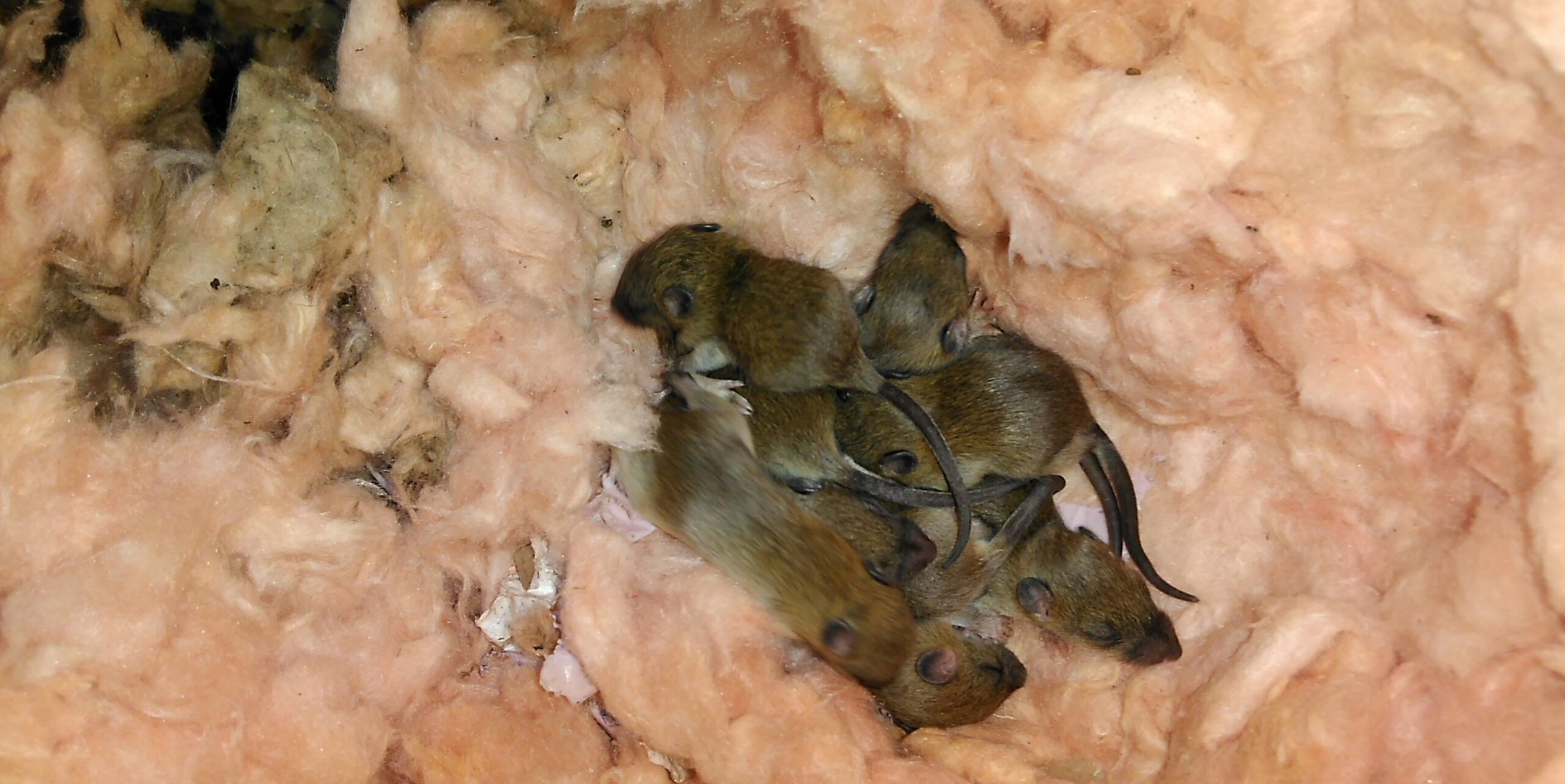
Mice are builders. They like to be warm and cozy inside your house. They will shred up anything they can find to build a soft nest. We often find mouse nests made of:
- Shredded paper or tissues.
- Bits of fabric or insulation.
- Dried plants or strings.
You will typically find mouse nests in dark, quiet places like the back of a closet, inside a drawer you rarely open, or buried deep in your attic insulation.
Rats are a little different. The Norway rat, which is common in our area, likes to dig. They often live on the lower levels of a home or even outside in the ground.
- Burrows: You might see holes dug in the soil around your garden, under your shed, or near the foundation of your house. These are rat burrows.
- Low levels: Inside, rats often nest in basements, crawl spaces, or garages. They like clutter and dark corners on the ground floor.
- Roof Rats: There is another type called the roof rat that likes high places, but they are less common than the Norway rat in some areas. If you have rats in the attic, it could be this type.
How We Help You Reclaim Your Home
At Skedaddle Humane Wildlife Control, we believe in doing the job right. We don’t just set traps and hope for the best. We have a proven process that removes the animals and keeps them out.
Our professional wildlife team handles everything for you. We start by inspecting your entire home—from the roof vent to the foundation—to find every single entry point. We identify whether you have rats or mice so we can use the right strategy.
We use special one-way doors. These are clever devices that we install over the hole the animals are using. It allows the mice or rats to leave your home to go look for food, but when they try to come back in, the door won’t open. They are locked out, safely and humanely.
Once all the animals are gone, we seal up every crack and hole with heavy-duty screening and sealant. This prevents new rodents from moving in. We also help with the cleanup, removing the dangerous droppings and dirty insulation so your home is fresh and safe again.
Say Goodbye to Rodents For Good
You shouldn’t have to live with scratching sounds or the worry of rodent infestation symptoms. Your home is your sanctuary. If you have noticed droppings, gnaw marks, or grease stains, it is time to call in the experts.
Understanding the difference in rats vs mice signs is helpful, but getting them out is a job for professionals. At Skedaddle Humane Wildlife Control in Mississauga, we are ready to help. We will handle the hard work, the cleanup, and the prevention, so you can go back to sleeping soundly.
Do you think you have mice or rats in your house? Don’t wait for the problem to get worse.
Request an estimate today to protect your home!

 Loading...







