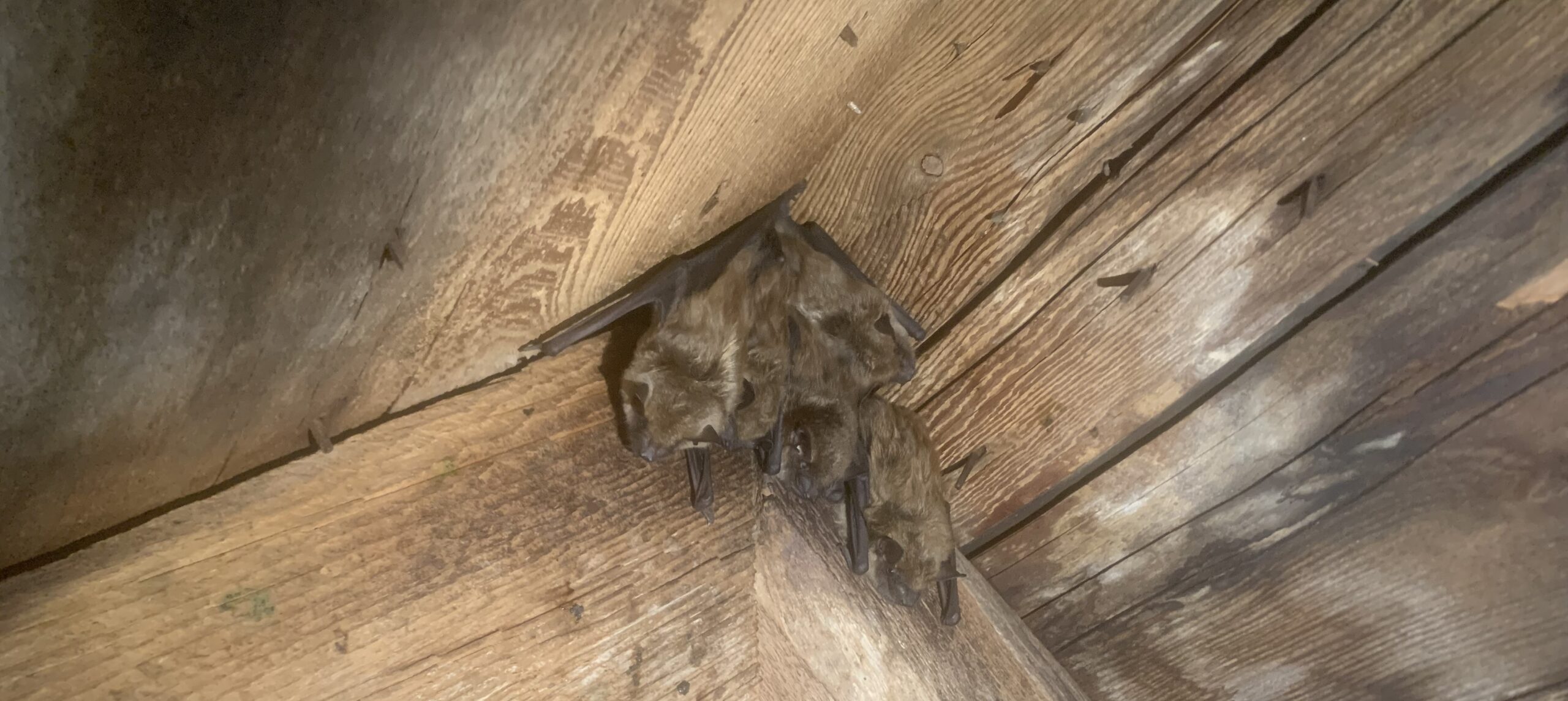
Bats are fascinating animals that many people only connect with night-time activity. But have you ever wondered, where do bats go during the day? Bats are nocturnal, meaning they’re active at night and rest during the day. When the sun rises and the world wakes up, bats retreat to their safe, dark hiding spots to rest and recharge for another night of feeding and flying. These daytime resting spots are called roosts.
Roosts can be found in a variety of places, depending on the species and the environment they live in. Some bats use natural shelters like caves, hollow trees, or cliff crevices, while others may seek out man-made structures such as attics, barns, or even walls inside homes. If you’ve got bats in your home or property, you’re likely to find them roosting during the day in hard-to-reach areas.
At Skedaddle Humane Wildlife Control in Mississauga, we’ve seen it all when it comes to bat daytime behaviour, and we specialize in helping homeowners deal with unwanted bat visitors using humane and effective solutions.
Understanding Bat Daytime Behaviour
To truly understand where bats go during the day, it helps to know a bit about their lifestyle. Bats spend a lot of energy flying and hunting at night, so they need a place to rest that offers protection from predators, extreme temperatures, and disturbances. Their roosts provide just that.
When these animals roost, they hang upside down, which might look odd to us, but it serves an important purpose. This position allows them to take off easily if they’re disturbed, and their specialized feet are designed to cling to surfaces for long periods without expending energy.
Types of Roosts
Bats don’t all roost in the exact same places. The type of roost largely depends on the species of bat. Here are some common options for where bats sleep during the day:
Natural Roosts
- Caves or caverns
- Hollow trees or tree bark
- Rock crevices or ledges
Man-Made Structures
- Attics and basements
- Barns, sheds, or garages
- Gaps in brick walls or roof tiles
These areas provide the safety and darkness that bats need to avoid detection and remain comfortable during daylight hours.
Why Do Bats Roost in Homes?
Bats often end up in homes because man-made buildings offer ideal conditions for roosting. Spaces in attics, walls, or soffits are dark, warm, and protected, mimicking the natural conditions that bats seek. Openings as small as a dime can serve as an entry point for bats to access these areas.
If you suspect you have bats roosting in your home, it’s essential to act quickly. Roosting bats can create health hazards through droppings (guano) and noise, and over time, they can cause damage to your property. Our team at Skedaddle Humane Wildlife Control in Mississauga has extensive experience dealing with roosts and specializes in safely removing them.
What Happens Inside a Bat Roost?
During the day, bats are mostly inactive. They rest within the roost, hanging upside down, conserving energy. However, there is more to their daytime behaviour than just sleeping.
- Social Interaction: Certain types of bats roost in large colonies, and these colonies aren’t just for resting. During the day, bats will groom themselves and each other, which keeps their fur clean and healthy. They also use squeaks and chirps to communicate, helping them stay organized within the group. These social interactions play an important role in bonding and maintaining a strong colony.
- Temperature Regulation: Bats are very picky about their roosts because the temperature has to be just right. If it gets too cool, some bats will huddle together to share body heat and stay warm. On hot days, many bats choose places with good airflow to keep from overheating. The ability to find the perfect balance helps them stay comfortable and survive in different climates.
- Reproduction: When it’s breeding season, female bats search for special maternity roosts where they can have and care for their babies. These roosts are usually warm, safe, and secluded, giving newborn bats a good chance to grow and learn to fly. Mother bats will stay in these roosts with their young until the pups are strong enough to join the colony at night.
While these animals spend much of their time in roosts resting, these structures also play an essential role in their day-to-day lives, especially in terms of social structure and reproduction.
Why You Shouldn’t Remove Bats Yourself
Seeing bats flying in and out of your property might tempt you to try to remove them on your own, but DIY removal methods rarely work and often create more problems. Bats are a protected species in many areas, meaning you can’t harm them or disturb their roosts without following proper regulations.
At Skedaddle Humane Wildlife Control, we use humane removal techniques, including one-way doors. These doors allow these animals to leave your home but prevent them from coming back inside. This process ensures their safe removal while keeping your home protected.
DIY removal often leads to stress for homeowners and risks for the bats. Without proper knowledge, you could accidentally trap them inside your home or violate wildlife laws. Skedaddle’s one-way door method is safe, effective, and ensures bats leave without harm. Our professional approach protects your family, home, and the bats themselves.
Protecting Your Home and Preventing Roosts
Once bats have been removed from your home, it’s crucial to prevent them from coming back. Here are some steps you can take to wildlife-proof your property:
- Seal Entry Points: Bats can squeeze through tiny gaps, even as small as a dime. That’s why it’s important to carefully check your roof, walls, and foundation for any cracks or holes. Sealing these entry points with materials like caulking or mesh not only keeps bats out but also prevents other animals from sneaking in.
- Maintain Your Property: A tidy yard is less inviting for bats looking for shelter near your home. Make sure to trim overgrown branches, bushes, and shrubs that could provide hiding places. Keeping things neat and clean also helps you spot potential problem areas before they become bigger issues.
- Install Bat Houses: Bat houses are a great way to help them without letting them move into your home. These small wooden boxes are designed to give them a safe place to roost and rest. Placing them far from your house can encourage these animals to stay in their own space while helping with pest control by eating insects.
At Skedaddle, we not only help with humane bat removal but also offer prevention services to keep your property bat-free.
Say Goodbye to Bat Boosts Today!
If bats have made your home their daytime resting spot, now’s the time to take action. Understanding bat daytime behaviour, including where bats sleep and what they do during the day, is the first step to resolving the issue. At Skedaddle Humane Wildlife Control in Mississauga, we’re here to help you remove animals safely and prevent them from coming back.
Want to learn more about our wildlife removal services? Request an estimate today, and take the first step to a bat-free home!


 Loading...