
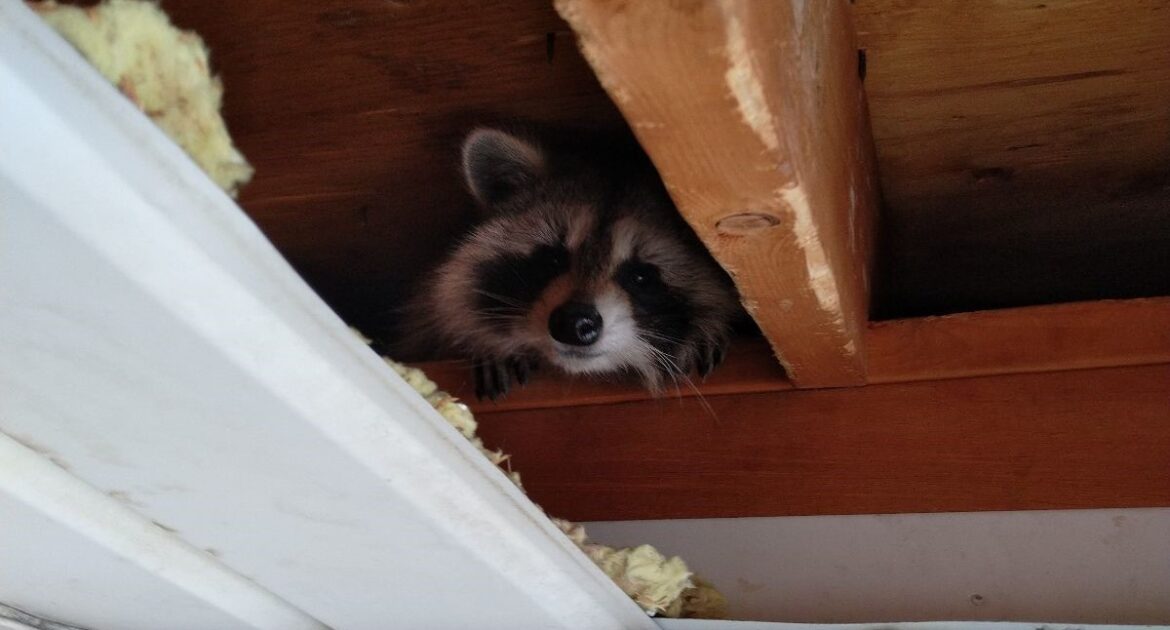
If you’re hearing strange sounds above your ceiling while everyone else is asleep, you’re not alone. Raccoons in your attic at night are a common problem for many Montreal homeowners. These curious and intelligent animals are highly adaptable and often choose urban buildings as their preferred nesting spots, especially when temperatures drop. Nighttime noises, particularly during winter, can be unsettling and worrying.
How can you tell if raccoons are responsible? Let’s explore the unique signs, sounds, and risks, and how Skedaddle’s approach helps you regain peace of mind.
What Noises Do Raccoons Make at Night?
Nighttime is when these animals are most active, making it the best time to notice signs of raccoons in your attic. Their movements and behaviours can produce various distinct sounds that differ from other wildlife. These nocturnal guests may wake you up with noises like thumping or heavy footsteps, especially when they’re walking or rolling objects around, the slow dragging of materials, or chittering and growling—particularly if there are babies present. Scratching or digging sounds along beams and insulation are common.
Raccoon sounds change throughout the night. Early evening often includes more active exploration and entry noises, while later, especially after midnight, you might hear softer, repetitious sounds as they settle, groom, or feed.
Knowing what to listen for is critical, but it’s only one part of confirming their presence. Next, we’ll examine key behavioural clues beyond the sounds themselves.
How to Safely Identify Raccoon Activity
While sounds and visual clues help identify raccoon attic activity, direct inspection carries health risks. Raccoons can carry diseases such as leptospirosis, salmonella, and parasites like Baylisascaris roundworm. Here’s how to approach the situation without exposing yourself or your family:
- Never enter the attic at night
- Avoid handling droppings or damaged insulation, as these can harbour viruses and parasites.
Instead of entering the attic yourself, make detailed notes of when and where you hear noise and the sounds’ characteristics. Sharing this information with professionals helps ensure a targeted and safe inspection. Skedaddle’s team uses thermal imaging and protective equipment to identify all entry points and den locations—keeping you out of harm’s way while delivering a reliable diagnosis.
By gaining a clearer understanding of the situation, the plan of action can be carefully tailored—especially if there are babies involved or if multiple animals are present. Transitioning from identification to prevention is the next logical step to secure your property.
The Risks of Having Raccoons in the Attic
The presence of raccoons in your attic at night brings more than just lost sleep. They threaten both the structure of your home and the well-being of everyone inside. Here’s what makes these unwelcome visitors a serious concern:
- Insulation damage: Raccoons trample and compact insulation, lowering its effectiveness and increasing heating costs.
- Health risks: Droppings and urine can spread bacteria and viruses, while the parasite Baylisascaris is of particular concern in the Montreal area.
Ignoring these risks doesn’t make them go away—in fact, the longer raccoons remain, the more complicated repairs and clean-up become. Fortunately, there are concrete steps to prevent such outcomes.
Prevention and Skedaddle’s Professional Solutions
Proactive steps can save you significant headaches and expenses down the road. Here’s what we recommend to prevent raccoons from gaining access or returning to your property: inspect your roof and attic spaces in early autumn for damage or weak spots, secure soffits, roof vents, and chimneys with heavy-gauge screening, remove food sources from around your property, such as garbage, compost, or pet food, trim tree branches that reach close to your home, as raccoons are skilled climbers, address any evidence of past entry immediately, including sealing all gaps and repairing damaged materials.
When raccoons have already moved in, professional intervention is essential. At Skedaddle, our process begins with a thorough assessment—from identifying how raccoons entered to determine if babies are present. Our trained technicians employ years of experience and advanced technology, including thermal imaging, to pinpoint animal locations and safely access even the tightest attic corners.
Key elements of our service include humane removal of adult raccoons and hand-removal of babies if needed, use of heated baby reunion boxes to ensure family units remain intact, complete cleaning and decontamination of contaminated materials, repair and restoration of insulation, rooflines, vents, and affected areas, as well as long-term prevention with heavy-duty exclusion measures.
Our personalized approach ensures we resolve your raccoon problem for good, prioritizing your home’s safety, cleanliness, and comfort.
Experience Lasting Relief from Nighttime Attic Disturbances
Those unsettling nighttime noises overhead often point to raccoons turning your attic into their personal den—posing risks to your home’s structure, your family’s health, and your peace of mind. Understanding the distinct sounds and behavioural clues raccoons leave behind is the first step toward proactive protection. Montreal’s changing seasons mean raccoon activity can escalate quickly, especially when seeking shelter from the cold or nursery sites for offspring.
Don’t wait for small signs to become big problems. Skedaddle brings unmatched expertise and humane solutions backed by decades of experience. From precise identification and hands-on removal—especially important when babies are involved—to complete cleanup and exclusion, our approach ensures your property stays secure, healthy, and quiet once more. If nocturnal noises have left you concerned, reach out to Skedaddle today and reclaim the comfort and safety of your home with confidence.

 Loading...







